

What Is Your Unidentified Hazardous Materials Response Strategy?
In emergency response, uncertainty is often unavoidable. Chemical incidents rarely begin with complete information, and responders are frequently required to act before a substance can be identified. This makes unidentified hazardous materials response one of the most critical challenges facing hazmat responders, HAZMAT teams, hospitals, and safety professionals.
When a material is unknown, delaying action can increase exposure risk, allow contamination to spread, and endanger both responders and the public. An effective emergency response plan must account for this reality and prioritize immediate hazard reduction alongside identification efforts.
What Is an Unidentified Hazardous Materials Incident?
An unidentified hazardous materials incident occurs when a substance is present but cannot be definitively identified before response actions are required. These incidents may involve powders, liquids, vapors, or mixed materials discovered in transportation accidents, industrial facilities, healthcare environments, or public spaces.
Because responders cannot rely on confirmed chemical properties or safety data sheets, these situations carry elevated risk. Industry guidance notes that early actions—such as isolation, scene control, and mitigation—often determine whether an incident stabilizes or escalates.
Why Unidentified Hazardous Materials Response Is High Risk
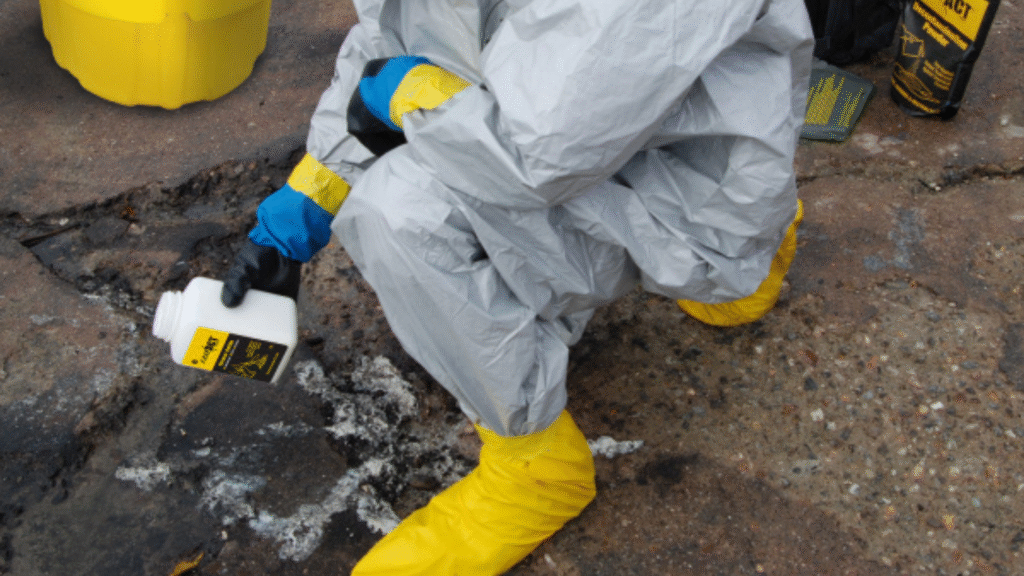
Hazardous substances are used and transported every day across nearly every sector. Toxic industrial chemicals, fuels, narcotics, and other dangerous goods are routinely encountered in both commercial and residential settings. As a result, thousands of HAZMAT incidents occur annually; many involving materials that are not immediately identifiable.
In an unidentified hazardous materials response, responders must protect life, secure the scene, and prevent environmental contamination—often simultaneously and with limited information. Federal guidance emphasizes treating unknown materials as potentially high hazard until proven otherwise, reinforcing the need for proactive response strategies that incorporate risk assessment and control measures (CHEMM – HHS).
HAZMAT Response Levels and Unknown Materials
HAZMAT response capabilities are generally divided into four levels, each playing a role in unidentified hazardous materials response:
- Awareness level responders recognize potential hazards and initiate hazard communication
- Operations level responders establish control zones and take defensive actions
- Technician level responders perform offensive actions to control or neutralize releases, using decontamination procedures when necessary
- Specialist level responders provide advanced scientific expertise and incident support
Regardless of training level, unidentified materials require responders to act before substance identification is complete, making preparedness and flexible tools essential.
Why Identification Alone Is Not a Complete Strategy
Advances in detection technology have improved the speed of identifying certain gases and vapors, but even rapid identification can take valuable time. In that window, hazards may spread, vapors can migrate, and contaminated individuals may expose others.
National response guidance stresses the importance of early isolation and defensive actions when dealing with unknown substances. These actions support compliance with Safety and Health Regulations and guidance from federal public health agencies, such as the EPA. In practice, identification is a critical component of response—but it cannot be the only line of defense in an unidentified hazardous materials response strategy.
FAST-ACT and Unidentified Hazardous Materials Response
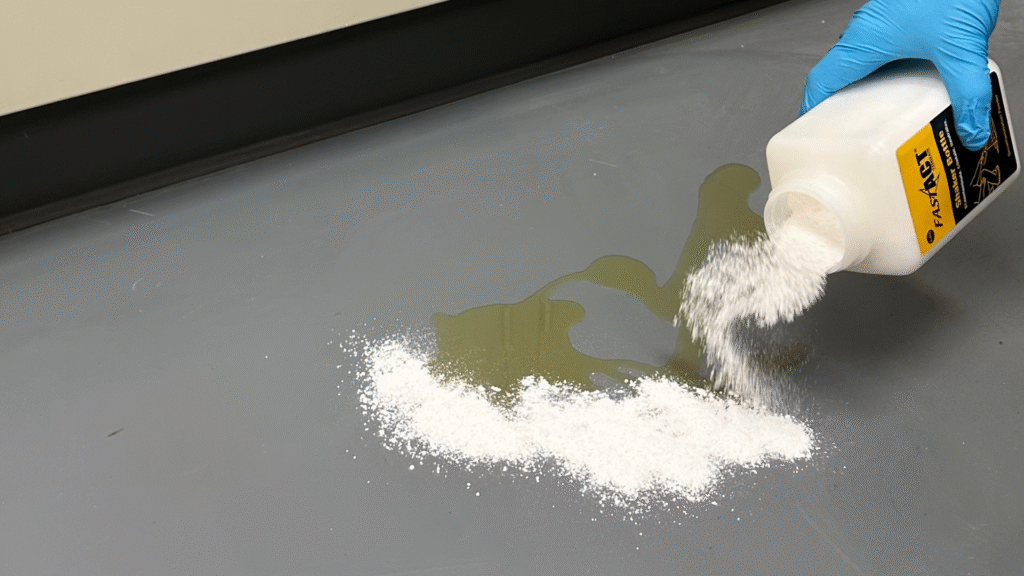
FAST-ACT technology was developed to address the gap between discovery and identification. Instead of relying on chemical-specific neutralizers, FAST-ACT provides broad-spectrum mitigation capable of neutralizing a wide range of hazardous substances, even when the material has not yet been identified.
FAST-ACT is a proprietary formulation of non-toxic, high-performance specialty materials effective against chemical emergencies and toxic industrial chemicals, with the added capability to destroy chemical warfare agents. The formulation is non-flammable, non-corrosive, and designed to significantly reduce both liquid and vapor hazards upon contact—allowing responders to take immediate action while identification and monitoring continue.
Visit our decon guide to learn more about the broad range of chemicals FAST-ACT works against.
The Science Behind FAST-ACT Technology
FAST-ACT’s effectiveness is driven by its engineered composition of magnesium oxide (MgO) and titanium dioxide (TiO₂), produced through proprietary manufacturing processes that dramatically increase surface area and pore structure.
At the molecular level, these engineered earth minerals interact with hazardous chemicals through adsorption and chemical neutralization mechanisms. Irregular particle shapes and high porosity increase contact efficiency, enabling FAST-ACT to neutralize a broad range of known and unknown chemical threats without introducing secondary hazards. This science-driven approach supports a more resilient initial response to chemical hazardous materials Incidents.
FAST-ACT Products for Emergency Response
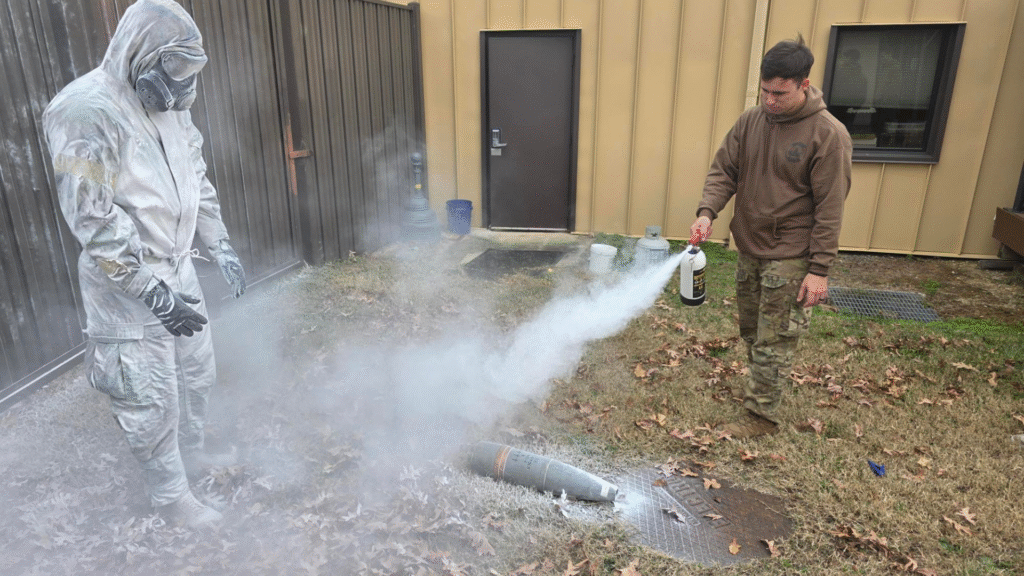
FAST-ACT products are designed for rapid deployment across a wide range of incident types, including:
- FAST-ACT Pressurized Cylinders for immediate mitigation of chemical spills and vapor releases
- FAST-ACT Kits includes the tools required for containment and neutralization, ensuring safety and compliance in various environments.
- FAST-ACT Decontamination Mitts and FAST-ACT Decontamination Wipes for skin, equipment, and sensitive surface decontamination.
*CE classified as a class I medical device for use on skin and surfaces in the EU.
FAST-ACT products enable responders to act quickly and safely, providing broad-spectrum neutralization for liquid and vapor hazards—critical when managing unidentified hazardous materials response incidents.

Applications Across Real-World Scenarios
FAST-ACT supports unidentified hazardous materials response across multiple operational environments, including:
Because FAST-ACT can be safely applied to unknown liquid spills or vapor releases, responders can deploy one technology across multiple threat profiles without waiting for chemical confirmation. Visit our applications page for more details.
Conclusion
Unidentified chemical incidents place responders in some of the most demanding conditions imaginable. Waiting confirmation before acting increases risk and limits response effectiveness. A strong unidentified hazardous materials response strategy should combine risk assessment, immediate hazard mitigation, and compliance with EPA procedures.
By integrating FAST-ACT into response planning, organizations can reduce chemical exposures, stabilize incidents faster, and protect responders, patients, and the public when it matters most.
For more information, visit our training page to see how FAST-ACT can help your team stay prepared for the unknown.
About Timilon Corporation:
Timilon Corporation is the manufacturer of FAST-ACT®, a proprietary formulation of non-toxic high-performance specialty materials effective at neutralizing a wide range of toxic chemicals with the added capability to destroy chemical warfare agents. The FAST-ACT technology is utilized by leading defense agencies, chemical industrial companies, first responders and HAZMAT teams to quickly and safely eliminate chemical hazards. For more information, reach out to Leticia Menzzano, Marketing Manager, lmenzzano@timilon.com.