

They often happen disorderly, with patients self-presenting to the emergency department before scene control is established, creating an immediate need for hospital patient decontamination.
Establishing Control in
Hospital Decon
Chemical incidents don’t provide warning to hospitals, putting staff, patients, and infrastructure at risk. FAST-ACT optimizes preparedness for early-stage response during a chemical exposure incident - here’s how.
Chemical incidents often come with no warning –
The first few minutes are critical for establishing control, supporting patient safety, and limiting exposure during a hazardous materials incident.
The Risk
- Unknown substance on clothing or skin following a chemical exposure incident
- Self-presenting, contaminated individual entering public emergency department intake & triage areas
- Full decontamination systems or decontamination stations may not yet be active
- Primary & secondary exposure risk & physical effects
The Effect
- Exposure to intake and treatment areas without technical hospital decontamination or patient decontamination procedures
- Pressure of uncertainty on staff, workflows, and facilities during a hazardous materials incident

Predictable touch-points for risk exposure

Emergency department intake & triage areas

Ambulance bays & receiving corridors

Warm zone operations outside hospital footprint

Surge tents & temporary treatment areas during a mass casualty incident

Responder & equipment handoff zones
Why traditional,
water-based solutions
leave a gap
- Require fixed plumbing, water supply, heating, and wastewater handling
- Are staff-intensive and PPE-intensive during mass casualty or surge conditions
- Take time to set up and scale during a hazardous materials incident
- Are rarely exercised due to operational burden and can be burdened by cold or freezing temperatures

Our Customers


FAST-ACT® - The Trusted Dry Decon Solution for Hospital Preparedness
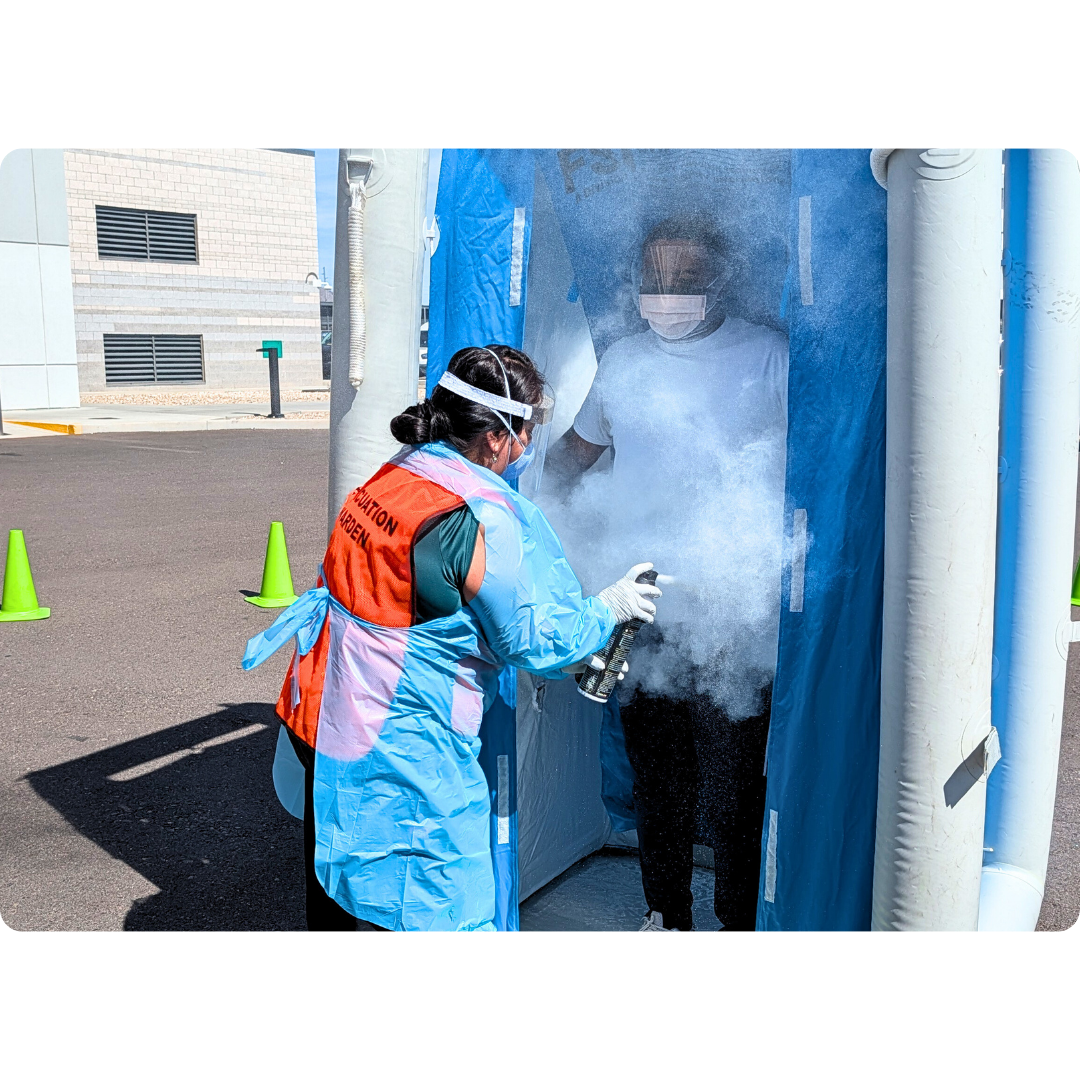
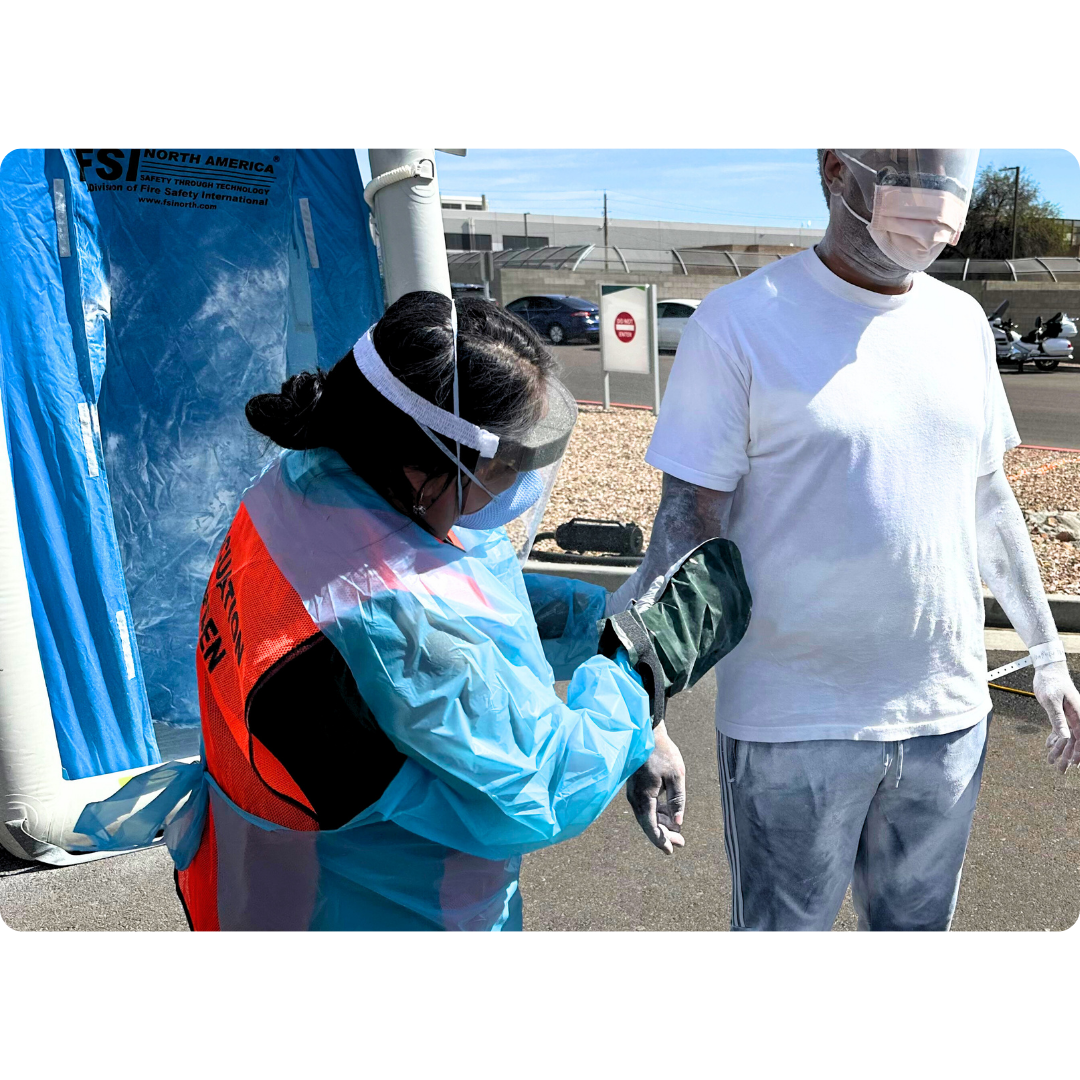
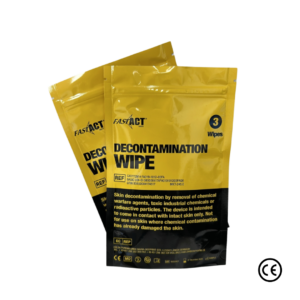
FAST-ACT® provides rapid dry decontamination that reduces chemical contaminants on a person, clothing, and personal effects during a chemical exposure incident or hazardous materials incident. It can be deployed immediately at emergency department intake & triage areas, before or alongside traditional water-based decontamination systems used in hospital decontamination.
It does not replace showers. It strengthens early exposure control when water systems are delayed, constrained, or impractical, supporting safer patient decontamination procedures and reducing staff exposure during early decontamination operations.

How FAST-ACT® is Deployed
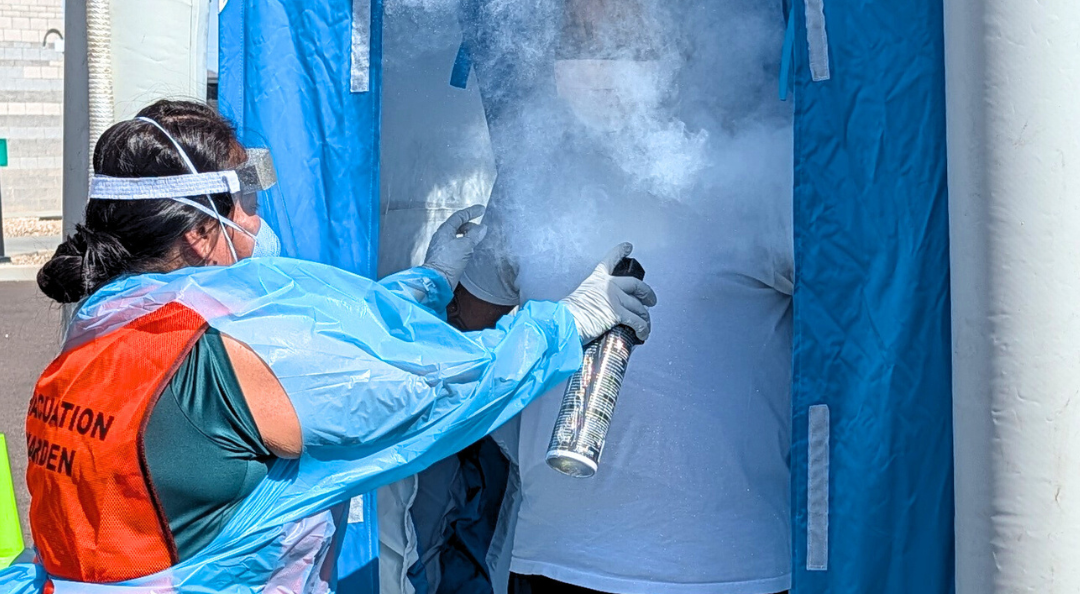

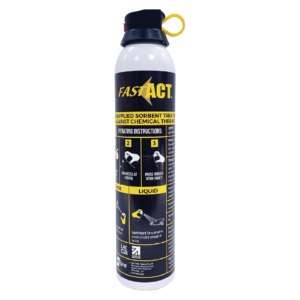
RAPID WHOLE-BODY DECONTAMINATION THROUGH PRESSURIZED DRY TREATMENT
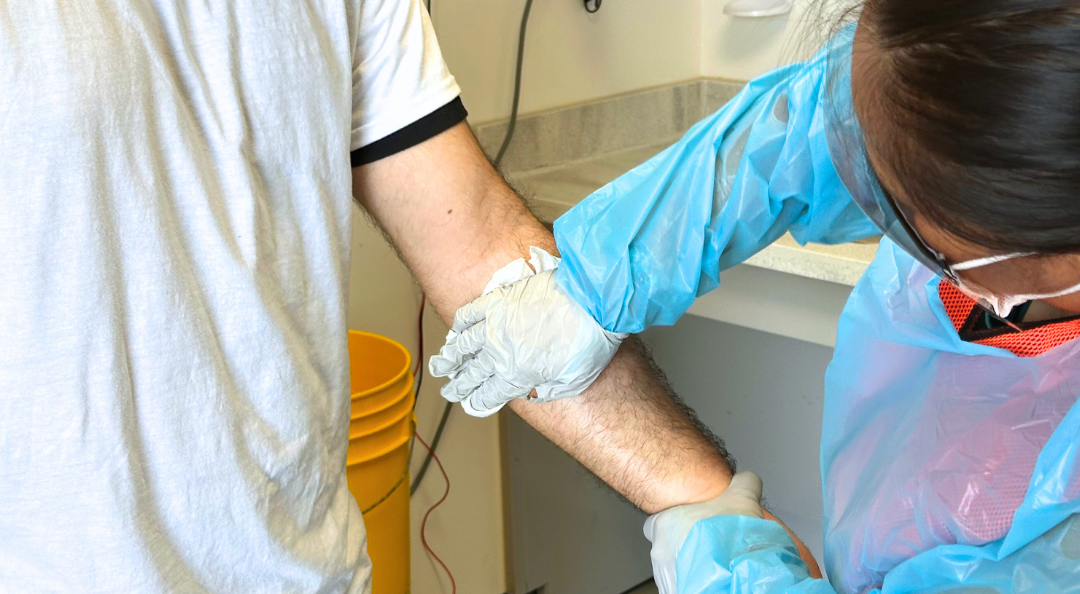

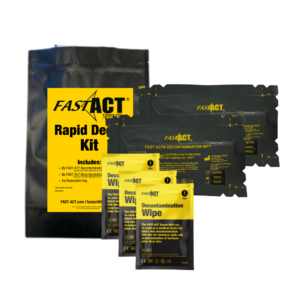
Targeted dry application for localized control on exposed areas & contact points
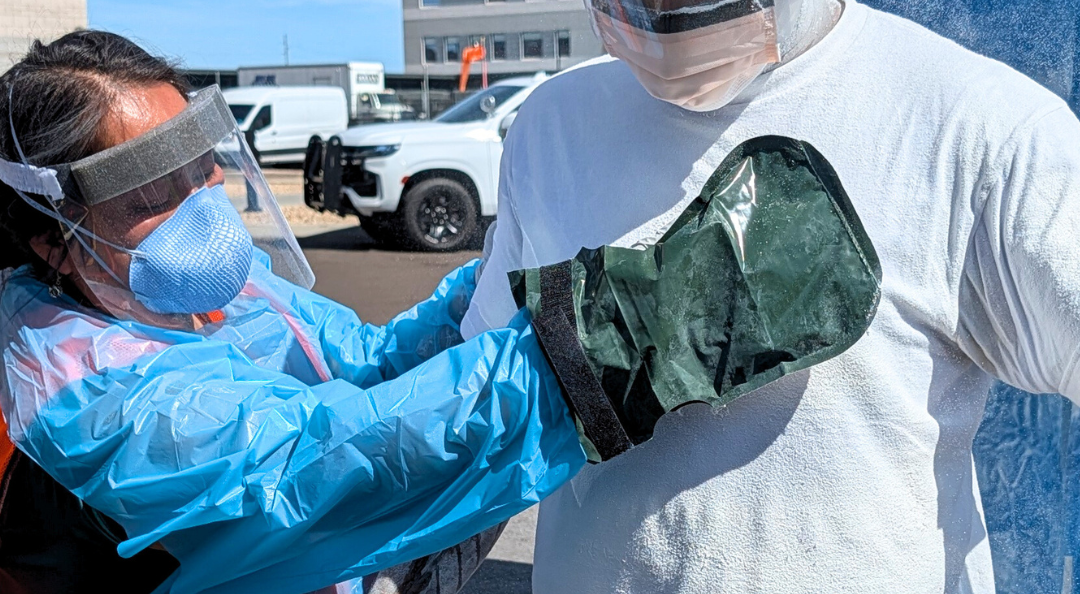

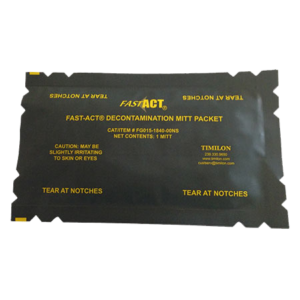
DRY RISK REDUCTION FOR PPE, EQUIPMENT, & SENSITIVE SURFACES
Through targeted operational forms, this allows hospitals to scale response based on patient volume, exposure type, and operational conditions without requiring fixed infrastructure.
How FAST-ACT® addresses early-phase response needs

Protects staff quickly
Reduces staff exposure to contaminants quickly

Maintains operations
Helps to maintain emergency department operations & avoid potential shutdown during a chemical exposure incident

Avoids internal spread
Avoids internal contamination spread from present source

Maximizes response time
Helps staff gain time while full decontamination operations are being activated
FAST-ACT®, in Action
Join our Partner Network
Hospitals & partners trust FAST-ACT® to align with current operations, reduce friction, support staff, and speed up risk response times within critical early windows.
Through our Partner Network, we work with reps & resellers like you to expand your hospital preparedness portfolio, sell, and scale among your Customers, with training, field support, sales tools, and growth opportunities available.
What’s in it for you:

Represent cutting-edge technology

Tested and validated product

Versatile market and applications

Global recognition

Training and support

Growth opportunities

Trusted brand