

CBRN Threat Preparedness Amid Rising Global Tensions
Recent military exchanges involving Iran, Israel, and the United States — including missile strikes and retaliatory actions — have increased instability across parts of the Middle East. Public reporting from NBC News and the BBC describes expanding cross-border activity and heightened military alert levels. As tensions rise, defense sectors reinforce preparedness across the full Chemical – Biological – Radiological – Nuclear (CBRN) spectrum to ensure readiness against both conventional and unconventional threats.
For defense sectors, readiness planning must account not only for conventional force engagement, but also for potential chemical exposure risks — whether from intentional use, damaged industrial infrastructure, radiological release, or secondary hazardous material events.
In environments where military tensions rise, preparedness planning remains a constant. For defense, military, civil protection organizations, and emergency responders, CBRN readiness is part of standard operational responsibility in complex and evolving security landscapes.
Why Escalation Increases CBRN Risk Awareness
Periods of instability elevate awareness across the full CBRNE spectrum. While media coverage often focuses on conventional military activity, defense planners evaluate broader exposure pathways involving chemical warfare agents, toxic industrial materials, radiological materials, and potential biological events.
CBRN risks may emerge through:
- Intentional deployment of nerve agents or other chemical warfare agents
- Damage to chemical storage sites or facilities near nuclear reactors
- Infrastructure disruption causing environmental contamination
- Accidental radiological release following strikes on industrial assets
- Secondary contamination during recovery or stabilization missions
It is important to recognize that CBRN risk does not rely solely on deliberate Chemical/Biological Terrorism Incidents. Industrial facilities and dual-use materials present in conflict zones can create serious exposure hazards if damaged. In such environments, threat detection, CBRN monitor teams, and rapid decontamination procedures become essential components of operational continuity. For defense organizations, CBRN threat preparedness requires planning for both deliberate and incidental exposure scenarios.
Chemical Threats Within the CBRN Defense Framework
Within the broader CBRN defense landscape, chemical threats demand particular attention due to their potential for rapid onset and vapor hazard exposure. Unlike some biological events that may present delayed symptoms, exposure to certain chemical warfare agents can produce immediate operational consequences.
Chemical hazards can impact:
- Force readiness and mission continuity
- Personal Protective Equipment integrity
- Vehicles, aircraft, and operational infrastructure
- Environmental stability within contested zones
Effective CBRN defense planning incorporates layered mitigation strategies. These typically include:
- Personal Protective Equipment readiness and disposal protocols
- Threat Detection systems and monitoring equipment
- Rapid-response decontamination procedures
- Structured CBRN defense training
- Readiness reporting and compliance with established CBRNE policies
CBRN Risk Mitigation and Security Governance Units within defense structures often oversee policy awareness, training levels, and readiness verification to ensure operational standards are maintained. Preparedness must be deployable under operational conditions — not limited to fixed installations or controlled environments.
The Role of Training and Simulation in CBRN Preparedness
CBRN threat preparedness is not solely equipment driven. It depends heavily on training programs and practical rehearsal.
Defense sectors frequently evaluate training gaps through simulation exercise and simulation-based training environments. These exercises help assess:
- Proper execution of decontamination procedures
- RED ZONE, YELLOW ZONE, and GREEN ZONE control integrity
- Coordination between emergency medical services and military units
- First responders’ integration into disaster management protocols
Training levels must align with operational demands. Without regular CBRN defense training, policy awareness may exist on paper but fail under real-world pressure. Structured simulation-based training strengthens response speed, reduces hesitation, and reinforces discipline in high-risk environments.
Scalable Chemical Mitigation in Dynamic Environments
Large-scale decontamination systems remain foundational in CBRN defense. However, early-stage mitigation tools are equally critical, particularly when infrastructure is compromised or mobility is required.
Organizations operating in unstable environments must be capable of:
- Containing hazardous vapors rapidly
- Reducing contamination spread across equipment and environmental surfaces
- Supporting personnel protection before full decontamination lines are established
- Preserving force readiness during exposure assessment
Scalable chemical mitigation tools function as a bridge between initial exposure and comprehensive decontamination operations. In conflict or disaster management environments, rapid intervention capability strengthens resilience and reduces operational disruption.
FAST-ACT’s Role in Chemical Risk Mitigation
FAST-ACT specializes in chemical neutralization technologies designed to support military, defense, civil protection sectors, and industrial response environments.
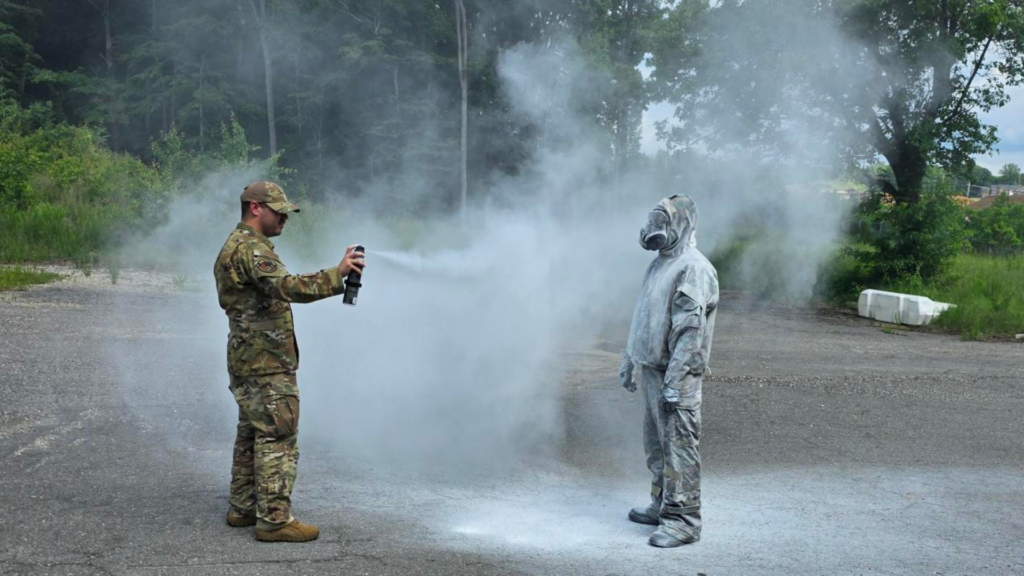
The FAST-ACT Pressurized Cylinder provides rapid adsorption and neutralization of hazardous chemical vapors and liquids. Its controlled discharge and portability support deployment in dynamic environments where immediate mitigation is required.
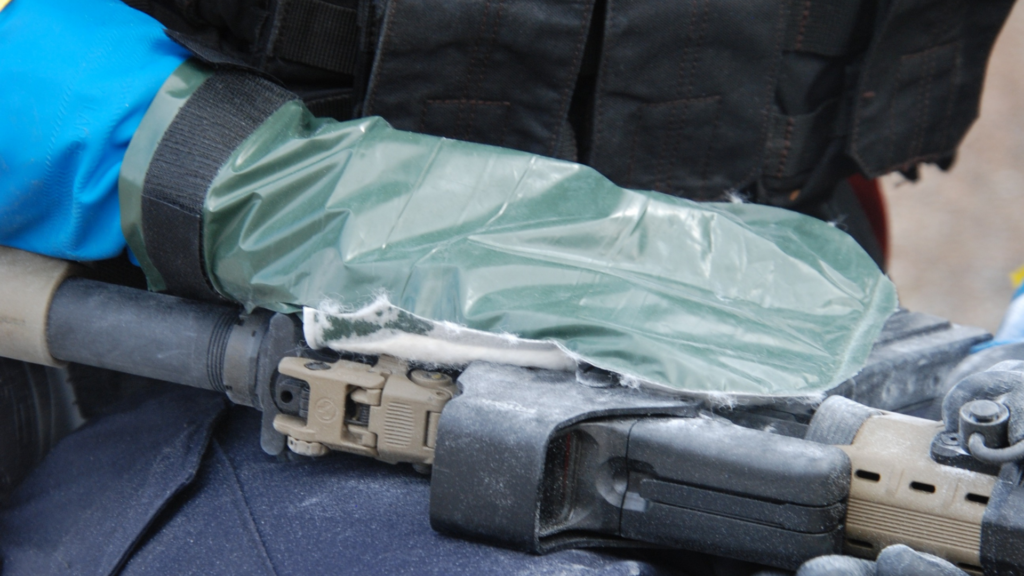
FAST-ACT Decontamination Mitts enable targeted neutralization on skin and surfaces, assisting personnel and equipment protection within operational zones. *CE classified as a class I medical device for use on skin and surfaces in the EU. FAST-ACT Decontamination Wipes support removal of trace contaminants, including hazardous chemicals and radiological materials, helping reduce secondary contamination. *CE classified as a class I medical device for use on skin and surfaces in the EU.
In addition to individual response tools, FAST-ACT offers scalable dry decontamination kits that integrate these applications into ready-to-deploy configurations. These kits support structured CBRN response planning and can be incorporated into broader CBRN defense training and operational readiness frameworks.
These solutions complement broader medical countermeasures and CBRN defense systems. They are designed to support early-stage chemical risk mitigation, enhancing layered preparedness rather than replacing established response frameworks.
Maintaining Preparedness in a Developing Situation
The situation involving Iran, Israel, the United States, and regional actors remains fluid and evolving. As information continues to emerge, defense organizations must focus on maintaining a disciplined CBRN threat preparedness plan.
CBRN readiness strengthens emergency responders’ operational confidence and reinforces structured disaster management capabilities across sectors — including military units, first responders, and healthcare professionals operating within broader response frameworks.
Preparedness in the CBRN domain is not reactive. It reflects ongoing professional responsibility in uncertain environments. This remains a developing situation, and as conditions evolve, disciplined CBRN preparedness ensures organizations remain positioned to respond to potential risks.
About Timilon Corporation:
Timilon Corporation is the manufacturer of FAST-ACT®, a proprietary formulation of non-toxic high-performance specialty materials effective at neutralizing a wide range of toxic chemicals with the added capability to destroy chemical warfare agents. The FAST-ACT technology is utilized by leading defense agencies, chemical industrial companies, first responders and HAZMAT teams to quickly and safely eliminate chemical hazards. For more information, reach out to Leticia Menzzano, Marketing Manager, [email protected].
FAQs
What is CBRN threat preparedness and why is it important during international conflicts?


CBRN threat preparedness refers to the planning, training, and operational measures used to protect personnel and infrastructure from chemical, biological, radiological, and nuclear hazards. During periods of regional conflict, the risk environment expands beyond conventional threats. Military forces, civil protection organizations, and emergency responders must be prepared for potential exposure to chemical warfare agents, toxic industrial chemicals, radiological materials, or other hazardous substances that may be released intentionally or through damaged infrastructure.
How do defense sectors prepare for chemical threats in CBRN environments?
Defense organizations strengthen CBRN preparedness through layered mitigation strategies that include personal protective equipment, threat detection systems, decontamination procedures, and structured training programs. Scenario-based exercises and simulation training help personnel practice operating in contaminated environments and reinforce protocols for managing RED, YELLOW, and GREEN operational zones. Maintaining this readiness ensures personnel can respond quickly if chemical exposure risks emerge.
How does FAST-ACT support chemical risk mitigation in CBRN response scenarios?
FAST-ACT technologies are designed to support early-stage chemical risk mitigation in operational environments. Products such as FAST-ACT Pressurized Cylinders, FAST-ACT Decontamination Mitts, and FAST-ACT Decontamination Wipes help neutralize hazardous chemical vapors and liquids, remove contaminants from surfaces, and reduce secondary exposure risks. These solutions complement broader CBRN defense systems by providing rapid chemical mitigation capabilities for defense sectors, first responders, and emergency response teams.
Are FAST-ACT solutions intended to replace traditional CBRN response systems?
No. FAST-ACT products are designed to complement established CBRN defense and decontamination frameworks. They provide rapid chemical mitigation options that can be integrated into existing preparedness plans, training programs, and operational protocols. By adding scalable dry decontamination tools to traditional response systems, organizations can strengthen their overall readiness and improve their ability to manage chemical threats in dynamic environments.