

Common Hospital Decontamination Mistakes (And How to Avoid Them During Chemical Incidents)
Hospitals prepare extensively for trauma, infectious disease, and natural disasters. Yet when a hazardous materials incident or chemical exposure event occurs, even well-equipped healthcare facilities can make preventable errors. These common hospital decontamination mistakes often happen in the first critical minutes, when patient safety, staff protection, and operational continuity are most vulnerable.
Decontamination in a hospital setting is not simply about equipment. It involves infection control principles, safety protocols, regulatory compliance, staff training, and risk assessment under pressure. During a mass casualty incident or chemical exposure scenario, small oversights can escalate into larger system failures.
This blog examines the most common hospital decontamination mistakes, why they occur, and how healthcare facilities can avoid them through structured planning and best practices.
Mistake #1: Waiting Too Long to Initiate Decontamination
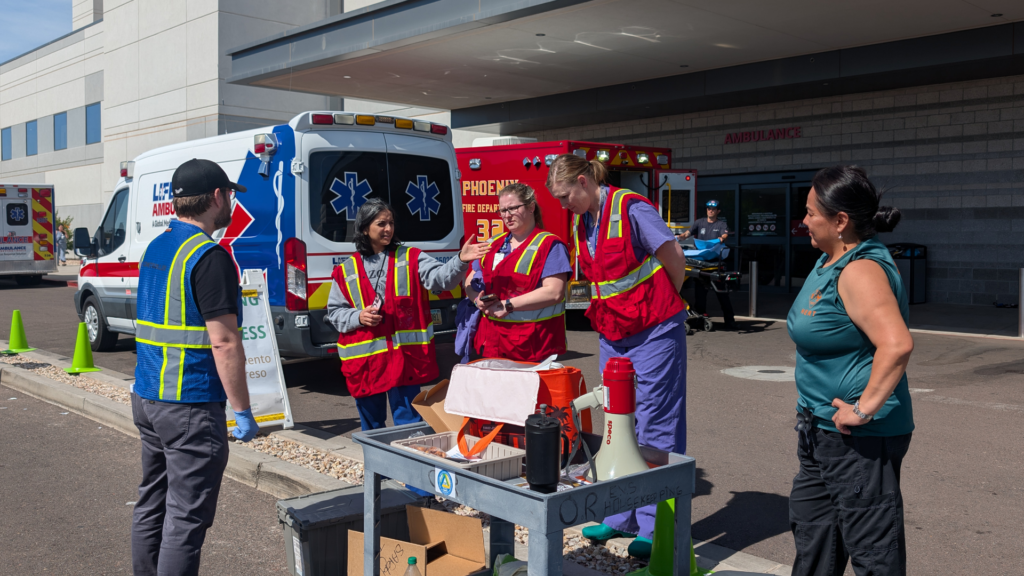
One of the most common hospital decontamination mistakes is hesitation. Hospitals often delay action while waiting for confirmed agent identification or formal scene management updates from emergency medical services. However, during a chemical exposure incident, contaminated patients may self-present before field hazmat decontamination is complete.
Early delay increases the risk of contaminants spread into patient care areas, environmental surfaces, and adjacent treatment zones. The longer hazardous chemicals remain on clothing or skin, the greater the risk of secondary exposure to hospital staff.
Frameworks such as PRISM and the 15 ’til 50 concept reinforce that early action — even if phased — is preferable to inaction. Hospitals should prioritize early risk reduction measures while full decontamination systems are mobilized.
Mistake #2: Over-Reliance on Water-Based Decontamination
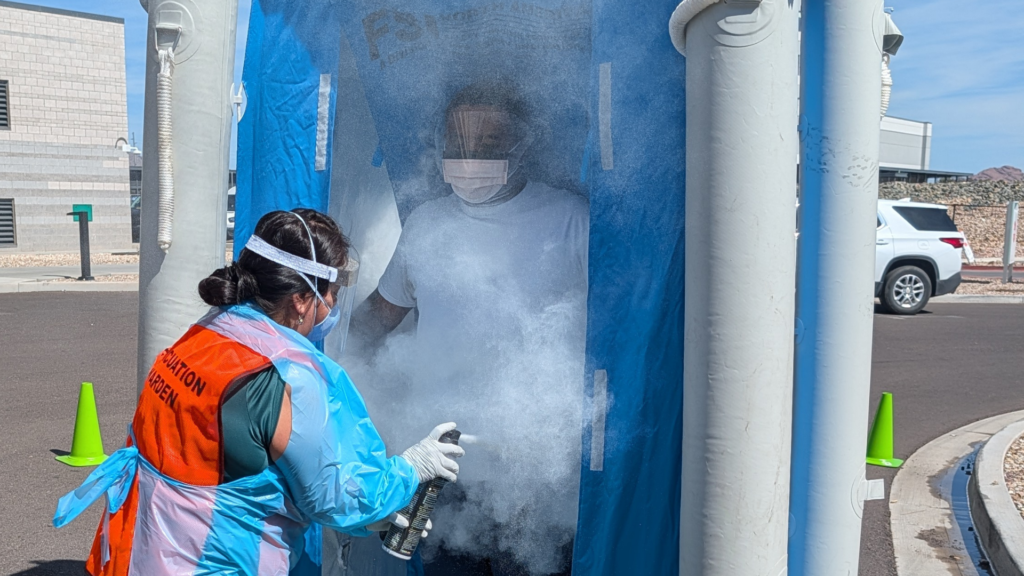
Water-based decontamination is an essential part of hospital response, but over-reliance on it can create operational bottlenecks. Setting up full wet decontamination corridors requires time, staffing, personal protective equipment, and environmental controls.
If hospitals wait to begin any decontamination procedures until water systems are active, they risk contaminants spread within the emergency department.
International guidance, including the World Health Organization (WHO), recognizes phased approaches to decontamination, including early dry decontamination where appropriate.
Dry decontamination does not replace full water-based decontamination when required in healthcare settings. However, incorporating scalable dry decontamination systems into hospitals standard operating procedure helps bridge the gap between patient arrival and full operational capability.
Mistake #3: Inadequate Zoning and Environmental Control
Another common hospital decontamination mistake is poor zoning. Without clear separation between contaminated and clean areas, hazardous chemicals can spread rapidly across environmental surfaces and patient care items.
Improper zoning may lead to:
- Cross-contamination of medical equipment
- Exposure of non-involved patients
- Contamination of reusable medical devices
- Improper disposal in standard waste streams instead of designated biohazard waste bins
Effective hospital cleaning and infection prevention practices are critical during decontamination events. While chemical decontamination differs from infection control, both require disciplined environmental management and adherence to safety protocols.
Hospitals should incorporate decontamination zoning into regular training methods and performance shaping factors that influence staff behavior under stress.
Mistake #4: Insufficient Staff Training and PPE Familiarity
Personal protective equipment is only effective when staff are trained to use it properly. During chemical incidents, improper donning and doffing of PPE can lead to secondary exposure.
The Occupational Safety and Health Administration (OSHA) outlines requirements for PPE use in hazardous materials settings, emphasizing regulatory compliance and staff safety.
Hospitals often focus on disposable PPE stockpiles but overlook hands-on training. Staff must be familiar with:
- Disposable PPE versus reusable PPE
- Proper donning and doffing sequences
- Contaminated waste handling procedures
- Emergency department decontamination workflows
Training should extend beyond emergency department teams. Ambulatory surgery centers and other units within a healthcare facility may also be affected during a mass chemical exposure event.
Mistake #5: Treating Chemical Decontamination Like Infection Control
Chemical decontamination and infection control share overlapping principles, but they are not the same. Applying hospital infection prevention protocols alone is insufficient for managing chemical toxicity.
Unlike pathogens, hazardous chemicals can off gas, spread through vapor exposure, or bind to surfaces differently than biological contaminants. Hospital cleaning protocols designed for infectious agents may not address the behavior of toxic chemicals.
Healthcare facilities must differentiate between:
- Routine infection prevention procedures
- Hospital cleaning for biological contamination
- Chemical decontamination during hazardous materials incidents
Guidance from ASPR TRACIE underscores the need for specific decontamination guidance for hospitals during chemical events. Understanding this distinction is essential for patient safety and effective hospital-based decontamination.
Strengthening Hospital Decontamination Readiness
Avoiding common hospital decontamination mistakes requires more than equipment. It requires layered preparedness that includes risk assessment, training, and practical decontamination workflows.
Hospitals can improve readiness by:
- Integrating phased decontamination into Hospital Standard Operating Procedures
- Conducting scenario-based training methods
- Reviewing PPE protocols for both disposable and reusable systems
- Reinforcing zoning and contamination control practices
- Aligning decontamination procedures with regulatory compliance standards
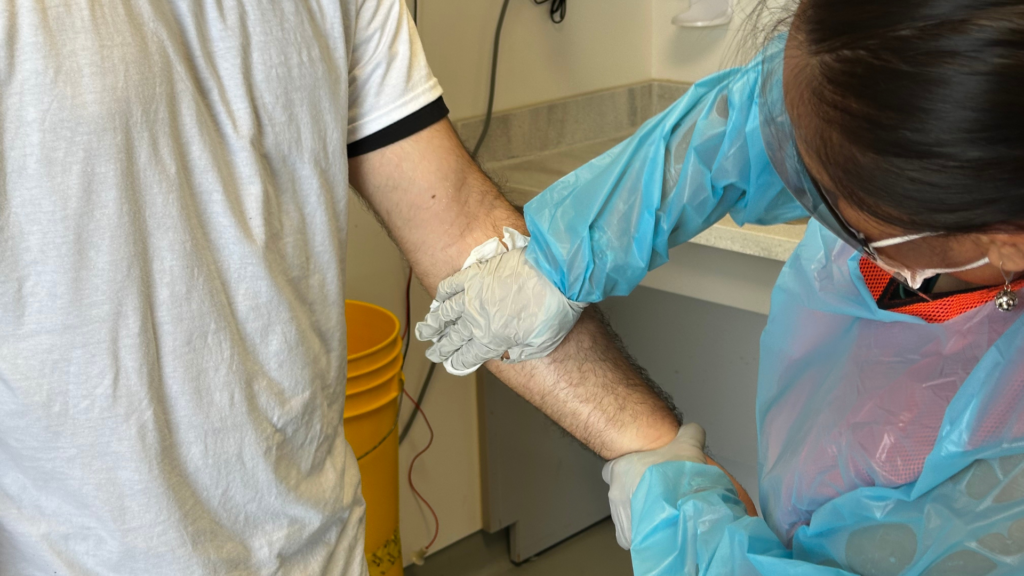
In early-stage chemical exposure scenarios, scalable dry decontamination can support rapid risk reduction. Tools such as the FAST-ACT 400g Pressurized Cylinder provide adsorption and neutralization of hazardous chemical vapors or liquids when time and infrastructure are limited. FAST-ACT Decontamination Mitts and FAST-ACT Decontamination Wipes support removal of contaminants from skin, surfaces , and sensitive equipment during early response.
Read more on integrating FAST-ACT into emergency preparedness plans
These solutions are not replacements for full decontamination capabilities. They are designed to complement structured hospital decontamination procedures, particularly during the early minutes of a hazardous materials incident.
Conclusion: Preventable Mistakes, Practical Solutions
Common hospital decontamination mistakes often stem from hesitation, over-reliance on infrastructure, insufficient training, or misunderstanding of chemical risk. During a mass casualty or mass chemical exposure event, these errors can compromise patient safety and staff protection.
By planning for early action, reinforcing best practices, and integrating scalable decontamination strategies, healthcare facilities can strengthen their preparedness for chemical incidents. Effective hospital decontamination is not about perfection — it is about reducing risk quickly, protecting patient health, and maintaining operational control under pressure.
Reach out to our team for more information on how FAST-ACT optimizes preparedness for early-stage response or access more information below.
About Timilon Corporation:
Timilon Corporation is the manufacturer of FAST-ACT®, a proprietary formulation of non-toxic high-performance specialty materials effective at neutralizing a wide range of toxic chemicals with the added capability to destroy chemical warfare agents. The FAST-ACT technology is utilized by leading defense agencies, chemical industrial companies, first responders and HAZMAT teams to quickly and safely eliminate chemical hazards. For more information, reach out to Leticia Menzzano, Marketing Manager, lmenzzano@timilon.com.
FAQs
What are the most common hospital decontamination mistakes during chemical incidents?


Common hospital decontamination mistakes often include delaying decontamination procedures, relying solely on water-based systems, failing to establish clear contamination zones, and insufficient staff training on hazardous materials response. During chemical exposure incidents, these gaps can increase the risk of secondary contamination to hospital staff, patients, and the broader healthcare facility.
Why is early decontamination important in hospital emergency response?
Early decontamination helps reduce the spread of hazardous chemicals and protects both patients and healthcare professionals. When contaminated patients arrive at an emergency department before field decontamination occurs, rapid action can prevent environmental contamination and limit exposure to other patients, staff, and medical equipment within the healthcare system.
What role does dry decontamination play in hospital response?
Dry decontamination can be used as an early intervention method when water-based decontamination systems are not immediately available. It helps remove or neutralize hazardous substances from skin, clothing, and surfaces while reducing the risk of chemical spread throughout the healthcare facility. Dry methods can support hospital response until full decontamination operations are established.