

Hospital Decontamination Procedures: Zones, Triage, and the Importance of Early Response
Hospital decontamination procedures are a critical component of emergency preparedness, particularly during hazardous materials incidents and mass chemical exposure events. These procedures are designed to protect healthcare professionals, patients, and facilities from the risks associated with chemical contamination.
However, real-world chemical incidents rarely unfold in a controlled or predictable way. Patients often self-present to the emergency department before formal decontamination systems are fully activated, creating immediate exposure risks. Contaminated individuals can arrive before incident details are known or response systems are in place, placing pressure on staff, workflows, and facility safety.
This blog will cover the purpose of hospital decontamination procedures, how decontamination zones and triage function within hospital workflows, and why early-stage response is essential for reducing exposure risk.
The Purpose of Hospital Decontamination Procedures
The primary goal of hospital decontamination procedures is to prevent the spread of hazardous materials within the healthcare environment. During chemical incidents, contamination can transfer quickly from patients to staff, equipment, and treatment areas if not properly controlled.
Guidance from the Department of Health and Human Services emphasizes that hospital decontamination protocols are designed to protect healthcare workers, reduce secondary contamination, and maintain continuity of care during emergency response. These procedures also support safe patient decontamination while ensuring that hospital operations can continue under high-pressure conditions.
What Are Hospital Decontamination Zones and How Do They Work?
Hospital decontamination procedures are typically structured around designated zones and controlled workflows that manage how contaminated patients are received and treated.
- Hot Zone (Contaminated Area): The initial point of contact where patients may still carry hazardous materials on their skin, clothing, or belongings.
- Warm Zone (Contamination Reduction Zone): The area where decontamination occurs, including clothing removal and water-based decontamination processes.
- Cold Zone (Clean Treatment Area): A controlled environment where patients are considered decontaminated and can safely receive medical care.
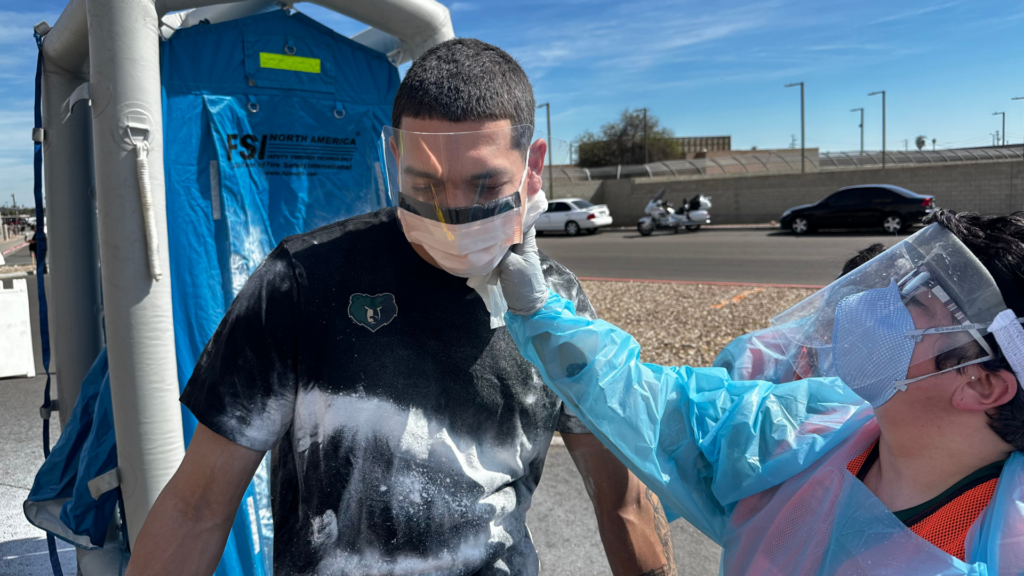
These zones are supported by triage processes that guide patient prioritization and movement through the system. As outlined by the Department of Homeland Security, maintaining separation between contaminated and clean areas is essential for effective scene management and hospital safety.
What is the Purpose of Triage in Hospital Decontamination?
Triage is a central component of hospital decontamination procedures, helping healthcare teams prioritize care during hazardous materials incidents and mass casualty events. In these scenarios, triage decisions must account for both medical urgency and contamination risk.
Unlike traditional emergency department triage, decontamination triage must consider whether a patient requires immediate life-saving care or must first undergo decontamination to prevent further exposure. This creates a complex decision-making process where patient care and contamination control must be balanced in real time.
The Gap in Hospital Decontamination Procedures: The First Minutes
While hospital decontamination zones, triage systems, and tools are designed to manage contamination effectively, they are not always immediately available when patients arrive.
Hospitals often face an early response window where patients arrive before decontamination systems are fully established, before chemical agents are identified, and before full staffing and workflows are activated. During this time, decisions must be made quickly with limited information and limited resources.
Early actions taken in these first minutes directly impact staff exposure, secondary contamination, and overall facility safety. This early phase, often referred to as the first receiver stage, represents one of the highest-risk periods in hospital decontamination procedures. Patients may move through intake areas, triage points, and corridors while still contaminated, increasing the potential for cross-contamination across the facility.
How Do PRISM and 15 ‘til 50 Support Early Hospital Decontamination?
Preparedness frameworks such as PRISM and the “15 ‘til 50” model help address this early response gap by focusing on how hospitals manage risk before full decontamination infrastructure is in place.
These frameworks emphasize that early actions should be rapid, simple, and scalable, allowing hospitals to reduce exposure risk while transitioning into more structured decontamination workflows. Rather than waiting for full technical decontamination systems to be activated, hospitals are encouraged to take immediate steps to stabilize conditions and protect staff and patients. This approach reinforces the importance of integrating early-stage response capabilities into overall hospital decontamination procedures.
Where FAST-ACT® Fits into Hospital Decontamination Procedures
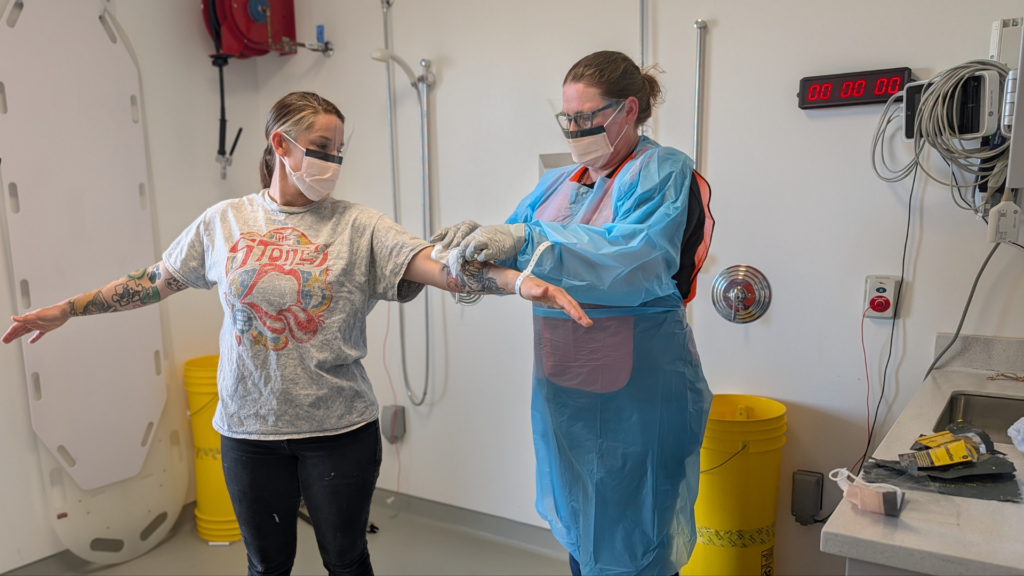
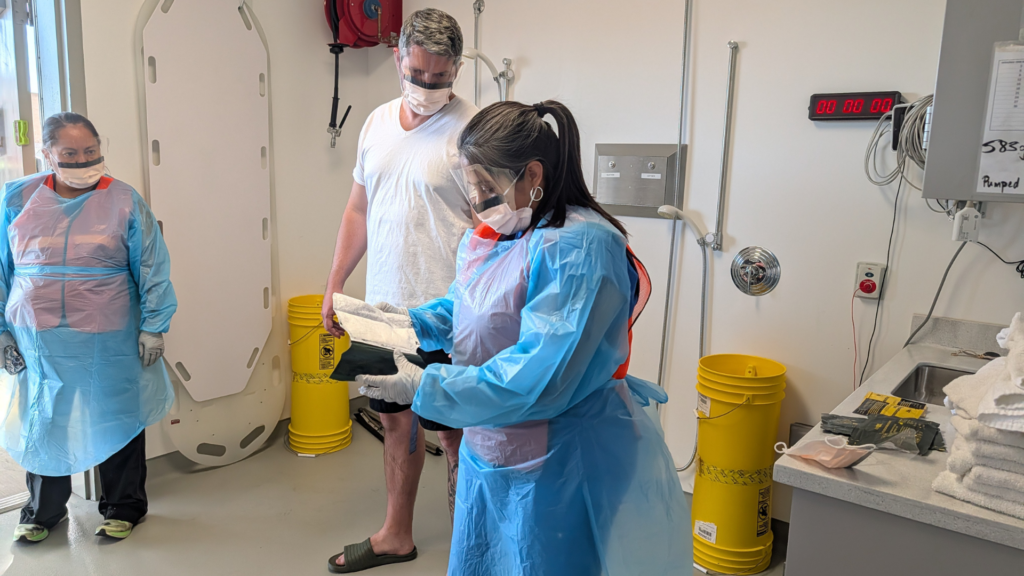
FAST-ACT® is designed to support hospital decontamination procedures during the earliest phase of a chemical incident, before full decontamination systems are activated. FAST-ACT® enables almost immediate risk reduction by addressing both chemical vapor and surface contamination without requiring water or a complex setup.
This makes it particularly valuable in high-risk areas such as emergency department intake, triage zones, ambulance bays, and receiving corridors—where exposure risk is highest during the first minutes of an incident.
FAST-ACT® can be deployed in multiple ways depending on the situation:
- FAST-ACT® 400g Pressurized Cylinder: Rapid, whole-body application for patient decontamination
- FAST-ACT® Decontamination Mitts and FAST-ACT® Decontamination Wipes: Support removal of contaminants from skin, surfaces, and sensitive equipment during early response. *CE classified as a class I medical device for use on skin and surfaces in the EU.
Unlike traditional water-based decontamination systems, which may take 10–20 minutes to fully establish, FAST-ACT® can be deployed in seconds, helping to reduce exposure risk during the most critical phase of response.
It is not a replacement for technical decontamination, but rather a complementary solution that supports early intervention and helps bridge the gap between initial exposure and full decontamination workflows.
Strengthening Hospital Decontamination Procedures Through Early Response
Hospital decontamination procedures are essential for managing hazardous materials incidents and protecting both patients and healthcare professionals. Decontamination zones, triage processes, and specialized tools provide the structure needed to control contamination and maintain safe operations.
However, timing plays a critical role in their effectiveness. The highest risk often occurs before full decontamination systems are in place, when patients first arrive, and immediate decisions must be made.
By incorporating early-stage response capabilities alongside established decontamination protocols, hospitals can strengthen their preparedness and reduce exposure risk during the most critical moments of a chemical incident.
If your facility is looking to enhance hospital decontamination procedures and improve early-stage response capabilities, FAST-ACT® can support your preparedness strategy with solutions designed for real-world healthcare environments.
Request a demo or speak with our team to see how FAST-ACT can strengthen your hospital’s decontamination procedures and early response capabilities.
About Timilon Corporation:
Timilon Corporation is the manufacturer of FAST-ACT®, a proprietary formulation of non-toxic high-performance specialty materials effective at neutralizing a wide range of toxic chemicals with the added capability to destroy chemical warfare agents. The FAST-ACT technology is utilized by leading defense agencies, chemical industrial companies, first responders and HAZMAT teams to quickly and safely eliminate chemical hazards. For more information, reach out to Leticia Menzzano, Marketing Manager, lmenzzano@timilon.com.
FAQs
How does FAST-ACT® support hospital decontamination procedures?


FAST-ACT® supports hospital decontamination procedures by enabling immediate response to chemical exposure during the earliest phase of an incident. It helps reduce both vapor and surface contamination before full decontamination systems are in place, minimizing exposure risk to staff and patients.
Can FAST-ACT® be used for both liquid and vapor chemical hazards?
Yes. FAST-ACT® is designed to address both liquid and vapor hazards, making it effective in hospital environments where chemical incidents may involve spills, airborne exposure, or unknown substances.
Where can FAST-ACT® be used within hospital decontamination zones?
FAST-ACT® can be used across multiple areas within hospital decontamination procedures, including emergency department intake, triage zones, ambulance bays, and contamination reduction zones. It is particularly valuable in the early stages before full decontamination workflows are established.
How is FAST-ACT® different from traditional water-based decontamination?
FAST-ACT® is a dry decontamination solution that does not require water, setup, or specialized infrastructure. This allows for rapid deployment in minutes, compared to traditional water-based systems that can take significantly longer to establish.
Can FAST-ACT® be used alongside existing hospital decontamination systems?
Yes. FAST-ACT® is designed to complement, not replace, traditional decontamination procedures. It supports early-stage risk reduction and helps bridge the gap before patients transition into full water-based decontamination workflows.