

When Wildfires Cross the Border, Chemical Risk Follows: What First Responders and Facilities Need to Know
Every wildfire season brings familiar concerns: rapidly spreading flames, wildfire smoke, evacuations, and deteriorating air quality. This year has been no different. More than 3,500 wildfires have burned over 6 million acres across Canada, sending smoke hundreds of miles into the United States and affecting air quality for more than 120 million people throughout the Midwest and Northeast. Communities have experienced unhealthy Air Quality Index (AQI) levels, prompting air quality alerts, public health advisories, and recommendations from the National Weather Service and other agencies for respiratory protection. These events underscore how a wildfire can impact populations far beyond the fire’s immediate footprint.
But while headlines focus on smoke and visibility, another threat often goes unnoticed. As wildland fire activity grows in frequency and intensity, emergency response organizations are increasingly facing a different challenge: hazardous materials incidents triggered by the wildfire itself. Fires that reach industrial areas, utility infrastructure, warehouses, chemical storage sites, or Energy Storage Systems (ESS) can quickly evolve from a traditional fire response into a complex HAZMAT response involving hazardous chemicals, contaminated debris, vapor hazards, and environmental contamination.
For fire departments, HAZMAT teams, emergency managers, industrial facilities, critical infrastructure operators, and hospitals, understanding these secondary hazards is becoming just as important as managing the fire.
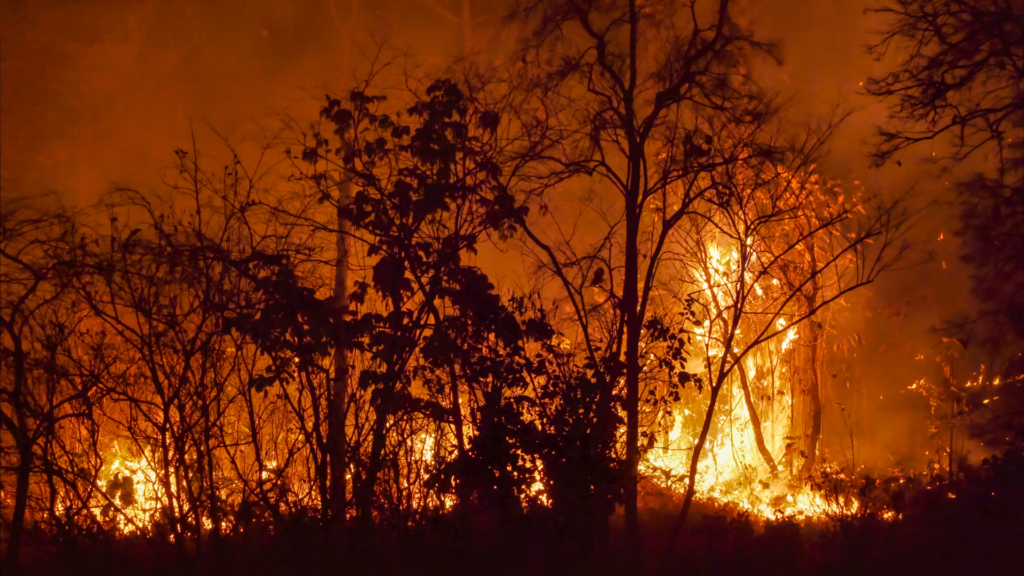
Can Wildfires Cause Chemical Emergencies?
When most people think about wildfire responses, they picture flames, smoke, and evacuation routes. However, the operational reality is far more complex. Wildfires can damage manufacturing facilities, chemical storage sites, transportation corridors, fuel infrastructure, electrical systems, and battery storage installations. Even when flames never reach a facility, wildfire-driven power outages, damaged utility infrastructure, and emergency shutdowns can disrupt critical safety systems designed to prevent hazardous chemical releases. This is where wildfire response begins to overlap with hazardous materials response.
Unlike traditional structural fires, these incidents may involve:
- Hazardous chemical releases
- Toxic airborne contaminants and vapor threats
- Hazardous waste and contaminated runoff
- Fire debris containing industrial materials
- Damaged electric vehicles and Energy Storage Systems
- Compromised industrial equipment
- Contaminated wildfire ash
- Worker exposure during cleanup and wildfire recovery
As cleanup operations begin, responders often encounter health and safety hazards well after the flames have been extinguished. Hazard assessments, appropriate personal protective equipment (PPE), gas monitoring, and effective decontamination procedures become essential components of protecting personnel throughout the response.
This growing overlap between wildfire operations and hazardous materials management highlights why emergency preparedness must extend beyond suppression tactics alone. Organizations that prepare for chemical emergencies before they occur are often better positioned to protect responders, reduce operational disruptions, and safely return facilities to service.
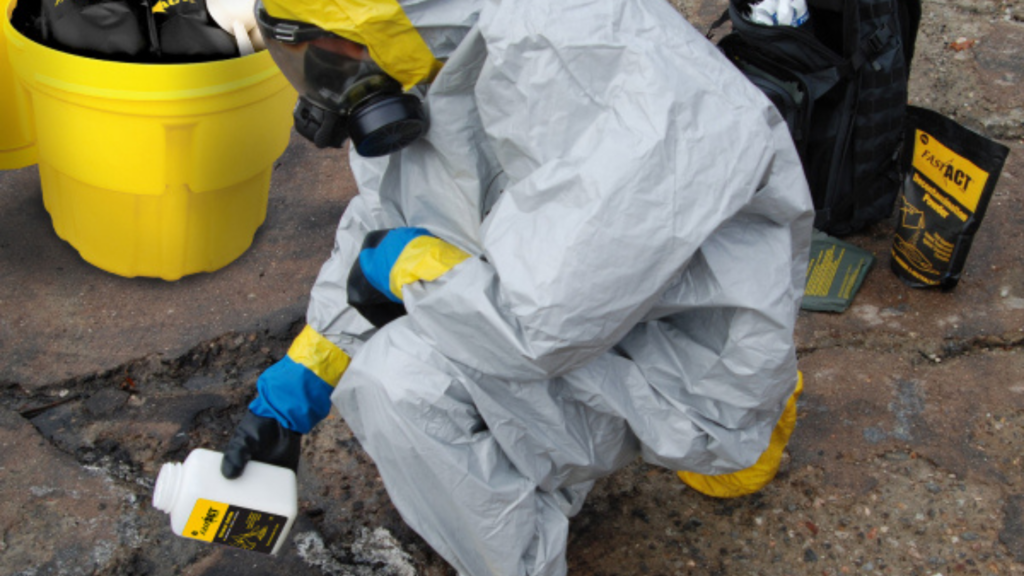
Are Industrial Facilities at Risk During Wildfires?
Many industrial operations across the United States store hazardous chemicals regulated under the Environmental Protection Agency’s Risk Management Program (RMP). These facilities include chemical manufacturers, petroleum storage operations, water treatment plants, agricultural processing facilities, and other sites where accidental chemical releases could pose significant risks to workers and surrounding communities.
A report from the U.S. Government Accountability Office (GAO) examined how climate-related hazards are increasing risks for industrial facilities, and the findings are significant.
The report identified approximately 10,420 EPA Risk Management Program facilities nationwide. Of those, 357 facilities are in areas with high or very high wildfire hazard potential, including 61 facilities in California located near the Los Angeles metropolitan area.
Even more concerning, the report found that more than 3,200 RMP facilities, roughly 31% of all facilities analyzed, are exposed to at least one significant climate hazard, including flooding, storm surge, sea level rise, or wildfire. However, wildfire risk extends beyond facilities located directly inside designated wildfire hazard zones. The GAO noted that facilities can experience hazardous conditions even when flames never reach the property. Wildfires frequently cause:
- Extended power outages
- Utility disruptions
- Equipment failures
- Emergency shutdowns
- Supply chain interruptions
- Limited access for emergency responders
These cascading effects can compromise refrigeration systems, ventilation equipment, monitoring systems, and other safety-critical infrastructure designed to prevent hazardous chemical incidents.
For emergency managers and facility operators, this represents an important shift in planning. A wildfire no longer needs to physically burn a chemical facility to create a hazardous materials emergency. Sometimes, the loss of critical infrastructure is enough.
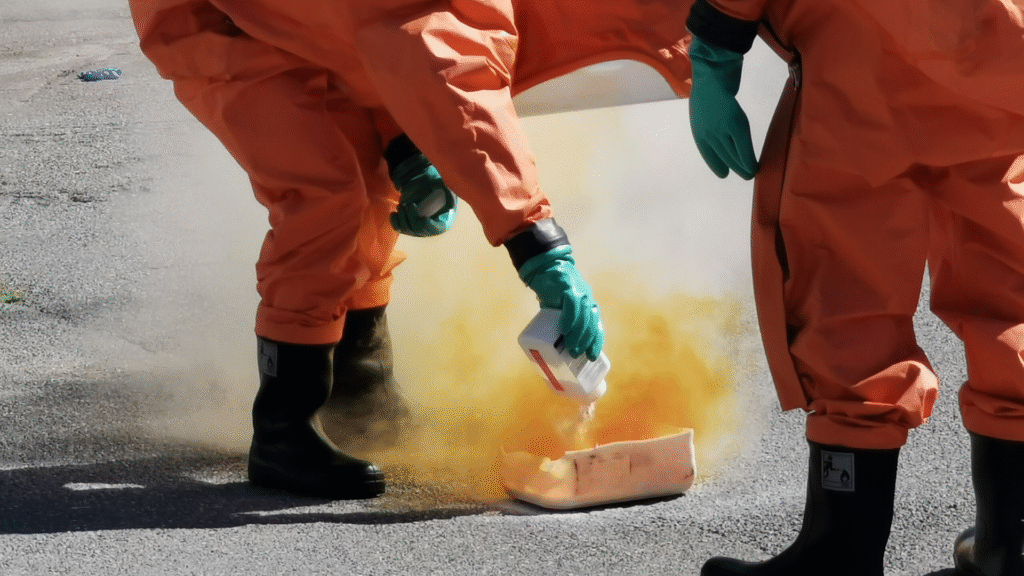
How Can a Natural Disaster Trigger a Hazardous Chemical Incident?
One of the clearest examples of how a natural disaster can escalate into a hazardous materials incident occurred during Hurricane Harvey in 2017. While the event was caused by catastrophic flooding rather than wildfire, it illustrates an important lesson for emergency planners: the greatest chemical risks often result from infrastructure failures, not the disaster itself.
At the Arkema chemical facility in Crosby, Texas, floodwaters disabled the site’s primary electrical supply and backup generators. Without power, refrigeration systems used to safely store organic peroxides failed. As temperatures increased, the chemicals began to decompose, ultimately igniting and releasing hazardous materials into the surrounding area. The incident led to a 1.5-mile evacuation zone and highlighted how quickly an operational disruption can evolve into a complex HAZMAT response.
Although Arkema was caused by flooding, the same failure mechanism applies to wildfires. Wildfires can damage power lines, interrupt utility service, block access roads, and force emergency shutdowns at industrial facilities. Even if flames never reach the site, these cascading failures can compromise refrigeration systems, ventilation equipment, monitoring devices, and other critical safeguards designed to prevent hazardous chemical releases.
For industrial facilities, critical infrastructure operators, fire departments, and emergency managers, wildfire preparedness should include planning for these secondary chemical emergencies, not just the fire itself.
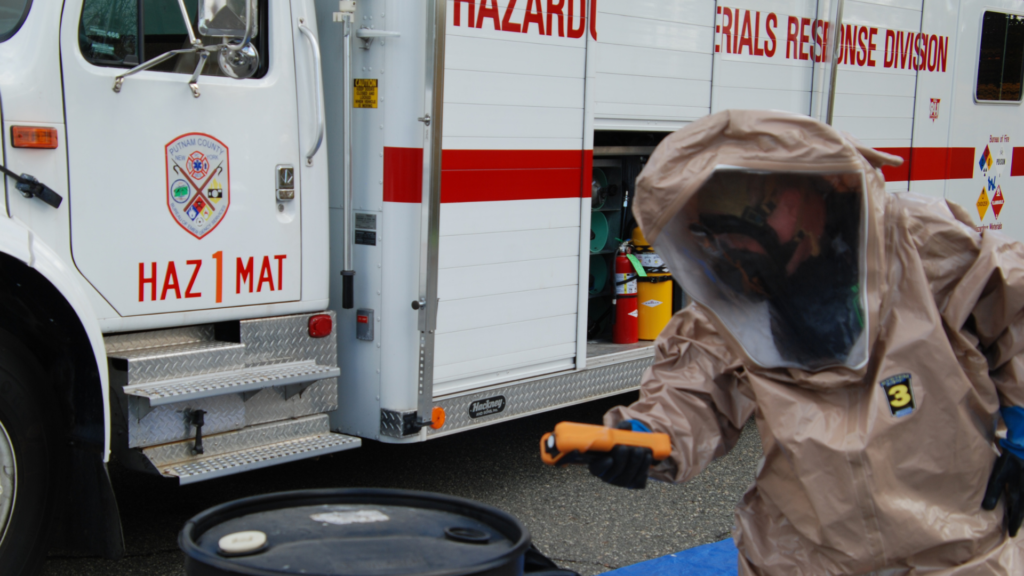
What’s Really In Wildfire Ash?
Once the flames are extinguished, another challenge begins. Not all wildfire ash is composed of burned vegetation. When wildfires spread into neighborhoods, commercial buildings, industrial sites, or transportation corridors, they consume a wide range of man-made materials that leave behind hazardous contaminants.
As structures, vehicles, plastics, treated lumber, fuels, electronics, and industrial chemicals burn, they can produce a complex mixture of substances that remain in fire debris, airborne particles, and ash throughout wildfire recovery operations.
Depending on what has burned, wildfire ash may contain a complex mixture of hazardous contaminants including:
- Polycyclic aromatic hydrocarbons (PAHs)
- Dioxins
- PFAS (“forever chemicals”)
- Benzene
- Petroleum byproducts
- Naphthalene
- Carbon monoxide
- Heavy metals
- Airborne asbestos
- Residues from lead-based paint
- Household hazardous waste and cleaning chemicals
These contaminants present ongoing health and safety hazards for response personnel long after active fire suppression has ended. In environments where water is scarce, runoff is a concern, or immediate action is needed, dry decontamination provides cleanup personnel with a portable, rapidly deployable option for reducing chemical exposure from contaminated ash, debris, and surfaces before more comprehensive decontamination procedures can be established.
During cleanup operations, responders may encounter:
- Burnt and unstable structures
- Damaged industrial equipment
- Hazardous waste
- Confined spaces
- Downed power lines
- Heavy equipment
- Damaged electric vehicles
- Compromised Energy Storage Systems (ESS)
These conditions require continued hazard assessments, proper personal protective equipment (PPE), gas monitoring, and established decontamination procedures to reduce secondary contamination and protect worker safety. Understanding whether dry or wet decontamination is right for the situation is also important when determining the most effective response for contaminated personnel, equipment, and operational environments.
Organizations working in industrial or emergency response environments may also benefit from understanding how chemical decontamination is changing environmental remediation in restoring contaminated equipment and operational areas following hazardous materials incidents.
Why Is Wildfire Recovery Considered a HAZMAT Operation?
The scale of today’s wildfire cleanup efforts demonstrates that recovery extends well beyond extinguishing the fire. Following the devastating Los Angeles wildfires, the U.S. Environmental Protection Agency launched what it described as the largest hazardous materials removal effort in agency history. The operation included:
- Reconnaissance of more than 6,000 properties
- Removal of approximately 80 electric vehicles and battery energy storage systems
- Deployment of more than 1,050 response personnel
- Coordination among federal, state, and local partners to identify and remove hazardous materials before rebuilding could begin safely
These response efforts focused on identifying hazardous chemicals, removing contaminated materials, securing damaged lithium-ion batteries, and protecting workers involved in debris removal and infrastructure restoration.
The cleanup effort also reinforced an important reality: wildfire recovery has become a multidisciplinary operation involving fire departments, HAZMAT teams, environmental agencies, utility restoration crews, public health officials, industrial facilities, and emergency managers working together under a coordinated Incident Command System.
As communities rebuild, protecting first responder health and safety becomes just as important as protecting the public. Likewise, organizations responsible for restoring industrial operations must prioritize industrial health and safety while managing contaminated equipment, damaged infrastructure, and hazardous materials generated during cleanup.
How Should Emergency Responders Prepare for Wildfire Chemical Hazards?
Wildfire response is evolving. Today’s incidents often involve more than suppressing flames, they require responders to identify hazardous chemicals, manage contaminated environments, and safely operate around industrial hazards that may not be immediately visible.
Preparing for these incidents means developing response plans that account for hazardous chemical releases, vapor threats, contaminated equipment, damaged battery systems, and secondary contamination that can persist long after the fire has been contained.
As wildfire seasons become more severe, organizations that integrate hazardous materials planning into their emergency response strategies will be better equipped to protect personnel, maintain operations, and recover safely.
Understanding these risks is only part of preparedness. Emergency response organizations also need practical tools that can help manage hazardous chemical releases, protect personnel, and support rapid decontamination when these incidents occur. The following FAST-ACT solutions are designed to help address those challenges across multiple stages of a HAZMAT response.
How FAST-ACT Supports Wildfire-Related HAZMAT Response
When hazardous materials are involved, every stage of the response matters, from initial scene assessment to decontamination and recovery. As wildfires increasingly intersect with industrial facilities, transportation networks, energy infrastructure, and battery storage systems, responders need solutions that can help address chemical hazards quickly, safely, and efficiently.
FAST-ACT’s dry decontamination technology was developed to help emergency personnel manage hazardous chemical incidents without relying solely on traditional wet decontamination methods. Because the technology is waterless, portable, and easy to deploy, it can support response efforts in environments where water may be limited, runoff is a concern, or immediate action is required.
To learn more about the technology behind FAST-ACT, explore the science behind FAST-ACT’s dry decontamination technology.
Vapor Suppression During Hazardous Chemical Incidents
Wildfires can damage storage tanks, industrial piping, transportation vehicles, and chemical processing equipment, creating the potential for hazardous vapors to be released into the surrounding environment. Quickly addressing these airborne hazards is an important part of protecting both responders and nearby communities.
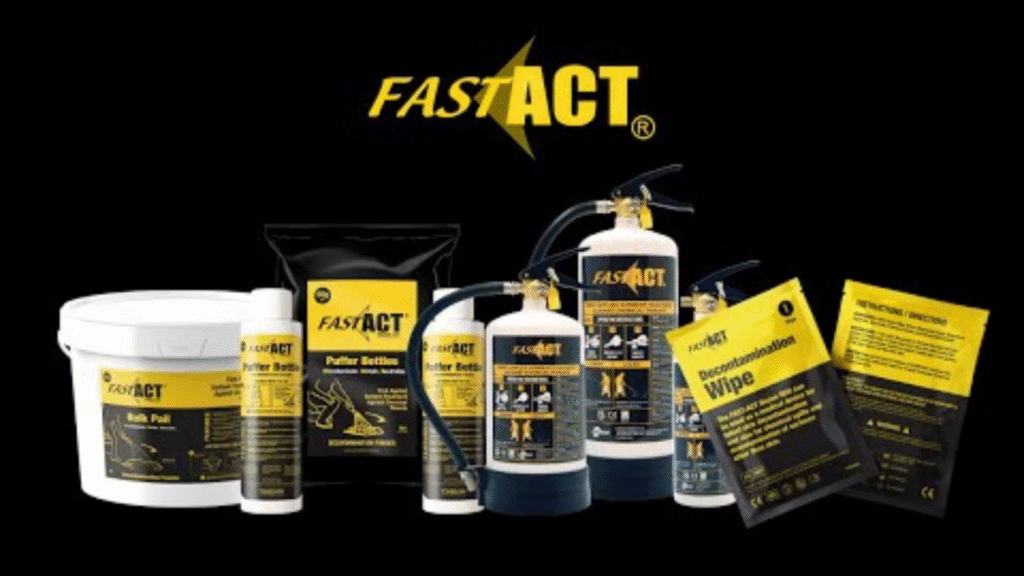
The FAST-ACT 400G Pressurized Cylinder is designed to rapidly disperse FAST-ACT powder, helping contain and neutralize hazardous chemical vapors at the source. Its lightweight design allows responders to deploy it quickly during chemical spills, transportation incidents, industrial emergencies, and other hazardous material events where rapid vapor suppression is critical.
Personnel Dry Decontamination
During wildfire recovery and hazardous materials operations, responders may encounter contaminated equipment, protective clothing, or skin after working around
The FAST-ACT Decontamination Mitt allows responders to begin removing and neutralizing hazardous chemicals directly from the skin without introducing any water. Its simple, portable design makes it well suited for field operations where immediate decontamination is needed. *CE classified as a class I medical device for use on skin and surfaces in the EU.
For additional cleanup, the FAST-ACT Decontamination Wipes provide another layer of dry decontamination. Together, these products can help support rapid personnel decontamination before more extensive medical evaluation or technical decontamination procedures are established. *CE classified as a class I medical device for use on skin and surfaces in the EU.
Responding to Lithium-Ion Battery Incidents
Wildfires increasingly involve electric vehicles (EVs) and Battery Energy Storage Systems (BESS), both of which can present unique hazards during response and recovery. Damaged lithium-ion batteries may continue releasing hazardous gases or experience delayed thermal events, creating additional risks for emergency personnel.
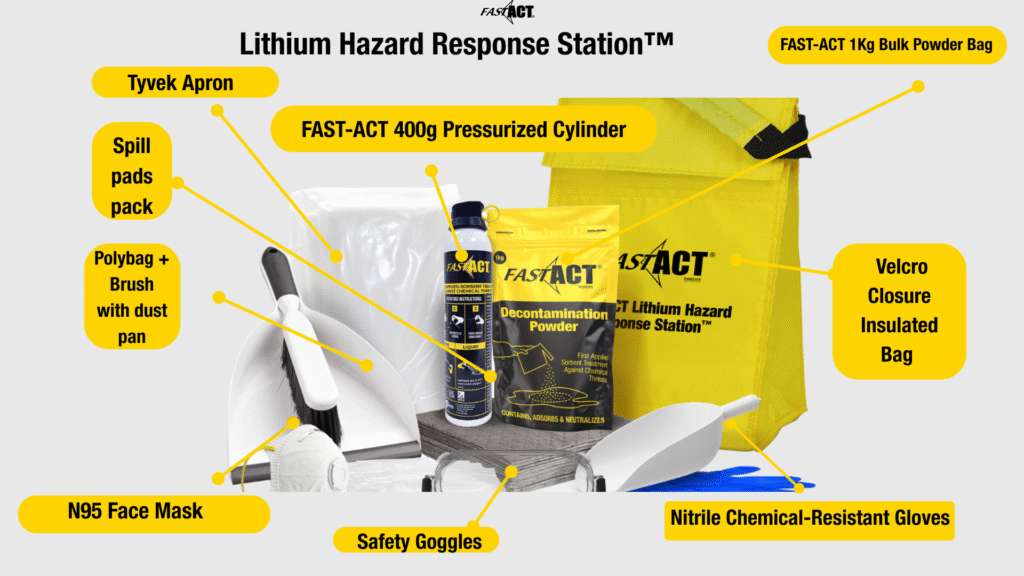
The FAST-ACT Lithium Hazard Response Station™ was developed to help responders quickly access the tools needed to address lithium-ion battery incidents. Designed for facilities, transportation hubs, and emergency response organizations, the station supports rapid deployment during battery-related emergencies while helping personnel respond safely to evolving hazards.
Preparedness Before an Emergency Happens
One of the most effective ways to improve hazardous materials response is ensuring responders have the necessary equipment available before an incident occurs.
The FAST-ACT Rapid Decontamination Kit (RDK) combines multiple FAST-ACT products into a single portable kit designed for rapid deployment during hazardous chemical incidents. Whether responding to industrial accidents, transportation emergencies, or wildfire-related chemical releases, having decontamination supplies immediately available can help reduce response time and improve operational readiness.
What Chemical Hazards Should Organizations Prepare for During Wildfire Season?
Wildfires will continue to challenge emergency responders, industrial facilities, and critical infrastructure across North America. However, as recent events have demonstrated, the greatest risks aren’t always the flames themselves.
Hazardous chemical releases, contaminated debris, damaged battery systems, and infrastructure failures can transform a wildfire into a complex HAZMAT incident that extends well beyond fire suppression.
By incorporating hazardous materials planning into emergency preparedness strategies and equipping personnel with effective decontamination and vapor suppression tools, organizations can strengthen their ability to protect responders, reduce secondary contamination, and safely recover from increasingly complex emergencies.
Whether responding to an industrial chemical release, contaminated wildfire debris, or damaged lithium-ion batteries, preparation before an incident occurs remains one of the most effective ways to improve operational resilience.
Wildfire response doesn’t end when the flames are out. Learn how FAST-ACT’s dry decontamination technology can help your organization prepare for hazardous chemical incidents before they happen.
About Timilon Corporation:
Timilon Corporation is the manufacturer of FAST-ACT®, a proprietary formulation of non-toxic high-performance specialty materials effective at neutralizing a wide range of toxic chemicals with the added capability to destroy chemical warfare agents. The FAST-ACT technology is utilized by leading defense agencies, chemical industrial companies, first responders and HAZMAT teams to quickly and safely eliminate chemical hazards. For more information, reach out to Leticia Menzzano, Marketing Manager, lmenzzano@timilon.com.
FAQs
How can wildfires create hazardous materials incidents?


Wildfires can damage industrial facilities, chemical storage areas, transportation infrastructure, and battery energy storage systems, potentially leading to hazardous chemical releases, contaminated debris, and vapor hazards that require specialized HAZMAT response.
Why is wildfire ash considered hazardous?
Wildfire ash may contain toxic substances such as heavy metals, asbestos, PAHs, PFAS, dioxins, petroleum byproducts, and other contaminants when homes, vehicles, industrial facilities, and commercial buildings burn.
What is dry decontamination?
Dry decontamination is the process of removing or neutralizing hazardous contaminants without relying on large volumes of water. It can be particularly useful during the initial stages of an emergency response or in environments where water runoff creates additional concerns.
How does FAST-ACT support hazardous materials response?
FAST-ACT provides dry decontamination and vapor suppression solutions designed to assist first responders, HAZMAT teams, hospitals, industrial facilities, and critical infrastructure operators during hazardous chemical incidents.