

National Environmental Awareness Month: Strengthening Environmental Chemical Hazard Response Across Industrial Operations
National Environmental Awareness Month underscores how environmental emergencies extend far beyond natural disasters. Many of the most damaging events come from hazardous chemical releases, chemical spills, and industrial hazardous materials incidents that threaten water, soil, air quality, and public health. To support this month’s focus on preparedness, this blog will cover how key industries—including mining, oil and gas, environmental remediation, and battery manufacturing—manage chemical hazards and strengthen their emergency response capabilities.
According to the U.S. Environmental Protection Agency (EPA), effective preparedness and response are essential to controlling environmental emergencies, reducing environmental damage, and protecting nearby communities. Industries such as mining, remediation, oil and gas, manufacturing, and battery production frequently work with chemicals that can create immediate or long-term environmental harm. This makes a strong environmental chemical hazard response strategy imperative for both safety and operational resilience.
Environmental Chemical Hazard Response in Mining and Resource Extraction
Mining operations routinely manage acids, solvents, caustic materials, and processing chemicals. If mismanaged, these substances can cause soil contamination, air hazards, or significant water contamination.
Effective planning requires evaluating chemical risks, using proper Personal Protective Equipment (PPE), and implementing best practices for spill response planning. OSHA emphasizes that proper training, PPE, and procedures are required for working safely around hazardous chemicals under its HAZWOPER guidelines.
Mining sites are often remote, making traditional water-based decontamination difficult. Dry-decon solutions such as FAST-ACT support safe and effective neutralization of liquid and vapor threats without generating runoff.
More information on chemical hazard response in mining and resource extraction
Environmental Chemical Hazard Response for Oil and Industrial Chemical Releases
Oil and chemical facilities experience various spill scenarios, including oil discharge incidents, solvent leaks, and accidental hazardous substance releases. When a spill meets federal reporting thresholds, the incident must be reported to the National Response Center (NRC), which serves as the designated point of contact for hazardous releases.
These incidents can include:
• Toxic vapor clouds
• Corrosive leaks
• Water-reactive chemical spills
• Chemical fires caused by reactive materials
FAST-ACT’s dry neutralizers help responders quickly manage these threats without introducing water, which is critical when chemicals may react dangerously with moisture.
More information on chemical spill response in oil and industrial settings
Environmental Chemical Hazard Response in Environmental Remediation
Remediation teams frequently encounter unknown substances, legacy chemical residues, and unstable materials. These operations can become hazardous substance emergencies requiring careful hazard assessment, proper PPE, and effective adsorption or neutralization tools.
The American Chemical Society recommends using appropriate absorbent materials and neutralizers designed for the specific class of chemical being handled—especially when working with corrosives, solvents, or other hazardous liquids.
FAST-ACT dry decontamination materials align with this guidance, providing broad-spectrum mitigation capabilities for acids, phosphorous compounds, caustics, halogenated materials, organic liquids, and other chemical agents.
Learn more on FAST-ACT and Environmental Remediation
Environmental Chemical Hazard Response for Lithium-Ion Battery Incidents
Lithium-ion battery failures—whether caused by puncture, thermal runaway, or mechanical damage—can create hazardous vapors, corrosive electrolyte spills, and intense heat. These events are increasingly recognized as emerging industrial hazards and require rapid control of airborne and liquid chemical threats.
Chemical emergency preparedness regulations emphasize hazard recognition, safe materials handling, and proactive consequence management to limit public health impacts.
FAST-ACT’s Lithium Hazard Response Station™ supports these requirements by providing a ready-to-deploy, water-free solution for managing vapor and liquid hazards associated with lithium-ion battery events.
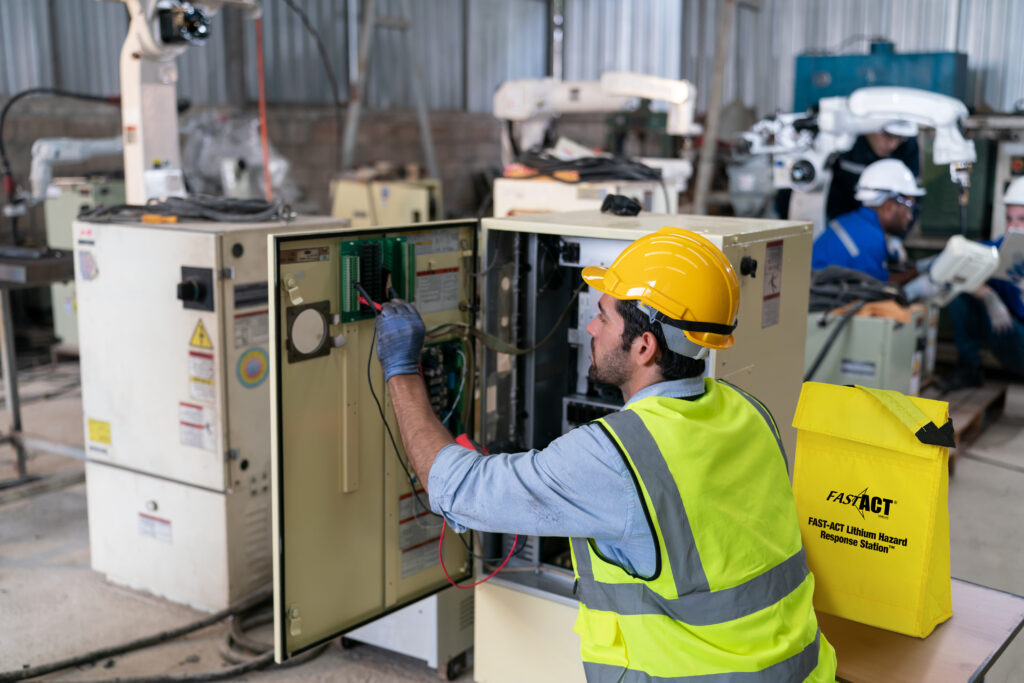
Read our most recent blog on Lithium-Ion Battery Chemical Hazards
How FAST-ACT Supports Environmental Chemical Hazard Response
FAST-ACT provides broad-spectrum, immediate-use tools that support safer responses to chemical hazards, oil and chemical spills, and other industrial emergencies:
- FAST-ACT 400g Pressurized Cylinder
Supports vapor and liquid mitigation for industrial and field response. - FAST-ACT Dry Decontamination Powder (1kg Bag)
Ideal for laboratories, remediation projects, hazmat teams, and small-scale incidents involving unknown or hazardous substances. - FAST-ACT Bulk Pail (5kg)
Designed for large-scale neutralization of acids, toxic industrial chemicals, phosphorous compounds, and caustic gases. - FAST-ACT Lithium Hazard Response Station™
Purpose-built for lithium-ion battery vapor and electrolyte spills, enabling safer and more efficient response.
Neutralizing hazardous chemicals at the point of contact significantly reduces the complexity of cleanup operations. When a spill or vapor release is neutralized rather than simply contained, responders face fewer risks, the affected area can be cleared faster, and disposal typically becomes less costly. Neutralization also minimizes the spread of contamination, reduces the need for extensive water-based washdowns, and helps industrial teams return to normal operations more quickly. For organizations managing chemical hazards, fast and effective neutralization is one of the most reliable ways to improve safety and reduce overall incident impact.
These solutions support emergency personnel by reducing escalation, limiting environmental impact, and helping organizations meet their preparedness responsibilities.
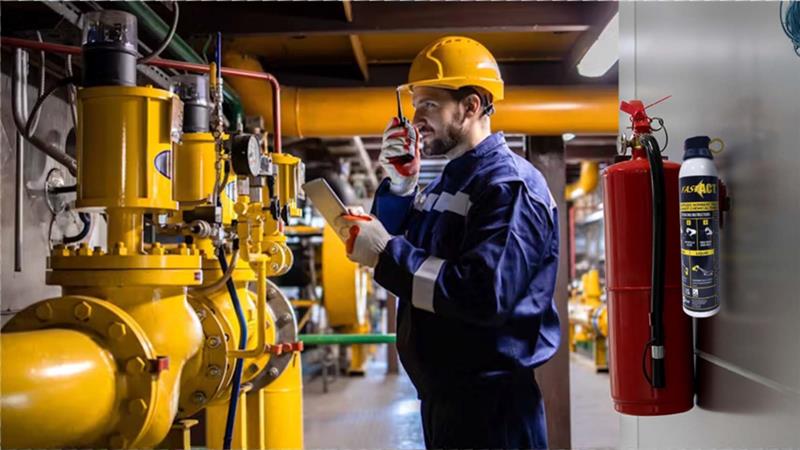
National Environmental Awareness Month: Strengthening Preparedness
National Environmental Awareness Month encourages organizations to review their consequence management strategies, evaluate environmental risks, and strengthen chemical emergency preparedness.
The Florida Department of Health notes that chemical spills can pose widespread environmental and public health risks, underscoring the need for rapid and effective response measures.
By improving planning, training, and access to neutralization tools like FAST-ACT, industries can significantly reduce the impact of future environmental disasters or hazardous releases.
For more information, access to test reports, or to schedule a tailored training session for your team, contact our FAST-ACT Team or visit our Training Page.
About Timilon Corporation:
Timilon Corporation is the manufacturer of FAST-ACT®, a proprietary formulation of non-toxic high-performance specialty materials effective at neutralizing a wide range of toxic chemicals with the added capability to destroy chemical warfare agents. The FAST-ACT technology is utilized by leading defense agencies, chemical industrial companies, first responders and HAZMAT teams to quickly and safely eliminate chemical hazards. For more information, reach out to Leticia Menzzano, Marketing Manager, lmenzzano@timilon.com.