

Chemical Spill Response: Reducing Risk and Cleanup Complexity from the Start
Chemical spill response is a critical function across Environmental Health & Safety (EHS) teams managing first responder safety and decontamination protocols, industrial operations, and emergency response teams operating across high-risk industrial environments. Whether involving hazardous materials, chemical leaks, or large-volume releases, these incidents can introduce immediate risks to personnel, equipment, and surrounding environments.
While most organizations maintain a spill response plan supported by tools such as spill kits, absorbent materials, and personal protective equipment (PPE), real-world chemical spills often begin with uncertainty. Response teams are often required to act before the hazard is identified, detailed safety data sheets are available, or full resources are mobilized.
During active spill scenarios, toxic fumes and liquid contaminants can remain present, which is why chemical spill response efficiency matters across industries, making rapid containment and neutralization critical for both safety and overall cleanup efficiency.
This blog will cover the challenges of managing unknown chemical spills, the risks of active contamination during response, and how teams can improve containment, cleanup efficiency, and overall control in real-world spill scenarios.
What Is Chemical Spill Response?
Chemical spill response refers to the actions taken to contain, manage, and remediate hazardous chemicals following a spill or release. These actions are typically guided by Environmental Health and Safety protocols, emergency procedures, and environmental regulations established by organizations such as the U.S. Environmental Protection Agency (EPA) and Occupational Safety and Health Administration (OSHA).
Traditional spill response methods often involve:
- Spill response kits and spill control kits
- Absorbent socks, spill berms, and containment tools
- Personal protective equipment (PPE)
- Established decontamination procedures and hazardous waste handling
These approaches are essential for compliance and containment but are typically most effective once the hazard level and chemical properties are understood.
What Happens When the Chemical Is Unknown?
One of the most challenging aspects of chemical spill response occurs when the substance involved has not yet been identified. In these situations, response teams must operate with limited information while still managing active hazards.
Initial actions often focus on isolating the area and following emergency procedures to limit access. However, hazardous chemicals may continue to release vapors, spread across surfaces, or contaminate equipment, PPE, and personnel during this time. Toxic fumes may remain active, while liquid contamination can transfer through contact with tools and shared workspaces.
Without rapid containment and neutralization, exposure risk persists for response teams and surrounding personnel, and the scope of the incident can expand, making containment, cleanup, and disposal more difficult to manage. A proactive response strategy for unknown chemical hazards that enables immediate action before substance identification is complete is essential for keeping responders and surrounding areas safe.
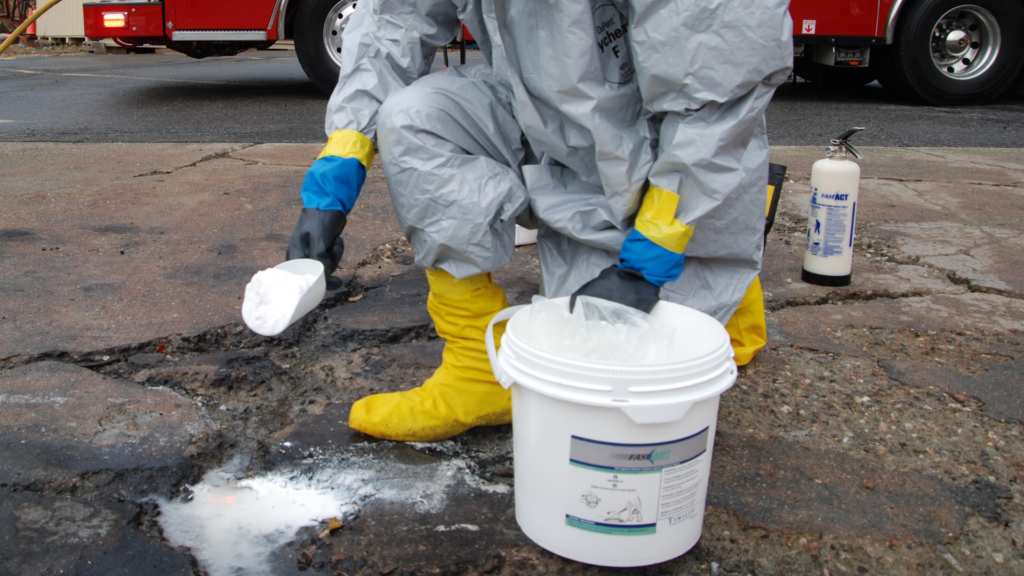
Real-world incidents demonstrate just how quickly unknown chemical hazards can escalate. Lessons from a recent Tennessee explosion highlight chemical incident preparedness and why teams must account for scenarios where they receive little or no advance notification.
Why Delays Increase Cleanup Complexity
Delays in active chemical spill response can significantly impact how an incident evolves. While containment using absorbent materials and spill kits is a necessary first step, it does not always address ongoing chemical activity.
When hazardous substances remain active, several challenges can develop:
- Contamination spreads across equipment and shared tools
- Cross-contamination impacts PPE and personnel
- Larger volumes of material become affected
- Cleanup and disposal of hazardous waste become more complex
These factors contribute to longer remediation timelines, increased labor requirements, and higher overall response costs. Understanding how traditional sorbents compare to neutralization-based solutions helps illustrate why containment alone is often insufficient, and the process of decontamination, containment, and neutralization is the more effective path.
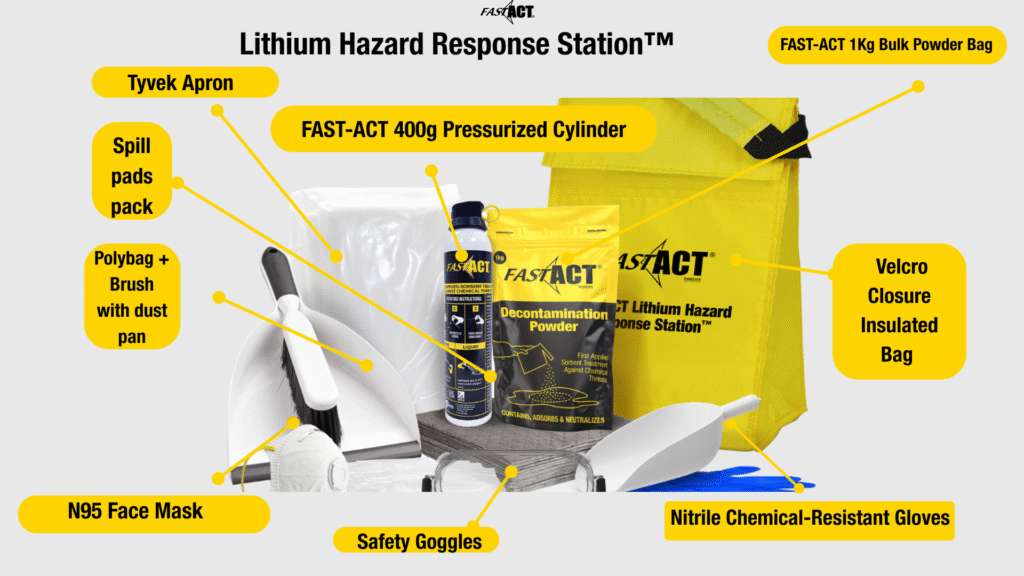
Emerging chemical hazards such as lithium-ion battery fires add another layer of complexity to spill response planning. Understanding lithium-ion battery chemical hazards highlights how diverse and unpredictable modern chemical threats have become, and why response teams must be equipped to act before a substance is fully characterized.
Why Is Early Action Important in Chemical Spill Response?
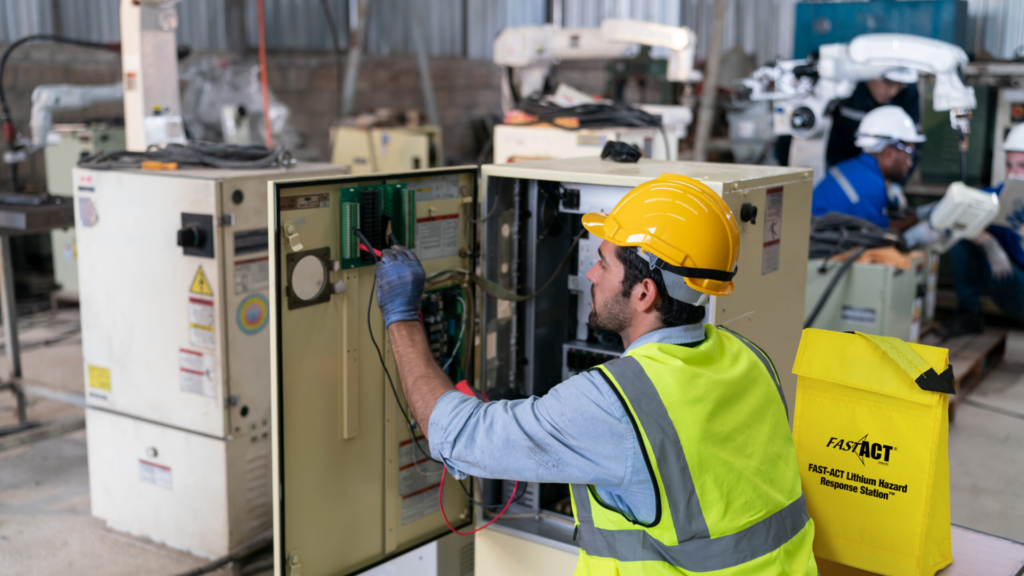
Early action plays a critical role in reducing both safety risks and operational impact during a chemical spill. The first moments of response often determine how far contamination spreads and how complex remediation efforts will become.
When response teams can quickly contain and neutralize hazardous chemicals, they can limit contamination spread, reduce exposure to toxic fumes and liquid hazards, and protect equipment, personnel, and surrounding environments. This rapid control helps create a safer and more manageable response scenario while simplifying downstream cleanup efforts.
Acting quickly also helps reduce the volume of impacted material, allowing organizations to improve cleanup efficiency, lower disposal requirements, and reduce the overall cost associated with chemical spill incidents. Industries such as mining, oil and gas, and environmental remediation each face distinct chemical hazard profiles. For a sector-by-sector breakdown, see our chemical hazard response across industrial operations blog.
How Do Response Teams Manage Spills Before Full Identification?
Before a chemical is fully identified, response teams rely on a combination of PPE, spill response kits, and established emergency procedures to manage the situation as safely as possible.
These efforts are primarily focused on:
- Containing liquid spread using absorbent materials and spill control tools
- Protecting personnel through appropriate PPE
- Following Environmental Health & Safety protocols and spill response plans
While effective for immediate containment, these approaches may not fully address active vapor release or ongoing chemical activity. As a result, response teams require solutions that can quickly neutralize hazardous chemicals and improve control of the scene while identification and assessment continue. Having a defined unidentified hazardous materials response strategy closes this gap before identification is confirmed.
Learn how decontamination challenges differ across high-risk response environments and what operational realities response teams must be prepared to manage in the field.
How Does FAST-ACT® Support Chemical Spill Response?
FAST-ACT® is used within chemical spill response to enable teams to quickly contain and neutralize hazardous chemicals, even when the substance is unknown.
Because FAST-ACT® does not require prior identification, it can be applied directly to spills, residues, equipment, PPE, and affected personnel to neutralize hazardous chemicals. Its dry formulation requires no water, mixing, or external resources, allowing response teams to act immediately in dynamic response environments. To understand what makes this technology effective, explore the science behind FAST-ACT’s dry decontamination.
In practice, FAST-ACT® allows teams to:
- Neutralize hazardous chemicals at the source
- Contain liquid spills and prevent spread
- Reduce cross-contamination on equipment, PPE, and personnel
- Improve overall control of the scene
By neutralizing chemicals on contact, FAST-ACT® reduces the volume and severity of contaminated material, making containment, cleanup, and disposal significantly easier. This leads to faster remediation timelines, reduced labor requirements, and lower overall response costs. These are key priorities for response contractors, industrial facilities, and environmental response teams. This is where FAST-ACT® offers a meaningful advantage over traditional sorbents used in industrial chemical response, which may contain hazards, but without neutralization.
FAST-ACT® offers multiple deployment options depending on the scale and conditions of the spill:
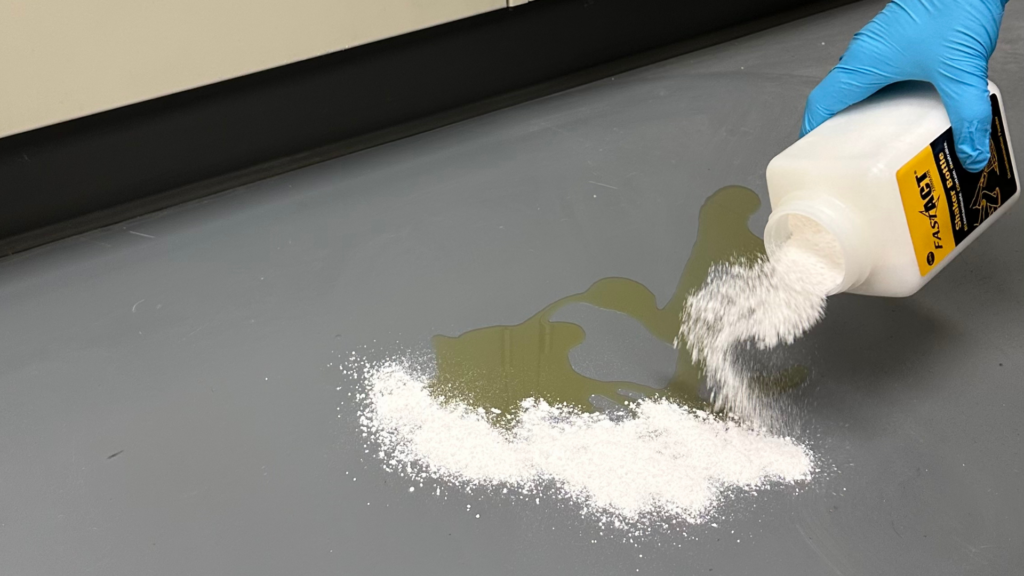
- FAST-ACT 500g Shaker Bottle for small-scale spills and controlled applications, allowing responders to quickly neutralize and adsorb hazardous liquid chemicals in localized areas
- FAST-ACT Bulk Pail for larger spill events, enabling teams to neutralize a broad range of hazardous substances across larger surfaces and contaminated areas
- FAST-ACT Immediate High Contamination Density Kits (HDK) for high-density contamination scenarios involving hazardous chemical spills, chemical leaks, or liquid pooling across wider operational environments
FAST-ACT Decontamination Wipes *CE classified as a class I medical device for use on skin and surfaces in the EU and FAST-ACT Decontamination Mitts *CE classified as a class I medical device for use on skin and surfaces in the EU, can also be used to address cross-contamination on PPE and personnel when needed.
*CE classified as a class I medical device for use on, skin and surfaces in the EU.
FAST-ACT® provides a complete solution for many chemical spill scenarios, enabling teams to neutralize, contain, and manage hazardous materials efficiently without requiring additional treatment steps. Explore how FAST-ACT® dry decontamination is improving environmental remediation and chemical decontamination efficiency in complex cleanup operations.
How Can Organizations Improve Chemical Spill Response?
Improving chemical spill response requires a focus on both preparedness and effective execution during active incidents. While compliance with environmental regulations and safety management practices remains essential, organizations must also ensure they have the capability to contain and neutralize hazardous chemicals as soon as they occur.
This includes equipping response teams with solutions that can be deployed immediately, allowing them to neutralize hazardous substances, contain liquid contamination, and prevent spread across equipment, PPE, and personnel. Organizations that prioritize rapid containment and neutralization can improve cleanup efficiency, reduce labor demands, simplify disposal processes, and lower the overall cost associated with spill response and remediation.
Strengthening Chemical Spill Response
Chemical spill response is often evaluated based on how effectively an incident is contained and cleaned up. However, the ability to quickly neutralize hazardous chemicals plays a critical role in determining how complex that process becomes.
When chemicals are neutralized at the source, response teams can limit contamination, reduce exposure, and simplify cleanup and disposal. This results in faster response times, improved safety outcomes, and more cost-efficient remediation.
By integrating solutions that enable immediate containment and neutralization, organizations can strengthen their chemical spill response strategy and improve outcomes across safety, efficiency, and cost. Reach out to our team to schedule a meeting and develop a tailored plan for incorporating FAST-ACT® into your existing emergency preparedness and chemical spill response protocols.
About Timilon Corporation:
Timilon Corporation is the manufacturer of FAST-ACT®, a proprietary formulation of non-toxic high-performance specialty materials effective at neutralizing a wide range of toxic chemicals with the added capability to destroy chemical warfare agents. The FAST-ACT technology is utilized by leading defense agencies, chemical industrial companies, first responders and HAZMAT teams to quickly and safely eliminate chemical hazards. For more information, reach out to Leticia Menzzano, Marketing Manager, lmenzzano@timilon.com.
FAQs
Why is neutralization important during chemical spill response?


Containment alone may not stop hazardous chemicals from continuing to release vapors or spreading contamination. Neutralization helps reduce the active hazard at the source, improving cleanup efficiency, reducing cross-contamination, and simplifying remediation and disposal efforts.
How does FAST-ACT® support chemical spill response?
FAST-ACT® enables response teams to quickly neutralize and contain hazardous chemicals, including unknown substances, without requiring water or mixing. FAST-ACT® can be applied directly to spills, residues, equipment, PPE, and affected personnel to help control vapor release and limit contamination spread.
What FAST-ACT® products are used for chemical spill response?
FAST-ACT® offers multiple spill response solutions depending on the scale of the incident, including: FAST-ACT® 500g Shaker Bottles for localized spills, FAST-ACT® Bulk Pails for larger spill containment and remediation operations, and FAST-ACT® Immediate High Contamination Density Kits (HDK) for high-density contamination scenarios. FAST-ACT® decontamination wipes and mitts can also be used to address cross-contamination on PPE and personnel.
Can FAST-ACT® be used when the chemical is unknown?
Yes. FAST-ACT® does not require prior identification of the hazardous substance before deployment. This allows response teams to begin containment and neutralization efforts immediately while additional assessment and identification continue.
How does FAST-ACT® improve cleanup efficiency?
By neutralizing hazardous chemicals on contact, FAST-ACT® helps reduce the volume and severity of contaminated material. This can simplify cleanup and disposal processes, reduce labor requirements, shorten remediation timelines, and lower overall response costs.