

Hospital Decontamination Planning: 4 Key Factors Every Facility Should Consider
Hospitals preparing for chemical incidents face a difficult and fast-moving reality: patients may arrive without warning, exposure details may be unclear, and staff must rapidly balance patient care with workplace safety. This makes hospital decontamination planning a critical part of disaster response for any emergency department, especially during events involving hazardous materials or chemical contaminants.
Federal Decontamination Guidance for Hospitals emphasizes that decontamination is not simply cleaning—it involves structured decontamination procedures designed to remove hazardous substances and reduce secondary contamination risks. These principles appear in guidance from OSHA and other regulatory agencies involved in healthcare preparedness.
This blog will cover:
- Why hospital decontamination planning matters
- Four OSHA-aligned factors to consider in decontamination planning
- How hospitals can reduce contamination risks during patient intake
- The role of equipment, methods, and PPE in patient decontamination
- How FAST-ACT solutions can support early response
Why Planning for Decontamination Matters
Decontamination is the removal of hazardous substances from people, equipment, and environments to prevent health effects and contamination spread. Strong decontamination plans help protect patients, staff, and facilities during both small and large-scale incidents, including potential mass casualty incidents or mass chemical exposure incidents.
Healthcare facilities are often the first point of contact for exposed individuals. In a mass chemical exposure incident, hospitals may need to manage patient decontamination, crowd control, and mass triage simultaneously while protecting operations.
Effective healthcare decontamination planning aligns with expectations from regulatory agencies such as OSHA and the Center of Domestic Preparedness, all of which emphasize readiness for hazardous materials events.
Determine the Number and Layout of Decontamination Stations
A foundational step in hospital decontamination planning is determining how many decontamination stations are needed and how they should be arranged.
Facilities should consider:
- Expected patient volume during small and large-scale incidents
- Location of a triage point before entry into clinical areas
- Whether a dedicated decontamination facility exists
- How to maintain separation between contaminated and clean areas
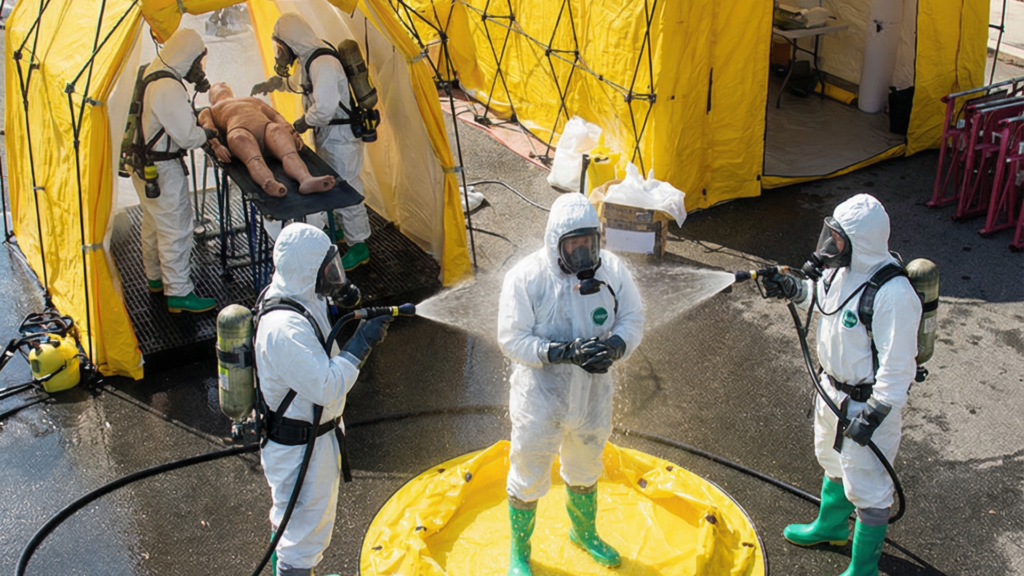
OSHA guidance notes that decontamination works best when arranged in a sequence from contaminated to clean areas. Hospitals often apply this through defined decontamination zones, including a hot zone, a contamination reduction zone, and a clean zone.
A well-planned layout supports safer scene management, smoother patient flow, and better control during patient surge situations.
Determine the Decontamination Equipment Needed
Effective hospital decontamination systems depend on realistic equipment planning. Hospitals should identify what is available immediately versus what requires setup.
Common equipment considerations include:
- Emergency wet decontamination resources
- Hospital decontamination systems and water supply access
- Personal Protective Equipment and chemical protective equipment for staff
- Absorbent, neutralizer and/or containment supplies
- Protective Gear for responders
These resources support both routine hazmat decontamination and larger disaster response scenarios. Planning also helps ensure the right tools are available for hazardous substances encountered in healthcare or near hazardous waste sites.
Establish Appropriate Decontamination Methods
Different hazards require different decontamination methods. OSHA notes that decontamination may involve rinsing, wiping, neutralization, or removal of contaminated clothing.
Hospitals should plan for:
- Emergency wet decontamination when water systems are available
- Dry methods for early response
- Scalable approaches for mass decontamination scenarios
Frameworks like the PRISM model and broader healthcare facility-based decontamination guidance recognize that early actions may occur before full systems are activated. Removing contaminated clothing alone can significantly reduce chemical contaminants in many situations.
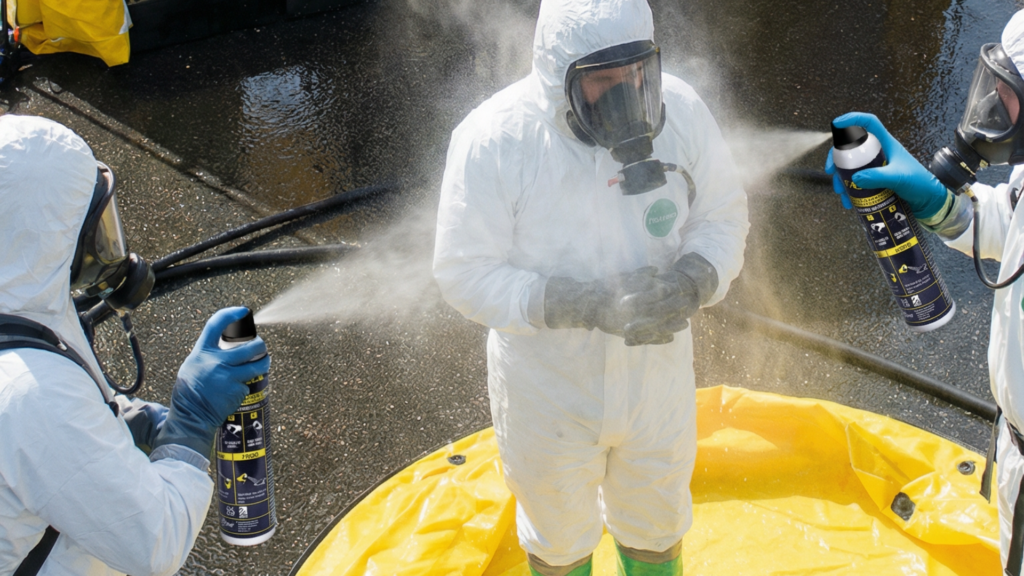
This layered strategy allows hospitals to begin patient decontamination while larger decontamination systems are being prepared.
Procedures to Prevent Cross-Contamination and Manage PPE
A strong decontamination plan must include steps to prevent contaminants from entering clean areas and to protect staff removing PPE.
Key considerations include:
- Clear decontamination line procedures
- Minimizing worker contact with contaminants
- Start decon process before hospital entry
- Proper handling and disposal of contaminated clothing
- Defined regulatory standards for disposal and cleaning
OSHA emphasizes that items not fully decontaminated must be disposed of properly to avoid contaminant spread. These steps protect both healthcare workers and facility operations.
Training and Competency
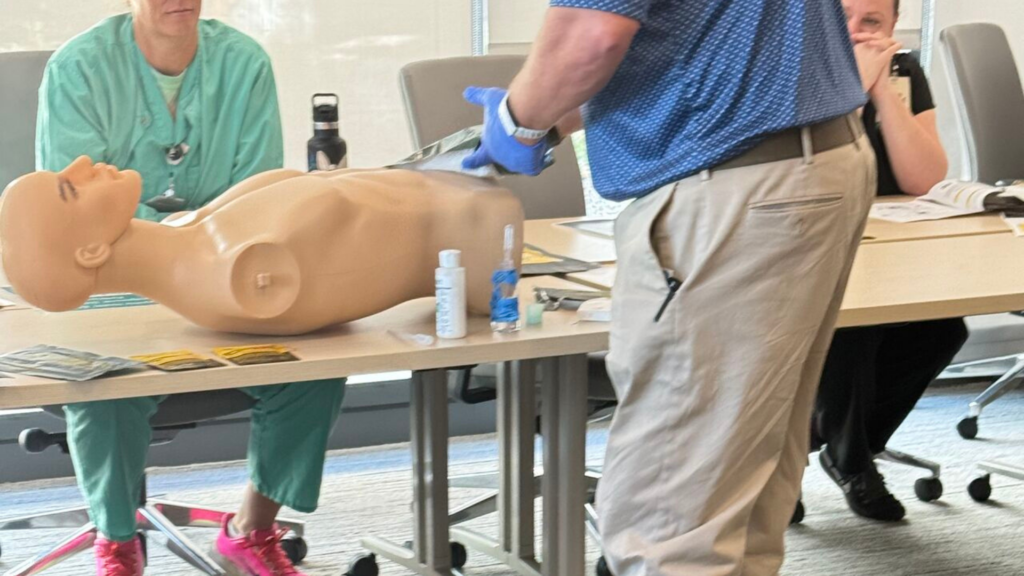
Even the best decontamination procedures are only effective if staff are trained. Training programs help ensure personnel understand PPE use, decontamination zones and equipment, and patient handling procedures. Hospitals that incorporate training programs into preparedness planning are better positioned to respond effectively to hazardous materials events and patient surge situations.
How FAST-ACT Fits into Hospital Decontamination Planning
A comprehensive decontamination plan must account for the earliest moments of an incident, when patients may arrive before full decontamination systems are operational. This is where dry decontamination tools can complement existing decontamination plans.
FAST-ACT solutions are designed to support early risk reduction as part of layered hospital preparedness. FAST-ACT Decontamination Mitts, FAST-ACT Decontamination Wipes, FAST-ACT 400g Pressurized Cylinder, and FAST-ACT Kits can be positioned at triage points, ambulance bays, and decontamination stations to support early patient decontamination steps.
These tools do not replace established decontamination systems or regulatory-aligned processes. Instead, they provide a practical Decon Solution for early-phase response, helping hospitals reduce contaminant transfer while larger decontamination systems are being activated if needed. FAST-ACT tools are commonly used by hazmat teams and integrated into preparedness strategies for both routine and high-risk environments.
Learn more on hybrid decon for hospitals
Building a Comprehensive Decontamination Strategy
Strong hospital decontamination planning supports safer outcomes during chemical incidents. By addressing layout, equipment, methods, PPE management, and training, hospitals can build decontamination plans that protect patients, staff, and facilities.
Preparedness today supports safer and quicker response tomorrow—especially in environments where hazardous materials incidents remain a realistic risk.
About Timilon Corporation:
Timilon Corporation is the manufacturer of FAST-ACT®, a proprietary formulation of non-toxic high-performance specialty materials effective at neutralizing a wide range of toxic chemicals with the added capability to destroy chemical warfare agents. The FAST-ACT technology is utilized by leading defense agencies, chemical industrial companies, first responders and HAZMAT teams to quickly and safely eliminate chemical hazards. For more information, reach out to Leticia Menzzano, Marketing Manager, lmenzzano@timilon.com.
FAQs
What role does FAST-ACT play in hospital decontamination planning?


FAST-ACT solutions support early-phase risk reduction within hospital decontamination planning. They help reduce contaminant transfer during the initial intake period before full decontamination systems are fully operational.
Can FAST-ACT replace emergency wet decontamination systems?
No. FAST-ACT solutions are designed to complement—not replace—emergency wet decontamination. They support early response while traditional decontamination systems are being activated.
Where can FAST-ACT be positioned inside a hospital?
FAST-ACT Decontamination Mitts, Decontamination Wipes, and pressurized cylinders can be placed at: Emergency department triage points, Ambulance bays, Decontamination stations, Temporary warm zones. This supports flexible deployment during small and large-scale incidents
Is FAST-ACT appropriate for mass casualty incidents?
FAST-ACT solutions can be integrated into decontamination plans for mass casualty incidents and patient surge scenarios. Their dry formulation allows rapid deployment without water infrastructure, supporting early containment in high-volume situations.
How does FAST-ACT help reduce secondary contamination?
FAST-ACT solutions are designed to reduce contaminant transfer on skin, clothing, and equipment. By addressing contamination early, hospitals can lower the risk of spreading hazardous substances into clean treatment areas.
Does FAST-ACT align with regulatory decontamination guidance?
FAST-ACT fits within layered hospital decontamination planning strategies aligned with OSHA and preparedness frameworks such as the PRISM model. It supports early risk reduction within structured decontamination procedures.