

How Global Defense Investments Signal a Growing Need for Advanced Chemical Response Readiness
As nations increase defense funding and expand industrial production capacity, one reality is becoming clearer: modern threats require stronger advanced chemical response readiness across military forces, emergency responders, hospitals, and industrial sectors. The European Parliament’s approval of its first-ever defense industry program—aimed at boosting continental manufacturing and rapid-response capability—illustrates a global shift toward addressing evolving chemical threats, hazardous materials risks, and public health emergencies.
This trend mirrors global spending patterns. World military expenditure reached a record high in 2023, driven by modernization, threat assessments, and stronger emergency response preparedness.
These developments signal rising demand for scalable response strategies, chemical safety tools, and advanced chemical response readiness solutions that protect populations against chemical agents, toxic industrial chemicals, and cross-sector emergencies.
Global Defense Investments Highlight Expanding Chemical Threat Concerns
Organizations such as NATO and the U.S. Department of Defense frequently note rising risks tied to chemical agents, toxic industrial chemicals (TICs), and incidents that may affect military, industrial, or public health sectors.
Industrial sectors face parallel challenges involving hazardous materials and toxic releases. Hospitals must also maintain healthcare preparedness, onsite decontamination capability, and mass casualty protocols as part of their public health response responsibilities. Together, these factors make advanced chemical response readiness essential for defense agencies, medical responders, industrial safety teams, and public health systems.
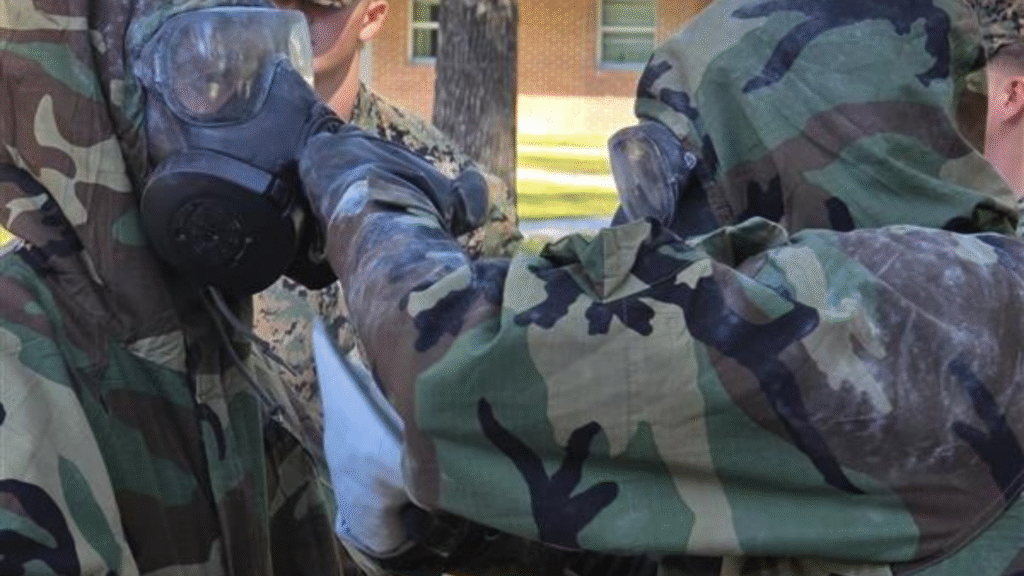
Why Advanced Chemical Response Readiness Must Adapt
Despite increases in global defense spending, gaps remain across chemical safety, emergency preparedness, and decontamination protocols. Challenges include:
- Overreliance on liquid decontamination methods that are unsuitable for vapor-heavy or enclosed environments
- Industrial facilities lacking portable tools to address both vapor and liquid chemical threats
- Hospitals needing waterless solutions safe for skin, surfaces, and medical equipment during public health emergencies
- First responders requiring lightweight tools suitable for emergency incident management
- The need for scalable solutions deployable within the Incident Command System (ICS)
- Growing risks in chemical facilities with strict regulatory processes and compliance obligations
In today’s landscape—shaped by geopolitical instability, industrial expansion, and rising CBRN incidents—emergency response preparedness requires the ability to rapidly neutralize chemical threats without complex logistics.
How Global Investment Trends Translate to Practical Response Needs
The EU’s new defense program focuses on manufacturing resilience and rapid deployment. These themes parallel what emergency responders, hospitals, and industrial teams require for advanced chemical response readiness:
- Readily deployable chemical mitigation tools
- Capabilities for both vapor and liquid neutralization
- Solutions suitable for disaster medical response scenarios
- Tools that support medical responders and public health strategies
- Decontamination assets compatible with the incident command system
- Portable kits that reduce operational delays
- Technologies that support threat assessments and real-time mitigation
- Effective response options for chemical threats, synthetic opioids, industrial leaks, and toxic chemical releases
This reflects a cross-sector understanding that modern emergency preparedness demands rapid, validated response strategies that protect military teams, first responders, hospitals, and industrial facilities alike.
FAST-ACT as a Supportive Capability for Advanced Chemical Response Readiness
FAST-ACT aligns with global defense and public health goals by offering adaptable, field-ready options for managing hazardous materials, toxic vapors, industrial spills, and chemical agents across sectors.
Field-Ready Liquid and Vapor Neutralization
FAST-ACT rapidly neutralizes a broad spectrum of hazardous materials, including acids, bases, toxic industrial chemicals, and select chemical warfare agents—supporting public health response and emergency preparedness missions.
Dry Decontamination Advantages
No water. No mixing. No runoff. This supports hospitals, public health agencies, industrial facilities, and responders handling sensitive equipment.
Key FAST-ACT Tools Supporting Advanced Chemical Response Readiness:
FAST-ACT 400g Pressurized Cylinder
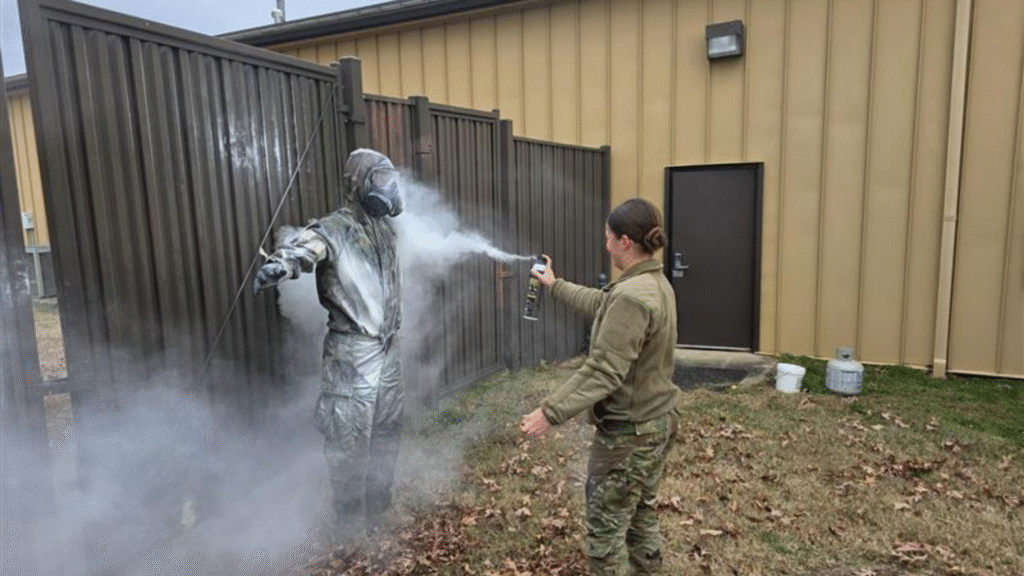
A critical tool for immediate response to hazardous toxic vapors and waterless personnel decontamination. Engineered using the FAST-ACT® technology, it provides fast adsorption and neutralization of chemical agents and industrial chemicals.
- User-friendly
- Lightweight
- No maintenance required
- Ideal for hospitals, defense teams, industrial sites, and public health emergencies
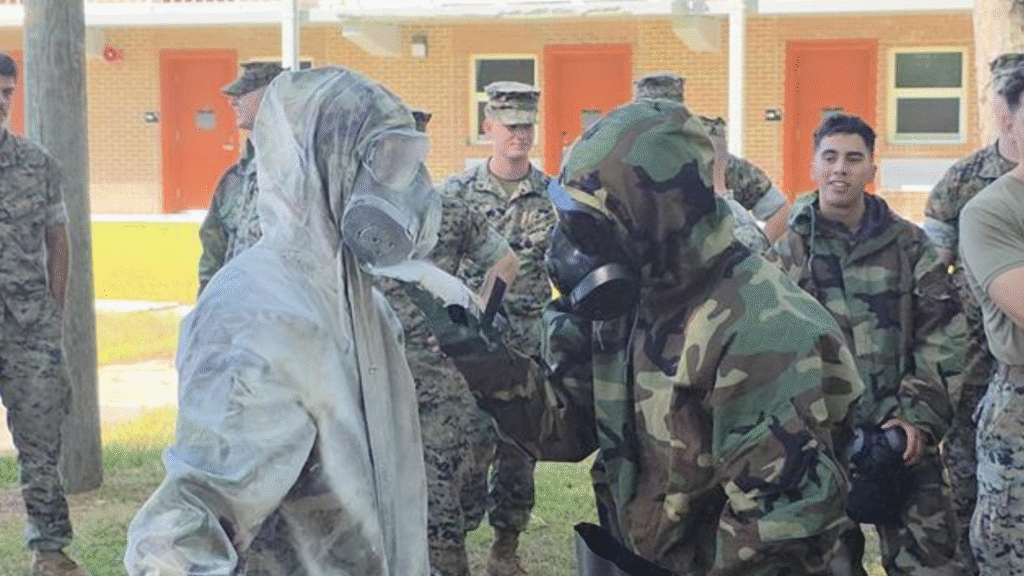
A crucial tool for rapid and effective neutralization of hazardous chemical agents. With its CE-mark and TGA certification as a Class 1 Non-Sterile Medical Device for use on skin and surfaces, providing peace of mind in high-risk environments. Whether dealing with chemical warfare agents or toxic industrial materials, this mitt stands ready to decontaminate.
Supports:
- CBRN incidents
- Industrial chemical hazards
- Medical environments
- Law enforcement and first responders
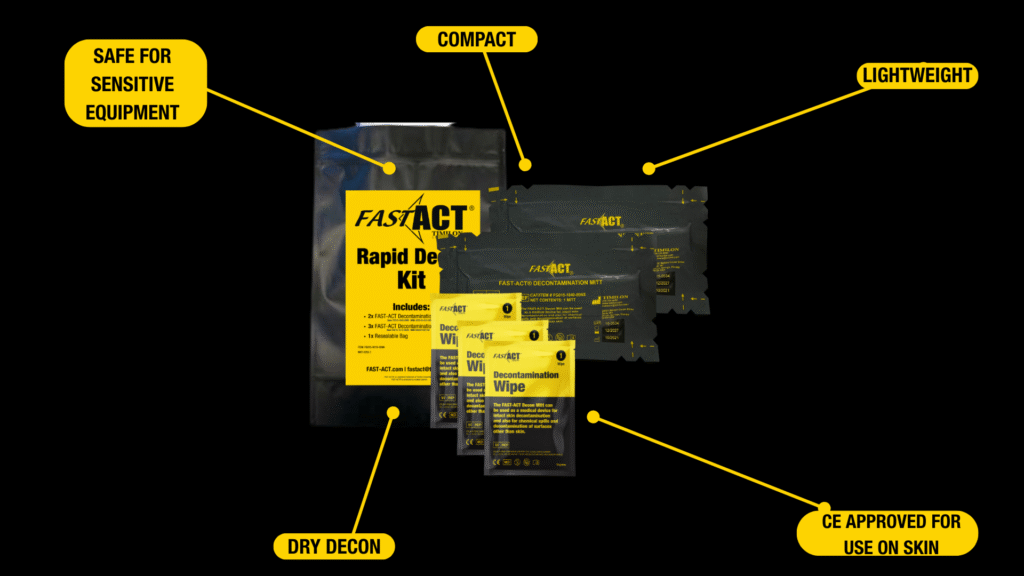
A compact, portable solution that includes 2x FAST-ACT Decontamination Mitt, 3x FAST-ACT Decontamination Wipes, and a seal bag for:
- Law enforcement
- HazMat teams
- Emergency responders
- ICS-aligned field operations
Perform immediate decontamination during civil disorder, crowd control, or hazardous incidents. Compact and lightweight, the RDK enables fast neutralization of chemical threats on personnel, protective gear, and mission-critical equipment without mixing or additional equipment. Safe for sensitive equipment, weaponry, and electronics, the RDK gives responders a universal tool for field decontamination — compact, portable, and proven.
Access FAST-ACT’s full product line
Conclusion
The need for advanced chemical response readiness is expanding across defense, healthcare, industrial infrastructure, and emergency management systems. As global defense investments highlight the urgency of chemical threat readiness, now is the time for agencies, healthcare systems, and response teams to evaluate their preparedness. FAST-ACT offers practical guidance, training support, and proven decontamination tools to help organizations build stronger, safer response frameworks. Reach out to explore how FAST-ACT can assist your team.
About Timilon Corporation:
Timilon Corporation is the manufacturer of FAST-ACT®, a proprietary formulation of non-toxic high-performance specialty materials effective at neutralizing a wide range of toxic chemicals with the added capability to destroy chemical warfare agents. The FAST-ACT technology is utilized by leading defense agencies, chemical industrial companies, first responders and HAZMAT teams to quickly and safely eliminate chemical hazards. For more information, reach out to Leticia Menzzano, Marketing Manager, lmenzzano@timilon.com.
FAQs
What is advanced chemical response readiness?


Advanced chemical response readiness is the ability to quickly identify, contain, and neutralize chemical threats using coordinated response strategies, decontamination protocols, and emergency preparedness planning.
How do global defense investments relate to chemical response preparedness?
Rising defense investments highlight increased concern over chemical threats, CBRN incidents, and hazardous materials, driving demand for faster, more reliable response capabilities.
Which industries need advanced chemical response readiness?
Defense, healthcare, chemical facilities, manufacturing, transportation, and emergency management all require chemical safety measures and coordinated response frameworks.
How does FAST-ACT support advanced chemical response readiness?
FAST-ACT provides dry decontamination solutions that support rapid, field-ready response to chemical agents, toxic vapors, and hazardous materials across high-risk environments.