

Improving Hospital Chemical Decontamination Preparedness: Insights from a U.S. Healthcare Facility Demonstration
Chemical incidents present one of the most complex challenges in modern emergency response. Whether triggered by hazardous materials accidents, industrial chemical spills, or a mass exposure chemical incident, the first minutes after a hazardous chemical release often determine the outcome for both victims and responders.
Hospitals and emergency departments play a critical role in this environment. It is not uncommon for contaminated individuals to self-evacuate and arrive at nearby healthcare facilities before first responders fully identify the hazard or establish mass decontamination systems. When this happens, the hospital itself can become a secondary contamination site, exposing emergency personnel, patients, and infrastructure to chemical toxicity.
Hospital preparedness for hazardous materials incidents, therefore, requires more than standard disaster response planning. It requires clear decontamination protocols, trained decontamination teams, and scalable hospital-based decontamination resources capable of responding quickly in a dynamic emergency situation.
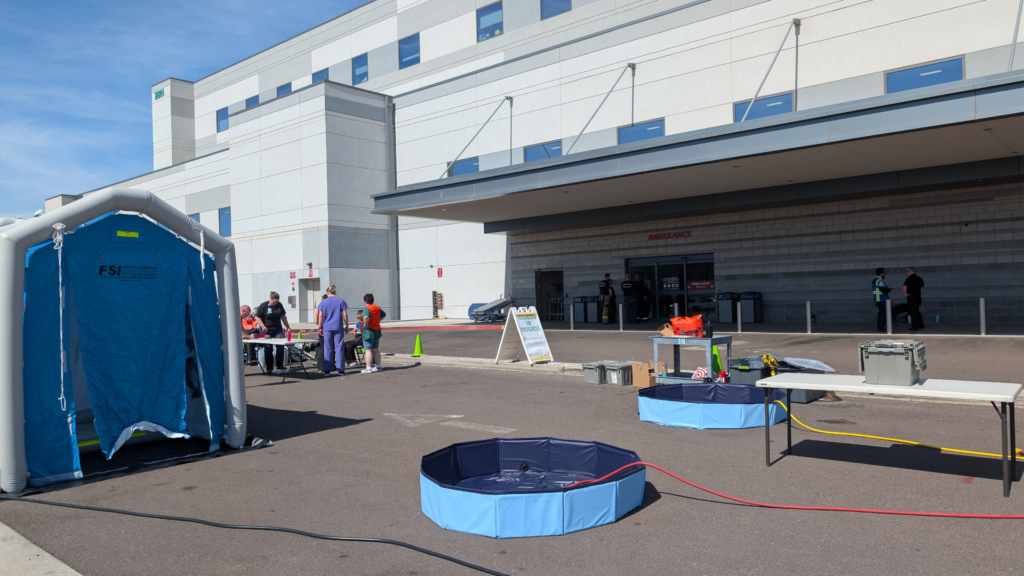
To better understand how early decontamination actions can support hospital readiness during chemical contamination incidents,FAST-ACT conducted a controlled demonstration at a U.S. healthcare facility , evaluating how dry chemical decontamination tools could integrate with existing response systems and hospital standard operating procedures.
This article provides an overview of that demonstration and introduces the concepts explored in FAST-ACT’s white paper on chemical casualty management.
The Challenge of Early Chemical Casualties
Chemical disasters create a unique operational challenge for both first responders and healthcare systems. During a chemical hazard release, responders must quickly stabilize victims, identify potential chemical agents, and begin decontaminating patients while managing an evolving emergency management environment.
However, several barriers can delay effective decontamination procedures. These may include:
- Limited information about the chemical agents involved
- Delays in establishing water-based decontamination corridors
- Environmental constraints affecting water decontamination showers
- Victim compliance challenges during chaotic mass casualty incidents
- Limited surge capacity in emergency departments
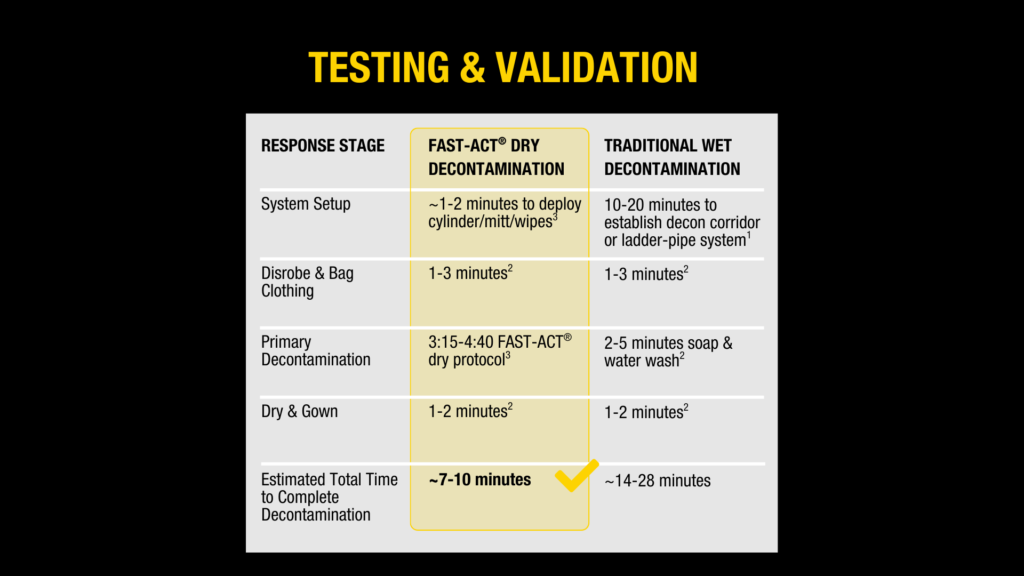
Research consistently shows that the time between exposure and decontamination is one of the most critical factors influencing outcomes. Even well-prepared response systems can face delays of 10–20 minutes before traditional wet decontamination systems are fully operational, leaving contaminants on clothing and skin during the most critical exposure window.
These realities highlight the need for adaptable response strategies that support rapid contamination reduction before formal mass decontamination facilities are fully established.
Understanding the PRISM Framework
One approach gaining attention in emergency preparedness planning is the PRISM framework (Primary Response Incident Scene Management). PRISM emphasizes rapid early actions to reduce contamination during the initial stages of a chemical emergency.
Rather than waiting for full decontamination facilities to be established, PRISM encourages responders to begin contamination reduction immediately through measures such as:
- Rapid clothing removal
- Early dry decontamination
- Prioritized patient decontamination of sensitive areas
- Transitioning patients into structured wet decontamination once systems are operational
This approach aligns closely with modern CBRN medical guidelines and hospital disaster preparedness strategies, particularly in scenarios involving mass casualty incidents or chemical warfare hazards.
For hospitals and first receivers, integrating PRISM-aligned strategies into hospital SOPs can help bridge the critical gap between patient arrival and the activation of full hazmat decontamination infrastructure.
Demonstration at a U.S. Healthcare Facility
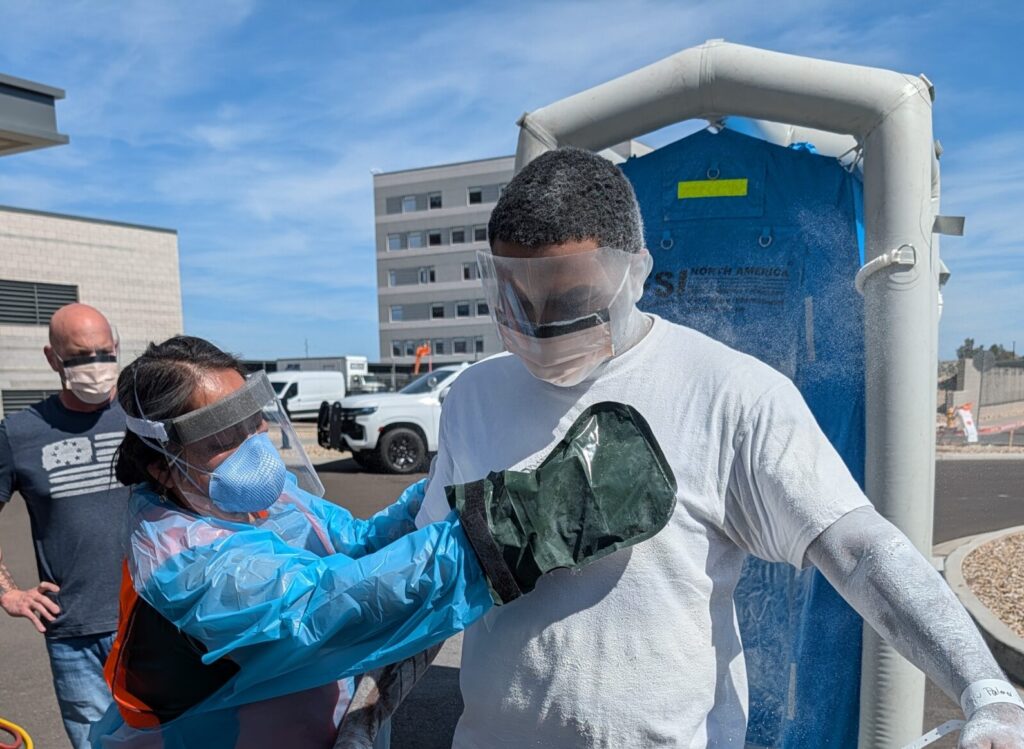
To evaluate how early dry decontamination could support hospital patient decontamination workflows, FAST-ACT conducted a controlled training exercise and decontamination drill at a U.S. healthcare facility.
The exercise simulated a chemical contamination incident involving three representative hazard categories:
- Acidic compounds
- Alkaline chemicals (represented by aerosolized ammonia)
- Persistent organic compounds
Participants were intentionally contaminated with simulants at specific locations and evaluated using M8 paper and pH paper to confirm contamination levels before and after decontamination procedures.
Emergency personnel then executed a three-stage dry chemical decontamination protocol designed to mirror real-world emergency response workflows.
The demonstration followed this sequence:
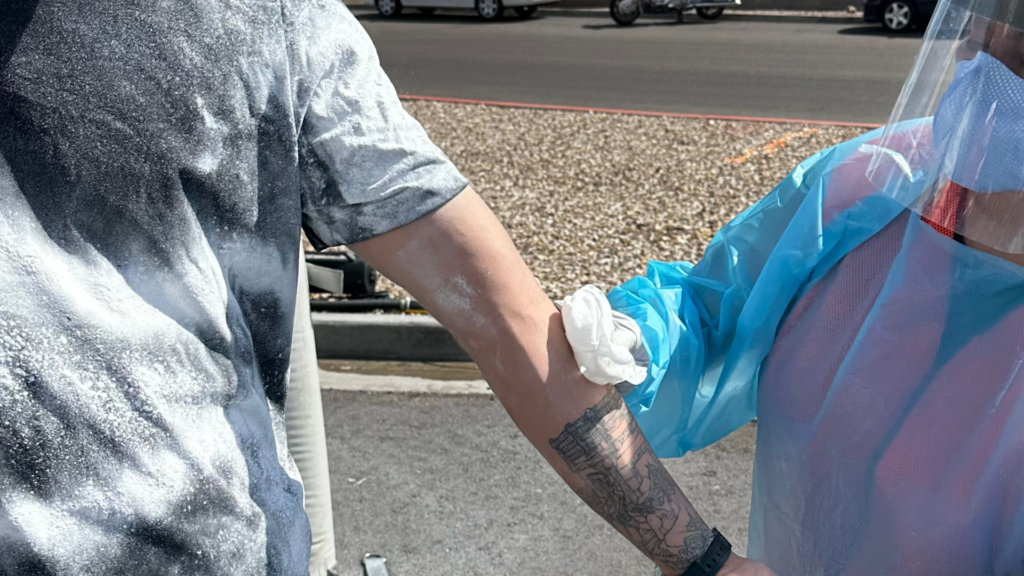
- Application of the FAST-ACT 400g Pressurized Cylinder to contaminated clothing and surfaces
- Supplemental decontamination using FAST-ACT Decontamination Mitts
- Final surface removal using FAST-ACT Decontamination Wipes
After this dry protocol, participants moved through secondary water-based decontamination showers to remove any remaining reactive sorbent powder and ensure complete decontamination.
Key Observations from the Demonstration
While the full methodology and results are detailed in the white paper, several operational observations emerged from the demonstration.
Rapid Early Contamination Reduction
Early intervention proved critical. When dry chemical decontamination was applied immediately after patient arrival, detector paper readings showed substantial reduction in chemical signatures across multiple hazard classes.
Faster Time to Decontamination
The combined dry-then-wet approach also demonstrated significant improvements in response speed. The demonstration estimated that the full decontamination process could be completed in approximately 7–10 minutes, compared with 14–28 minutes for traditional wet-only decontamination procedures.
Improved Casualty Throughput
When multiple responders operated together as a coordinated team, casualty processing times improved significantly. A three-person decontamination team could process three contaminated individuals in approximately five minutes using the staged dry protocol.
These results highlight the potential for early dry decontamination to support hospital readiness during mass exposure chemical incidents by reducing contamination levels before patients reach emergency departments or hospital-based decontamination facilities.
What This Means for Hospital Preparedness
For healthcare facilities planning for hazmat incidents, these findings reinforce several important considerations.
Hospitals must expect that contaminated patients may arrive before formal decontamination facilities are operational. Emergency departments should therefore incorporate scalable patient decontamination strategies into their disaster preparedness planning.
This includes:
- Establishing clear hospital SOPs for chemical emergency medical management
- Training first receivers and decontamination teams through regular exercises
- Ensuring personal protective equipment availability for emergency personnel
- Maintaining hospital-based decontamination resources capable of rapid activation
Incorporating early contamination reduction tools can help protect healthcare professionals, reduce the risk of environmental contamination inside healthcare facilities, and support more efficient patient flow during chemical contamination incidents.
FAST-ACT’s Role in Early Chemical Decontamination
FAST-ACT technology is designed to support early-stage chemical hazard mitigation in hazardous materials environments.
Products such as the FAST-ACT 400g Pressurized Cylinder, FAST-ACT Decontamination Mitts, and FAST-ACT Decontamination Wipes provide responders with tools that can begin chemical decontamination immediately without requiring prior identification of the chemical agent and while wet decontamination systems are being set up, ensuring rapid response.
The reactive mineral matrix used in FAST-ACT products can adsorb and neutralize a broad spectrum of hazardous chemicals, including corrosive acids, alkaline compounds, and certain organophosphate substances associated with nerve agents.
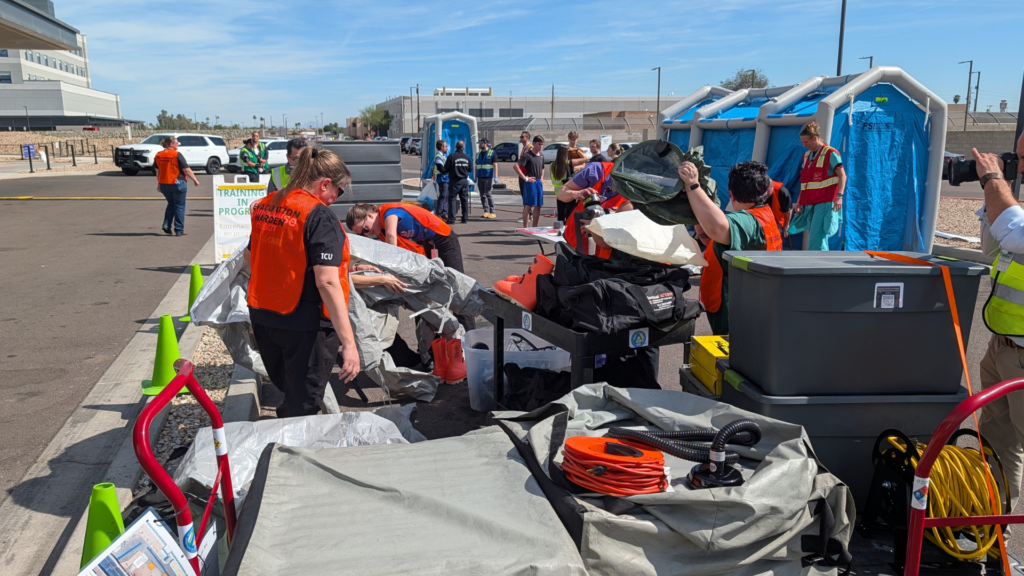
In addition to individual response tools, FAST-ACT also provides dry decontamination kits that support rapid deployment by decontamination teams operating in hazardous environments.
When integrated into existing hazmat decontamination protocols and hospital preparedness strategies, these tools can help reduce responder exposure and support safer patient handling during the earliest stages of an emergency response.
Download the Full White Paper
This blog provides only a high-level overview of the demonstration and the concepts explored in FAST-ACT’s research.
The full white paper includes:
- Detailed methodology of the healthcare facility demonstration
- Detector paper contamination measurements
- Chemical reduction data across multiple hazard classes
- Time-to-decontamination comparisons between dry and wet systems
- Operational guidance for hospitals and emergency response organizations
If your organization is evaluating ways to strengthen hospital preparedness for hazardous materials incidents, FAST-ACT can work with your team to conduct tailored demonstrations and training exercises that align with your hospital SOPs, response systems, and existing decontamination facilities.
Our team can support healthcare systems, emergency departments, and disaster preparedness teams in exploring how early chemical decontamination strategies can integrate with current emergency response workflows.
Contact the FAST-ACT team to learn more about scheduling a customized demonstration for your healthcare facility. Or to access our free online training platform tailored for healthcare emergency preparedness staff
Access the complete report to explore how early dry decontamination strategies can strengthen hospital preparedness for chemical contamination incidents and mass casualty response.
About Timilon Corporation:
Timilon Corporation is the manufacturer of FAST-ACT®, a proprietary formulation of non-toxic high-performance specialty materials effective at neutralizing a wide range of toxic chemicals with the added capability to destroy chemical warfare agents. The FAST-ACT technology is utilized by leading defense agencies, chemical industrial companies, first responders and HAZMAT teams to quickly and safely eliminate chemical hazards. For more information, reach out to Leticia Menzzano, Marketing Manager, lmenzzano@timilon.com.
FAQs
How does FAST-ACT support chemical decontamination in healthcare settings?


FAST-ACT supports hospital decontamination procedures by providing dry decontamination technologies that can be used immediately during a chemical incident. These tools help reduce contamination on patients, surfaces, and equipment before full water-based decontamination systems are established, supporting safer patient handling and protecting healthcare professionals from secondary exposure.
What FAST-ACT products are used during chemical decontamination?
FAST-ACT offers several products designed for emergency response, including the Pressurized Cylinder, Decontamination Mitts, Decontamination Wipes, and integrated dry decontamination kits. These tools are used together to support a staged approach to chemical decontamination, helping remove, neutralize, and reduce hazardous chemicals during the early stages of an incident.
Can FAST-ACT be used before chemical agents are identified?
Yes. One of the key advantages of FAST-ACT is that it can be deployed without prior identification of the chemical agent. Its reactive mineral technology is designed to adsorb and neutralize a broad spectrum of hazardous chemicals, allowing emergency personnel and healthcare facilities to begin decontamination immediately during uncertain or rapidly evolving situations.
How does FAST-ACT align with PRISM decontamination protocols?
FAST-ACT aligns with PRISM by supporting early contamination reduction before full decontamination systems are operational. Products like the FAST-ACT 400g Pressurized Cylinder, FAST-ACT Decontamination Mitts, and FAST-ACT Decontamination Wipes can be used during the initial stages of response to reduce exposure risks, improve casualty flow, and bridge the gap until structured wet decontamination is established.
Is FAST-ACT a replacement for traditional decontamination systems in hospitals?
No. FAST-ACT is designed to complement traditional decontamination procedures, not replace them. It provides an early-stage solution that can be used alongside existing hospital SOPs, hazmat decontamination protocols, and water-based systems to improve overall response effectiveness and reduce contamination risks during chemical incidents.