

The Science Behind The FAST-ACT® Dry Decontamination Technology
Chemical incidents involving hazardous substances require immediate action. Whether responding to industrial chemical exposure, chemical warfare agents, or other toxic chemicals, the ability to begin effective decontamination quickly is critical to protecting both responders and those affected.
In emergency response environments—ranging from acute hospitals to industrial and Hazmat incidents—early intervention plays a key role in reducing exposure and limiting the spread of contamination. This is where dry decontamination technology becomes essential.
FAST-ACT® dry decontamination technology is designed to support rapid response by combining physical removal with chemical neutralization. Understanding the science behind this approach helps explain how it differs from traditional decontamination techniques and why it is increasingly relevant in modern decontamination procedures.
What Is FAST-ACT® Dry Decontamination Technology?
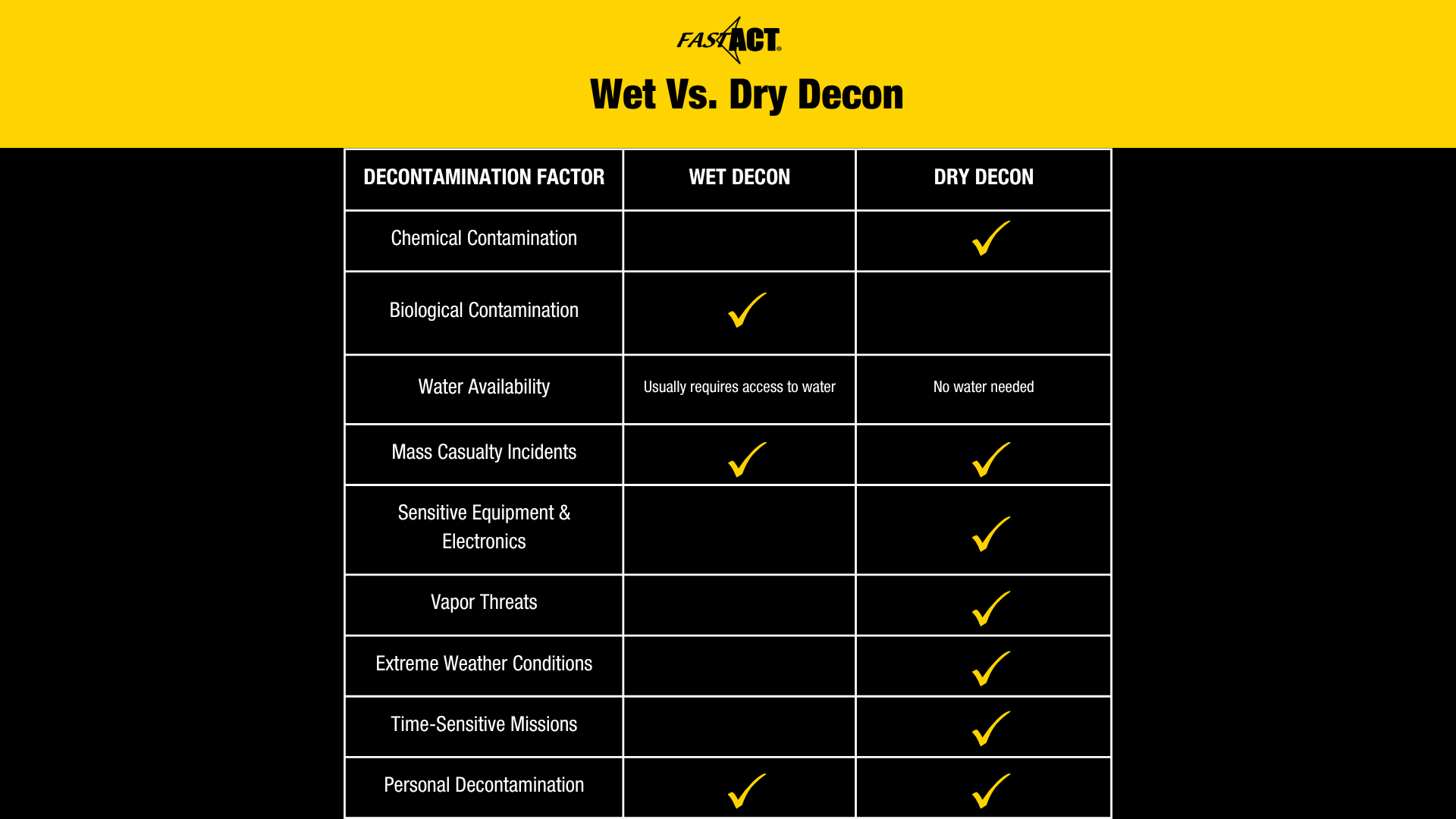
FAST-ACT® dry decontamination technology is a method of chemical decontamination that does not rely on water. Instead, it uses a patented formulation to address chemical exposure on skin, surfaces, equipment, vapor, and contaminated PPE.
This approach is particularly valuable in emergency situations where:
- Water-based decontamination systems are not immediately available
- Chemical agents have not yet been identified
- Rapid action is required to reduce ongoing exposure
Unlike traditional wet decontamination, which often requires setup time and infrastructure, FAST-ACT® can be deployed immediately by first responders, healthcare professionals, and response teams operating in dynamic environments.
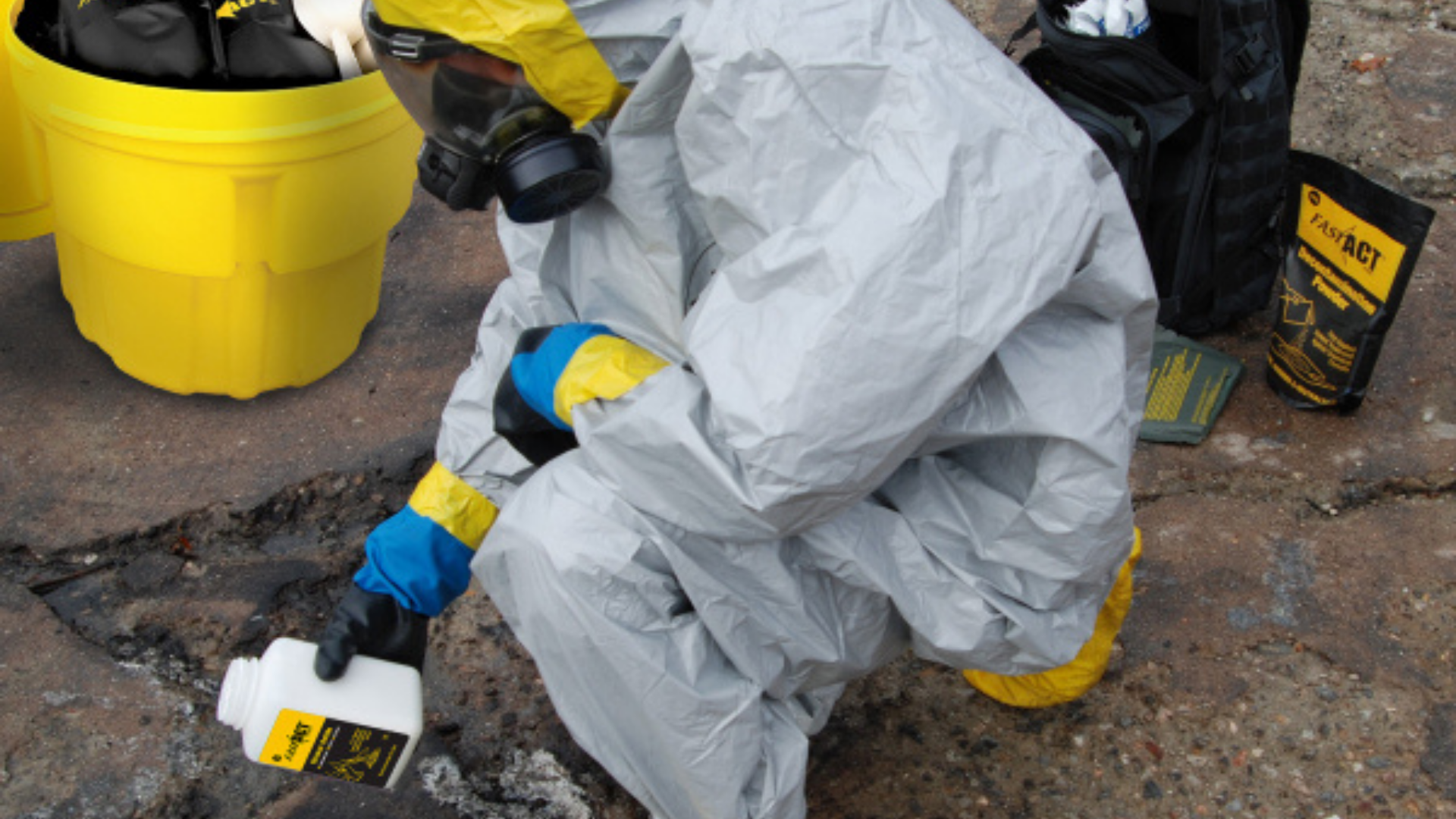
How FAST-ACT® Dry Decontamination Technology Works
FAST-ACT® dry decontamination technology is based on a combination of physical and chemical processes that work together to address hazardous materials.
Adsorption of Chemical Contaminants
FAST-ACT® utilizes earth minerals engineered to adsorb liquid contaminants and chemical vapors. When applied, these particles bind to hazardous substances, helping to contain and reduce the spread of contamination across skin, surfaces, and materials.
This is particularly important in scenarios involving chemical vapors or persistent liquid contaminants, where ongoing exposure can increase risk to both patients and responders.
Chemical Neutralization of Hazardous Substances
In addition to adsorption, FAST-ACT® dry decontamination technology introduces a critical capability: chemical neutralization.
The reactive mineral formulation interacts with a wide range of chemical agents—including acids, bases, CWAs, and certain organic compounds—to reduce their reactivity and toxicity. This process helps transform hazardous substances into more stable forms, supporting safer handling and reducing the risk of secondary exposure.
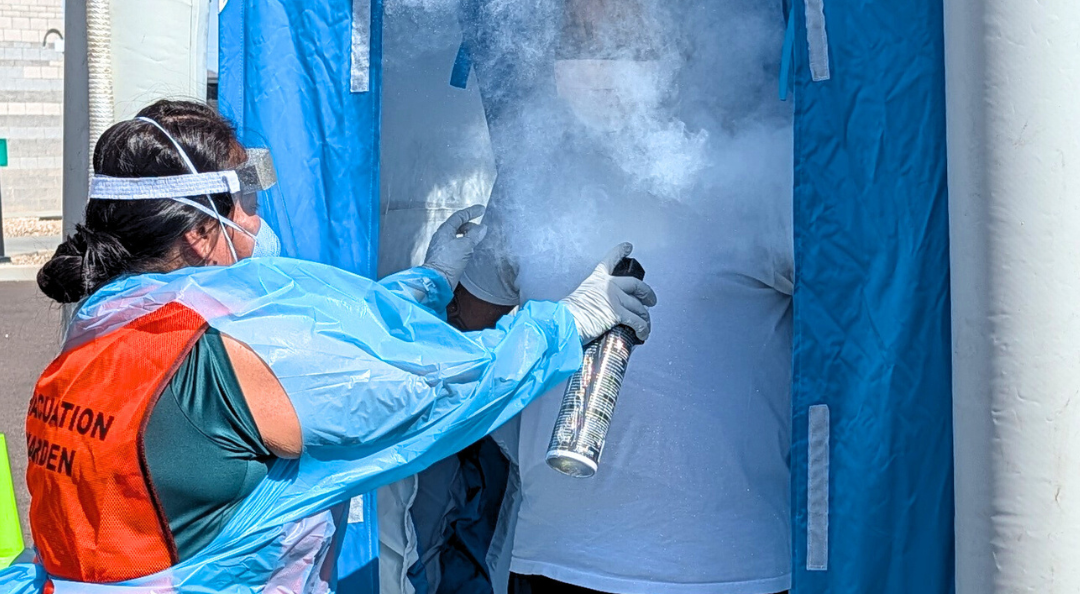
This capability is especially relevant in incidents involving chemical warfare agents or unknown chemical threats, where rapid decision-making must occur without full identification.
Combined Physical and Chemical Action
FAST-ACT® does not rely on a single mechanism. Instead, it combines:
- Decontamination – physical removal
- Contain- adsorption
- Neutralize
This combined approach allows FAST-ACT dry decontamination technology to contain, decontaminate, and neutralize chemical hazards, rather than simply transferring contamination from one surface to another.
Why FAST-ACT® Dry Decontamination Technology Matters in Emergency Response
In real-world emergency response scenarios, time is a critical factor. During chemical exposure incidents or mass casualty incidents, delays in decontamination procedures can increase risk to patients, healthcare professionals, and emergency services.
FAST-ACT® dry decontamination technology supports:
- Rapid initial response without reliance on water
- Early reduction of chemical vapors and liquid contaminants
- Safer handling of chemically contaminated casualties
- Protection of sensitive equipment and medical devices
- Improved workflow for response teams and Incident Management
For acute hospitals and healthcare professionals acting as first receivers, this type of dry decontamination technology can help reduce the risk of contamination entering clinical environments before full decontamination protocols are established.
It also aligns with broader public health and Public Health Preparedness efforts focused on improving response capabilities during chemical and toxic threats.
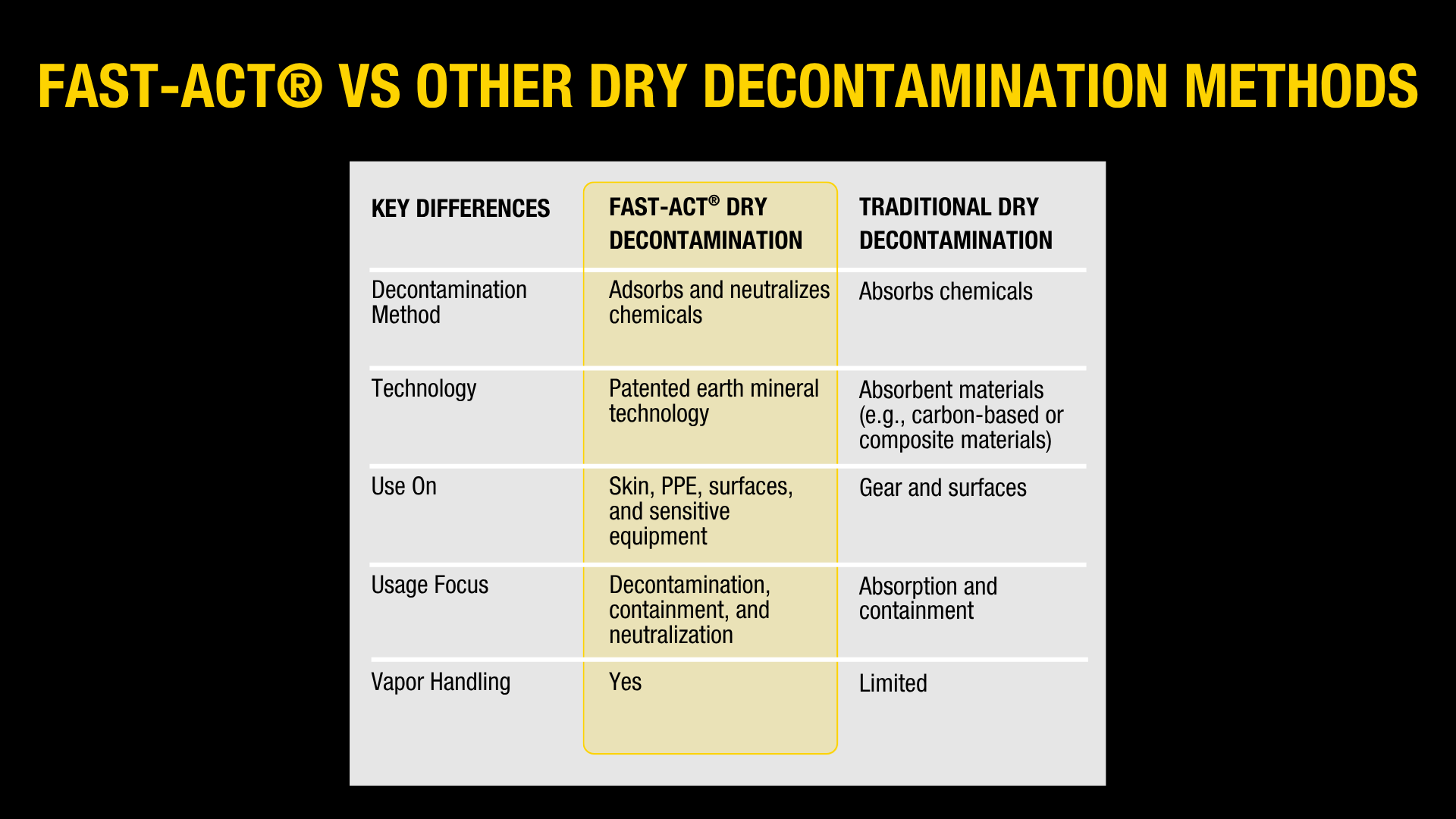
How FAST-ACT® Dry Decontamination Technology Differs from Traditional Methods
Traditional dry decontamination is widely used in emergency response as an initial step to remove contaminants from the body or surfaces. These methods typically involve:
- Blotting or wiping techniques
- Water based systems
- Use of absorbent materials
These approaches are effective at reducing the presence of contaminants, particularly in the early stages of a response.
FAST-ACT® dry decontamination technology builds on this foundation.
While traditional dry decontamination focuses on only physical removal, FAST-ACT® introduces an additional layer of protection through chemical neutralization. This allows it to:
- Reduce the reactivity of toxic chemicals
- Address a broader range of chemical threats
- Help limit off-gassing and secondary contamination
This distinction is important in environments where chemical exposure risks remain active and evolving.
Testing and Validation of FAST-ACT® Dry Decontamination Technology
FAST-ACT® dry decontamination technology has been evaluated through extensive third-party testing across a wide range of chemical threats, environmental conditions, and operational scenarios. These evaluations are designed to reflect real-world emergency response environments, ensuring performance is not limited to controlled laboratory settings.
Testing has included exposure to toxic industrial chemicals, chemical warfare agent simulants, radiological materials, chemical vapors, and liquid contaminants across various surface types such as skin, surfaces, and sensitive equipment. Both laboratory and field-based evaluations have been conducted to assess performance under realistic conditions, including extreme environments where traditional water-based decontamination may be limited.
Representative testing has demonstrated effectiveness in scenarios such as operation in extreme cold conditions, decontamination of sensitive equipment without compromising functionality, removal of radiological contaminants from surfaces and skin, and evaluation against highly hazardous compounds in controlled studies.
In addition to performance testing, FAST-ACT®’s earth mineral technology has undergone safety and toxicity evaluations, supporting its use in environments where responder and patient safety are critical considerations.
These examples represent only a portion of the broader validation work conducted. FAST-ACT® has been evaluated across many additional chemical classes, operational environments, and application scenarios beyond those summarized here.
Full test reports and detailed validation data are available upon request for organizations evaluating dry decontamination solutions.
FAST-ACT® Dry Decontamination Technology in Practice
FAST-ACT® technology is applied through tools designed to support different stages of decontamination procedures.
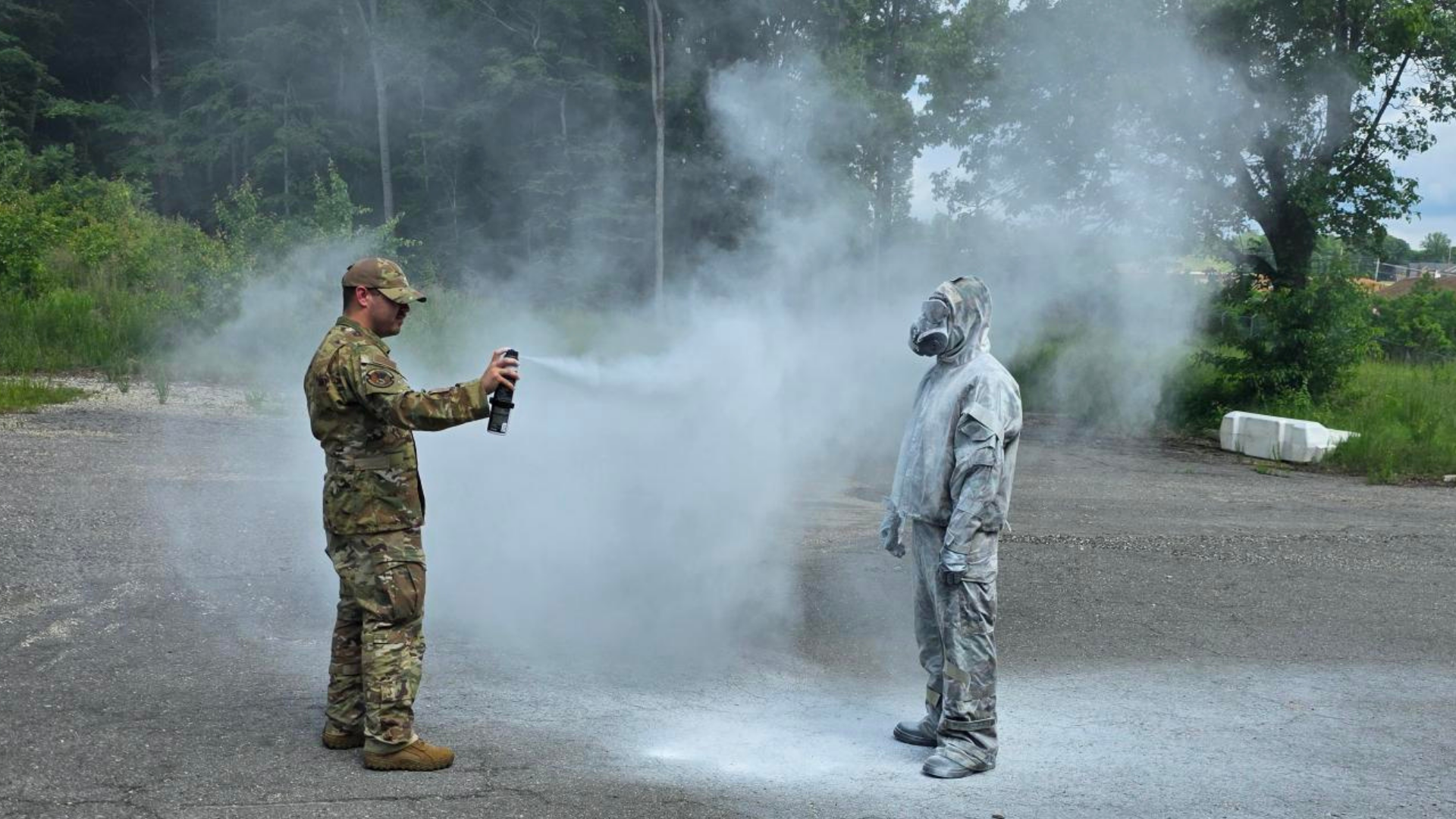
The FAST-ACT® 400g Pressurized Cylinder enables rapid application of FAST-ACT® powder across contaminated areas, supporting early containment of hazardous substances.
The FAST-ACT® Decontamination Mitt allows for targeted skin decontamination, particularly on high-priority areas such as hands, face, and neck. *CE classified as a class I medical device for use on skin and surfaces in the EU.
The FAST-ACT® Decontamination Wipes provide an additional step for removing residual contaminants (if any) from surfaces and skin, supporting more detailed contamination. *CE classified as a class I medical device for use on skin and surfaces in the EU.
Together, these tools support a scalable decontamination strategy that can be integrated into existing decontamination protocols, response systems, and emergency management workflows.
Conclusion
Dry decontamination plays a critical role in chemical emergency response, particularly in the earliest stages of an incident. However, the effectiveness of any decontamination strategy depends on the underlying science.
FAST-ACT® dry decontamination technology builds on established dry decontamination techniques by combining physical removal with chemical neutralization. This approach supports faster, more effective response to hazardous substances, helping reduce exposure risks and improve safety for both responders and affected individuals.
As chemical threats continue to evolve across healthcare, industrial, and emergency response environments, understanding the science behind decontamination solutions becomes increasingly important. FAST-ACT® represents a science-driven approach to addressing these challenges through advanced dry decontamination technology.
From hospitals to industrial safety and hazmat response teams, FAST-ACT® dry decontamination technology is designed to support rapid, effective chemical decontamination in dynamic environments.
If you’re looking to strengthen your decontamination procedures or evaluate new decontamination solutions, contact our team.
About Timilon Corporation:
Timilon Corporation is the manufacturer of FAST-ACT®, a proprietary formulation of non-toxic high-performance specialty materials effective at neutralizing a wide range of toxic chemicals with the added capability to destroy chemical warfare agents. The FAST-ACT technology is utilized by leading defense agencies, chemical industrial companies, first responders and HAZMAT teams to quickly and safely eliminate chemical hazards. For more information, reach out to Leticia Menzzano, Marketing Manager, lmenzzano@timilon.com.
FAQs
What is FAST-ACT® dry decontamination technology?


FAST-ACT® dry decontamination technology is a method of chemical decontamination that uses a patented mineral formulation to adsorb and neutralize hazardous substances without the need for water. It is designed for rapid deployment in emergency response environments where immediate action is required.
How does FAST-ACT® differ from other dry decontamination methods?
Other dry decontamination methods primarily focus on physically removing contaminants through absorption or adsorption. FAST-ACT® builds on this approach by combining physical removal with chemical neutralization, allowing it to reduce both the presence and the hazard of toxic substances.
Can FAST-ACT be used on skin and sensitive equipment?
Yes. FAST-ACT® is designed to be safe to use on skin, PPE, surfaces, and sensitive equipment. Testing has demonstrated that it can be applied without damaging electronics or critical equipment, making it suitable for a wide range of emergency response and operational environments.
Does FAST-ACT® work against chemical vapors?
FAST-ACT® has been shown to adsorb and help reduce chemical vapors in addition to liquid contaminants. This capability supports early-stage hazard reduction and helps limit ongoing exposure during chemical incidents.
Has FAST-ACT® been tested and validated?
Yes. FAST-ACT® has undergone extensive third-party testing across a variety of chemical threats, including toxic industrial chemicals, radiological materials, and chemical warfare agent simulants. Testing has been conducted in both laboratory and operational environments, and full test reports are available upon request.