

Top 5 Most Common Decontamination Pitfalls Between Hospitals and First Responders
Chemical incidents rarely arrive at hospitals in an orderly sequence. In many hazardous materials incidents, patients self-present before scene control is established, before responder decontamination is complete, and before hospital systems are fully activated. This places hospitals into an immediate operational role that blends clinical medical care, hazardous materials management, and facility protection.
This early, improvised phase represents one of the most vulnerable points in hospital emergency decontamination response. Breakdowns during this window increase secondary exposure risk, strain staff and resources, and expand contamination beyond the original patient. Hospital preparedness guidance from the U.S. Department of Health and Human Services (HHS) and hospital first receiver frameworks consistently show that exposure risk during this phase is driven by timing, not intent.
This blog will cover the most common operational gaps in hospital emergency decontamination response, including:
- Self-presenting patients arriving before scene control or responder decontamination
- Staffing, PPE demand, and wastewater constraints
- Cross-contamination through clothing, equipment, and surfaces
- Secondary exposure within intake and treatment areas
- Unknown substances and personal effects creating operational uncertainty
Across both hospitals and emergency responders, the same operational pitfalls appear repeatedly — not because teams are unprepared, but because systems are stressed before full technical response is in place.
Self-presenting Patients Arrive Before Scene Control or Decontamination is Established
One of the most consistent and impactful pitfalls is patients reaching the emergency department before incident scenes are controlled and before responder or hospital decontamination procedures are fully activated. In these cases, hospitals become the first technical point of contact for a chemical exposure incident.
This creates a predictable exposure window where intake, triage, and treatment areas can rapidly become early exposure environments. Staff are required to begin patient decontamination decisions while scene management, hazard identification, and full hospital decontamination systems are still being activated.
Hospital first receiver guidance recognizes this early phase as a critical vulnerability in hospital emergency decontamination response, particularly during mass casualty or mass chemical exposure scenarios. This timing gap is a foundational challenge in both hospital patient decontamination and healthcare facility-based decontamination.
Staffing, PPE Demand, and Wastewater Constraints Limit Effective Decontamination
Even when hospitals have established decontamination protocols, real-world constraints often limit what can be executed during early response. Surge conditions during a mass casualty incident can quickly overwhelm trained staffing, while personal protective equipment (PPE) consumption may exceed planned supply.
Water-based systems introduce additional complexity. Water-based decontamination, emergency showers, and decontamination shower systems generate contaminated water, creating wastewater and runoff management challenges. Drainage capacity and water runoff management requirements can delay or restrict wet decontamination operations.
These constraints directly shape how hospital emergency decontamination response unfolds. As a result, many hospitals plan for and implement a hybrid approach, using early dry decontamination to reduce vapor and surface hazards while traditional water-based decontamination systems and wastewater handling capabilities are being activated. This phased strategy allows facilities to take immediate action to limit exposure, protect staff and patients, and stabilize operations during the critical early response window, rather than waiting for full wet decontamination infrastructure to be fully operational.
Cross-contamination Through Clothing, Equipment, and Surfaces
Cross-contamination is one of the primary pathways by which a single contaminated patient can impact large portions of a facility. Clothing, stretchers, monitors, PPE, and environmental surfaces act as efficient vectors for chemical transfer.
When contaminated patients move through intake and treatment areas, chemicals can be transferred to high-touch surfaces, equipment, and personal protective clothing. This expands the contamination footprint and increases the complexity of response.
FAST-ACT testing on Sensitive Equipment
Hospital preparedness guidance identifies cross-contamination as a major operational risk in hospital dry decontamination and early response workflows. Limiting secondary spread is a core objective of hospital emergency decontamination response and is essential to protecting staff, patients, and facilities.
Secondary exposure within Intake and Treatment Areas
Emergency departments, ambulance bays, intake corridors, and triage spaces are predictable exposure touchpoints during early hazmat incidents. These areas are designed for rapid clinical intake — not for technical decontamination — yet they frequently become exposure zones.
Secondary exposure in these areas occurs when patients arrive before decontamination, when vapors persist in enclosed clinical spaces, and when contaminated clothing or skin are not controlled early. This places staff, other patients, and visitors at risk despite having no direct connection to the original hazardous materials incident.
Protecting intake and treatment areas is a central focus of decontamination guidance for hospitals and is a key pillar of effective hospital emergency decontamination response.
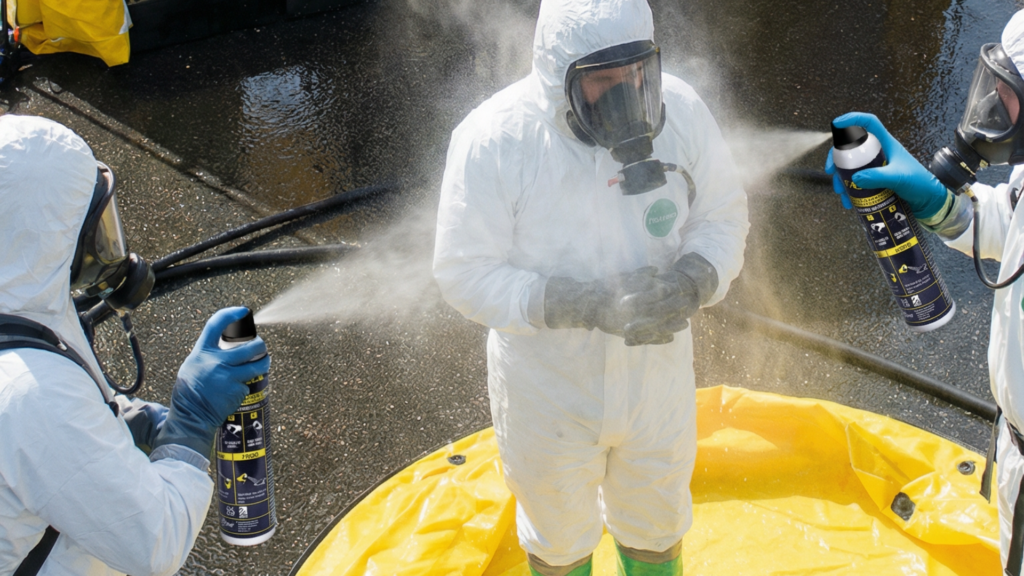
Unknown Substances and Personal Effects Create Uncertainty and Improvised Response
Unknown contamination on clothing or skin, combined with personal effects, creates operational uncertainty that directly impacts decision-making. When the substance involved is unidentified, hospitals must manage risk without full hazard classification or confirmation.
This uncertainty increases pressure on staff, workflows, and facilities. PPE selection, isolation decisions, and decontamination process design must often be made before chemical identification is available. This is a predictable challenge described in hospital first receiver frameworks and emergency response planning models.
Managing this uncertainty is a defining feature of hospital emergency decontamination response and is especially critical during large-scale disaster response and mass exposure scenarios.
Why Early Hybrid Approaches Matter in Hospital Emergency Decontamination Response
Across all five pitfalls, the common factor is timing. The highest-risk period is often the earliest phase — before full decontamination units, emergency showers, and hospital decontamination infrastructure are fully active.
Guidance from agencies such as the U.S. Department of Health and Human Services and Department of Homeland Security emphasizes early source control, vapor hazard reduction, and controlled transitions into full technical decontamination.
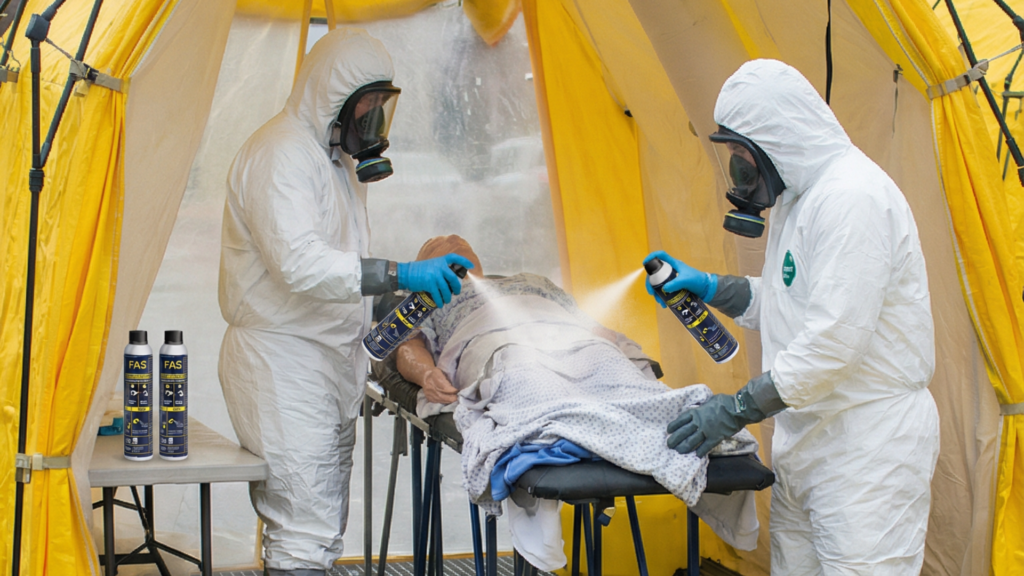
The Hospital-Based First Receiver Dry Decontamination SOP reflects this hybrid approach by positioning early dry decontamination to reduce vapor hazards, minimize cross-contamination, and improve patient throughput prior to full water-based decontamination.
Reach out to our team for more information on FAST-ACT Hospital Standard Operational Procedure.
How FAST-ACT Tools Align with Hospital Emergency Decontamination Response SOPs
Hospitals are reassessing how they manage chemically exposed patients who self-present in the early minutes of an incident, before decontamination lines are fully operational. Guidance such as PRISM and the “15 ’til 50” framework highlights the risks that exist during this initial window, when staffing and infrastructure are often constrained. In FAST-ACT’s Standard Operational Procedure and hospital materials, FAST-ACT products are used to support specific early-response needs:
- FAST-ACT® 400g Pressurized Cylinder supports rapid whole-body application on self-presenting patients.
- FAST-ACT Decontamination Mitts targeted for localized contamination control on exposed areas & contact points. *CE classified as a class I medical device for use on skin and surfaces in the EU.
- FAST-ACT Decontamination Wipes dry risk reduction for PPE, equipment, and sensitive surfaces prior to re-entry. *CE classified as a class I medical device for use on skin and surfaces in the EU.
These tools are incorporated to support early control and safer transition into full hospital decontamination systems. They support — but do not replace — established wet decontamination, emergency showers, and hospital decontamination shower systems, consistent with hospital emergency decontamination response best practices.
Strengthening Hospital Emergency Decontamination Response Through Preparedness
Improving performance during chemical and hazardous materials incidents requires aligning hospital workflows with the realities of early field response and self-presentation. Hospitals and emergency responders that best perform, plan specifically for the early, improvised phase — when systems are stressed and information is limited.
By addressing these five common pitfalls, organizations can strengthen hospital emergency decontamination response, reduce secondary exposure, protect staff and facilities, and improve overall resilience during chemical exposure incidents and mass casualty events.
Lead capture button for full SOP or Hospital one pager
About Timilon Corporation:
Timilon Corporation is the manufacturer of FAST-ACT®, a proprietary formulation of non-toxic high-performance specialty materials effective at neutralizing a wide range of toxic chemicals with the added capability to destroy chemical warfare agents. The FAST-ACT technology is utilized by leading defense agencies, chemical industrial companies, first responders and HAZMAT teams to quickly and safely eliminate chemical hazards. For more information, reach out to Leticia Menzzano, Marketing Manager, lmenzzano@timilon.com.
FAQs
What is hospital emergency decontamination response?


Hospital emergency decontamination response refers to the coordinated set of procedures hospitals use to manage chemically contaminated patients, protect staff and facilities, and reduce secondary exposure during hazardous materials incidents. It includes early actions, hybrid dry and water-based decontamination, and integration with hospital emergency response plans and first receiver workflows.
Why do patients often arrive before decontamination is established?
In many chemical exposure incidents, patients self-present to emergency departments before scene control or responder decontamination is complete. This creates a predictable early exposure window where hospitals must begin patient management before full technical decontamination systems are operational.
When should dry decontamination be used in hospitals?
Dry decontamination is commonly used during the early phase of response to reduce vapor and surface hazards while traditional water-based decontamination systems are being activated. It supports early source control and helps limit cross-contamination during the most vulnerable period of hospital emergency decontamination response.
Does dry decontamination replace water-based decontamination?
No. Dry decontamination is used as part of a hybrid approach. It supports early risk reduction but does not replace established water-based decontamination, emergency showers, or hospital decontamination shower systems. Wet decontamination remains an essential component of comprehensive hospital decontamination protocols.