

What the Latest HAZMAT Study Teaches Us About Hazardous Materials Response
Every day, hazardous materials are transported across the world by highway, rail, air, and sea, supporting industries ranging from manufacturing and healthcare to energy production and chemical processing. While strict regulations and safety protocols have significantly improved hazardous materials transport over the years, new industry research suggests that many HAZMAT incidents don’t begin with catastrophic accidents, they begin with routine operational challenges.
The J. J. Keller Center for Market Insights and the Council on Safe Transportation of Hazardous Articles (COSTHA) recently surveyed more than 250 professionals responsible for hazardous materials safety across the supply chain. Their findings reveal that documentation errors, packaging failures, labeling mistakes, and training challenges remain some of the industry’s most persistent issues. Additional findings are available in the Focus on Safety: Benchmarking the State of the Hazmat/Dangerous Goods Industry report.
As Steve Murray, Executive Vice President of Professional Services at J. J. Keller, explains, many of today’s most significant risks are rooted in “everyday realities,” including human error, training complexity, and process gaps.
For organizations that transport, receive, store, or respond to hazardous substances, these findings reinforce an important reality: prevention is only part of the equation. Even organizations with mature compliance programs can experience hazardous materials incidents, making preparedness and effective response capabilities equally important.
What Does the Latest HAZMAT Study Reveal About Industry Challenges?
The Focus on Safety: Benchmarking the State of the Hazmat/Dangerous Goods Industry report provides valuable insight into the challenges organizations continue to face when managing hazardous materials.
Among respondents reporting compliance issues during the previous 12 months, the most common included:
- Documentation and shipping paper errors (47%)
- Marking, labeling, and placarding errors (42%)
- Improper packaging selection or packaging failures (38%)
- Material misclassification (34%)
- Improper load securement (29%)
Interestingly, the study found these issues are rarely caused by a lack of regulatory knowledge. Instead, they typically occur during routine tasks that become rushed, inconsistent, or overlooked.
The industry’s biggest compliance challenges also reflected these operational realities:
- Keeping up with changing regulations (57%)
- Documentation and paperwork (38%)
- Employee training (34%)
- Packaging requirements (31%)
- Classification of hazardous materials (30%)
Organizations can reduce many of these risks by implementing standardized procedures, regular audits, and safe hazardous package handling practices throughout the shipping process.
These findings are consistent with Federal Highway Administration (FHWA) transportation data, which found that less than 2% of hazardous materials transportation incidents were caused by vehicle crashes or derailments. Instead, the overwhelming majority stemmed from human error, packaging failures, or loading and unloading operations. While transportation accidents accounted for most property damage, everyday operational mistakes remained the leading cause of hazardous materials incidents.
These findings also reinforce why organizations responsible for DOT HAZMAT inspection priorities should continuously review compliance procedures and emergency response capabilities. Rather than viewing HAZMAT emergencies as rare, unpredictable events, organizations should recognize that many incidents begin with routine processes that occur every day.
Why Can Routine HAZMAT Problems Escalate Into Emergencies?
A documentation error or damaged package may appear minor on its own, but hazardous materials incidents often escalate quickly when hazardous substances are involved.
According to the study, the greatest safety risks organizations identified were:
- Chemical spills (49%)
- Insufficient employee training (44%)
- Undeclared hazardous materials (34%)
- Regulatory complexity across transportation modes (33%)
Undeclared hazardous materials continue to present a significant concern, particularly during inbound shipments from suppliers and customers, where organizations have less visibility into packaging and classification practices.
The study also highlights that hazardous materials shipping by air remains one of the most challenging transportation methods for regulatory compliance due to lithium battery requirements, varying carrier policies, and inconsistent interpretation of regulations.
PHMSA incident statistics reinforce another important trend. Between 2011 and 2020, non-bulk packaging incidents outnumbered bulk packaging incidents by more than ten to one, demonstrating that many hazardous materials emergencies originate from smaller packages and routine shipments rather than large-scale industrial releases.
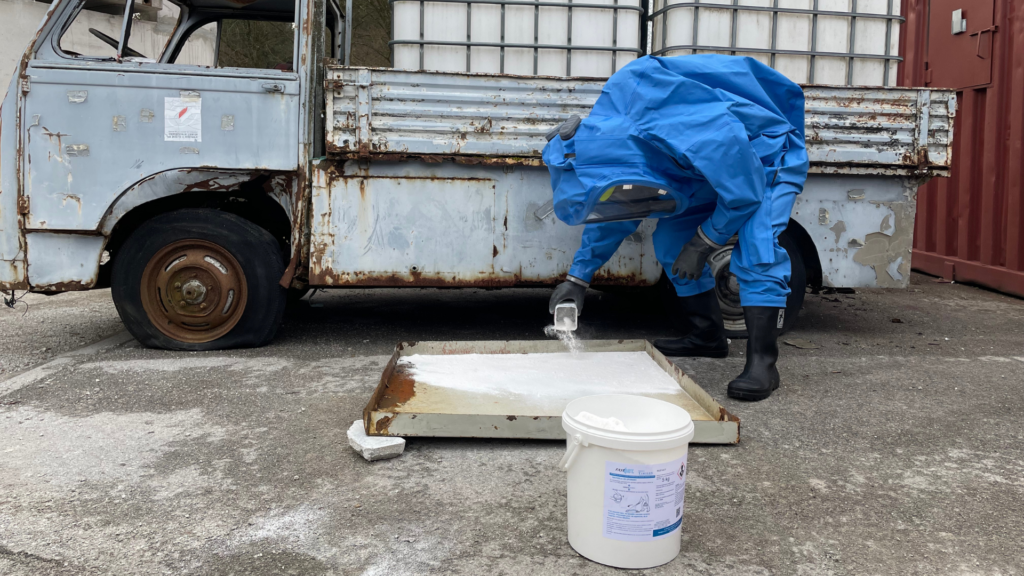
These findings emphasize that organizations should not underestimate seemingly minor spills or leaks. Without rapid assessment and appropriate containment measures, incidents can expose workers, interrupt operations, contaminate equipment, and require significant cleanup efforts.
For manufacturers, warehouses, laboratories, and transportation providers, establishing procedures for chemical hazard response across industrial operations before an incident occurs can improve coordination, reduce secondary contamination, and support faster recovery efforts.
Key takeaway: Small operational issues can quickly become larger emergencies when hazardous materials are involved. Rapid recognition and response help reduce the impact before contamination spreads.
Why Is Rapid Hazardous Materials Response So Important?
While prevention remains essential, no organization can eliminate every risk associated with hazardous materials. The good news is that 72% of organizations surveyed reported feeling fully or well prepared to respond to a hazardous materials incident. However, this also means that more than one-quarter of respondents do not feel adequately prepared if an emergency occurs.
Considering the scale of hazardous materials transportation, preparedness becomes increasingly important. According to PHMSA By the Numbers, more than 1.2 million hazardous materials shipments move throughout the United States every day, totaling approximately 1.6 billion tons annually across all transportation modes.
As hazardous materials continue moving through increasingly complex transportation networks, organizations should routinely evaluate their hazardous materials’ preparedness before an emergency occurs. Every shipment represents an opportunity for safe delivery, but also a potential need for emergency response.
An effective hazardous materials response plan helps organizations:
- Protect workers and first responders
- Limit chemical exposure
- Reduce secondary contamination
- Support faster incident stabilization
- Minimize operational disruption
Selecting the appropriate response strategy is equally important. Understanding dry vs. wet decontamination helps organizations determine the most effective approach based on the hazard, environment, and operational objectives.
Why Is Rapid Hazardous Materials Response So Important?
Workplace exposure remains an ongoing concern. OSHA injury and illness data continues to identify respiratory illnesses among the most commonly reported workplace health issues, highlighting the importance of quickly controlling airborne hazards following a chemical release.
Whether responding to chemical spills, transportation incidents, warehouse leaks, or industrial accidents, the first actions taken during an emergency often determine how effectively the situation is controlled. Incidents involving toxic industrial chemicals, such as chloropicrin, highlight how quickly airborne chemical hazards can develop following a release, reinforcing the importance of early hazard recognition and decontamination.
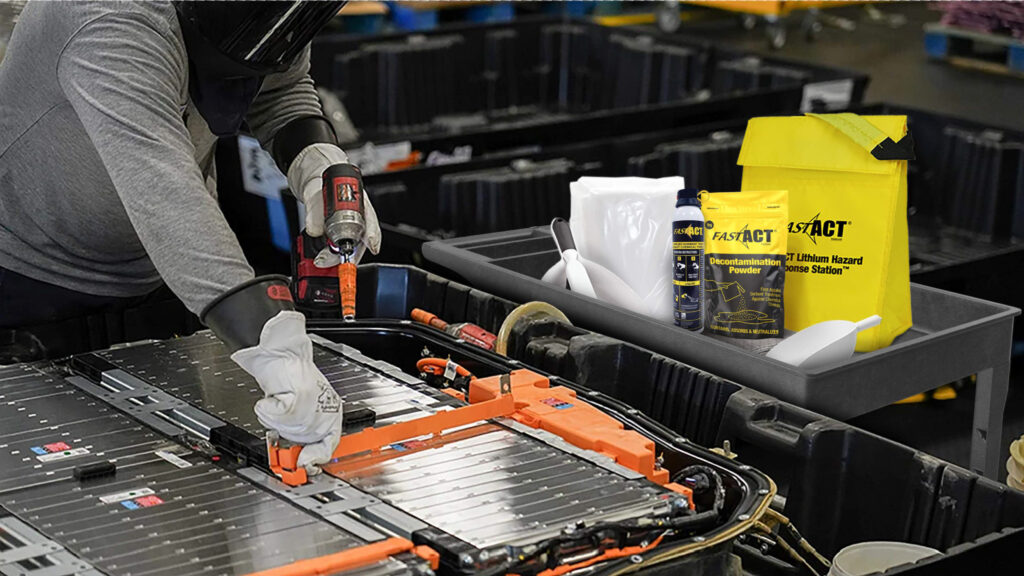
Likewise, emerging hazards such as lithium-ion battery failures continue to reinforce the importance of preparedness. Recent incidents involving thermal runaway have highlighted the need for organizations to understand lithium-ion battery chemical hazards and establish response procedures before an emergency occurs.
Key takeaway: A well-executed hazardous materials response is about more than regulatory compliance. It protects people, limits contamination, and improves operational resilience.
How Can Organizations Strengthen Hazardous Materials Preparedness?
The latest research suggests that preparedness extends far beyond maintaining regulatory compliance. Organizations with effective hazardous materials response programs typically combine training, planning, routine inspections, and continuous improvement. Many also evaluate decontamination strategies for high-risk environments to ensure they are prepared for a wide variety of hazardous scenarios.
Among companies with formal safety management systems, the most commonly implemented elements include:
- Policies and procedures (76%)
- Hazard identification (76%)
- Risk assessments (71%)
- Emergency preparedness planning (71%)
- Incident investigations (56%)
- Audits (45%)
Training also remains one of the industry’s greatest challenges.
Respondents cited several barriers to maintaining effective HAZMAT training programs, including:
- Keeping training current with changing regulations (54%)
- Tracking renewal requirements (40%)
- Identifying employees requiring training (38%)
- Managing different transportation requirements (34%)
High employee turnover and scheduling constraints were also identified as leading obstacles to maintaining workforce readiness. Organizations continue to build preparedness through daily operational practices such as safety meetings, compliance checklists, incident reporting, and digital tracking systems.
Critical infrastructure environments present unique response challenges because large numbers of people may be exposed before a hazardous substance is identified. Lessons learned from chemical threats to subway systems demonstrate why preparedness planning must account for both rapid evacuation and contamination control.
Key takeaway: Preparedness is built long before an incident occurs through consistent training, planning, and routine operational practices.
How Can FAST-ACT® Support Hazardous Materials Response?
While no single solution can replace comprehensive emergency planning, organizations can strengthen their hazardous materials response capabilities by equipping responders with technologies designed to support rapid containment and decontamination.
The science behind FAST-ACT dry decontamination technology explains how its mineral-based formulation helps neutralize a broad range of hazardous chemicals rather than simply absorbing them, making it a valuable addition to many hazardous materials response programs.
FAST-ACT® products are designed to help first responders, HAZMAT teams, industrial facilities, healthcare organizations, military personnel, transportation organizations, and emergency response teams manage hazardous chemical incidents quickly and effectively.
FAST-ACT® technology can support:
- Containment and Neutralization of hazardous chemicals at the source
- Rapid dry decontamination for personnel and equipment
- Targeted chemical decontamination for skin
- Vapor suppression and contamination control
- Chemical spill containment and cleanup
- Removal of radiological particles from surfaces
- Improved responder safety during the critical early stages of an incident
FAST-ACT offers a range of solutions designed to address different response scenarios:
- FAST-ACT 400G Pressurized Cylinder delivers rapid deployment of FAST-ACT powder to help neutralize hazardous chemical vapors, airborne threats, and chemical spills, making it an ideal solution for immediate response to vapor hazards.
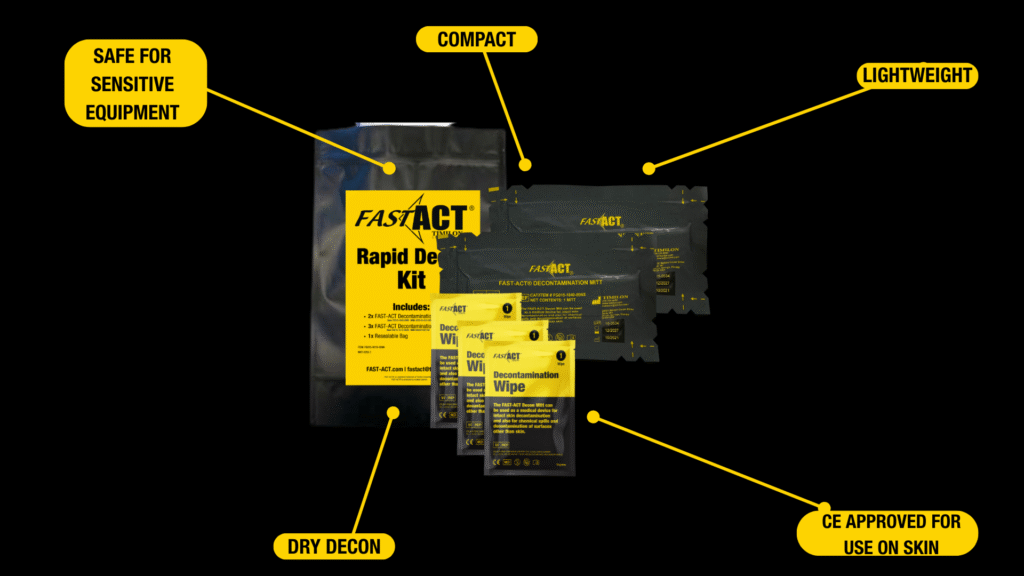
- FAST-ACT Decontamination Mitt is designed for targeted dry decontamination of skin, surfaces, and sensitive equipment while neutralizing hazardous chemicals without introducing additional liquids into the response environment. CE classified as a Class I medical device for use on skin and surfaces in the EU.
- FAST-ACT Decontamination Wipes provide an easy-to-use solution for skin, surfaces, and sensitive equipment proven and tested for decontamination of radiological particles. CE classified as a Class I medical device for use on skin and surfaces in the EU.
- For organizations responding to lithium-ion battery failures, the FAST-ACT Lithium Hazard Response Station™ provides an all-in-one emergency response solution designed to help manage electrolyte leaks, hazardous chemical releases, thermal runaway events, and toxic vapor hazards associated with damaged lithium-ion batteries.
- The FAST-ACT Rapid Decontamination Kit combines multiple FAST-ACT products into a compact, portable system that supports rapid hazardous materials response across a variety of chemical exposure scenarios.
FAST-ACT® solutions are used across transportation, manufacturing, healthcare, public safety, defense, aviation, and emergency management. Rather than replacing existing emergency response plans, FAST-ACT technologies complement established protocols by helping organizations respond more effectively during the critical early stages of an incident.
Preparing for the Next Hazardous Materials Incident
The latest J. J. Keller/COSTHA study reinforces an important lesson for organizations that work with hazardous materials every day: many HAZMAT incidents begin with routine operational challenges rather than catastrophic failures. Documentation errors, packaging issues, training gaps, and process inconsistencies may seem minor individually, but together they create opportunities for hazardous materials emergencies to occur.
While prevention and regulatory compliance remain essential, organizations should also invest in comprehensive hazardous materials’ response planning, workforce training, and technologies that support rapid containment when incidents occur. As new hazards continue to emerge, including those associated with electric vehicles, organizations should also evaluate their preparedness for EV battery spill response and other evolving chemical hazards.
By combining strong operational practices with effective emergency preparedness, organizations can better protect personnel, reduce contamination, and improve resilience when hazardous materials incidents arise.
Download FAST-ACT full transportation booklet: https://fast-act.com/dry-decontamination-products/
About Timilon Corporation:
Timilon Corporation is the manufacturer of FAST-ACT®, a proprietary formulation of non-toxic high-performance specialty materials effective at neutralizing a wide range of toxic chemicals with the added capability to destroy chemical warfare agents. The FAST-ACT technology is utilized by leading defense agencies, chemical industrial companies, first responders and HAZMAT teams to quickly and safely eliminate chemical hazards. For more information, reach out to Leticia Menzzano, Marketing Manager, [email protected].
FAQs
Why is rapid decontamination important during a hazardous materials incident?


Rapid decontamination helps reduce the spread of contamination, minimizes exposure risks, and improves responder safety during the critical early stages of a chemical incident. Acting quickly can help limit secondary contamination and support a more effective emergency response.
How does dry decontamination compare to traditional wet decontamination?
Dry decontamination can often be deployed immediately without requiring large volumes of water or specialized infrastructure. It can help contain contamination, support rapid response efforts, and reduce secondary contamination before additional decontamination measures are implemented.
What industries benefit from hazardous materials preparedness?
Organizations across healthcare, fire and EMS, law enforcement, HAZMAT teams, manufacturing, transportation, defense, utilities, and critical infrastructure all benefit from maintaining hazardous materials response and decontamination plans.
How can organizations improve their HAZMAT preparedness?
Organizations can strengthen preparedness by regularly training personnel, updating emergency response plans, maintaining appropriate decontamination equipment, conducting exercises, and implementing proven procedures for rapid hazard recognition and contamination control.