

Early Hospital Chemical Decontamination: How PRISM and the 15 ’til 50 Framework Help Hospitals Act in the First Minutes
When a chemical exposure incident occurs, hospitals rarely receive advance notice, confirmed agent identification, or fully deployed decontamination systems. Instead, they often face the reality of self-presenting patients arriving within minutes of exposure, sometimes before field hazmat decontamination is completed. This creates a critical window where early hospital chemical decontamination decisions directly affect patient health, hospital staff safety, secondary contamination risk, and overall facility operations.
In these first minutes, hospitals are not choosing between ideal options — they are choosing between practical ones. The priority shifts from perfect chemical decontamination to early risk reduction. Structured frameworks such as the PRISM model and the “15 ’til 50” concept help healthcare facilities make safer, more scalable decisions during uncertain conditions, especially during a mass casualty incident or mass chemical exposure.
This article explores why early hospital chemical decontamination matters, how these frameworks guide response, and how early dry decontamination tools can support hospital preparedness.
The Reality of Chemical Incidents in Healthcare Facilities
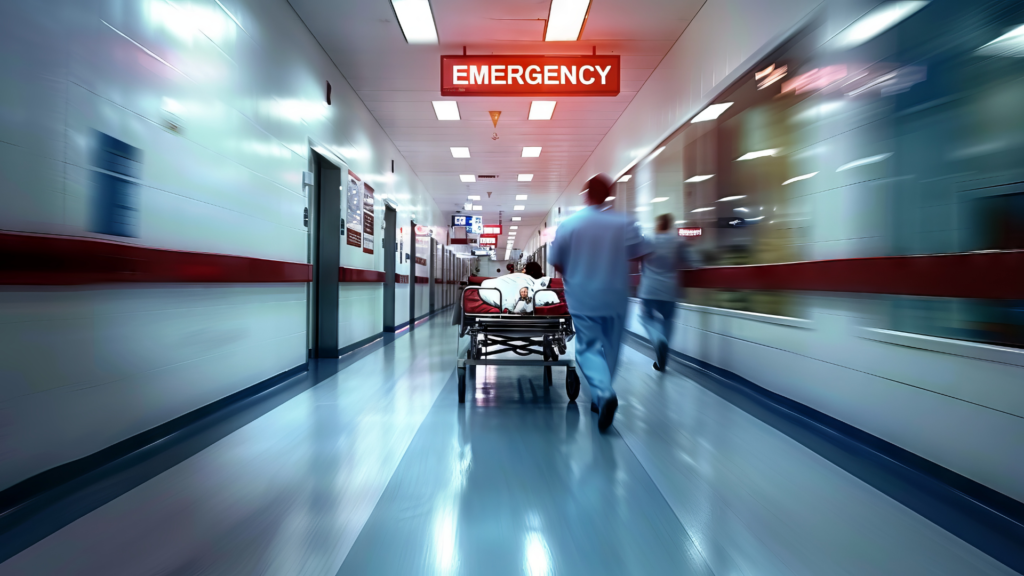
Hazardous materials incidents occur across the United States each year, including industrial accidents, transportation releases, and intentional events involving hazardous chemicals or toxic chemicals. In many situations, patients leave the scene and seek medical care immediately, meaning healthcare facilities may receive contaminated individuals before emergency medical services, or HAZMAT teams complete on-scene decontamination.
This places hospitals in the position of delivering emergency medical treatment while simultaneously managing contamination risk. Staff in the emergency department may not yet know what chemical agents are involved, how many people are affected, or whether additional patients are on the way. Routine hospital operations continue in parallel, limiting staffing, space, and equipment used for chemical decontamination.
Why Early Decisions Carry Outsized Impact
The first decisions during a hazardous materials incident often occur before full command structures are activated and before technical decontamination lines are operational. Hospitals must act with limited situational awareness, evolving scene management information, and environmental conditions that may complicate response.
During this early phase, actions often focus on harm reduction rather than complete decontamination procedures. The goal is to reduce chemical toxicity risk, protect hospital staff, and prevent contaminant spread into patient care areas while more comprehensive systems are mobilized.
Early pressures frequently include:
- Managing patients before formal Hospital Standard Operational Procedure workflows are activated
- Acting without confirmed chemical identification
- Balancing medical care with staff protection
- Preventing contamination spread inside the facility
Because these pressures are predictable, structured frameworks provide essential guidance.
How the PRISM Model Guides Early Hospital Chemical Decontamination
The PRISM model offers a practical framework for managing early risk and stabilizing conditions before full mass-casualty decontamination operations are established. It recognizes that hospitals must often act before they have information or full resources.
PRISM emphasizes that early actions should reduce exposure risk using available dry decontamination systems while supporting downstream decontamination procedures. Patients may arrive before agent confirmation, and early steps should not delay (or complicate) more comprehensive hazmat decontamination.
Importantly, PRISM frames early hospital chemical decontamination as a phased process. Early personal decontamination measures are not intended to replace technical decontamination but to reduce risk until more robust systems are in place. This approach aligns with how Hazmat Incidents and mass exposure chemical incidents unfold in real hospital environments.
Understanding the 15 ’til 50 Framework
The “15 ’til 50” concept provides a timing and surge lens for hospital planning during a mass casualty or mass chemical exposure scenario. It describes the period when hospitals must manage patient surge before full decontamination capability is mobilized.
In practice, this window often begins with early arrivals, where patients present within minutes of exposure. This is followed by an initial surge, during which healthcare facilities manage patients with limited space, staffing, and developing information. As time progresses, hospitals transition into sustained operations and eventually reach full capability once coordinated decontamination systems are active.
The key lesson is that patient surge frequently precedes full capability. Early hospital chemical decontamination strategies should therefore be scalable, rapid, and supportive of downstream workflows rather than resource-intensive at the outset.
The Role of Dry Decontamination in Early Response
Dry decontamination is recognized in multiple preparedness frameworks as a practical early option when water-based decontamination is delayed or constrained. International response doctrine, including the UK’s Initial Operational Response guidance, identifies dry decontamination as an early intervention before mass wet decontamination is established.
Dry decontamination can reduce contaminant transfer, support rapid patient handling, and lower secondary contamination risk. It can also preserve water and infrastructure capacity during the critical early phase of a chemical warfare or industrial chemical incident.
Dry methods are not a substitute for full decontamination when required. Instead, they serve as part of layered decontamination procedures designed to manage risk while larger systems are mobilized.
FAST-ACT Solutions in Early Hospital Decontamination
FAST-ACT technologies are designed to support early risk reduction when time, staffing, or infrastructure limit immediate wet decontamination.
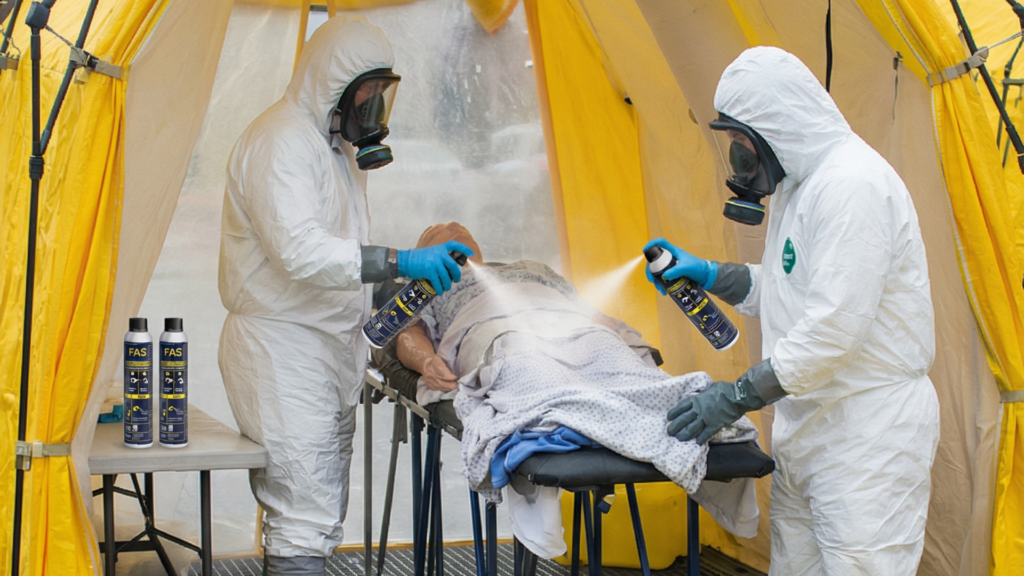
The FAST-ACT Pressurized Cylinder provides a rapid solution for neutralization of hazardous chemical vapors or liquids. Its controlled-discharge valve, safety clip, and lightweight body support portability and ease of use. With no formal maintenance requirements, it is ready for deployment in critical situations.
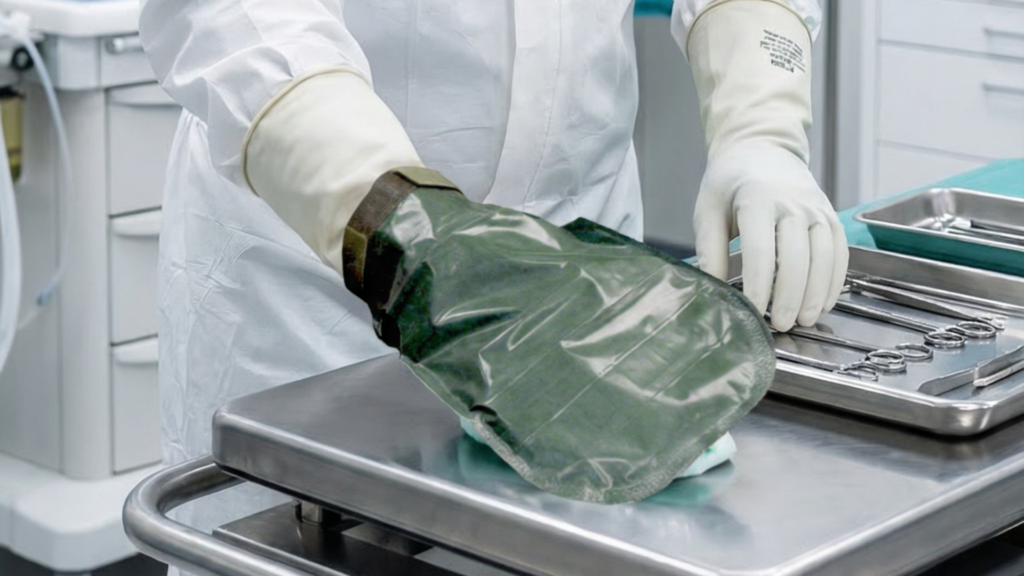
FAST-ACT Decontamination Mitts support rapid neutralization on both skin and surfaces. Featuring FAST-ACT powder on a polyethylene-backed pad, they are designed for a wide range of hazardous chemicals, including chemical warfare agents and toxic industrial materials. *CE classified as a class I medical device for use on skin and surfaces in the EU.
FAST-ACT Decontamination Wipes assist with the removal of trace contaminants, including radiological particles and harmful chemicals from skin, surfaces, and sensitive equipment. Their compact format supports rapid access in emergency environments. *CE classified as a class I medical device for use on skin and surfaces in the EU.
Read More on FAST-ACT Products in Hospital Settings
These tools are designed to complement, not replace,full decontamination lines when available.
Planning for Reality, Not Perfection
Early hospital chemical decontamination is ultimately about managing risk in the minutes before full capability exists. Hospitals should expect contaminated, self-presenting patients, delayed situational clarity, and resource constraints during a hazardous materials incident. In these situations, the earliest actions often have the greatest influence on staff safety, patient health, and operational continuity.
Preparedness is not just about having a decontamination system on-site. It is about ensuring that hospital staff understand how to apply scalable decontamination procedures under real-world conditions. This includes knowing when to initiate dry decontamination, how to protect patient care areas, and how to prevent the spread of hazardous chemicals within the facility.
Hospitals that incorporate frameworks like PRISM and the 15 ’til 50 concept into training and Hospital SOPs are better positioned to respond confidently during a mass casualty or mass chemical exposure event. These frameworks encourage phased response, practical decision-making, and early risk reduction rather than waiting for ideal conditions.
Early hospital chemical decontamination will never be perfect, but it can be effective. By planning for how chemical incidents actually unfold and equipping teams with practical tools and guidance, healthcare facilities can reduce exposure risks, support emergency medical treatment, and maintain safer environments for both patients and hospital staff.
Reach out to our team to see how FAST-ACT can fit into your Emergency Response Plans.
About Timilon Corporation:
Timilon Corporation is the manufacturer of FAST-ACT®, a proprietary formulation of non-toxic high-performance specialty materials effective at neutralizing a wide range of toxic chemicals with the added capability to destroy chemical warfare agents. The FAST-ACT technology is utilized by leading defense agencies, chemical industrial companies, first responders and HAZMAT teams to quickly and safely eliminate chemical hazards. For more information, reach out to Leticia Menzzano, Marketing Manager, [email protected].
FAQs
What is the PRISM model in hospital decontamination?


The PRISM model is a framework that supports early decision-making during chemical incidents. It emphasizes phased response, early risk reduction, and practical actions that can be taken before full decontamination procedures are established. It helps hospitals act effectively even when agent identification is unknown.
What does the “15 ’til 50” concept mean?
The 15 ’til 50 framework describes the time gap between early patient arrival and full decontamination capability. It highlights that hospitals often experience patient surge before they are fully set up for mass-casualty decontamination, reinforcing the need for scalable early response strategies.
Does dry decontamination replace water-based decontamination?
No. Dry decontamination is not a replacement for water-based decontamination when full decontamination is required. It is part of a layered approach to reduce risk in the early stages of a chemical decontamination response.
Why is early decontamination important in hospitals?
Early action helps reduce secondary contamination, protects hospital staff, and supports safer patient care. Contaminants can spread quickly in emergency departments and patient care areas if not addressed promptly, especially during a mass casualty incident or hazardous materials incident.