

Managing Chemical and CBRN Threats at the 2026 FIFA World Cup: What Response Teams Need to Know
The 2026 FIFA World Cup will be one of the largest international sporting events ever conducted, bringing unprecedented operational, transportation, and public safety challenges across the United States, Mexico, and Canada. The FIFA World Cup 2026 expects approximately 6.5 million attendees across 48 teams and 104 matches over a five-week period, running from June 11 through July 19, 2026. The tournament will span 16 host cities, and significantly increase the complexity of emergency response coordination, crowd management, and infrastructure preparedness; placing chemical preparedness and decontamination strategies at the center of public safety planning.
Demand surrounding the tournament is already demonstrating the scale of the event. FIFA reportedly received approximately 150 million ticket requests within weeks of sales opening, a number that far exceeds total tournament attendance capacity, according to Reuters. FIFA President Gianni Infantino has compared the event to “hosting 80 major sports events” simultaneously, highlighting the operational intensity expected across host cities.
While much of the public focus centers around the matches themselves, emergency responders, public safety agencies, hospitals, transportation systems, and venue operators are preparing for a much broader set of challenges. Events of this scale pose CBRN threats that exceed what traditional security planning is designed to handle, making coordinated chemical emergency preparedness essential at every level of response.
This blog will cover the large-scale operational and chemical preparedness considerations surrounding the 2026 FIFA World Cup, and why coordinated emergency response planning is critical for first responders, public safety agencies, and critical infrastructure operators.
Why Does the 2026 FIFA World Cup Present Unique Emergency Preparedness Challenges?
The scale of the 2026 FIFA World Cup creates emergency preparedness challenges far beyond those of a traditional sporting event. With matches spread across multiple countries, metropolitan areas, transportation systems, and public gathering spaces, agencies must coordinate across a highly complex operational environment involving millions of visitors moving between venues, fan zones, airports, entertainment districts, and surrounding infrastructure. Safeguarding critical event infrastructure across this many simultaneous environments requires preparedness strategies that go beyond standard venue security protocols.
Unlike a single-site event, the World Cup will operate simultaneously across stadiums, FIFA Fan Festival™ locations, public watch parties, hotels, restaurants, and transportation corridors throughout host cities. Some metropolitan areas are expected to experience temporary influxes of more than 100,000 additional visitors during high-profile matches involving countries with large traveling fan bases. This places increased pressure on emergency responders, medical services, public transit systems, and public health operations responsible for maintaining safety and operational continuity throughout the event.
Preparedness planning must also account for crowd movement, communication challenges, operational overtime, and maintaining situational awareness across multiple jurisdictions at the same time. As the scale of public gatherings increases, so does the complexity of coordinating emergency response across connected operational environments. Large-scale public events also reinforce the operational challenges response teams face during decontamination in high-risk environments.
What Chemical and CBRN Threats Must Emergency Responders Prepare For?
Large-scale public events require preparedness for a wide range of potential hazardous materials and CBRN threats, particularly in densely populated environments where rapid evacuation and incident isolation may be difficult.
For the 2026 FIFA World Cup, planners are preparing for scenarios involving:
- Toxic industrial chemicals in public gathering areas
- Suspicious substances or unknown chemical exposures
- Vapor threats in enclosed or high-density spaces
- Hazardous materials incidents near transportation corridors
Security experts have noted that many modern chemical threats may not necessarily be intended to create mass casualties, but instead to generate confusion, operational disruption, and public panic within crowded environments. Preparing for CBRN threats during major global events requires response teams to operate in crowded, fast-moving environments where hazard recognition and containment decisions must happen quickly.
Fan zones, public transit systems, stadium entry areas, and HVAC-adjacent spaces may present additional vulnerabilities because contamination or panic can spread quickly before hazards are fully identified. Chemical agents such as chloropicrin have historically been used as crowd-control irritants in public spaces. Understanding agents like chloropicrin and how to respond safely is an important part of chemical preparedness planning for large public events. These realities reinforce why chemical emergency preparedness for the 2026 World Cup requires more than traditional venue security planning alone.
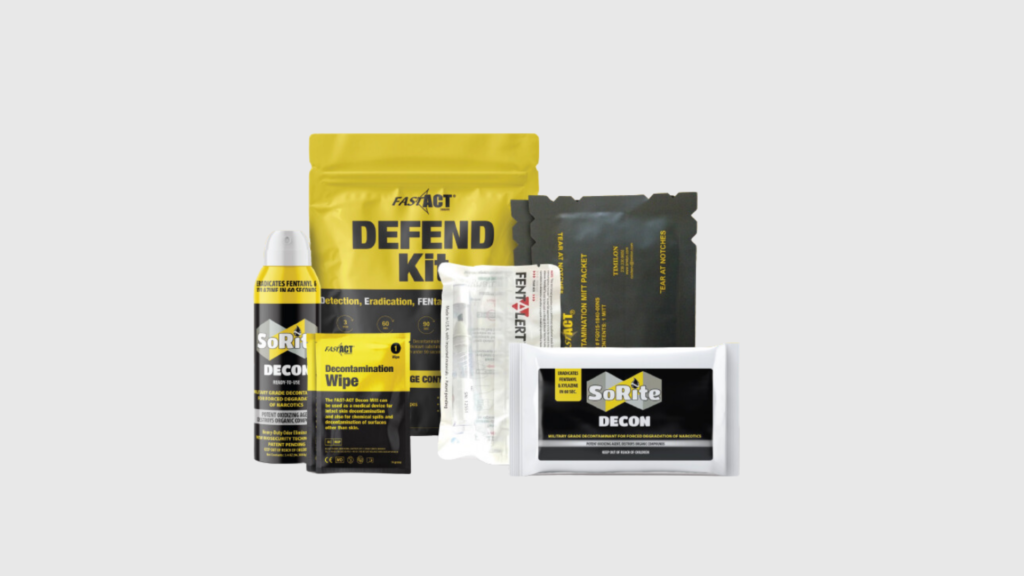
Fentanyl and other synthetic opioids also represent an emerging chemical hazard at large public events. Fentanyl decontamination and detection present unique challenges for first responders operating in crowded environments where secondary exposure risks are high and substance identification may be delayed.
Emergency responders and security personnel must be prepared to rapidly assess unknown hazardous materials, support public safety operations, and maintain operational continuity during dynamic incidents. HAZMAT safety during large-scale public events highlights what response teams need to have in place before an incident occurs.
Why Are Fan Zones and Large Public Gathering Areas Difficult to Manage During Emergencies?
While stadiums typically operate with structured security plans and controlled access points, many surrounding public gathering environments present very different operational challenges during emergencies.
Fan zones, public watch parties, opening ceremony venues, entertainment districts, and transportation corridors often involve less controlled entry screening, heavier crowd movement, and greater communication challenges than traditional stadium operations. These environments may also involve overlapping responsibilities between venue operators, private security, public safety agencies, and local emergency responders, making coordinated response efforts more difficult during rapidly evolving incidents.
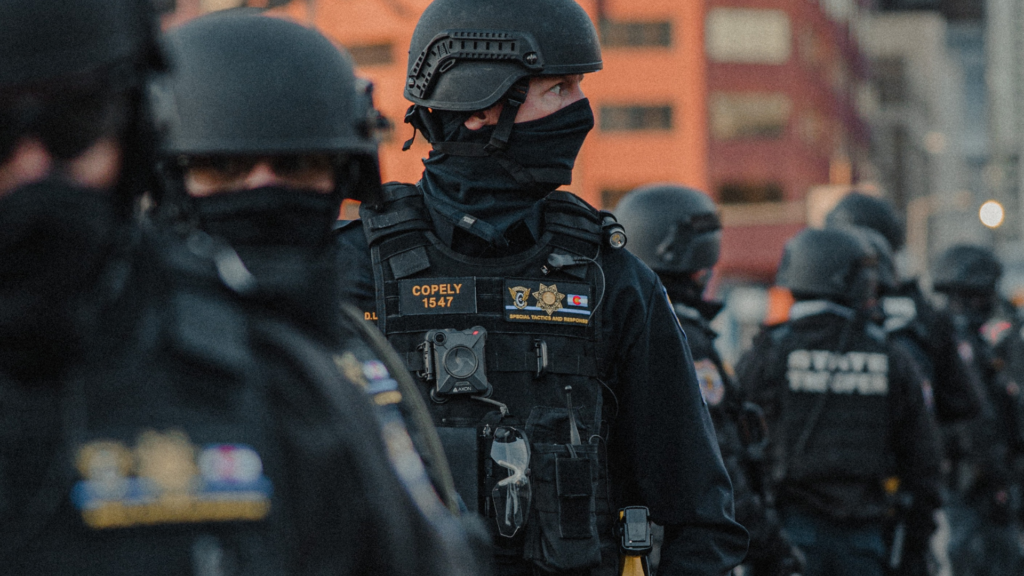
As crowd density increases, maintaining situational awareness across multiple gathering areas becomes significantly more challenging. Delays in hazard recognition, communication breakdowns, or evacuation coordination can complicate response operations and increase public safety risks, particularly during incidents involving unknown chemical exposure in high-density environments where the gap between hazard recognition and effective response can have serious consequences.
Emergency preparedness strategies for the 2026 FIFA World Cup must therefore account not only for stadium security, but also for the broader network of public gathering spaces connected to the event.
Why Is Coordination Between Public Safety Agencies So Important During the 2026 FIFA World Cup?
The scale of the tournament requires extensive coordination between local, state, federal, and international agencies responsible for security activities, emergency response, transportation management, and public health operations.
According to FEMA, preparedness training has been coordinated for more than 238,000 local emergency managers and first responders associated with host city operations. These efforts have focused on emergency response coordination, large sports venue management, mass casualty incident preparedness, incident command structures, and risk communication across multiple operational environments.
Annual emergency management training becomes especially critical when response teams are expected to manage simultaneous incidents across multiple jurisdictions under real-time pressure. In addition, approximately 50,000 police and security personnel are expected to support World Cup operations alongside more than 65,000 FIFA volunteers serving in logistical and operational support roles.
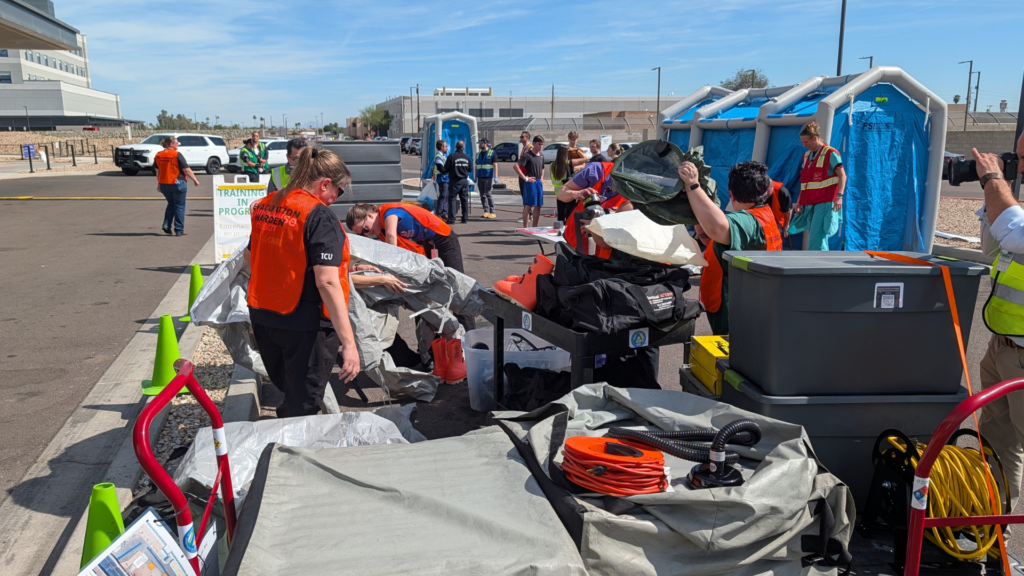
This level of coordination highlights the importance of maintaining clear communication pathways, rapid decision-making capabilities, and flexible response procedures across multiple agencies and jurisdictions. For emergency responders, maintaining operational continuity during rapidly evolving incidents may depend on how quickly hazards can be identified, contained, and managed without creating additional disruption to surrounding infrastructure or public operations.
How Can Organizations Strengthen Chemical Emergency Preparedness for the 2026 World Cup?
Chemical emergency preparedness for the 2026 World Cup requires organizations to prepare for fast-moving incidents involving unknown hazards, large public gatherings, and highly dynamic operational environments.
Preparedness strategies should focus on:
- Rapid emergency response coordination
- Flexible decontamination capabilities
- Hazardous materials preparedness
- Cross-agency operational planning
Response teams must also be equipped with solutions that support rapid deployment without adding additional operational complexity during active incidents. In large public event environments, response capabilities must remain flexible enough to support transportation systems, public gathering areas, hospitals, and venue operations simultaneously. Understanding whether to use dry or wet decontamination procedures, or when to use both methods is a critical component of building field-ready response capabilities for large-scale public events.
FAST-ACT® supports chemical emergency preparedness through dry decontamination technology designed for hazardous materials response, unknown chemical incidents, and operational environments where rapid deployment and flexibility are critical. Because FAST-ACT® does not require water or complex setup procedures, it can support response operations across transportation systems, public gathering areas, hospitals, and large event environments where maintaining operational continuity is essential. For high-density contamination scenarios across wide operational areas, FAST-ACT® provides scalable decontamination solutions that can be deployed without delay.
The FAST-ACT 400g Pressurized Cylinder for example, integrates these capabilities into a compact, portable system designed for immediate deployment in field response environments, making it well-suited for the fast-moving, multi-site operational demands of an event like the 2026 FIFA World Cup.
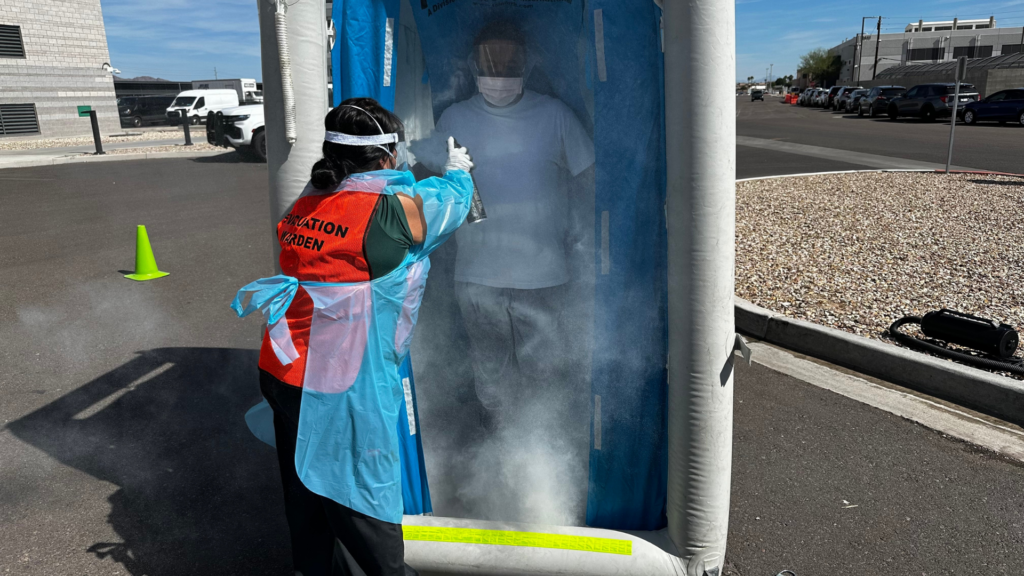
As the FIFA World Cup 2026 approaches, preparedness efforts will continue expanding across host cities and supporting infrastructure. Organizations responsible for emergency response and public safety must ensure they are prepared not only for traditional security challenges, but also for hazardous materials incidents and chemical threats that could impact both responders and the public.
Strengthening Emergency Preparedness for Large-Scale Public Events
The 2026 FIFA World Cup represents a historic operational challenge involving millions of visitors, multiple countries, large public gathering areas, and highly coordinated emergency response operations.
From stadiums and fan zones to hospitals and transportation systems, maintaining public safety during an event of this scale requires extensive planning, communication, and preparedness across every level of response. Modern chemical decontamination approaches are evolving to meet the demands of increasingly complex, large-scale response environments and organizations must ensure their preparedness strategies keep pace.
Chemical emergency preparedness for the 2026 World Cup is not limited to a single venue or agency. It requires coordinated strategies capable of supporting rapid response, operational continuity, and public safety across complex environments where unknown hazards and large crowds intersect.
As large-scale public events continue growing in size and complexity, organizations must ensure their preparedness strategies evolve alongside the operational realities response teams face in the field.
Follow along with our 2026 World Cup preparedness blog series as we explore how response teams, hospitals, transportation systems, and public safety agencies are preparing for the operational challenges surrounding large-scale public events.
About Timilon Corporation:
Timilon Corporation is the manufacturer of FAST-ACT®, a proprietary formulation of non-toxic high-performance specialty materials effective at neutralizing a wide range of toxic chemicals with the added capability to destroy chemical warfare agents. The FAST-ACT technology is utilized by leading defense agencies, chemical industrial companies, first responders and HAZMAT teams to quickly and safely eliminate chemical hazards. For more information, reach out to Leticia Menzzano, Marketing Manager, lmenzzano@timilon.com.
FAQs
How does FAST-ACT® support chemical emergency preparedness?


FAST-ACT® supports chemical emergency preparedness through dry decontamination technology designed for hazardous materials incidents and unknown chemical exposures.
Can FAST-ACT® be used during large-scale public events?
During large-scale public events, delays in hazard recognition and response can increase contamination spread and operational disruption. Rapid decontamination capabilities can help support incident control, protect personnel, and maintain public safety during fast-moving emergency scenarios.
Why is FAST-ACT® valuable during incidents involving unknown chemical hazards?
FAST-ACT® does not require prior identification of the hazardous substance before deployment. This allows response teams to begin containment and neutralization efforts quickly while incident assessment and identification continue, helping reduce contamination spread and support operational continuity.