

Chemical Spill Response and Decontamination Challenges in Stadium Environments
As preparations for the 2026 FIFA World Cup continue, much of the attention surrounding emergency preparedness has focused on crowd size, transportation systems, and large public gathering areas. However, stadiums present a different set of operational realities that require specialized planning. Chemical preparedness across large-scale event venues goes far beyond traditional perimeter planning, and stadiums are among the most operationally complex environments response teams will face during the 2026 World Cup.
The scale alone introduces challenges that extend beyond traditional venue security planning. The 16 FIFA World Cup venues span three host countries, with stadium capacities ranging from approximately 45,700 attendees at BMO Field in Toronto to nearly 93,000 at AT&T Stadium in Arlington, Texas. MetLife Stadium, host of the 2026 FIFA World Cup Final, represents one of the most complex security environments due to its location within a densely populated metropolitan area and the scale of operations expected during the tournament. Coordinating chemical preparedness across 16 venues in three countries requires response strategies that go well beyond what traditional stadium emergency planning has historically addressed.
Chemical preparedness for stadiums requires more than perimeter security and crowd management planning. Stadium operators, emergency responders, HAZMAT teams, and public safety agencies must prepare for challenges involving enclosed spaces, contamination spread, evacuation coordination, and maintaining operational continuity in environments designed to move and manage tens of thousands of people at once. CBRN preparedness for large-scale global events demands purpose-built decontamination strategies for stadium environments specifically.
This blog explores the unique chemical spill response and decontamination challenges associated with stadium operations and why preparedness planning for large-scale sporting venues requires a broader operational approach.
Why Are Stadiums Different From Other Public Gathering Spaces?
Unlike open public gathering environments, stadiums function as layered operational ecosystems. Large venues contain seating bowls, enclosed concourses, tunnels, concession areas, locker rooms, staff corridors, media facilities, security checkpoints, and multiple levels of public access points , all operating simultaneously during events.
These environments are designed to efficiently move large volumes of people through controlled spaces. However, that same infrastructure can introduce additional challenges during chemical emergencies or hazardous materials incidents. Decontamination across interconnected high-risk environments presents operational realities that response teams must plan for well in advance of an active incident.
Modern stadium operations increasingly rely on advanced technologies to improve event risk management and crowd safety planning. FIFA World Cup venues have incorporated digital twin technology that allows operators to simulate crowd flow patterns, entry queues, and evacuation scenarios before match day. These simulations help stadium safety planning teams identify vulnerabilities and understand how movement patterns may shift during rapidly evolving situations.
The complexity of these environments reinforces why chemical preparedness for stadiums extends beyond traditional emergency response planning. Protecting spectators, security personnel, Emergency Medical Services teams, and operational staff requires planning that accounts for how hazards can move throughout interconnected spaces. HAZMAT safety planning for large events must account for stadium environments where a single chemical incident can quickly affect multiple operational zones simultaneously.
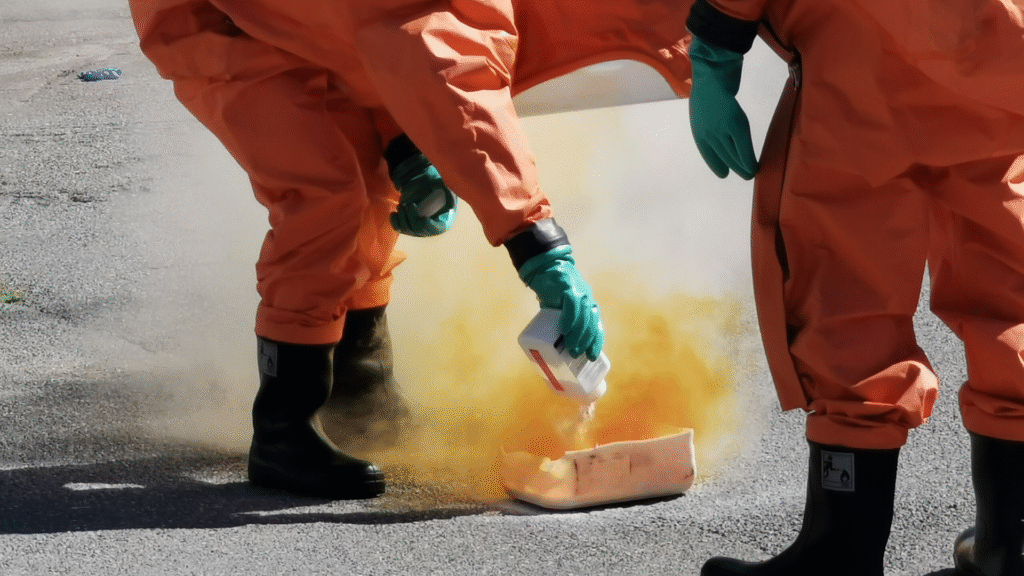
How Can Chemical Incidents Spread Through Stadium Infrastructure?
Chemical incidents inside stadiums create challenges that differ significantly from open-air environments. According to FEMA’s guidance on chemical incident planning, enclosed or low-lying areas may trap toxic vapors or liquid contaminants long after an initial release occurs, creating ongoing exposure risks even after an incident appears contained.
Within large sports facilities, contamination concerns may extend far beyond the original release location. Areas that may contribute to contamination spread include:
- Shared HVAC systems
- Enclosed tunnels and service corridors
- Concession and concourse areas
- Interior gathering spaces and waiting areas
The CDC notes that when chemical fumes enter areas connected through shared ventilation systems, HVAC systems may need to be shut down immediately to reduce contamination spread throughout the venue.
An additional challenge involves delayed exposure recognition. FEMA planning guidance notes that when symptoms are not immediately visible, exposed individuals may continue moving throughout a city, region, or transportation network before the incident is identified. During large sporting events involving tens of thousands of attendees, this creates significant challenges for incident identification and public safety response efforts.
Chemical agents, such as crowd-control chemicals like chloropicrin, have historically been used as irritants and represent a realistic threat profile for large enclosed venues. Similarly, fentanyl and synthetic opioid exposure risks in high-density environments are particularly acute in stadium settings where secondary exposure risks are high, and substance identification may be significantly delayed.
Understanding how contamination can move through connected environments is an increasingly important component of chemical preparedness for high-contamination stadium scenarios.
Why Is Crowd Movement So Difficult During Stadium Emergencies?
Crowd movement inside stadiums introduces challenges that extend beyond evacuation planning alone. During emergencies, maintaining crowd safety often depends on communication, situational awareness, and how quickly emergency responders can establish operational control.
Large venues contain multiple choke points where movement naturally slows, including entry gates, stairwells, concession areas, pedestrian tunnels, and transportation exits. During rapidly evolving incidents, these areas may become increasingly difficult to manage. Without a defined strategy for unknown hazardous materials, the gap between hazard recognition and effective response can widen significantly in environments where crowd movement is already difficult to control.
Real-world incidents continue to demonstrate how quickly crowd control failures can escalate. The 2022 Kanjuruhan Stadium disaster in Indonesia, which resulted in 135 fatalities, highlighted how crowd movement challenges and chemical crowd-control agent incidents in stadiums can rapidly contribute to mass casualty conditions when preparedness and evacuation protocols fall short.
Mass decontamination planning introduces additional considerations. Research published in Health Security has shown that public cooperation during decontamination events depends heavily on how information is communicated, and that delays, inconsistent messaging, or confusion during response operations can complicate evacuation procedures and increase operational pressure on emergency responders.
Chemical preparedness for stadiums requires more than response plans alone. It requires planning that considers how people behave, move, and react within highly concentrated environments.
What Preparedness Capabilities Matter Most for Stadium Operations?
According to the World Health Organization’s mass gathering preparedness framework, planning for chemical and biological incidents requires organizations to establish coordinated capabilities involving surveillance, assessment, decontamination procedures, and medical management.
For stadium environments, preparedness efforts often involve:
- Emergency response planning and training programs
- Coordination between security agencies and local authorities
- HAZMAT team integration
- Emergency Medical Services readiness
- Public communication procedures
Regular emergency management training is especially critical in stadium environments where response teams are expected to manage simultaneous incidents across multiple operational zones under real-time pressure and in front of tens of thousands of spectators.
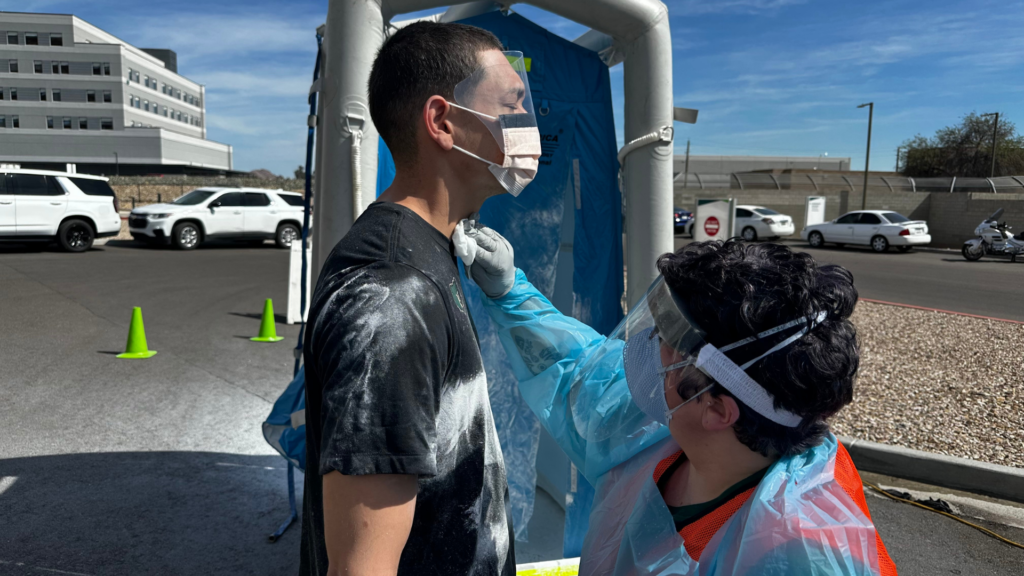
Preparedness exercises must also account for operational continuity and how response efforts affect both spectators and venue personnel. During events operating at full capacity, response teams may need to maintain public safety while simultaneously supporting emergency operations, venue management activities, and crowd movement coordination. Understanding whether dry or wet decontamination is right for the situation is a critical component of building flexible, field-ready response capabilities for stadium environments where water access and setup time may be limited.
As stadium operations become increasingly complex, emergency preparedness planning continues evolving alongside emerging risks and large-scale event requirements.
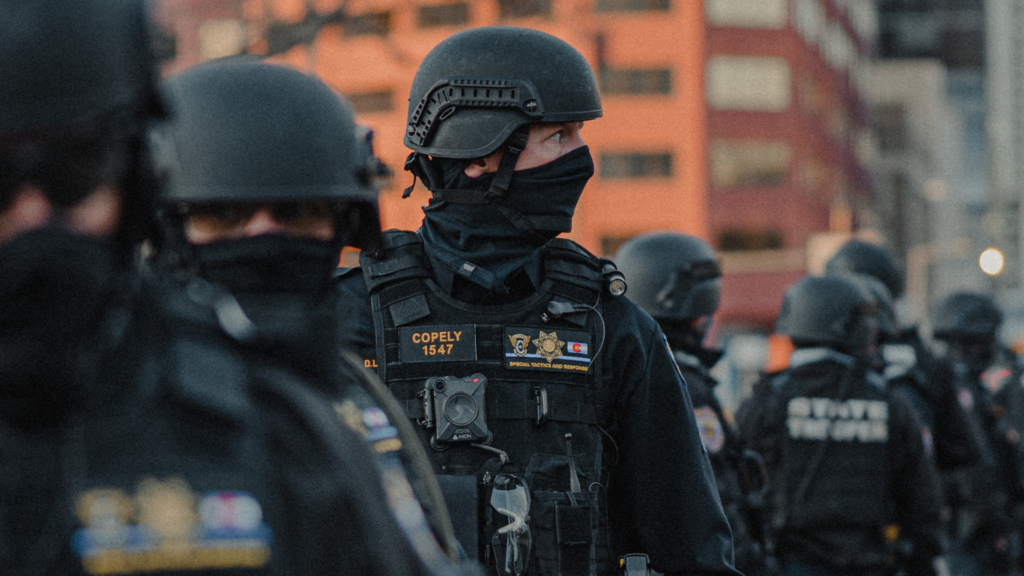
How Does FAST-ACT® Support Chemical Preparedness for Stadiums?
Chemical preparedness for stadiums requires solutions capable of supporting response operations across dynamic environments where rapid deployment, operational flexibility, and contamination control are essential.
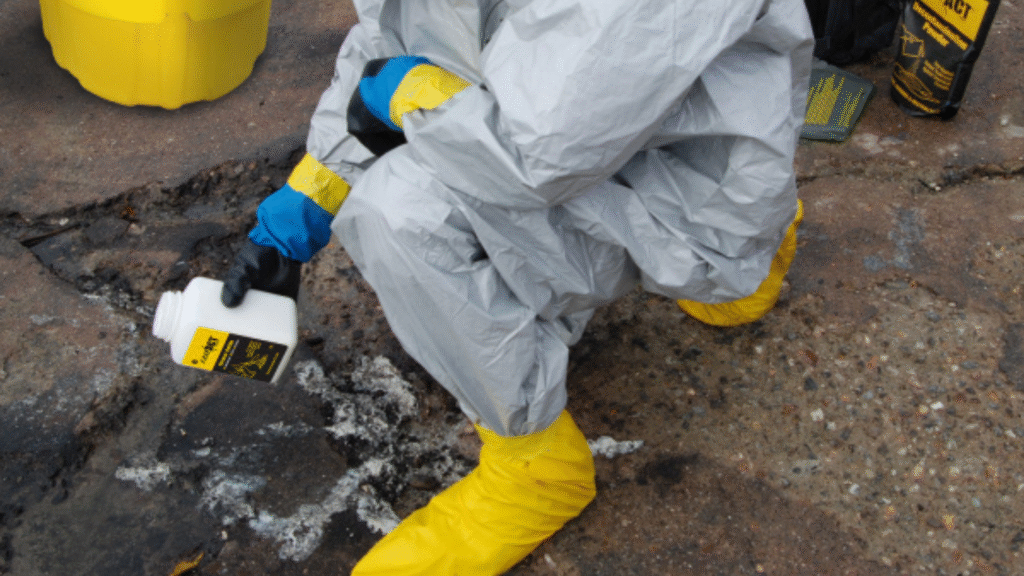
FAST-ACT® supports hazardous materials response and decontamination operations without requiring water or extensive setup procedures, helping response teams maintain operational continuity during active incidents. The science behind FAST-ACT’s dry decontamination technology explains why its formulation is particularly effective in enclosed, high-density environments where vapor and surface hazards can spread rapidly across connected spaces.
Because FAST-ACT® dry decontamination can support unknown hazardous materials scenarios, it provides flexibility in environments where hazards may not be immediately identified, and response timelines are compressed.
FAST-ACT® solutions supporting stadium preparedness operations include:
- FAST-ACT Rapid Decontamination Kit (RDK): a compact, portable system designed for immediate deployment in dynamic stadium response environments
- FAST-ACT Pressurized Cylinders for fast, broad-area deployment of vapor threats
- FAST-ACT Decontamination Mitts and FAST-ACT Decontamination Wipes for targeted applications on skin and equipment. *CE classified as a class I medical device for use on skin and surfaces in the EU.
- FAST-ACT Shaker Bottles and FAST-ACT Bulk Pail for scalable contamination response scenarios
These tools help support decontamination operations while reducing operational complexity and allowing responders to rapidly adapt to changing incident conditions. Chemical decontamination in complex large-scale response environments continues evolving, and stadium preparedness strategies must keep pace ahead of events like the 2026 FIFA World Cup.
Strengthening Chemical Preparedness for Stadiums
Modern stadiums represent some of the most operationally complex public environments involved in large-scale events. Crowd density, infrastructure design, contamination spread considerations, and communication challenges create preparedness realities that extend beyond traditional security planning.
Chemical preparedness for stadiums requires coordination between emergency responders, public safety agencies, venue operators, and hazardous materials teams capable of supporting rapidly evolving situations.
Follow along with our 2026 World Cup preparedness blog series as we continue exploring how hospitals, transportation systems, fan zones, and public safety agencies are preparing for the operational challenges surrounding large-scale public events.
About Timilon Corporation:
Timilon Corporation is the manufacturer of FAST-ACT®, a proprietary formulation of non-toxic high-performance specialty materials effective at neutralizing a wide range of toxic chemicals with the added capability to destroy chemical warfare agents. The FAST-ACT technology is utilized by leading defense agencies, chemical industrial companies, first responders and HAZMAT teams to quickly and safely eliminate chemical hazards. For more information, reach out to Leticia Menzzano, Marketing Manager, lmenzzano@timilon.com.
FAQs
Can FAST-ACT® be used when the hazardous material is unknown?


Yes. FAST-ACT® does not require prior identification of the hazardous material before deployment. This allows response teams to begin containment and decontamination efforts while assessment and incident investigation continue.
How does FAST-ACT® support chemical preparedness for stadiums?
FAST-ACT® supports chemical preparedness for stadiums through dry decontamination technology designed for hazardous materials incidents, unknown chemical exposures, and rapidly evolving operational environments. FAST-ACT® can support response efforts while helping maintain operational continuity in active stadium settings.
Why is dry decontamination valuable in stadium environments?
Stadium incidents may require rapid deployment without introducing additional operational complexity. FAST-ACT® dry decontamination technology does not require water or extensive setup procedures, making it well-suited for dynamic environments where response speed and flexibility are critical.
Can FAST-ACT® support operational continuity during large public events?
FAST-ACT® is designed to support hazardous materials response while helping organizations maintain operational flexibility during active incidents. Its rapid deployment capabilities can help response teams manage contamination concerns without relying on extensive infrastructure or setup requirements.