

What the Longview Paper Mill Disaster Teaches Us About Industrial Chemical Spill Preparedness
On May 26, 2026, an industrial tragedy unfolded at the Nippon Dynawave Packaging paper mill in Longview, Washington. A 900,000-gallon storage tank containing white liquor, a corrosive chemical solution used in the kraft pulping process, imploded during a shift change, killing 11 workers and injuring seven others, along with one firefighter. The incident has been described as Washington state’s deadliest industrial disaster in nearly a century, and the U.S. Chemical Safety and Hazard Investigation Board (CSB) has launched a formal investigation into the cause.
While investigators continue working to determine exactly what happened, the disaster serves as a sobering reminder of the hazards that industrial facilities manage every day. Catastrophic failures like the Longview implosion are fortunately rare, but chemical leaks, toxic gas releases, hazardous material spills, fires, and explosions remain ongoing risks across manufacturing plants, processing facilities, refineries, warehouses, and industrial sites around the world.
Industrial chemical hazard response requires preparedness strategies tailored to each facility’s unique risk profile, whether that involves corrosive liquids, toxic gases, or combustible materials. The question for industrial organizations is not simply how to respond after a major incident; it is how to strengthen industrial chemical spill preparedness before one occurs.
What Happened During the Longview Paper Mill Chemical Incident?
The Longview incident involved the catastrophic implosion of a storage tank containing approximately 900,000 gallons of white liquor, a highly alkaline chemical mixture primarily composed of sodium hydroxide, sodium sulfide, and sodium carbonate. White liquor plays an essential role in the kraft pulping process, but it is also highly corrosive and capable of causing severe injuries upon exposure.
The implosion occurred during a shift change, when workers were gathered near the facility, contributing to the high number of casualties. Recovery operations proved exceptionally difficult due to collapsed structures, exposed electrical hazards, and ongoing contamination concerns. Search and recovery teams underwent decontamination procedures each time they exited the work zone, while recovered victims were also decontaminated before being transported for identification.
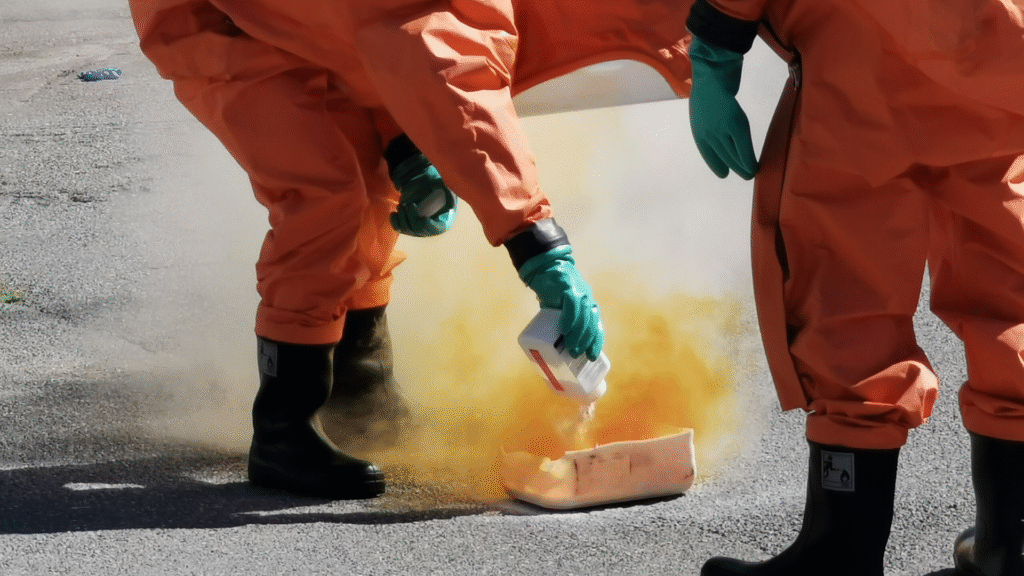
Although the investigation remains ongoing, the incident highlights how quickly industrial chemical emergencies can escalate and how recovery operations often extend well beyond the initial response. Industrial decontamination during emergency response, including the repeated decontamination cycles required of responders entering and exiting an active hazard zone, illustrates just how resource-intensive recovery operations can become.
Why Are Industrial Chemical Spills Still a Major Safety Concern?
Catastrophic paper mill disasters receive national attention because they are uncommon. However, industrial chemical incidents occur far more frequently than many organizations realize.
Facilities handling hazardous chemicals routinely manage risks involving:
- Chemical leaks
- Hazardous material spills
- Toxic gas releases
- Vapor hazards
- Corrosive chemical exposure
- Process equipment failures
- Fires and explosions
- Environmental contamination
Whether a facility manufactures paper products, chemicals, batteries, food products, or industrial equipment, many operations depend on chemicals that require careful handling, storage, and emergency response planning. Lithium-ion battery chemical hazards illustrate how diverse and unpredictable modern industrial chemical risks have become, extending well beyond traditional liquid spills. No two incidents are identical, but they often share one characteristic: once a hazardous material is released, every minute matters.
Strong industrial chemical spill preparedness begins long before an emergency occurs through hazard identification, employee training, emergency response planning, and the availability of appropriate spill response resources. Industrial chemical spill response solutions help organizations close the gap between traditional containment methods and the rapid contamination management that active incidents demand.
How Do Industrial Chemical Spills Impact Workers, Responders, and the Environment?
Industrial chemical incidents rarely affect only one area of a facility. Depending on the chemical involved, releases may expose workers, generate hazardous vapors, contaminate equipment, damage infrastructure, or migrate into surrounding soil and waterways.
The Longview response demonstrated these challenges in real time. Officials worked to prevent contaminated runoff from reaching nearby waterways, while environmental responders monitored water quality and wildlife impacts. Firefighters and recovery personnel also had to manage ongoing contamination risks throughout the response.
Beyond immediate life safety concerns, organizations may also face:
- Operational downtime
- Environmental contamination
- Hazardous waste handling
- Regulatory investigations
- Equipment decontamination
- Infrastructure cleanup
- Business interruption
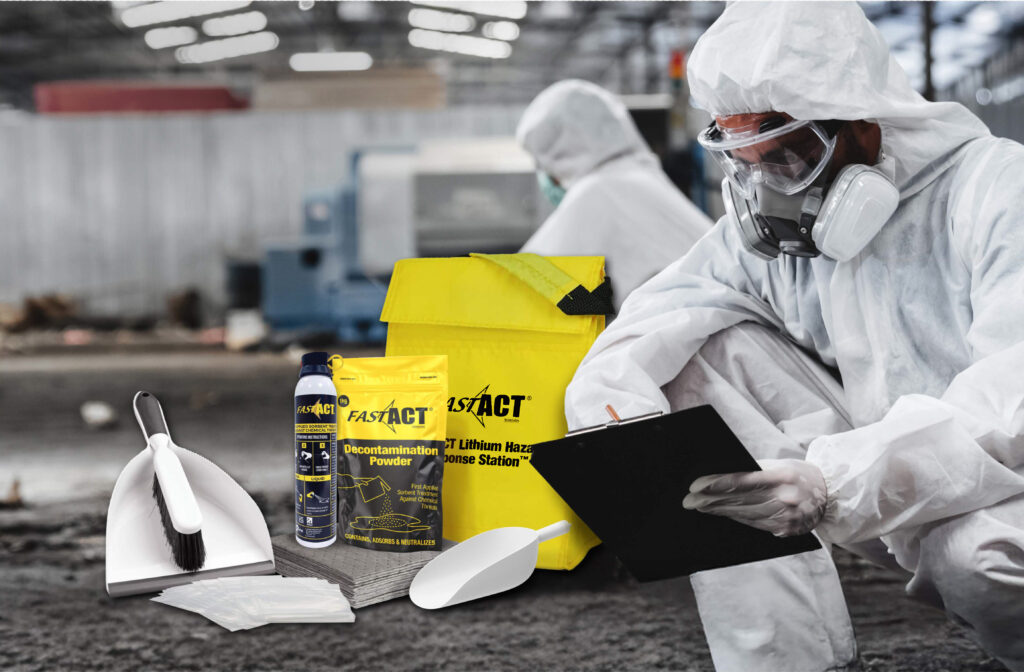
Limiting contamination during the earliest stages of an incident can significantly reduce the complexity of downstream cleanup, environmental remediation, and facility recovery. Early contamination management is one of the most effective ways organizations can limit the scope of environmental and operational impacts following a chemical release.
Why Is Early Chemical Spill Response Critical During Industrial Emergencies?
Every industrial chemical spill presents a different set of challenges, but one principle remains consistent: early action can significantly influence the outcome.
Rapid spill response helps organizations:
- Reduce worker exposure
- Limit contamination spread
- Minimize vapor hazards
- Support employee safety
- Protect critical equipment
- Reduce environmental impacts
- Improve operational continuity
Preparedness is more than having a written chemical spill response plan. It requires training and drills, clearly defined emergency response procedures, hazard assessments, spill containment strategies, and response equipment that can be deployed quickly when every second counts. Having a defined strategy for unidentified hazardous materials is especially important during the earliest moments of an incident, when the substance involved may not yet be confirmed.
For facilities managing hazardous chemicals, preparation before an incident is often the most effective way to reduce the consequences afterward. Choosing a dry decontamination solution is an important consideration for organizations evaluating spill response equipment, since not every product on the market offers the same level of effectiveness.
How Can Industrial Facilities Improve Chemical Spill Preparedness?
Industrial preparedness should be viewed as an ongoing process rather than a compliance exercise.
Organizations can strengthen their chemical spill preparedness by:
- Conducting routine hazard identification assessments
- Maintaining and reviewing chemical spill response plans
- Training employees on emergency procedures
- Performing spill response drills
- Evaluating hazardous chemical storage practices
- Coordinating with emergency response teams and local HAZMAT agencies
- Reviewing spill containment and secondary containment strategies
- Preparing for both liquid spills and vapor hazards
The most effective preparedness programs combine planning, training, communication, and readily available response resources to help protect employees, facilities, and surrounding communities. Facilities managing specialized hazards, including EV battery spill response, benefit from preparedness strategies tailored to their specific operational risks. Hazardous package spill response further illustrates how varied modern industrial hazard profiles have become. Facilities with on-site laboratories should also consider laboratory chemical spill response, as these environments present a distinct set of containment challenges from larger industrial process areas.
How Can FAST-ACT® Support Industrial Chemical Spill Response?
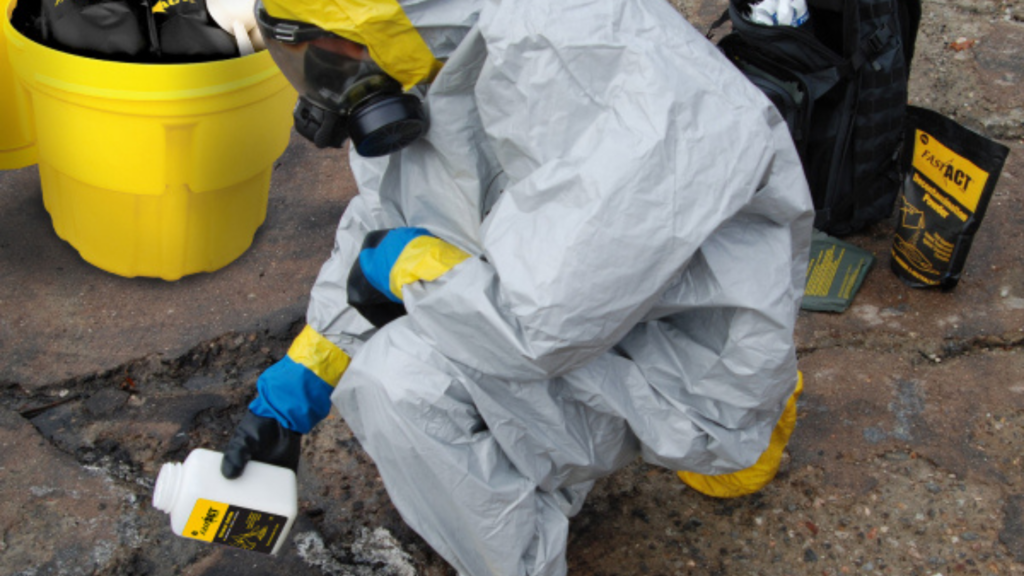
When a chemical incident occurs, responders need solutions that can be deployed quickly to help manage contamination and support emergency operations. FAST-ACT technology is designed to support industrial chemical spill preparedness through rapid contamination management and dry decontamination solutions that complement existing emergency response plans.
FAST-ACT® Pressurized Cylinders
FAST-ACT Pressurized Cylinders provide a rapid-response solution for managing vapor hazards and chemical contamination. With an average discharge time of approximately 9.9 seconds, they allow responders to quickly apply FAST-ACT® technology to affected areas. Rather than simply absorbing a spill, FAST-ACT® helps contain and neutralize hazardous chemicals, reducing ongoing hazards and making cleanup, handling, and disposal safer and more efficient.
FAST-ACT® Bulk Pails
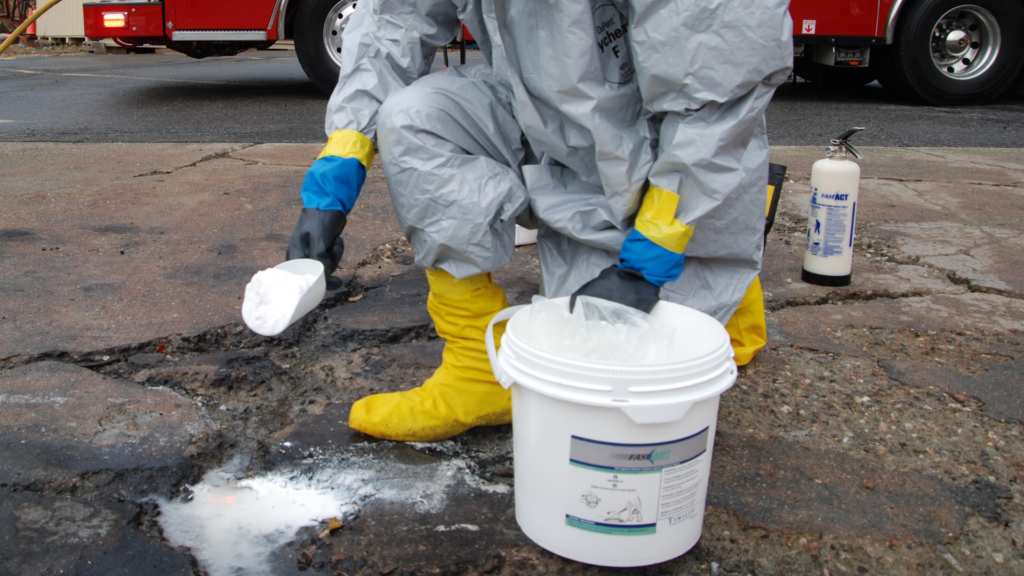
FAST-ACT Bulk Pails provide facilities with a versatile option for managing larger chemical spills, hazardous material incidents, and contamination concerns across industrial sites.
FAST-ACT® Shaker Bottles
FAST-ACT Shaker Bottles provide a convenient solution for localized chemical spills and targeted contamination management where fast application is needed. By helping contain and neutralize hazardous chemicals, they can simplify spill cleanup, support safer handling of contaminated materials, and improve overall spill response operations.
What Can Industrial Facilities Learn From the Longview Paper Mill Disaster?
The Longview paper mill disaster is a tragic reminder of the risks faced by workers across industrial facilities every day. While investigators continue searching for answers, one lesson is already clear: effective industrial chemical spill preparedness cannot begin after an incident occurs.
Organizations that invest in hazard identification, employee training, emergency response planning, spill response capabilities, and contamination management are better positioned to protect their workforce, reduce operational disruptions, and strengthen overall resilience.
Catastrophic incidents may be rare, but chemical leaks, hazardous material spills, toxic gas releases, and industrial emergencies remain an ongoing reality. Preparing for those everyday risks is one of the most effective ways facilities can improve safety before the next incident occurs.
About Timilon Corporation:
Timilon Corporation is the manufacturer of FAST-ACT®, a proprietary formulation of non-toxic high-performance specialty materials effective at neutralizing a wide range of toxic chemicals with the added capability to destroy chemical warfare agents. The FAST-ACT technology is utilized by leading defense agencies, chemical industrial companies, first responders and HAZMAT teams to quickly and safely eliminate chemical hazards. For more information, reach out to Leticia Menzzano, Marketing Manager, [email protected].
FAQs
How can FAST-ACT® support industrial chemical spill response?


FAST-ACT® technologies are designed to support industrial chemical spill preparedness through rapid contamination management and dry decontamination solutions. FAST-ACT® products can help facilities respond to chemical spills, hazardous material incidents, vapor hazards, and contamination concerns while supporting worker safety and operational continuity.
How can industrial facilities reduce the impact of chemical spills?
Facilities can reduce the impact of chemical spills by developing comprehensive emergency response plans, training employees, implementing spill prevention measures, maintaining readily available spill response equipment, and using contamination management strategies that help limit the spread of hazardous materials.
Why is early chemical spill response important?
Rapid spill response can help reduce worker exposure, limit contamination spread, protect critical equipment, and minimize environmental impacts. Taking action early often simplifies cleanup, supports operational continuity, and reduces the overall impact of a chemical incident.