

Industrial Chemical Preparedness: Longview Paper Mill Disaster
On May 26, 2026, a 900,000-gallon chemical storage tank at the Nippon Dynawave Packaging facility in Longview, Washington, catastrophically failed. Eleven workers were killed. Three others were seriously injured. Washington Governor Bob Ferguson called it the state’s deadliest industrial disaster in nearly a century.
The investigation is still ongoing, and what has already emerged tells a story that extends well beyond Longview. This blog traces the documented timeline of warnings and failures at Nippon Dynawave, and examines what industrial facilities can take from this event to strengthen their own chemical spill preparedness before the next incident occurs.
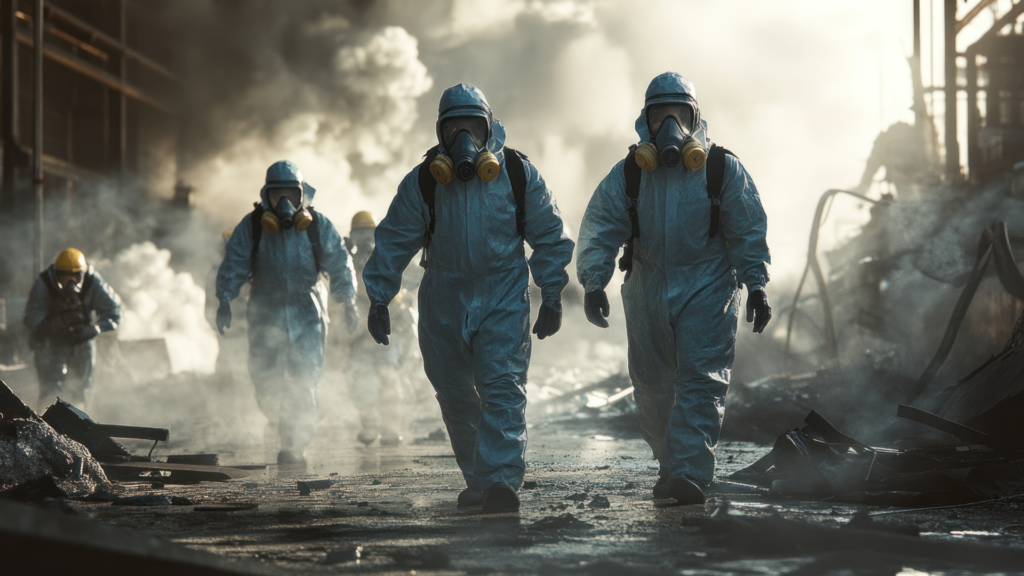
What Happened at Nippon Dynawave and When Did the Warnings Start?
July 2025
An inspection contractor finds significant wall thinning below the minimum safe thickness in Tank G, a 900,000-gallon white liquor storage tank. The report designates the finding as “Priority 1: Not fit for continued service” with a “high likelihood/consequence of failure.” Internal inspection and shell replacement are recommended. Nippon Dynawave does neither.
October 2025
A second external inspection confirms substantial portions of the tank wall remain below minimum safe thickness. The tank is not removed from service, derated, or repaired.
November 2025
A chemical spill occurs at the facility. The company reports it as approximately 150 gallons. A worker named Tippins raises internal and external complaints, warning the spill was hundreds of times worse, potentially up to 500,000 gallons released into the bay. Five independent experts review photos and video and dismiss the 150-gallon estimate. Tippins is fired the following month. State regulators are still investigating the true volume.
February 2026
A third external inspection, again, confirms wall thickness below minimum safe levels. The tank remains in service.
May 6, 2026
Washington’s L&I opens an inspection at Nippon Dynawave in response to a complaint about a broken valve on the tank.
May 26, 2026 – 7:15 a.m.
Tank G catastrophically fails. Shortly before 2:00 a.m., a digester shutdown altered flow conditions causing white liquor to accumulate in the tank. By 6:20 a.m., the tank approaches full capacity. At 7:15 a.m., just as morning shift workers are arriving, the vessel implodes, releasing approximately 900,000 gallons of caustic white liquor across the site. Building walls blow out. Vehicles are crushed. The liquid flows into lower-floor areas where workers are holding morning meetings. Eleven are killed. Three sustain serious chemical burns.
May 28 — July 1, 2026
Recovery operations begin. Search and recovery teams undergo full decontamination every time they exit the work zone. After 37 days of Unified Command operations, the incident transitions out of emergency status on July 1.
August 25–28, 2026
Washington’s Department of Ecology issues 35 environmental violations to Nippon Dynawave spanning air quality, water quality, hazardous waste, and containment adequacy. Three days later, the CSB releases its investigation update confirming the tank was flagged “not fit for continued service” 10 months before the failure, and that the company never repaired, derated, or removed it from service.
October 12, 2026
Most of the facility’s 500-plus workers return to work as the facility moves toward restart. Multiple investigations from the CSB, Washington State Attorney General, and L&I remain ongoing.
Source: Spokesman-Review
What Does the Nippon Dynawave Timeline Tell Us About Industrial Chemical Risk?
The Longview timeline is not primarily a story about a single catastrophic event. It is a story about a documented risk that was known, recorded, and not acted upon, across three inspection cycles, over nearly a year.
An “unfit for service” designation is not a scheduling input. Once a qualified inspector documents that a vessel is not fit for continued service, the only compliant path is removal from service pending repair or replacement. Treating that finding as a deferred budget item converts a technical determination into an accepted operational risk.
A potential unreported spill preceded the catastrophic failure. The November 2025 spill allegations, still under investigation, raise an additional concern about incident reporting accuracy and internal safety culture at facilities where workers may face consequences for raising chemical safety concerns.
Volume defeats unprepared containment. 900,000 gallons of caustic white liquor overwhelmed site containment almost instantly. According to FEMA’s chemical incident planning guidance, the single most effective means of reducing response and recovery complexity is limiting contamination spread from the outset. Effective chemical spill response requires planning that accounts for worst-case release volumes, not just routine operational spills.
How Should Industrial Facilities Respond to a Chemical Spill in the First Minutes?
One of the most consistent findings across industrial chemical incidents is that the first minutes after a release determine the scope of what follows, the casualty count, the environmental footprint, and the regulatory exposure.
External HAZMAT teams and specialized response resources take time to mobilize. Whatever capability exists on site when a breach occurs is the capability that matters in those first minutes. Chemical hazard response across industrial operations varies by sector, but the underlying principle of early containment applies universally.
Traditional wet decontamination carries real limitations in an active industrial environment. Water requires supply, pressure, and drainage. It generates contaminated runoff that must be captured and disposed of, often expanding the regulatory footprint of an incident. Near live electrical systems, in freezing conditions, or where water may worsen a chemical reaction, wet decontamination may not be the most practical first response.
Whether dry or wet decontamination is right for the situation depends on the chemical, the environment, and the resources immediately available, and that decision should be addressed in facility response plans before an incident occurs.
FAST-ACT Dry Decontamination technology supports the early response window, when the goal is reducing contamination and limiting spread before comprehensive response systems are fully established, if required. The science behind FAST-ACT’s technology uses a neutralization-based formulation that addresses a broad range of hazardous chemicals, including corrosive acids, without requiring water, mixing, or drainage infrastructure.
For liquid spills and surface contamination:
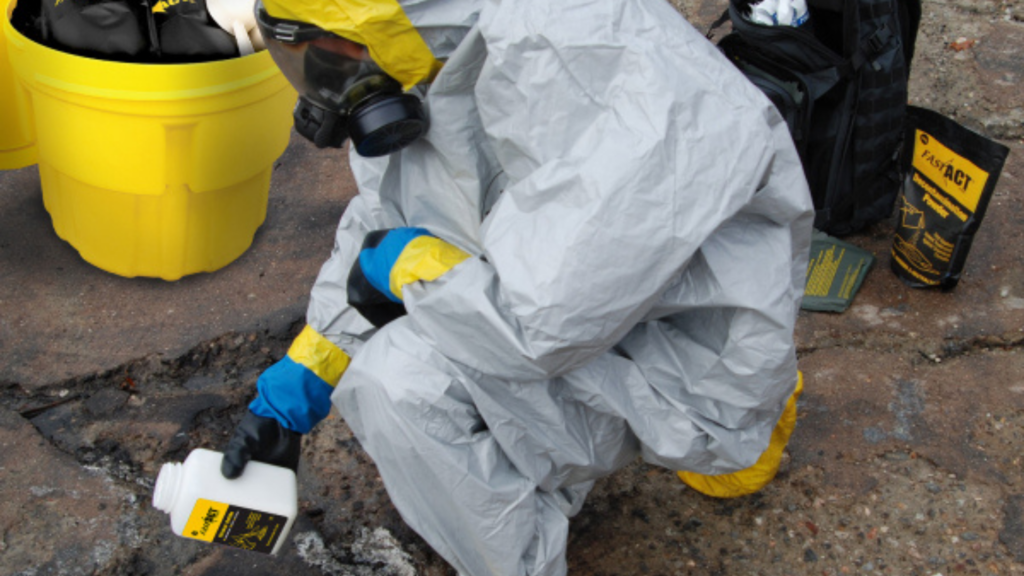
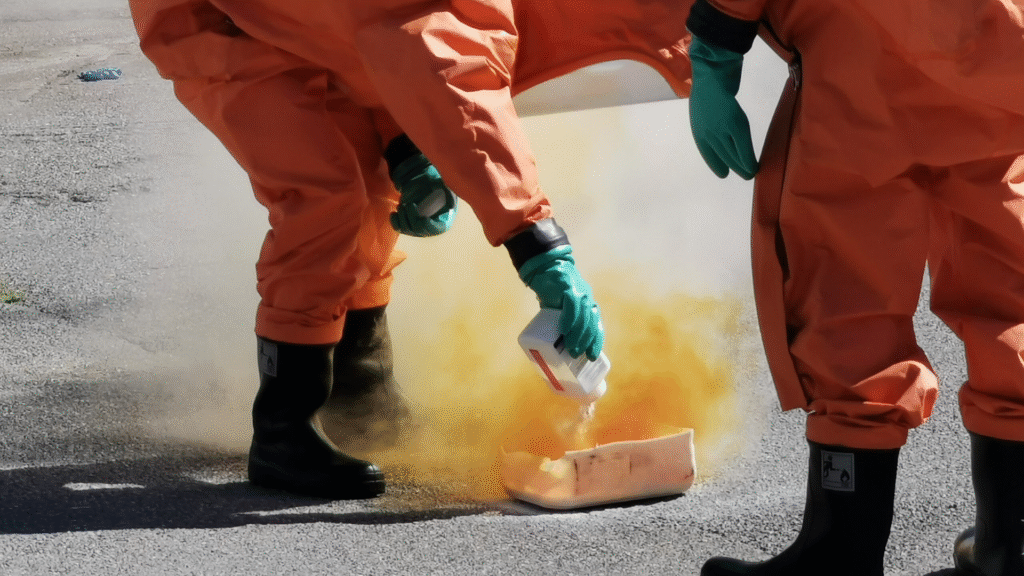
FAST-ACT Bulk Pails support high-volume spill response across wide operational areas. FAST-ACT Shaker Bottles provide a portable option for localized spills and targeted surface contamination.
For personnel and PPE decontamination:
FAST-ACT Decontamination Mitts and Decontamination Wipes provide portable options for targeted decontamination of skin, surfaces, and sensitive equipment. CE certified as Class I medical devices for use on skin and surfaces in the European Union.
For vapor hazards:
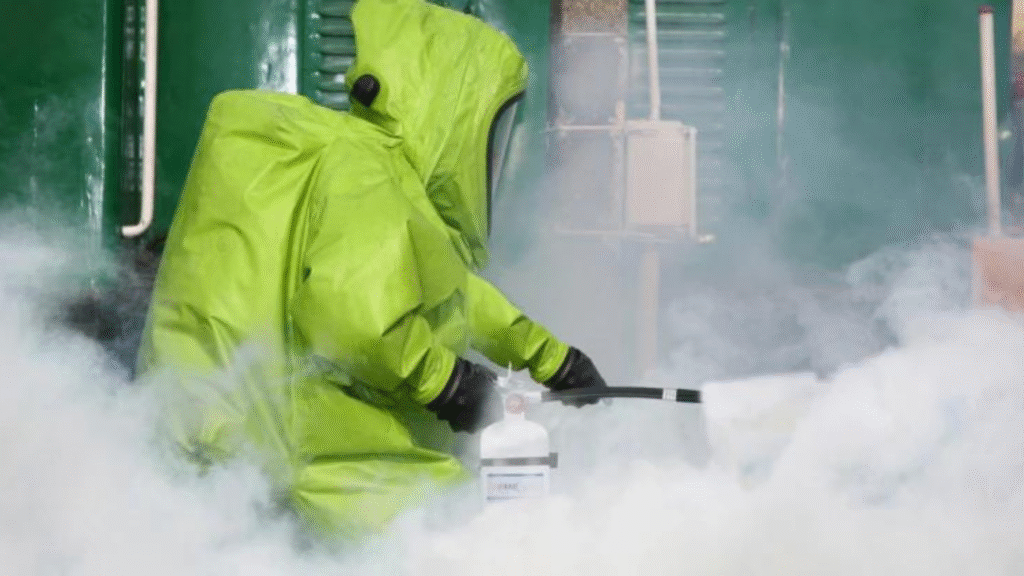
The FAST-ACT 400G Pressurized Cylinder provides a portable format for rapid vapor suppression or whole-body decontamination, with an average discharge time of approximately 9.9 seconds, allowing responders to address chemical vapor threats or whole-body decontamination without requiring water or complex setup. We have 1kg, 2kg, and 4kg cylinders for larger incidents.
What Are the Key Lessons from the Longview Paper Mill Disaster?
Four lessons from Longview apply directly to any facility handling bulk corrosives or hazardous process chemicals, and each one points back to the same gap: the space between when a risk is identified and when a facility is actually prepared to respond.
Known risks require action before they become incidents. The July 2025 inspection flagged Tank G as unfit for continued service. Three inspections confirmed the same finding. The gap between identifying a structural risk and acting on it is the same gap that exists in chemical response planning, facilities that have not evaluated their decontamination capabilities before an incident face that gap in real time, under pressure.
Containment assumptions should reflect worst-case volumes. Nippon Dynawave’s site containment could not hold 900,000 gallons. For chemical spill response, this means facilities should evaluate not just whether they have a spill response plan, but whether the neutralization and containment resources on hand are appropriate for the actual scale of a realistic release. Effective chemical spill response starts with honest planning, not optimistic assumptions.
Early response capability must exist before the incident. External HAZMAT teams take time to arrive. According to OSHA’s HAZWOPER standard, facilities handling hazardous chemicals must maintain emergency response plans, trained personnel, and decontamination procedures. That preparation only has value if the right resources are staged where they are actually needed, inside high-risk zones, not stored in a cabinet across the facility.
Decontamination resources belong at the point of risk. In the Longview response, recovery teams required decontamination every time they exited the work zone. Having portable dry decontamination available at the point of contact, not dependent on water, setup time, or external support, is what allows a facility to begin managing contamination in the first minutes of an incident rather than waiting for infrastructure to be established.
How Can Industrial Facilities Strengthen Chemical Preparedness Before the Next Incident?
The Longview investigation is still ongoing. But the lessons already in the public record are clear enough to act on now.
Pull the inspection file for every pressure and atmospheric vessel on site and identify any finding that was deferred rather than closed. Map your chemical footprint against actual response capability, for each bulk hazardous material, document what is available to contain or neutralize it, where that material is staged, and who is trained to deploy it. Audit your response times honestly, not the time until mutual aid arrives, but the time until someone standing in the hazard zone can act.
Understanding your unidentified hazardous materials response strategy before an incident is one of the most important steps any industrial facility can take. Adding FAST-ACT Dry Decontamination to HAZMAT lockers and zone-level kits closes the gap between breach and neutralization, without adding water, drainage, or waste-handling complications to an already complex response environment.
Eleven workers in Longview did not come home on May 26. The controls that would have mattered were known, documented, and not acted upon. Preparedness starts before the inspection report arrives, and it includes having the right equipment, trained personnel, and response protocols in place before they are needed.
About Timilon Corporation:
Timilon Corporation is the manufacturer of FAST-ACT®, a proprietary formulation of non-toxic high-performance specialty materials effective at neutralizing a wide range of toxic chemicals with the added capability to destroy chemical warfare agents. The FAST-ACT technology is utilized by leading defense agencies, chemical industrial companies, first responders and HAZMAT teams to quickly and safely eliminate chemical hazards. For more information, reach out to Leticia Menzzano, Marketing Manager, [email protected].
FAQs
What should industrial facilities do to improve chemical spill preparedness?


Key steps include reviewing inspection files for any deferred findings, mapping chemical storage against actual containment and neutralization capacity, auditing on-site response times honestly, and staging early-response resources inside high-risk zones. Facilities should also ensure that portable decontamination options, such as FAST-ACT dry decontamination products, are immediately accessible at the point of risk rather than stored in distant locations.
What types of industrial chemical hazards does FAST-ACT address?
FAST-ACT works on toxic industrial chemicals including acids and bases, chemical warfare agents, and vapor-phase hazards, in both liquid and vapor formats. It is designed for industrial environments including high-risk process areas, manufacturing floors, chemical handling and storage areas, battery and hazardous material storage, and confined or enclosed spaces.
Why do traditional cleanup methods leave a gap in industrial chemical response?
Traditional methods often rely on water, absorbents, or delayed response, limiting early-stage effectiveness. They can be further constrained by limited access to water or power in confined spaces, and may be impractical in cold or freezing temperatures. FAST-ACT is designed to fill that gap by providing immediate neutralization capability without those dependencies.
How does FAST-ACT help industrial facilities maintain operations after a chemical incident?
By neutralizing chemical threats at the source during the earliest phase of an incident, FAST-ACT helps minimize facility downtime, reduces cleanup costs, and avoids internal contamination spread, particularly to water and soil. This supports both worker safety and operational continuity without waiting for full-scale decontamination infrastructure to be established.