

Decontamination in High-Risk Environments: Operational Realities Across Critical Sectors
While some operational constraints may overlap, decontamination in high-risk environments differs based on facility design, threat type, and response requirements. Hospitals, fire and hazmat teams, transportation hubs, industrial facilities, and critical infrastructure each face distinct contamination risks and operational pressures that shape how decontamination must be approached.
Across FAST-ACT’s supported environments, the consequences of delayed or ineffective decontamination are significant — ranging from patient and responder exposure to operational shutdowns, equipment damage, and large-scale public safety impacts. Understanding decontamination in high-risk environments helps organizations align response planning, decontamination procedures, and the overall decontamination process with real-world conditions involving chemical hazards and environmental contamination.
Decontamination in High-Risk Hospital and Healthcare Environments
In healthcare facilities, decontamination is critical to protecting contaminating individuals, staff, and patient care areas from secondary contamination. Chemical exposure incidents often require emergency decontamination before contaminated individuals enter the facility, particularly during unknown substance events or mass exposure scenarios. If contamination is not contained at the perimeter, it can spread into emergency departments, treatment rooms, and other hospital surfaces, increasing exposure risk and disrupting clinical operations.
Hospitals must also manage environmental surfaces, high-touch surfaces, and overall environmental cleanliness to reduce the risk of cross-contamination. The hospital environment introduces unique challenges related to hospital cleaning, monitoring environmental cleanliness, and maintaining safe conditions across shared clinical spaces.
Hospital environments also face time pressure, weather constraints, and limited space for exterior setup. These realities make rapid, controlled decontamination a critical first step for protecting both people and infrastructure.
Hospital-related use cases include:
- Contaminated patients arriving prior to substance identification
- Exterior triage and intake decontamination
- Self-presenting patients
- Limited time to establish a formal decontamination line
- Weather, limited staff, and infrastructure constraints affecting setup
In hospital settings, FAST-ACT tools are commonly positioned to support early intervention and exterior response. This includes The FAST-ACT 400g Pressurized Cylinders for rapid whole- body application on self- presenting patients, FAST-ACT Decontamination Mitts for a targeted application for contamination control on exposed areas and contact points *CE classified as a class I medical device for use on skin and surfaces in the EU, and FAST-ACT Decontamination Wipes for dry risk reduction for PPE, Equipment, and sensitive equipment prior to re-entry. *CE classified as a class I medical device for use on skin and surfaces in the EU.

Decontamination in High-Risk Fire & HazMat Operations
Fire and hazmat teams frequently operate in uncontrolled environments involving unknown chemical releases, vapor threats, and liquid contaminants. These incidents demand immediate hazard suppression to protect responders, limit environmental impact, and prevent escalation.
Scene conditions, limited infrastructure, and the need for rapid PPE and equipment decontamination increase the complexity of response. Delays caused by reliance on fixed systems or extended setup can increase exposure risk and allow vapor or liquid hazards to spread to additional environmental surfaces.
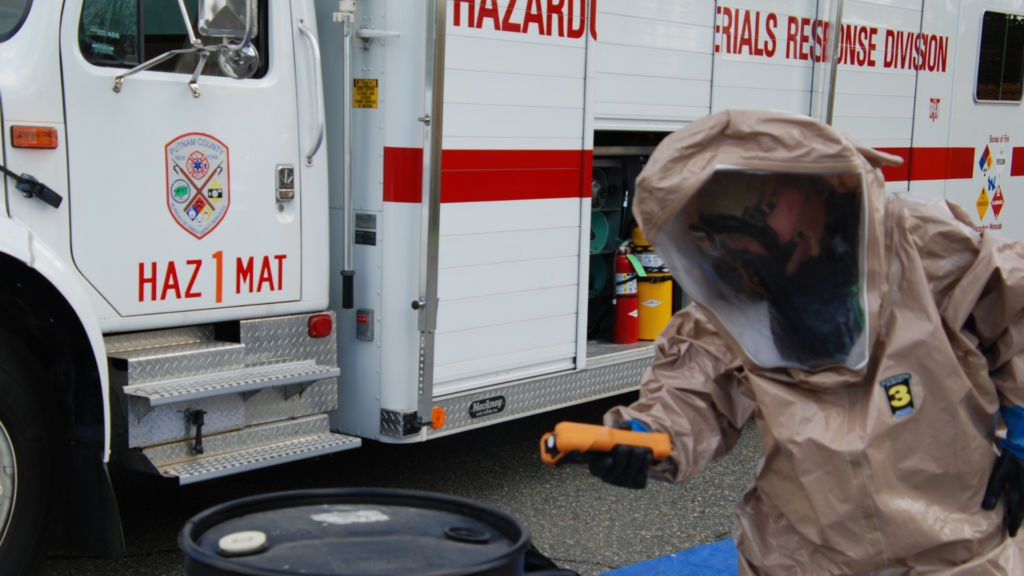
Fire and hazmat use cases include:
- Unknown chemical spills at industrial or transportation sites
- Vapor threats in enclosed or semi-enclosed spaces
- Large-area contamination requiring rapid initial control
- PPE, tools, and apparatus contamination
FAST-ACT tools are used in fire and hazmat operations to support immediate, field-deployable response. These tools include FAST-ACT Decontamination Mitts for surface and personal decontamination *CE classified as a class I medical device for use on skin and surfaces in the EU, The FAST-ACT 400g Pressurized Cylinder for vapor, PPE, and surfaces, FAST-ACT individual Decontamination Kits, and FAST-ACT Decontamination Wipes for gear, uniforms, surfaces, and skin. *CE classified as a class I medical device for use on skin and surfaces in the EU.
Decontamination in High-Risk Law Enforcement and First Responder Environments
Law enforcement and first responders regularly encounter unknown powders, narcotics, chemical agents, and vapor hazards in vehicles, residences, and public spaces. These exposures can quickly lead to cross-contamination of officers, equipment, and facilities.
The need for rapid return to service, combined with limited access to water or fixed decontamination stations, makes on-scene capability essential. Without immediate decontamination, contamination can spread into patrol vehicles, holding areas, and gear rooms, increasing the scope of environmental contamination.
Law enforcement and first responder use cases include:
- On-scene decontamination after drug or chemical exposure
- Vehicle and gear contamination
- Confined-space vapor threats
- Rapid return-to-service requirements
In these environments, FAST-ACT tools such as The FAST-ACT DEFEND Kit for Detection, Eradication and FENTanyl Decontamination, FAST-ACT Decontamination Mitts for surface and personal decontamination, The FAST-ACT 400g Pressurized Cylinder for vapor, PPE, and surfaces, and FAST-ACT individual Decontamination Kits. These tools support decontamination procedures that help reduce contamination of Personal Protective Equipment and duty gear.
Decontamination in High-Risk Industrial and Environmental Remediation Settings
Industrial facilities face daily risks from chemical leaks, vapor releases, and hazardous material incidents that can impact worker safety, regulatory compliance, and production continuity. Some incidents may involve areas similar to hazardous waste sites, where contamination control and proper hazard classification are critical.
Industrial environments must balance safety by minimizing downtime and operational disruption. Decontamination approaches that require extended setup or shutdown can significantly increase costs and delay production. Vapor migration and localized spills further complicate containment in active operations and increase potential environmental impact.
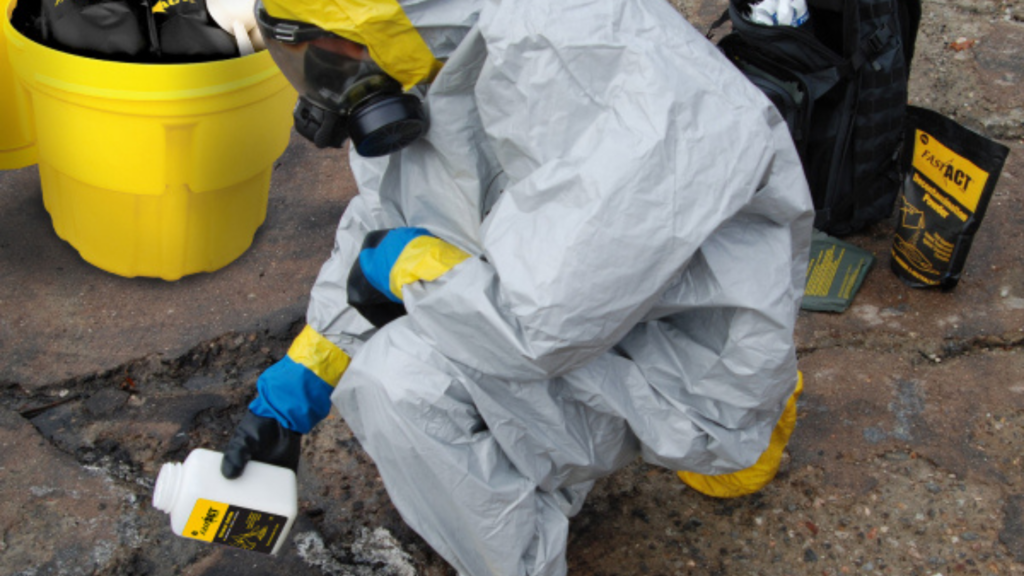
Industrial and remediation use cases include:
- Chemical spills on production floors
- Vapor migration in enclosed work areas
- Maintenance and cleanup in active operations
- Environmental remediation near water or sensitive areas
FAST-ACT industrial use commonly includes The FAST-ACT Bulk Pail for high- volume spills and environmental contamination, The FAST-ACT 400g Pressurized Cylinder for vapor control in enclosed or indoor areas, The FAST-ACT Shaker Bottle for quick deployment for small-scale leaks or clean up. These tools support industrial decontamination methods for both surface and vapor contamination.
Decontamination in High-Risk EV Battery and Lithium-Ion Incidents
Lithium-ion battery failures introduce a combination of toxic vapor release and corrosive liquid contamination. Off-gassing during thermal runaway can expose responders and facility personnel to highly hazardous compounds such as hydrogen fluoride, sulfur dioxide, and hydrogen chloride — all classified as serious chemical hazards.
These incidents often escalate quickly and require simultaneous management of airborne and surface contamination. Delayed or incomplete response can increase exposure, expand contamination to surrounding environmental surfaces, and extend facility downtime.
EV battery and lithium-ion use cases include:
- Vapor suppression during thermal runaway
- Neutralization of chemical off gassing (HF, SO₂, HCl)
- Containment of leaking electrolytes and other liquid contaminants
- Decontamination of tools, work surfaces, and surrounding equipment
FAST-ACT tools used in battery-related environments include The FAST-ACT Lithium Hazard Response Station to safely neutralize airborne chemical vapors and liquid spills without the use of water or complex procedures— minimizing exposure risk and operational disruption, The FAST-ACT 1kg Powder for different applications methods to contain and neutralize chemical spills, and The FAST-ACT Pressurized Cylinders for spray decon on vapors, cars and personnel.
Decontamination in High-Risk Sensitive Equipment and Electronics Environments
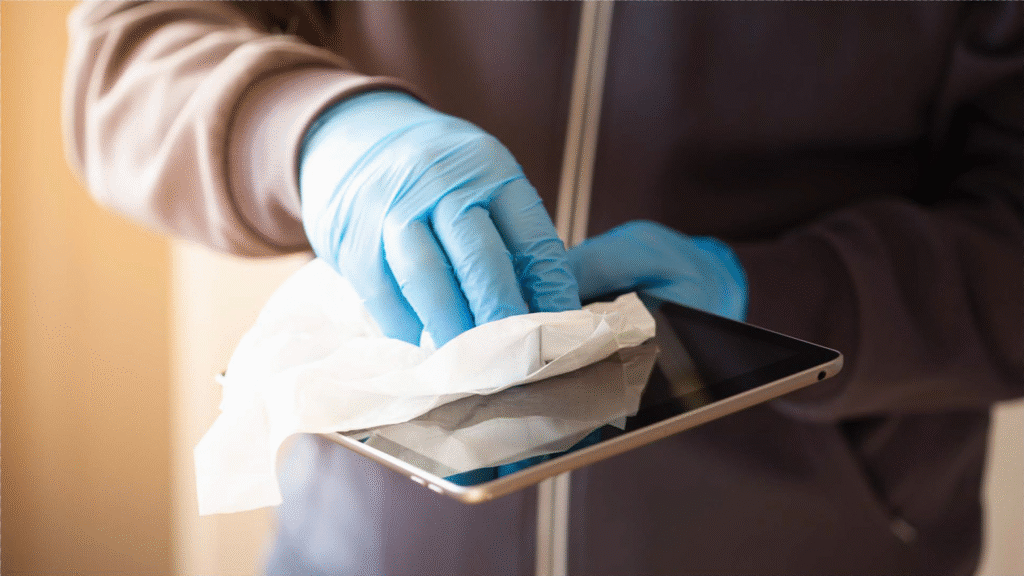
Sensitive environments such as data centers, medical equipment areas, laboratories, and security systems contain high-value electronics that can be permanently damaged by liquid-based decontamination. Even small amounts of moisture can result in costly repairs or extended downtime.
Decontamination in these environments must protect both people and equipment. Fear of damaging electronics can also lead to incomplete decontamination, leaving residues or vapor contamination unaddressed and increasing long-term environmental contamination risk.
Sensitive equipment use cases include:
- Chemical contamination near electronics
- Equipment exposure to vapors or residues
- Need to decontaminate without introducing moisture
- Pressure to maintain uptime and avoid equipment replacement
The FAST-ACT Decontamination Mitt for tactile, The FAST-ACT Decontamination Wipe for optics and small surfaces, and The FAST-ACT Puffer Bottle for targeted decon.
Decontamination in High-Risk Critical Infrastructure Facilities
Critical infrastructure environments support essential services such as government operations, utilities, data centers, and public safety systems. Contamination incidents in these facilities can disrupt operations, affect public confidence, and increase long-term environmental impact.
These environments must balance security, safety, and continuity of operations. Decontamination strategies that require shutdowns or introduce secondary risks can have far-reaching operational consequences.
Critical infrastructure use cases include:
- Chemical threats in secure or restricted areas
- Vapor migration through ventilation systems
- Contamination near mission-critical systems
- Need to maintain continuity of operations
The FAST-ACT tools used in this environment includes The FAST-ACT Bulk Pail for high- volume spills and environmental contamination, The FAST-ACT 400g Pressurized Cylinder for vapor control in enclosed or indoor areas, FAST-ACT Decontamination Mitts for surface and personal decontamination, and FAST-ACT Decontamination Wipes for sensitive equipment, surfaces, and skin. *CE classified as a class I medical device for use on skin and surfaces in the EU.
Decontamination in High-Risk Transportation Hubs and Transit Systems
Transportation environments such as subways, airports, and terminals are enclosed, high-occupancy spaces where chemical or vapor releases can rapidly expose large numbers of people. Limited airflow and complex geometry can allow airborne hazards to spread quickly throughout vehicles and terminals.
Rapid response is critical to suppress and neutralize airborne threats before exposure spreads, and operations are disrupted. Infrastructure-dependent methods can delay containment and increase operational impact.
Transportation-related use cases include:
- Airborne threats in confined spaces
- Limited airflow when HVAC systems are inactive
- Rapid passenger exposure
- Need for wide-area, fast-acting response
In transportation environments, FAST-ACT Decontamination Mitts and FAST-ACT Decontamination Wipes are safe to use on skin and sensitive equipment- providing fast, non-damaging decontamination where water cannot be used, FAST-ACT Individual Decontamination Kits for easy and fast decontamination, The FAST-ACT 400g Pressurized Cylinders spray to suppress vapors and decon surfaces, baggage or personnel area, and The FAST-ACT DEFEND Kit for unknown powders and emergencies in terminals or checkpoints.
Validation and Testing
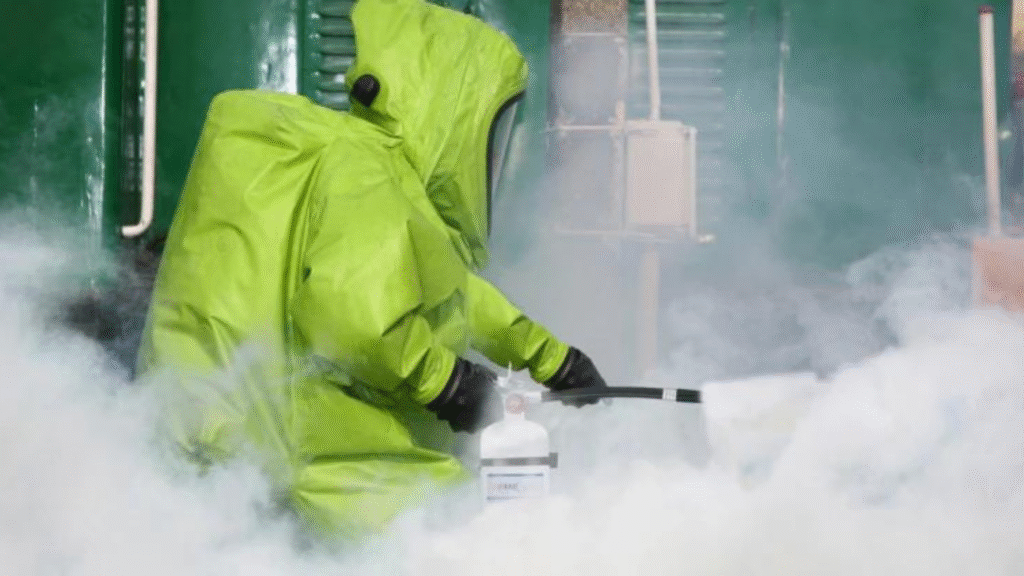
FAST-ACT has been independently tested and validated to support use in demanding, real-world response environments. Testing includes enclosed-space dispersion and coverage, field validation in industrial and environmental response scenarios, cold-weather performance, and compatibility with sensitive equipment and operational settings. These validations support FAST-ACT’s use as a reliable dry decontamination solution across a wide range of complex response conditions.
Why Decontamination in High-Risk Environments Matters
Decontamination is not a one-size-fits-all process, and in many real-world incidents, responders may not immediately know what chemical or substance is involved. In these situations, having a validated, broad-spectrum dry decontamination tool is critical for rapid risk reduction.
FAST-ACT is designed to be used when the hazard is unknown, allowing responders to quickly contain and neutralize a wide range of liquid and vapor threats to help limit spread, reduce exposure, and stabilize the scene. This enables safer operations while identification, monitoring, and follow-on actions are conducted.
In high-risk and time-sensitive environments, this approach supports improved responder safety, helps protect PPE and equipment, and supports continuity of operations by allowing teams to take immediate action with confidence when seconds matter.
About Timilon Corporation:
Timilon Corporation is the manufacturer of FAST-ACT®, a proprietary formulation of non-toxic high-performance specialty materials effective at neutralizing a wide range of toxic chemicals with the added capability to destroy chemical warfare agents. The FAST-ACT technology is utilized by leading defense agencies, chemical industrial companies, first responders and HAZMAT teams to quickly and safely eliminate chemical hazards. For more information, reach out to Leticia Menzzano, Marketing Manager, lmenzzano@timilon.com.
FAQs
Why is dry decontamination important for healthcare facilities and hospitals?


In healthcare facilities, contaminated patients may arrive before formal decontamination lines are established. Dry decontamination allows hospitals to initiate exterior decontamination to help protect patient care areas, high-touch surfaces, and hospital surfaces from secondary contamination. This supports infection control, environmental cleanliness, and continuity of patient care.
Can FAST-ACT be used in environments with sensitive equipment and electronics?
Yes. FAST-ACT dry decontamination tools are commonly used in sensitive equipment environments where liquid-based decontamination could damage electronics, medical devices, or IT systems.
Has FAST-ACT been tested for use in extreme or demanding conditions?
FAST-ACT technology has been evaluated through independent testing and field validation in demanding environments, including enclosed transportation spaces, industrial and environmental remediation scenarios, and extreme cold-weather conditions under NATO C2 standards.
How does FAST-ACT support emergency decontamination when water is not available?
FAST-ACT provides dry decontamination methods that do not rely on water-based systems. These tools allow responders to initiate emergency decontamination, manage liquid contaminants, and suppress hazardous vapors when traditional decontamination stations or water showers are not practical or available.