

EMS HAZMAT Hospital Coordination: What Needs to Happen Before the Patient Reaches the Hospital
In our previous article, we looked at hospital chemical decontamination. But the hospital response does not begin at the hospital.
It begins at the scene.
Imagine an EMS crew arrives at a call involving a suspected chemical exposure. Patients need care, the substance may not yet be identified, and additional resources are still on the way. At the same time, the receiving hospital needs enough information to prepare for the patient’s arrival.
According to CHEMM, the decisions made during the first few minutes of a chemical HAZMAT response can establish the character of the overall response, and ultimately its success or failure. These decisions are often made by the first responders on scene, before specialized resources arrive.That makes the EMS-to-hospital handoff one of the most critical links in the HAZMAT response chain.
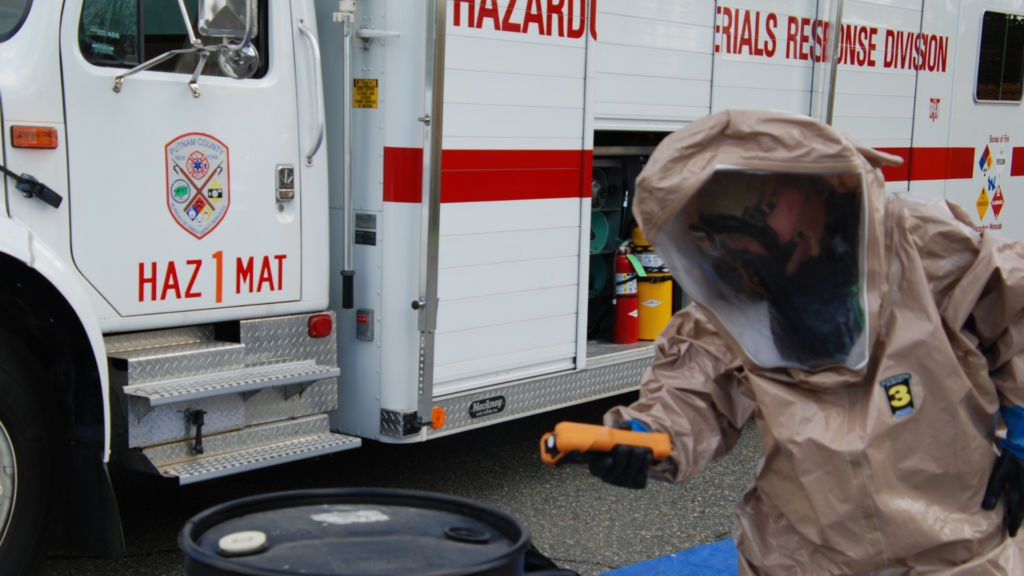
What Does EMS Need to Do First at a HAZMAT Scene?
Before patient contact, EMS needs to recognize that the incident may involve a hazardous substance and conduct an appropriate scene size-up.
CHEMM’s initial response guidance begins with recognizing the incident, quickly assessing the situation and its potential scale, and prioritizing life safety. The first arriving responder is by default the Incident Commander until relieved by a more senior or qualified responder, meaning EMS often holds command responsibility during the most critical early minutes of a chemical incident.
For EMS, this can create a difficult balance. The instinct is to reach the patient as quickly as possible. But at a HAZMAT scene, entering an uncontrolled environment can create another exposure before patient care even begins. According to EMS1’s HAZMAT first 10 minutes guidance, scene control is patient care in a HAZMAT incident, and early recognition and notification are paramount to preserving the time it takes for specialized resources to mobilize, arrive, set up, and operate effectively.
Scene information may come from facility personnel, container markings, placards, alarms, odors, visible releases, or other indicators. According to Firehouse Magazine’s first-due HAZMAT size-up guidance, physical clues including NFPA 704 placards, container types, and facility signage can give responders critical hazard information within seconds of arrival, even before any personnel make direct patient contact.
The goal is not necessarily to identify the exact chemical immediately. It is to recognize the potential hazard, protect responders, and communicate what is known. Having a defined strategy for unidentified hazardous materials before an incident occurs is one of the most important preparedness steps any EMS agency can take, because the substance may not be confirmed for minutes or hours after the initial call.
What Information Does the Hospital Need Before the Patient Arrives?
Once a potential chemical exposure is recognized, early hospital notification becomes critical.
Ideally, the receiving facility receives information before the patient arrives. FEMA’s advance notification guidance identifies this notification as an opportunity for hospitals to prepare staff, equipment, treatment resources, and decontamination capabilities. Advance notification also gives medical personnel valuable time to prepare for incoming patients and review information that may support faster diagnosis and treatment. However, advance notification may not be possible if the incident has not yet been identified as involving a chemical release.
The information does not need to be perfect. It needs to be early, relevant, and updated as new information becomes available.
A HAZMAT notification should communicate, when known:
- The suspected chemical or hazard
- Whether the substance is a liquid, vapor, gas, or solid
- Route of exposure
- Number of potentially exposed patients
- Patient symptoms and condition
- Whether decontamination has occurred
- What type of decontamination was performed
- Estimated time of arrival
- Whether additional patients are expected
The exact notification procedure should be established between the EMS agency and receiving hospitals before an incident occurs.
Research examining trauma pre-notification across 700 consecutive cases found a median estimated time of only 15 minutes between the notification call and patient arrival, with 11% of cases having an ETA of 5 minutes or shorter. During a chemical incident, those minutes can give the hospital time to activate its response plan rather than discovering the exposure when the ambulance reaches the entrance. Research on ambulance pre-alert communication further confirms that advance notification facilitates earlier initiation of time-critical treatment and improves clinical outcomes.
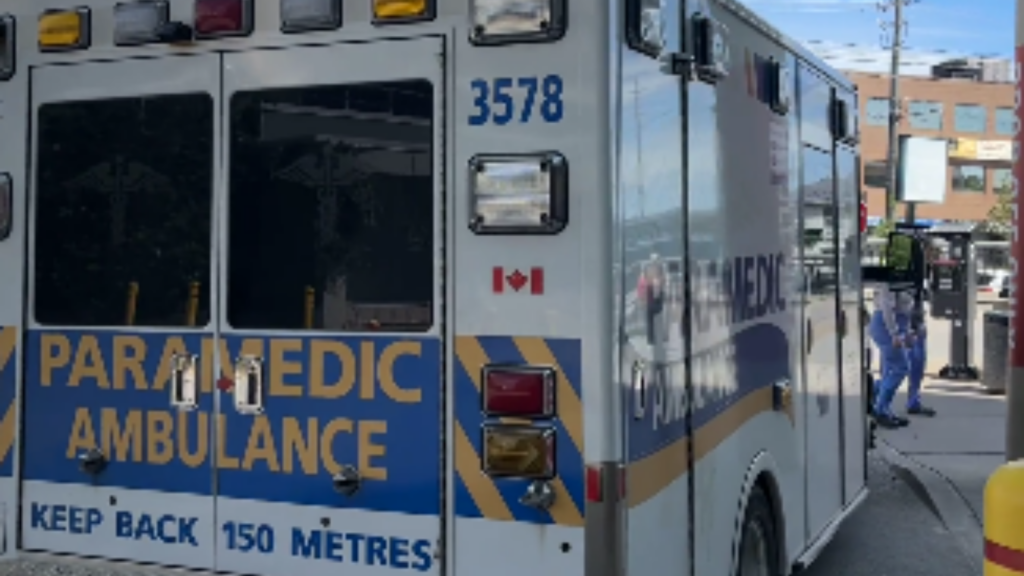
Where Does EMS-to-Hospital Communication Break Down?
Communication problems are rarely limited to one missing phone call.
They can occur when agencies use different terminology, assume someone else has already notified the hospital, fail to communicate that decontamination has occurred, or provide an ETA without explaining the nature of the exposure.
The hospital may be prepared for an ambulance arrival but not for a potentially contaminated patient. EMS may assume the hospital already knows the patient was exposed. HAZMAT may have information that never reaches the receiving facility.
FEMA documents this exact failure from the 1995 Tokyo subway sarin attack: while other nearby hospitals offered to take patients from a single facility that received over 640 patients, there was no disaster plan or means for interhospital transport, and first responder ambulances were unavailable. Pre-established communication and transport plans were entirely absent, significantly complicating the response.
These gaps become especially challenging when the chemical is unknown or the incident is still developing. Research on HAZMAT-CBRN incident coordination identifies communication and coordination as serious and consistently documented challenges, noting that the successful management of chemical incidents is significantly affected by factors that impede effective coordination across organizations.
The CDC’s Managing Hazardous Materials Incidents planning guidance emphasizes joint planning among hospitals, EMS agencies, and other response organizations, and recommends that EMS staff be represented on planning committees that develop and periodically review HAZMAT protocols. That planning should answer simple but critical questions before an emergency occurs:
- Who makes the notification?
- Who receives it?
- What information is communicated?
- How early should the call occur?
- Where does the patient go when they arrive?
These decisions should be established before an incident occurs, with clear protocols for communication, patient movement, and decontamination. Coordination between hospitals and first responders is strengthened when teams train and plan together.
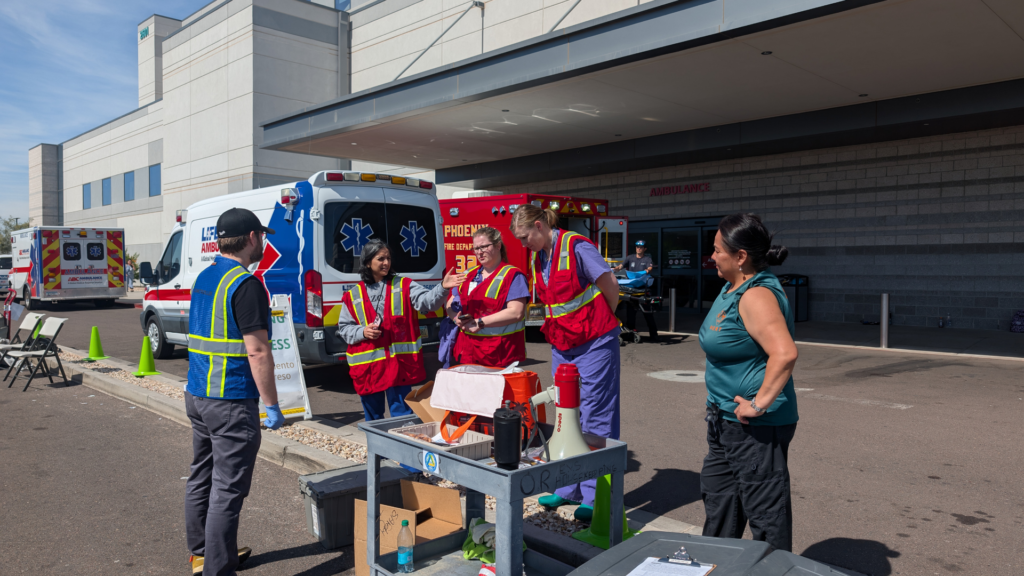
How Can EMS Reduce Secondary Contamination Before Hospital Arrival?
The handoff does not begin when the ambulance reaches the hospital. It begins when the patient enters the ambulance.
A patient who has not been appropriately decontaminated can potentially transfer contamination to the stretcher, equipment, ambulance surfaces, EMS personnel, and eventually the receiving facility. Research examining secondary contamination events from 2003–2006 found that at least 17 medical personnel were injured as a result of secondary contamination while treating contaminated victims, 12 were EMTs and 5 were hospital personnel, directly demonstrating the risk that travels with the patient from the scene to the hospital.
Patient movement should be limited when appropriate; contaminated materials should be controlled, and EMS personnel should maintain protective measures based on the suspected hazard and their role in the response.
Research published in PLOS ONE found that both wet and dry improvised decontamination approaches can contribute to contaminant removal, with combinations of approaches providing additional benefit in early decontamination when specialist resources are unavailable. For EMS, this reinforces an important principle: the best decontamination method is the one that is appropriate for the hazard, the patient, and the operational environment. Whether dry or wet decontamination is right for the situation is one of the most important early decisions EMS faces during a chemical transport, and one that should be addressed in protocols before an active incident.
How Can FAST-ACT Dry Decontamination Support EMS Operations?
FAST-ACT Dry Decontamination gives EMS another option for addressing appropriate chemical contamination before the patient reaches the hospital.
Unlike a traditional water-based decontamination setup, FAST-ACT does not require a shower system, water supply, or runoff collection. The science behind FAST-ACT’s dry decontamination technology explains why its neutralization-based formulation is particularly effective during this early response window, when the goal is rapid contamination reduction before comprehensive decontamination systems are in place.
FAST-ACT provides dry decontamination solutions designed for first responders and EMS teams. The FAST-ACT Decontamination Mitts and Decontamination Wipes are designed for use on skin, surfaces, and sensitive equipment, providing a portable option for targeted decontamination. The FAST-ACT Mitts and Wipes are CE certified as a Class I medical device for use on skin and surfaces in the European Union.
For whole-body decontamination and chemical vapor threats, the 400G Pressurized Cylinder provides EMS and hospital response teams with a portable option for rapidly addressing chemical contamination and suppressing chemical vapors when appropriate.
FAST-ACT also offers an Ambulance Kit to deliver rapid and effective chemical decontamination for first responders and emergency responders in the field.
The purpose is not to suggest that dry decontamination replaces every other decontamination method. Instead, it serves as an early-response tool that helps EMS address appropriate contamination while coordinating with HAZMAT and the receiving hospital. How dry decontamination fits into hospital and first responder protocols during the first minutes before full decon is established is a critical consideration for any EMS agency building chemical incident response capabilities.

Why Does EMS-Hospital Coordination Matter in Chemical Emergencies?
A chemical incident does not end when the patient leaves the scene.
The response moves from the incident site to the ambulance and then to the receiving facility. Every transition creates an opportunity for information to be lost, or for contamination to move with the patient, responder, or surfaces.
Effective EMS-hospital HAZMAT coordination connects those stages. It means recognizing the hazard early, protecting responders, communicating before arrival, addressing appropriate contamination as early as practical, and giving the hospital accurate information about what happened before the patient reaches its doors.
Research on acute occupational HAZMAT incidents found that 94% of chemical exposure incidents produced victims requiring hospital transport, making EMS the primary transport link in almost every chemical incident chain. That reality makes the EMS-to-hospital handoff not an edge case but a near-certainty in any significant chemical response.
For EMS agencies, that requires more than a radio notification. It requires pre-established protocols, joint training, compatible equipment, and regular coordination with receiving hospitals and HAZMAT partners. How hospitals and first responders coordinate decontamination across the full response chain, from scene to transport to hospital arrival, is one of the most operationally important and least standardized aspects of chemical incident response.
Strengthening the EMS-to-Hospital Handoff
The most effective HAZMAT response is not built around one agency working independently. It is built around a connected response chain. Recognize the hazard. Protect the responder. Communicate early. Address appropriate contamination. Transport safely. Notify the receiving hospital. Complete the handoff.
Dry decontamination can support that chain by giving EMS a portable option for addressing appropriate chemical contamination before hospital arrival. First responder health and safety depends on having the right tools available at every stage of that chain, not just at the scene, but in the ambulance and at the hospital entrance.
The objective is not to replace established HAZMAT or hospital procedures. It is to help close the gap between initial exposure and full decontamination capability. That gap is where coordination matters most.
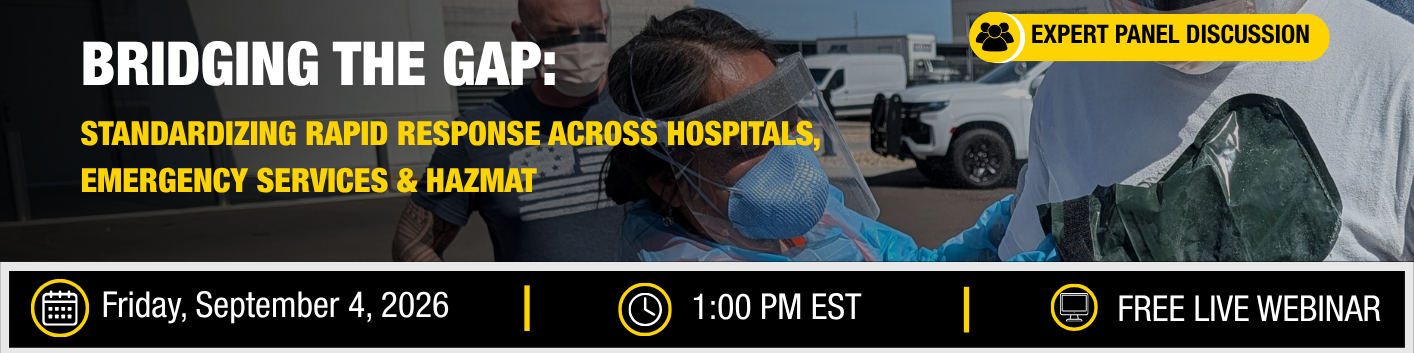
Continue the Conversation on September 4
Where does the EMS-to-hospital handoff break down, and what can responders do to close the gap?
Join FAST-ACT’s upcoming expert panel, “Bridging the Gap: Standardizing the First 15 Minutes of a Chemical Incident,” on September 4 to hear hospital, EMS, and HAZMAT experts discuss how better communication, early decontamination, and coordinated procedures can strengthen the response before the patient reaches the hospital.
About Timilon Corporation:
Timilon Corporation is the manufacturer of FAST-ACT®, a proprietary formulation of non-toxic high-performance specialty materials effective at neutralizing a wide range of toxic chemicals with the added capability to destroy chemical warfare agents. The FAST-ACT technology is utilized by leading defense agencies, chemical industrial companies, first responders and HAZMAT teams to quickly and safely eliminate chemical hazards. For more information, reach out to Leticia Menzzano, Marketing Manager, [email protected].
FAQs
Why is EMS-hospital coordination important during a HAZMAT incident?


Early coordination helps the receiving hospital understand the potential hazard, prepare staff and resources, and determine appropriate procedures before a potentially contaminated patient arrives.
What information should EMS provide to a hospital after a chemical exposure?
When known, EMS should communicate the suspected hazard, route of exposure, number and condition of patients, decontamination performed, estimated time of arrival, and whether additional patients or resources are expected.
What FAST-ACT products can support EMS and hospital chemical decontamination?
FAST-ACT offers several dry decontamination solutions, including Decontamination Mitts, Decontamination Wipes, the Ambulance Kit, and 400G Pressurized Cylinder. The appropriate product depends on the type and extent of contamination and the response scenario.
Can the FAST-ACT 400G Pressurized Cylinder be used for whole-body decontamination?
The 400G Pressurized Cylinder provides a portable option for addressing larger areas of chemical contamination and can support whole-body decontamination when appropriate. It can also be used for chemical vapor suppression in applicable response scenarios.
Why should EMS and hospitals establish HAZMAT communication protocols before an incident?
Pre-established protocols help ensure EMS and hospital teams understand who communicates the exposure, what information should be shared, and how the receiving facility should prepare before the patient arrives.