

How Can Hospitals and First Responders Begin Dry Decontamination Before Full Decon Is Established?
Chemical incidents rarely unfold under ideal conditions. Hospitals may receive little or no advance notice, first responders may still be assessing the scene, and specialized HAZMAT resources can take time to mobilize. Yet contaminated patients don’t always wait. Some self-evacuate from the scene, others are transported directly by EMS, and some arrive at emergency departments before a chemical release has even been identified. Unknown chemical exposure and self-presenting patients represent one of the highest-risk scenarios hospitals face, and one of the least predictable. This creates a critical challenge for hospitals and first responders: how do you begin reducing contamination before full technical decontamination systems are in place?
Research consistently shows that early intervention matters. Studies have demonstrated that chemical decontamination is most effective when initiated as soon as possible after exposure, with effectiveness declining as time passes. Rather than waiting for full decontamination setup, today’s emergency response guidance emphasizes taking practical actions that reduce contamination during the critical first minutes of an incident. Hospital decontamination preparedness remains one of the most significant vulnerabilities in chemical incident response, particularly during the gap between patient arrival and full decontamination system activation.
Dry decontamination has become an important part of that conversation, not as a replacement for full decontamination, but as a bridge until more comprehensive operations can be established. Dry decontamination in hospital emergency plans helps facilities prepare for contaminated patients who may arrive before field operations are complete.
Why Are the First 15 Minutes So Critical During a Chemical Incident?
The first minutes following a chemical exposure often determine how much contamination remains on a patient’s skin, clothing, and personal belongings. According to NIH StatPearls, specialized HAZMAT teams require time to mobilize, and patients exposed to hazardous chemicals frequently arrive at healthcare facilities before formal decontamination has taken place. Expert guidance also indicates that, whenever feasible, decontamination should begin within minutes of exposure, because delaying intervention allows contaminants to remain in contact with the body for longer periods.
Additional research published in Clinical Toxicology found that decontamination was significantly more effective when initiated immediately after exposure than when delayed by 15, 45, or 120 minutes, a direct demonstration of why the first minutes of a chemical incident carry the greatest decontamination impact.
For hospitals and first responders, this means the first 15 minutes should focus on reducing risk, not waiting for ideal conditions. The PRISM and 15 ’til 50 framework help hospitals make early decontamination decisions during the critical window before full technical systems are operational.
Why Can’t Hospitals Always Wait for Full Decontamination?
One of the biggest misconceptions surrounding chemical incidents is that patients will always arrive after being fully decontaminated in the field. Real-world incidents tell a different story. Research published in PMC/Evidence-Based Patient Decontamination has shown that a proportion of potentially contaminated patients will self-evacuate from the scene before a decontamination procedure is performed and present to hospitals as walk-ins, and at the time of arrival of the first walk-ins, hospital facilities may not even be aware that an incident has occurred.
Massachusetts General Hospital’s First Receiver Decontamination guidance notes that incoming patients often require decontamination before receiving definitive medical care to protect staff, patients, and hospital operations from secondary contamination. According to FEMA’s chemical incident planning guidance, advance notification may not be possible if the incident has not yet been identified as involving a chemical release, meaning hospitals must be prepared to act without confirmed scene information.
This is why hospitals should not rely solely on field decontamination. Instead, emergency preparedness plans should account for the possibility that contaminated patients may arrive with little or no warning. Hospital decontamination mistakes, including relying solely on field decontamination before patient arrival, remain among the most preventable vulnerabilities in chemical preparedness planning. Strong hospital and first responder decontamination coordination is essential for organizations developing effective field-to-hospital communication protocols.
How Does the PRISM Framework Support Early Dry Decontamination?
The PRISM (Primary Response Incident Scene Management) framework was developed to provide evidence-based guidance for patient decontamination during chemical incidents. One of its most significant findings is that rapid, simple actions performed early can substantially reduce contamination.
Research supporting PRISM- published by BARDA, found that removing contaminated clothing alone can eliminate approximately 99% of external chemical contamination. The framework’s ASPIRE decision-support algorithm further helps responders determine when emergency dry decontamination may be appropriate before transitioning to water-based decontamination. PRISM Volume 1’s Strategic Guidance also notes that disrobing is more effective than decontamination in reducing exposure to chemical contaminants, but must be conducted within minutes of exposure for optimum effectiveness.
Rather than encouraging responders to wait until every resource is available, the PRISM framework supports practical decision-making that prioritizes early contamination reduction while more comprehensive decontamination operations are being established. Building a hospital dry decontamination SOP around frameworks like PRISM provides healthcare facilities with a structured approach to early chemical incident response.
How Do You Choose the Right Dry Decontamination Approach?
Not every chemical incident requires the same response. The type, location, and extent of contamination should guide the initial decontamination approach. Choosing a dry decontamination solution is an important consideration for hospitals evaluating which products belong in their early-response toolkit.
Widespread contamination
When contamination affects large areas of the body, surface, air, clothing, or when responders need to rapidly apply FAST-ACT® technology across a broader surface, the FAST-ACT Pressurized Cylinder provide a fast, portable application method. It can quickly apply FAST-ACT® while containing and neutralizing hazardous chemicals. It is important to note that the pressurized cylinder is not a mandatory first step during every incident. It is one option within a broader dry decontamination strategy.
Localized contamination
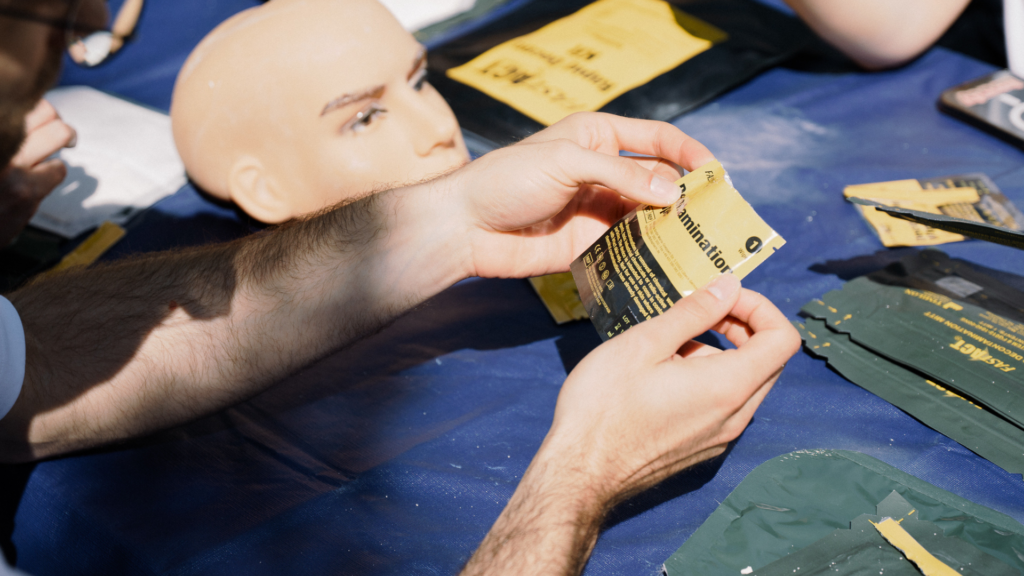
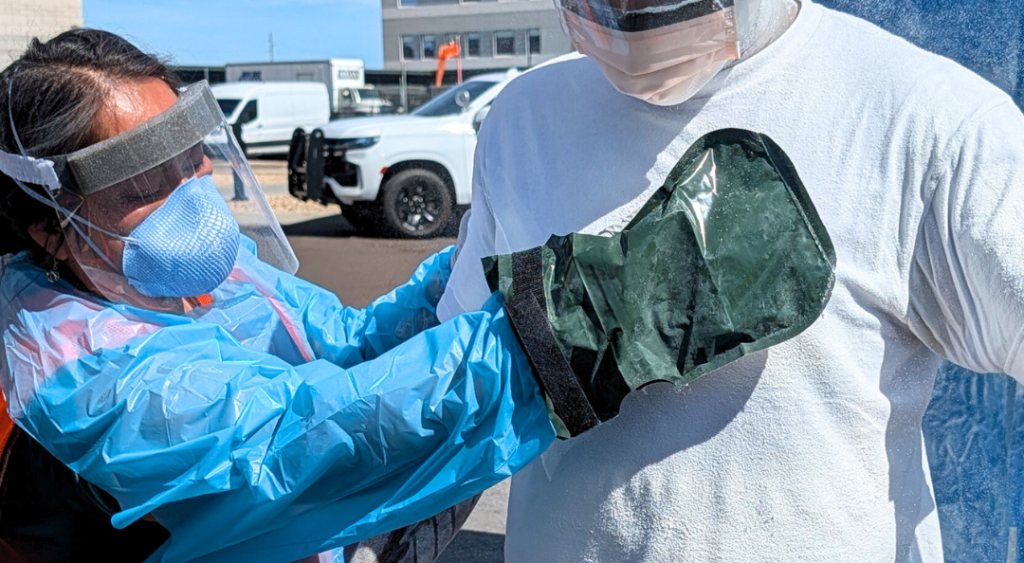
When contamination is limited to specific areas, the FAST-ACT Decontamination Mitt provides a targeted solution for dry decontamination. The mitt allows responders to address localized contamination on exposed skin, surfaces, and sensitive equipment without applying product unnecessarily to unaffected areas. *CE classified as a class I medical device for use on skin and surfaces in the EU.
For many incidents involving localized exposure, responders may begin directly with the mitt. A controlled human volunteer study published in PMC found that blotting combined with rubbing was the most effective form of dry decontamination, directly supporting the targeted application approach the mitt enables.
After the primary contamination has been addressed, the FAST-ACT Decontamination Wipe supports removal of remaining residue from skin or equipment surfaces. As part of a layered dry decontamination approach, the wipe helps reduce residual contamination before patients are transported or transitioned into additional medical care. *CE classified as a class I medical device for use on skin and surfaces in the EU.
The goal is not to force every incident into a rigid three-step process. Instead, responders should select the most appropriate tools based on the specific contamination scenario. Understanding dry vs. wet decontamination helps responders select the most appropriate approach during the earliest stages of a chemical incident when water resources may not yet be available.
Why Is Dry Decontamination a Bridge for Full Decontamination?
Dry decontamination is not intended to replace technical decontamination. Instead, it fills the critical gap between exposure and the establishment of full decontamination operations. Multiple studies have shown that improvised dry decontamination can effectively reduce chemical exposure while specialized resources are still being deployed.
A controlled cross-over human volunteer study published in PLOS ONE found that both wet and dry improvised decontamination procedures effectively removed contaminants from skin, and that combinations of dry and wet approaches provided cumulative benefit in the early stages of decontamination. Research published in ScienceDirect further confirmed that immediately initiated dry removal may facilitate patient management until wet decontamination resources are available and reduce the risk of secondary contamination.
Research increasingly supports combining dry and wet decontamination to improve patient outcomes during chemical incident responses. Once technical decontamination resources become available, responders can transition to more comprehensive decontamination procedures as dictated by the chemical involved, patient condition, and operational objectives.
How Can Hospitals Incorporate Dry Decontamination Into Emergency Response Planning?
Effective chemical preparedness begins long before an incident occurs. Hospitals and first responders should consider how dry decontamination fits into their existing emergency response protocols by evaluating:
- First receiver procedures
- Field-to-hospital communication
- Self-presenting patient workflows
- Staff training and competency
- Chemical incident response protocols
- PPE requirements
- Decontamination equipment availability
- Coordination with EMS, Fire, and HAZMAT teams
Hospital decontamination planning should include clearly defined procedures for chemical incidents, staff training, and early dry decontamination. A hospital chemical decontamination SOP provides a practical framework for integrating dry decontamination into emergency response plans.
According to HHS ASPR TRACIE’s Chemical Hazardous Material Decontamination guidance, First Receiver Operations (FRO) level training, which includes eight hours of training to competency, is required for hospital staff who may be the first to receive contaminated patients.Hospital dry decontamination training helps facilities evaluate their protocols under realistic response conditions.
Incorporating dry decontamination into preparedness planning helps organizations bridge the gap between initial exposure and full technical decontamination while supporting safer patient care and reducing the risk of secondary contamination. Hospital dry decontamination as a faster, more efficient approach to emergency response reflects how healthcare facilities are increasingly integrating early-phase dry decontamination as a core component of their chemical incident response strategy, not an afterthought.
How Are Hospitals and First Responders Preparing for the First 15 Minutes Before a Chemical Incident
Chemical incidents rarely provide responders with complete information, unlimited resources, or the luxury of time. Hospitals and first responders must often make rapid decisions based on the conditions immediately in front of them.
Dry decontamination provides a practical approach for reducing contamination during those critical first minutes before full decontamination operations are established. By understanding when broad application is appropriate, when localized decontamination is sufficient, and how these approaches fit within established guidance such as the PRISM framework, organizations can strengthen preparedness while improving coordination between the field and the hospital. Dry decontamination in high-risk environments highlights the operational realities hospitals and first responders should prepare for well before a chemical incident occurs.
When it comes to chemical incidents, the first 15 minutes aren’t about achieving perfection; they’re about taking the right actions at the right time to reduce risk, protect responders, and improve patient outcomes. FAST-ACT dry decontamination technology is designed to support rapid contamination reduction during the earliest stages of a chemical incident, before comprehensive decontamination systems are fully established.
About Timilon Corporation:
Timilon Corporation is the manufacturer of FAST-ACT®, a proprietary formulation of non-toxic high-performance specialty materials effective at neutralizing a wide range of toxic chemicals with the added capability to destroy chemical warfare agents. The FAST-ACT technology is utilized by leading defense agencies, chemical industrial companies, first responders and HAZMAT teams to quickly and safely eliminate chemical hazards. For more information, reach out to Leticia Menzzano, Marketing Manager, [email protected].
FAQs
What is FAST-ACT Dry Decontamination?


FAST-ACT dry decontamination is a rapid contamination reduction approach designed to help hospitals, first responders, EMS, and HAZMAT teams begin managing chemical exposures before full decontamination operations are established. Using specialized dry decontamination solutions, including the FAST-ACT Pressurized Cylinder, Decontamination Mitt, and Decontamination Wipe, responders can help contain and neutralize hazardous chemicals, reduce the risk of secondary contamination, and support safer patient care during the critical early stages of a chemical incident.
What is the difference between dry and wet decontamination?
Dry decontamination uses absorbent materials or specialized decontamination products to remove chemical contaminants from the skin, while wet decontamination uses water and other cleansing methods. Dry decontamination can serve as an effective bridge before water-based decontamination is available or when rapid intervention is needed.
Why are the first 15 minutes important during a chemical incident?
The first 15 minutes are critical because early decontamination can significantly reduce chemical exposure and help limit contamination spread. Taking prompt action during this period can improve patient outcomes while reducing the risk of secondary contamination for responders, hospital staff, and healthcare facilities.
How can hospitals prepare for self-presenting contaminated patients?
Hospitals can improve preparedness by incorporating dry decontamination into emergency response plans, training first receiver personnel, coordinating with EMS and HAZMAT agencies, and establishing protocols for patients who arrive before full decontamination operations are in place.
How does FAST-ACT Dry Decontamination support hospitals and first responders?
FAST-ACT Dry Decontamination helps hospitals and first responders begin reducing chemical contamination during the critical early stages of a chemical incident, before full decontamination operations are established. Depending on the type and extent of contamination, FAST-ACT® solutions, including the Pressurized Cylinder, Decontamination Mitt, and Decontamination Wipe, support rapid contamination reduction while helping contain and neutralize hazardous chemicals. This layered approach can help reduce the risk of secondary contamination, support field-to-hospital coordination, and improve emergency response during the first critical minutes of an incident.