

Hospital Preparedness for Chemical Exposure Incidents During the 2026 World Cup
As preparations continue for the 2026 FIFA World Cup, much of the attention surrounding emergency preparedness has focused on stadium security, fan zones, transportation systems, and public safety operations. However, hospitals and healthcare systems play a critical role in consequence management when chemical exposure incidents occur. Chemical and CBRN threat preparedness at the 2026 FIFA World Cup extends well beyond the venue perimeter, and hospitals represent one of the most critical and often underprepared layers of that response system.
Unlike emergency responders operating at the scene of an incident, hospitals often become involved after exposure has already occurred. In many cases, healthcare facilities may receive contaminated patients before hazardous materials personnel arrive, before the chemical is identified, and before field decontamination operations are fully established. This creates unique operational challenges that extend far beyond traditional emergency department planning.
Federal, state, and local agencies are already investing heavily in preparedness efforts ahead of the tournament. FEMA has awarded $846 million in grants to nine host states to enhance security, cybersecurity, and emergency response capabilities, while healthcare systems across host regions continue coordinating with public health agencies, Emergency Medical Services (EMS), and first responders to strengthen preparedness planning.
Hospital chemical preparedness for the 2026 World Cup requires more than surge capacity and mass casualty response protocols. It requires preparing healthcare personnel to manage unknown chemical exposures, prevent secondary contamination, and maintain operational continuity during rapidly evolving incidents.
This blog explores why hospitals are a critical component of chemical emergency preparedness for the 2026 World Cup and the unique challenges healthcare systems must prepare to manage.
Why Are Hospitals a Critical Part of World Cup Preparedness?
Large-scale international events place significant demands on healthcare systems. Millions of visitors will travel between host cities, stadiums, fan zones, transportation hubs, and public gathering spaces throughout the tournament, increasing the potential for incidents that require medical evaluation and treatment. Large-scale public events introduce operational realities across every level of the response system, and hospitals sit at the end of that chain, often receiving patients with little to no advance warning.
Recognizing these challenges, healthcare organizations across host regions have already begun strengthening preparedness efforts. The Massachusetts Department of Public Health is coordinating with more than 70 agencies while utilizing nearly $76 million in federal funding to support safety, security, emergency response, and health planning for World Cup activities in the state.
Similarly, the Southeast Texas Regional Advisory Council (SETRAC) has developed a dedicated FIFA World Cup 2026 Hospital Preparedness Checklist that addresses surge capacity, mass-casualty response plans, triage zones, chemical-incident planning, and coordination with EMS and public health partners.
These efforts highlight an important reality: hospitals are not simply treatment facilities during large-scale events. They are a critical component of the broader emergency response system. Understanding how chemical emergency preparedness shapes response operations across the 2026 World Cup helps illustrate why healthcare systems play such an important role in consequence management and public safety.
Why Do Self-Presenting Patients Create Unique Challenges?
One of the most overlooked realities of chemical exposure incidents is that patients frequently arrive at hospitals before formal decontamination operations are completed.
According to guidance published through the NIH’s StatPearls program, individuals exposed to hazardous substances often self-transport to healthcare facilities because specialized HAZMAT response teams require time to mobilize. As a result, hospitals may become involved in an incident long before complete information is available.
In many situations, healthcare facilities may receive:
- Contaminated patients
- Unknown chemical exposures
- Limited incident information
- Little or no advance warning
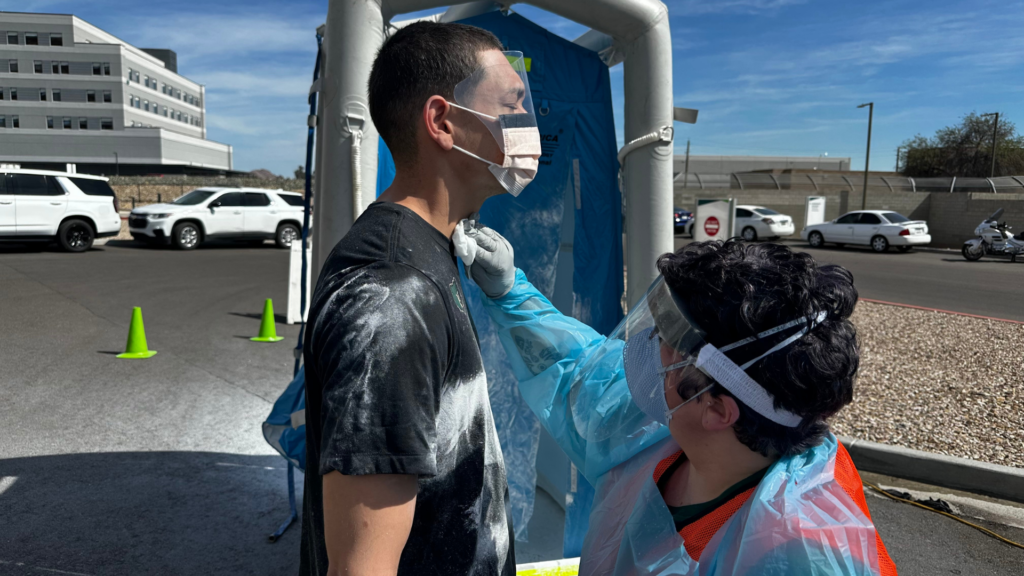
This creates a difficult operational environment for healthcare personnel. Emergency departments must rapidly evaluate patients while simultaneously protecting staff, other patients, and facility operations from potential contamination. Hospital decontamination planning for self-presenting patients becomes especially critical during this window, when patients arrive before field HAZMAT decontamination is completed, and confirmed incident information is not yet available.
Unlike field responders who may have access to incident-scene information, hospitals are often required to make critical decisions based on limited details and evolving circumstances. Understanding the challenges unknown hazardous materials incidents create for hospital response operations is essential for healthcare systems building preparedness plans ahead of major public events.
How Can Secondary Contamination Affect Hospital Operations?
Secondary contamination occurs when contaminated patients, clothing, equipment, or personal belongings introduce hazardous substances into a healthcare facility. While often overlooked in public discussions, secondary contamination has resulted in documented disruptions to hospital operations across the United States. Research published in Disaster Medicine and Public Health Preparedness found that secondary contamination incidents have led to emergency department evacuations, temporary shutdowns, and extensive decontamination operations involving both facilities and healthcare personnel. that secondary contamination incidents have led to emergency department evacuations, temporary shutdowns, and extensive decontamination operations involving both facilities and healthcare personnel.
One frequently cited example occurred in Oregon in 2002 when a self-presenting patient exposed to CS powder, a riot-control chemical similar to crowd-control agents like chloropicrin, unintentionally contaminated an emergency department, affecting healthcare personnel and requiring additional response measures. The ScienceDirect case study documenting this event notes it was the seventh secondary contamination event affecting ED personnel reported to the CDC’s HAZMAT surveillance system between 1996 and 2002.
Perhaps, most importantly, hospitals rarely receive immediate confirmation regarding the substance involved. Staff may initially be managing symptoms and patient care while simultaneously determining whether contamination is present and whether additional protective measures are required. Understanding common hospital decontamination challenges during chemical incidents is critical for healthcare systems building preparedness plans ahead of the 2026 World Cup.
These realities demonstrate why hospital chemical preparedness extends beyond patient treatment, and includes protecting personnel, maintaining operations, and preventing contamination from spreading throughout the facility.
What Hospital Preparedness Gaps Still Exist?
Despite significant improvements in emergency preparedness, studies continue to identify gaps in hospital readiness for chemical exposure incidents. A study of emergency care facilities in Washington State found that 41% lacked designated decontamination facilities despite the ongoing risk of hazardous materials incidents.
Additional research found:
- Only 49% of surveyed emergency departments had a chemical incident response plan
- Only 50% reported having a decontamination site
- Only 12% could properly decontaminate supine patients
Researchers evaluating chemical incident preparedness also found that hospital personnel rated their department’s ability to manage a large-scale chemical exposure event at just 5.4 out of 10, highlighting the complexity of chemical incident response and the challenges of maintaining readiness for low-frequency but high-consequence events.
During the 2014 World Cup in Brazil, only 34% of surveyed hospitals had received preparedness training, more than half lacked formal public agency communication channels, and just 27% could isolate patients during infectious surges, a sobering benchmark as the 2026 tournament approaches.
These findings do not suggest hospitals are unprepared. Rather, they highlight the complexity of chemical incident response and the challenges associated with maintaining readiness for low-frequency, but high-consequence events. Addressing hospital chemical decontamination preparedness gaps before an active incident occurs remains an essential component of 2026 World Cup planning.
Why Is Coordination Between Hospitals and First Responders Essential?
Chemical incidents rarely involve a single organization. Effective response requires coordination among hospitals, EMS, fire service personnel, law enforcement, public health agencies, emergency management organizations, and other response partners.
According to Domestic Preparedness, planning for the 2026 FIFA World Cup requires synchronized coordination across multiple disciplines to support public safety and maintain operational continuity throughout the tournament, with medical services and hospitals expected to face significant strain on limited resources.
CHEST Physician has also emphasized the importance of implementing Incident Command System (ICS) structures approximately one month before major events to support coordination among healthcare systems, EMS providers, public health agencies, and venue operators.
When a chemical exposure incident occurs, information sharing becomes critical. Hospitals may need to coordinate with first responders regarding:
- Patient exposures
- Chemical identification
- Triage procedures
- Decontamination requirements
- Resource allocation
- Public safety communications
Understanding hospital and first responder decontamination coordination challenges remains one of the most important and often overlooked components of hospital preparedness planning. Regular emergency management training across hospitals and response teams is essential for ensuring that coordination protocols work under real-time pressure. Strong coordination helps improve situational awareness and allows organizations to adapt more effectively as incidents evolve.
How Does FAST-ACT® Support Hospital Chemical Preparedness?
Hospital chemical preparedness for the 2026 World Cup requires solutions that support rapid deployment, operational flexibility, and contamination management in fast-moving environments.
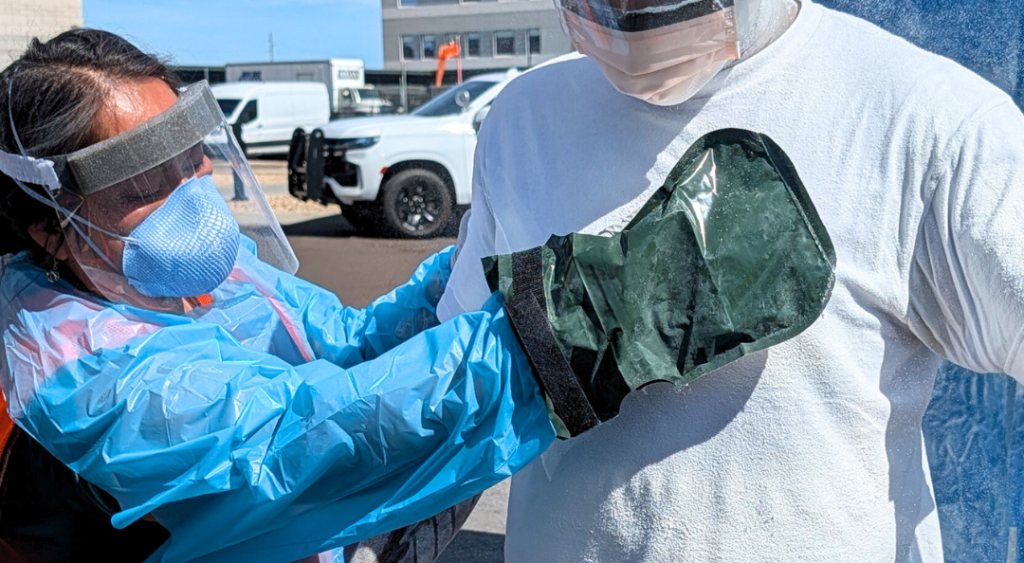
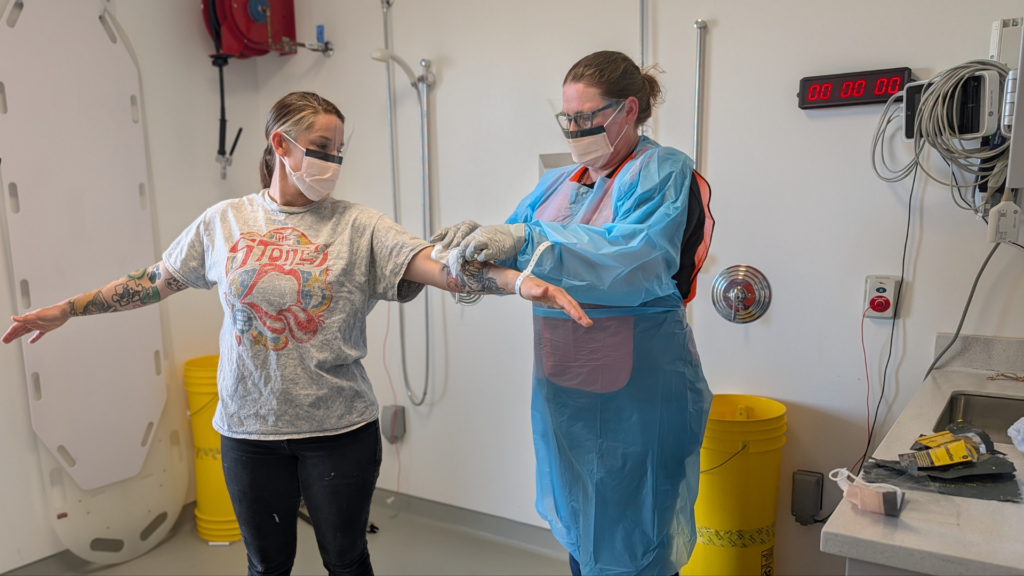
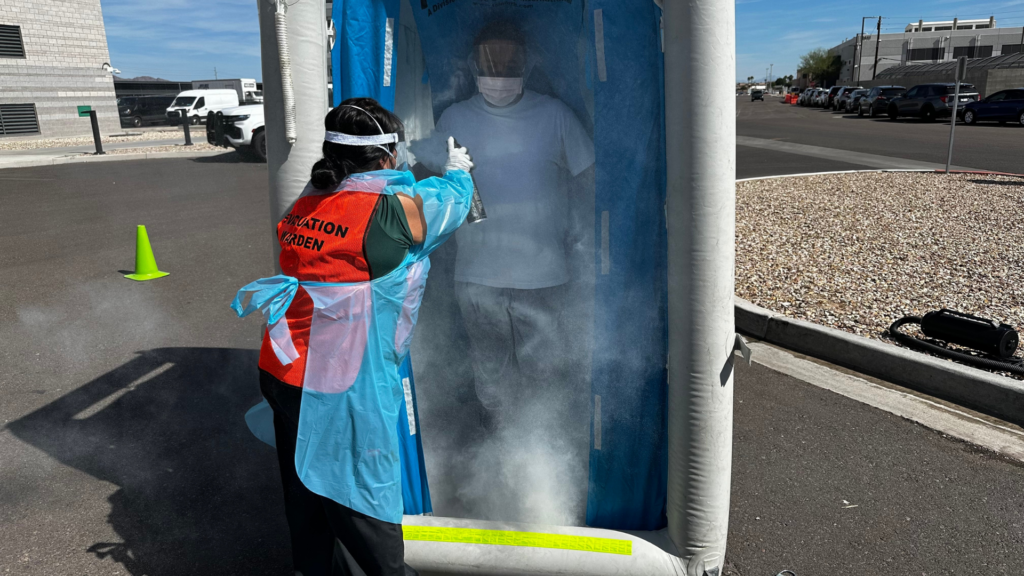
FAST-ACT® supports hospital preparedness efforts through dry decontamination technology designed to assist response teams when speed and ease of use are critical. Understanding when to use dry vs. wet decontamination procedures is an essential consideration for hospital teams managing self-presenting patients.
FAST-ACT® solutions that support hospital preparedness operations include:
- FAST-ACT® 400g Pressurized Cylinder: designed for rapid deployment to help support full body contamination management involving unknown chemical threats, vapor hazards, and hazardous substances
- FAST-ACT® Decontamination Mitts: designed to support rapid decontamination of personnel, PPE, skin, and exposed surfaces while helping reduce contamination transfer. *CE classified as a class I medical device for use on skin and surfaces in the EU.
- FAST-ACT® Decontamination Wipes: portable decontamination tools designed for targeted applications on personnel, equipment, and localized contamination concerns. *CE classified as a class I medical device for use on skin and surfaces in the EU.
Because these solutions do not require water or extensive setup procedures, they can support response operations during the critical period when hospitals may be managing self-presenting patients and evolving incident conditions. Managing high-contamination scenarios in hospitals helps ensure healthcare facilities can maintain operational continuity even when incident volumes exceed initial response capacity.
Strengthening Hospital Chemical Preparedness for the 2026 World Cup
Hospitals represent one of the most important layers of consequence management during chemical exposure incidents. While much of the public attention surrounding the 2026 FIFA World Cup focuses on venue security and crowd safety, healthcare systems must prepare for the realities of contaminated patients, secondary contamination risks, and rapidly evolving response conditions.
The combination of large crowds, increased travel, and complex public environments reinforces the importance of hospital chemical preparedness planning across healthcare systems and emergency response organizations.
Follow along with our 2026 World Cup preparedness blog series as we continue exploring how airports, transportation systems, and environmental response teams are preparing for the operational challenges surrounding large-scale public events.
About Timilon Corporation:
Timilon Corporation is the manufacturer of FAST-ACT®, a proprietary formulation of non-toxic high-performance specialty materials effective at neutralizing a wide range of toxic chemicals with the added capability to destroy chemical warfare agents. The FAST-ACT technology is utilized by leading defense agencies, chemical industrial companies, first responders and HAZMAT teams to quickly and safely eliminate chemical hazards. For more information, reach out to Leticia Menzzano, Marketing Manager, [email protected].
FAQs
Why are hospitals an important part of 2026 World Cup preparedness?


Hospitals play a critical role in consequence management following chemical exposure incidents. Healthcare systems must be prepared to evaluate patients, prevent secondary contamination, coordinate with emergency responders, and maintain operational continuity during large-scale public events.
What are self-presenting patients?
Self-presenting patients are individuals who travel directly to a healthcare facility after an exposure or incident rather than waiting for EMS transport. During chemical incidents, these patients may arrive before hazardous materials teams are fully deployed or before decontamination operations are completed.
How does FAST-ACT® support hospital chemical preparedness?
FAST-ACT® supports hospital preparedness through dry decontamination solutions designed for rapid deployment during chemical exposure incidents. These solutions can help healthcare teams manage contamination concerns while maintaining operational continuity.
Which FAST-ACT® products support hospital preparedness?
FAST-ACT® solutions that support hospital chemical preparedness include: FAST-ACT® 400g Pressurized Cylinder FAST-ACT® Decontamination Wipes FAST-ACT® Decontamination Mitts These products are designed to support rapid decontamination efforts involving personnel, PPE, equipment, and localized contamination concerns.