

The Hidden Threat of Contaminated Clothing: Off-Gassing After Chemical Exposure
A patient self-presents to the emergency department after reporting exposure to an unknown substance. No HAZMAT team responded. No field decontamination occurred. The patient is conscious, alert, and does not appear seriously injured, but the contamination arrived with them, held in the fibers of their clothing. Nobody in the ED knows it yet.
This scenario is not uncommon. According to HHS ASPR TRACIE’s chemical decontamination guidance, many patients contaminated by hazardous materials arrive at the hospital by private vehicle or ambulance without any prior decontamination. And even when patients have been decontaminated at the scene, emergency or gross decontamination may not have been sufficient.
Contaminated clothing is not simply something to be removed as a comfort measure. It can act as a chemical reservoir, continuing to release hazardous vapor long after the patient has left the original release point. That process is chemical off-gassing, and it has documented consequences for EMS personnel, hospital staff, and the facilities that receive contaminated patients.
Understanding how contaminated clothing behaves after chemical exposure, and what can be done during the gap between exposure and full decontamination, is an important part of preparedness for EMS, Fire and HAZMAT teams, and hospital first receivers.
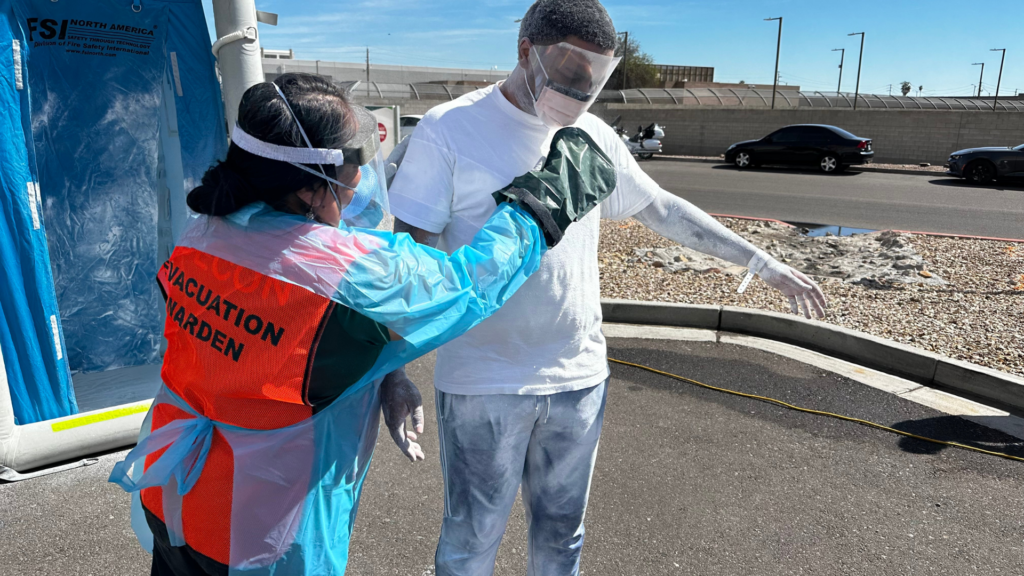
Does Contaminated Clothing Continue to Release Hazardous Vapor?
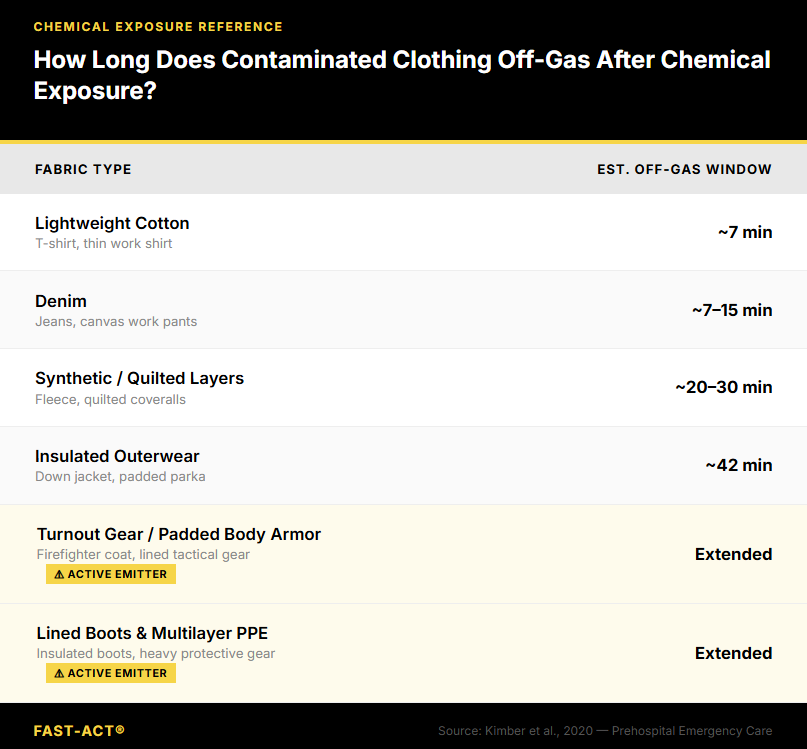
A study measuring chemical vapor release from clothing found that vapor concentration near clothing often increased for several minutes after it was removed from the contaminated environment, and that mean times for vapor release to reach zero ranged from 7 minutes for jeans to 42 minutes for down jackets. Compression of thick outerwear released additional vapor.
According to ATSDR’s guidance on unidentified chemical exposure, victims whose skin or clothing is soaked with liquid chemical, or victims who have condensation of chemical vapor on their clothes or skin, may contaminate others by direct contact or by off-gassing vapor. This applies both in prehospital settings and in the emergency department.
Does Fabric Type Affect How Long Chemical Off-Gassing Lasts?
Not all garments behave the same way after chemical exposure. Retention behavior is governed by fiber density, loft, and the volume of trapped air inside the garment, and those variables differ significantly between a work shirt and cold-weather gear.
A single layer of denim is relatively dense and thin. Vapor has a short diffusion path to the open air, so emission is faster and more complete. A down-filled jacket behaves differently. Contaminated vapor that reaches the pockets desorbs slowly over a much longer window.
The practical implication: the heavier and more insulated the garment, the longer the off-gassing tail. Turnout gear, quilted coveralls, lined boots, and padded body armor should be treated as active emitters for longer periods. Research on off-gassing from field-contaminated firefighter jackets found that volatile compounds were still detectable at 48 hours after exposure. This challenge extends beyond the incident scene, as Firehouse Magazine notes, contamination in PPE layers isn’t necessarily limited to the exterior surface, meaning gear that looks clean may still retain hazardous substances within its materials.
A separate study found that firefighting uniforms off-gassing in enclosed vehicles could be a relevant source of hazardous compounds for occupants sharing that space.
Why Is Chemical Exposure Risk High During Patient Transport?
The highest-risk period in many chemical response situations is not the hot zone, it is the minutes after the hot zone, when a clothed patient enters an enclosed vehicle with crew members who may have limited respiratory protection.
An ambulance cabin is a small, poorly ventilated space. Vapor from a saturated garment accumulates rather than disperses. According to OSHA’s guidance on protecting EMS responders, studies estimate that removing contaminated clothing can reduce the quantity of contaminant associated with victims by an estimated 75 to 90 percent, and removing contaminated clothing as soon as possible will reduce both patient and responder exposure levels.
Research examining secondary contamination from 2003–2006 identified at least 17 medical personnel injured as a result of secondary contamination while treating contaminated victims, 12 were EMTs and 5 were hospital personnel. Respiratory irritation was the most common injury sustained.
94% of chemical exposure incidents in one EMS HAZMAT study produced victims requiring hospital transport, meaning the transport corridor is an almost universal stage of chemical incident response where clothing management decisions have direct consequences for crew safety.
Why Should Contaminated Clothing Be Removed Immediately?
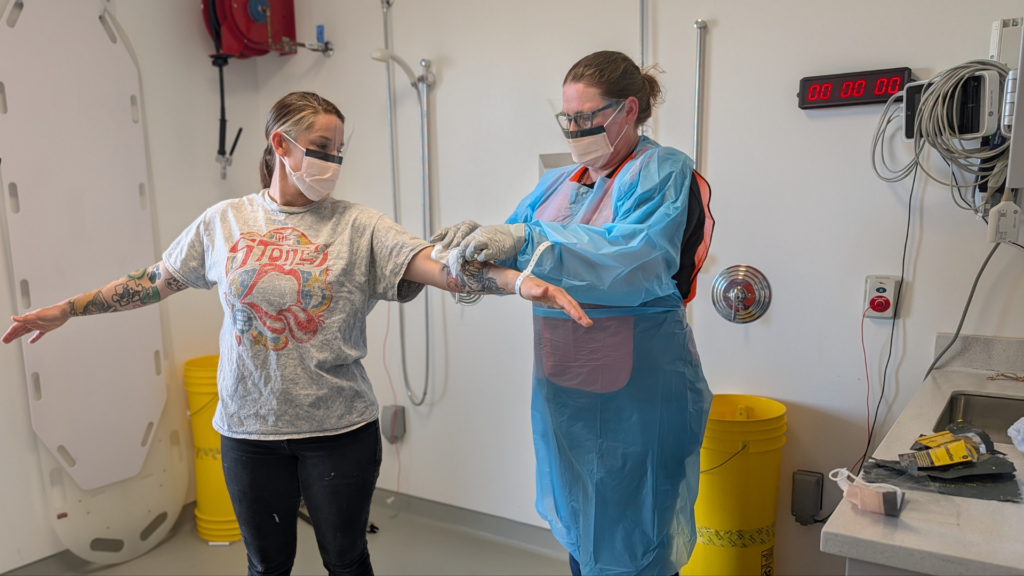
Clothing removal is one of the highest-yield early interventions available during a chemical response, and the research supporting it is consistent.
BARDA-funded PRISM research found that removing clothing removes up to 90% of chemical contamination. According to PRISM Volume 2 Tactical Guidance, the protective effects of disrobing decrease by 20% every 10 minutes following exposure, reinforcing that early clothing removal is a time-sensitive action, not a secondary consideration. According to NIH/StatPearls, clothing serves as a reservoir for chemical contaminants, especially liquid-based chemicals, and removal of clothing outside of the treatment area helps prevent facility contamination.
However, not every patient will be willing or able to disrobe immediately. Patients may be uncooperative, medically unstable, or uncomfortable removing clothing in a public or field environment. In those situations, waiting for full compliance before taking any decontamination action may not be the most effective approach. FAST-ACT Dry decontamination can be applied directly over clothing and to exposed skin in the interim, helping reduce surface contamination and off-gassing while responders work toward clothing removal or transition to a more controlled decontamination environment.
Whether dry or wet decontamination follows clothing removal depends on the substance, patient condition, and available resources, and that decision should be addressed in established response protocols before an active incident.
Clothing removal addresses the bulk of external contamination, but it exposes a gap. Technical decontamination corridors take time to site, staff, and establish. Ambient temperature may make a water shower clinically unwise. The patient may already be in transport. Between disrobing and the establishment of full wet decontamination, residual agent may remain on skin, hair, and remaining layers, continuing to off-gas.
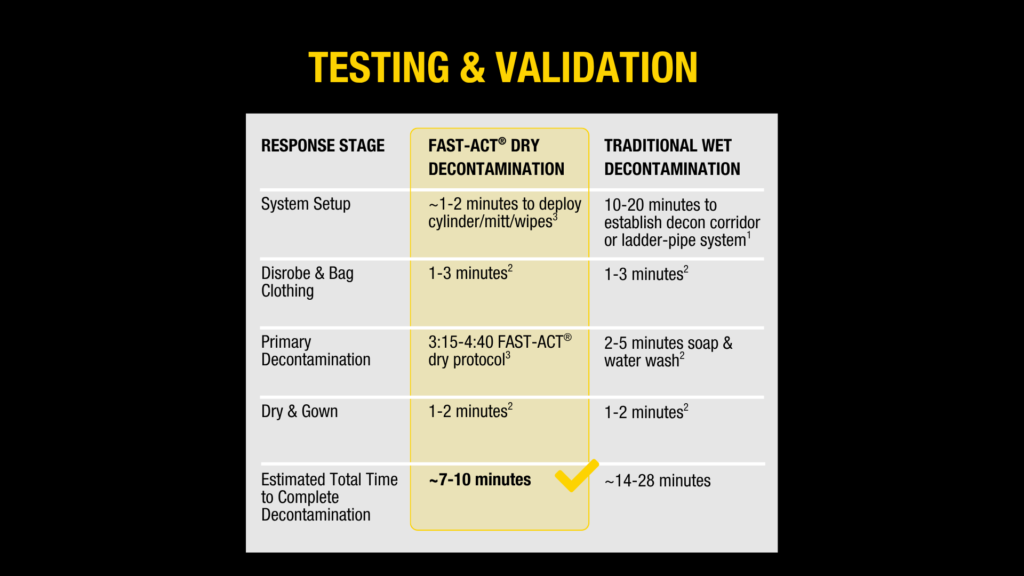
Research in controlled human volunteer trials found that dry decontamination reduced skin contamination under all tested conditions, with blotting combined with rubbing producing the greatest reduction. Combining dry and wet decontamination resulted in lower simulant recovery than either method alone, supporting the idea that dry and wet approaches serve different roles within a larger response rather than competing with each other.
How Does Dry Decontamination Help After Chemical Clothing Exposure?
Dry decontamination uses adsorbent and reactive dry media to help remove chemical contamination surfaces, and equipment, without requiring water, runoff management, or complex setup.
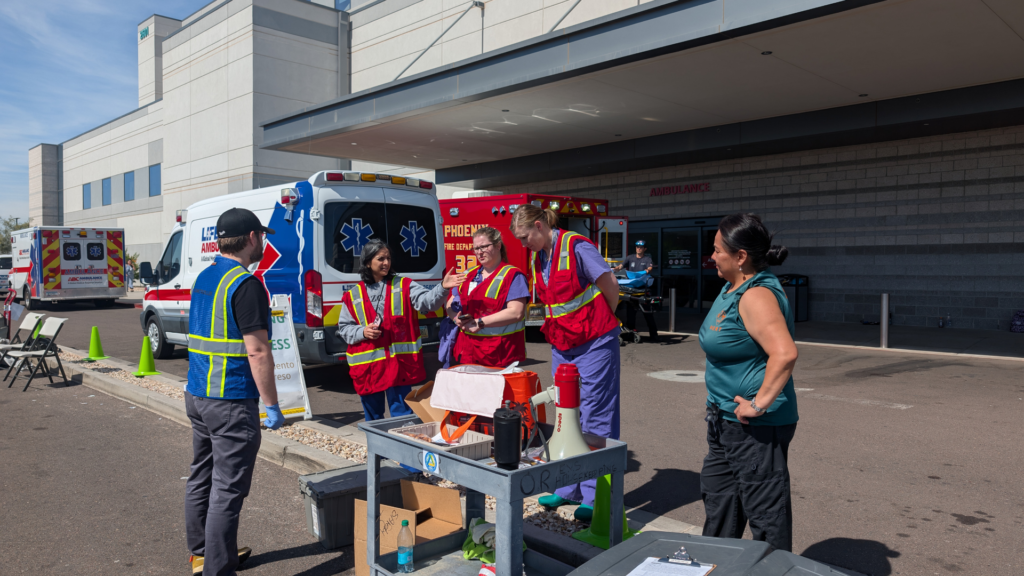
For EMS and first responders, this means having a portable dry decontamination option available at the point of patient contact, not two miles away in a support vehicle. For hospitals, it means having supplies accessible at the triage entrance and patient receiving areas before the full decontamination system is activated.
FAST-ACT’s dry decontamination technology uses a reactive formulation designed to decontaminate, contain, and neutralize a broad range of hazardous chemicals on skin, surfaces, and equipment. The science behind FAST-ACT’s technology explains why its neutralization-based approach is particularly relevant during this early response window. While FAST-ACT works well as part of a combined dry and wet decontamination approach, its formulation is also effective as a standalone dry decontamination method, neutralizing hazardous chemical on contact without requiring water.
FAST-ACT Decontamination Mitts and FAST-ACT Decontamination Wipes provide portable options for targeted decontamination of skin and surfaces, CE certified as Class I medical devices for use on skin and surfaces in the European Union. The wipes support the removal of radiological particles, making them relevant across a broader range of incident types.
For larger-area applications, whole body decon, and appropriate vapor-response scenarios, the FAST-ACT 400G Pressurized Cylinder provides a portable format that can be deployed quickly, with an average discharge time of approximately 9.9 seconds, allowing responders to rapidly address chemical vapor threats and surface contamination without requiring water or complex setup.
Dry decontamination is a bridge to comprehensive decontamination, not a replacement for it. Not all dry decontamination solutions offer the same level of neutralization effectiveness, an important consideration for any organization evaluating early-response options.
How Does Contaminated Clothing Travel Through the Response Chain?
A contaminated patient can move through several environments before full decontamination is complete: the scene, an ambulance, a hospital entrance, an emergency department. The goal at every stage is to prevent contamination from traveling with them.
First responder health and safety, and the safety of hospital staff receiving potentially contaminated patients, depends on having clearly defined options available at every stage of that chain. Common coordination pitfalls between hospitals and first responders, including failure to communicate what decontamination has or has not occurred, are among the most preventable failures in the chemical response chain.
Clothing removal, early dry decontamination where appropriate, clear communication between Fire/HAZMAT, EMS, and the receiving hospital, and a plan for transitioning from early actions to comprehensive decontamination, these are the components of a response that manages contamination rather than simply moving it from one environment to the next.
How hospitals and first responders can begin dry decontamination before full decon is established addresses exactly this challenge, providing practical guidance for managing contamination during the critical early window across the full response chain. The patient who self-presents to the ED without prior decontamination is one of the most common ways a chemical incident reaches a hospital. The contamination in their clothing does not stop being a hazard because the original incident has been controlled.
The best time to determine how your agency will manage contaminated clothing is before a patient arrives. Contact our team to learn more about integrating FAST-ACT dry decontamination into your existing response protocols, for EMS, Fire and HAZMAT, and hospital environments.
About Timilon Corporation:
Timilon Corporation is the manufacturer of FAST-ACT®, a proprietary formulation of non-toxic high-performance specialty materials effective at neutralizing a wide range of toxic chemicals with the added capability to destroy chemical warfare agents. The FAST-ACT technology is utilized by leading defense agencies, chemical industrial companies, first responders and HAZMAT teams to quickly and safely eliminate chemical hazards. For more information, reach out to Leticia Menzzano, Marketing Manager, [email protected].
FAQs
Does contaminated clothing continue to release chemicals after a patient leaves the exposure area?


Yes. Textiles can retain hazardous chemicals and continue releasing vapor after a patient has left the original release point, a process called off-gassing.
Why is patient transport a high-risk period for chemical exposure?
An ambulance cabin is a small, poorly ventilated space. Vapor from contaminated clothing accumulates rather than disperses in an enclosed vehicle, creating ongoing inhalation and secondary contamination risks for EMS crew members who may have limited respiratory protection during transport.
How does FAST-ACT support contaminated clothing response?
FAST-ACT provides portable dry decontamination solutions including Decontamination Mitts and Wipes for targeted skin and surface decontamination, and the 400G Pressurized Cylinder for larger-area applications and appropriate vapor-response scenarios. These tools are designed to support the early response window before comprehensive decontamination systems are in place, and can be used alongside or independent of wet decontamination depending on the situation.