
USPS Hazmat Awareness Month 2026: Why Unknown Substances in the Mail Call for a Prepared Response
On October 30, a worker processing mail-in ballots at a Chester County, Pennsylvania government building felt a non-liquid substance through a sealed envelope. Employees were isolated and monitored, the building was shut down, and a hazmat team responded. Officials determined within 45 minutes that no chemical or biological hazard was detected, but election services were disrupted for about three hours.
The incident came two days before USPS Hazmat Awareness Month began on November 1, and just days before Election Day. Both stories raise the same question: what happens when an unknown substance turns up in the mail?
What Is USPS Hazmat Awareness Month?
The annual campaign focuses on how to safely identify, handle, and deliver mailable hazardous materials, and how to keep prohibited ones out of the mail stream. USPS is reminding customers and employees to check all six sides of a package for hazmat markings, remove outdated markings before reusing a box, and confirm that mailable hazardous materials carry an “H” icon on the postage label. Nonmailable items include electronics with lithium-ion batteries rated above 100 watt-hours, such as e-bikes and scooters.
The scale is significant. PHMSA reports more than 1.2 million daily shipments of hazardous materials in the United States. New USPS requirements contributed to a 20% reduction in incidents in 2023, and the Postal Inspection Service opened 1,700 investigations in fiscal year 2024 into customer attempts to send hazardous materials through the mail.
Prevention narrows the funnel, but it does not close it. Hazardous package handling risks, from lithium battery leaks to unknown powders, exist all year.
Why Are Unknown Substances in Election Mail a Concern?
Election season adds volume and attention to the same infrastructure. Ballots move through processing centers, county election offices, and municipal mailrooms, and one suspicious envelope can halt work at a facility many people depend on.
West Chester is not isolated. Ahead of the midterms, at least 36 members of Congress and election offices in at least 10 states reported suspicious envelopes, and the FBI and U.S. Postal Inspection Service are investigating. This pattern affects offices regardless of party, and our blog on suspicious substance incidents covers it from the protective detail perspective. The Postal Inspection Service responded to 1,675 suspicious mail incidents involving substances, powders, or liquids in fiscal year 2023.
Two kinds of hazard move through the same channel:
- Undeclared or improperly packaged hazardous materials, such as lithium cells, aerosols, and corrosives, which are compliance failures that can cause fires, leaks, or reactions.
- Unknown substances deliberately placed in an envelope, which call for a different response than a packaging error.
In both cases, the person who finds the item rarely knows what it is.
What Happens When an Unknown Substance Is Found in a Mailroom?
The first steps are consistent: stop handling the item, isolate it and anyone exposed, restrict airflow, and notify responders. West Chester followed this pattern, isolating nearby employees, shutting down the building, and having the hazmat team check for chemical and biological hazards.
The disruption comes from the time that follows. Ballot intake pauses, exposed staff may need evaluation, adjacent mail and equipment can be pulled into the affected area, and public confidence suffers when an office is cordoned off. In West Chester, the building reopened within 90 minutes, yet election services were disrupted for about three hours.
Having an unknown substance response strategy in place before an incident is what keeps those first minutes controlled.
Why Is Dry Decontamination a Practical Fit for Mailrooms and Offices?
Water-based decontamination was designed for open ground, not a room full of paper and electronics. In an enclosed office it can create runoff that spreads across floors and into drains, and it can damage records and equipment. Water-based methods dilute contaminants without necessarily neutralizing them, and the runoff may need its own collection and treatment.
Dry decontamination requires no water supply, drainage, or setup. Whether dry or wet decontamination is right depends on the substance, the environment, and the available resources. In an occupied mailroom or county office, dry decontamination is a practical early-response option while HAZMAT teams mobilize. Dry decontamination is designed to address liquid and vapor chemical hazards. It is not intended for dry powders or particulates, and it should not be confused with other dry materials that only absorb or cover a spill.
How Does FAST-ACT Support Early Response to Unknown Substances in the Mail?
FAST-ACT is a dry decontamination technology that decontaminates, contains, and neutralizes hazardous chemicals on contact. It requires no water and can be used as a standalone method. It is designed for the early-response window before full decontamination is established, and it complements established HAZMAT procedures rather than replacing them. The science behind FAST-ACT explains its neutralization-based formulation.
Several formats apply to mail environments:
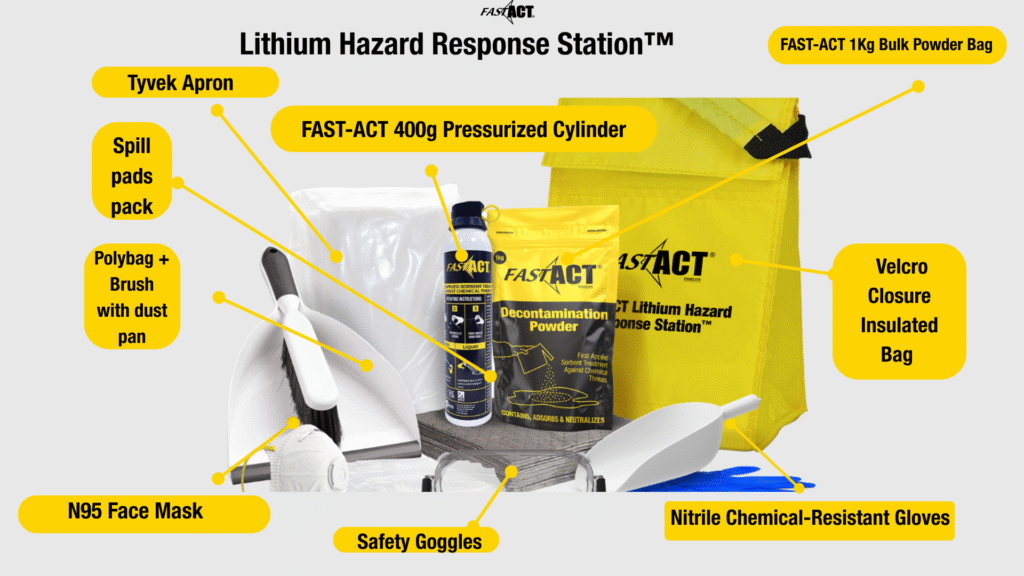
- 400G Pressurized Cylinder: a portable format for vapor and broader-area applications, with an average discharge time of about 9.9 seconds.
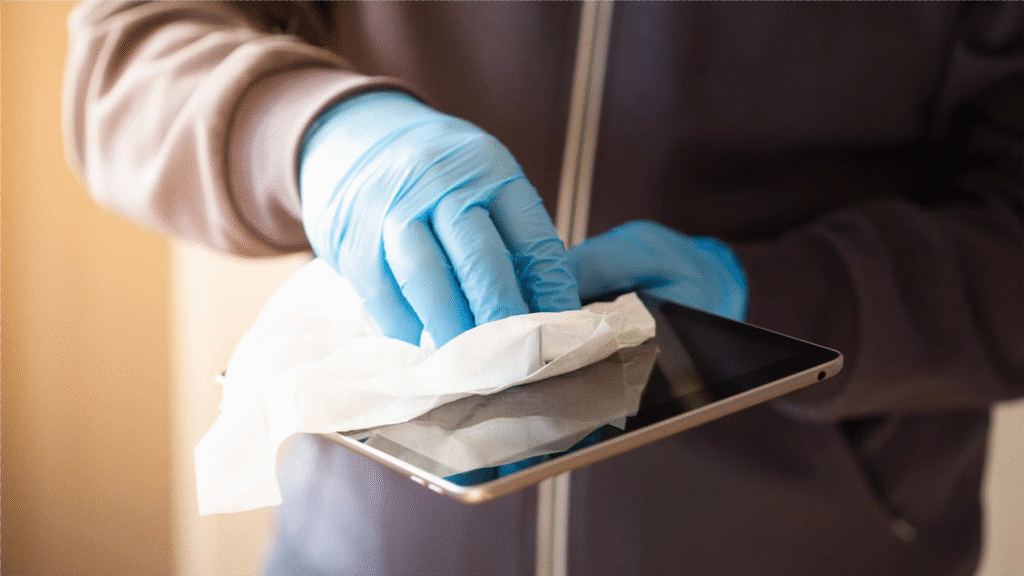
- Decontamination Mitts and Wipes: targeted decontamination of skin, surfaces, and equipment. *CE classified as a class I medical device for use on skin and surfaces in the EU.
- DEFEND Kit: detection and decontamination tools for fentanyl and unknown powders.
- Lithium Hazard Response Station: neutralizes toxic gases and electrolyte spills from damaged lithium-ion batteries without water, which is relevant to USPS’s lithium battery guidance.
Staging these where mail is handled puts capability at the point of contact.
Join the Conversation on December 8

Exposed staff do not always stay in the mailroom. They can become self-presenting patients at a hospital before anyone knows what they were exposed to. On December 8 at 11:00 AM EST, FAST-ACT is hosting “The Shift to Dry Decontamination: Medical Device Solutions for Hospitals and Medical Defense,” a live webinar on how dry decontamination supports early response before full decontamination is established.
How Can Facilities Prepare During Hazmat Awareness Month?
November is a useful prompt to review the basics:
- Confirm that staff know how to check packages for hazmat markings and the “H” icon
- Define who isolates exposed people, who notifies responders, and who is authorized to act
- Stage early-response tools where mail is processed
- Train with local HAZMAT partners
Annual emergency management training that includes unknown substance scenarios helps teams act under pressure. Awareness campaigns end, but the risk does not, and the facilities best prepared are the ones that decided their response before the envelope arrived.
To learn how dry decontamination fits into your facility’s response plan, contact our team.

About Timilon Corporation:
Timilon Corporation is the manufacturer of FAST-ACT®, a proprietary formulation of non-toxic high-performance specialty materials effective at neutralizing a wide range of toxic chemicals with the added capability to destroy chemical warfare agents. The FAST-ACT technology is utilized by leading defense agencies, chemical industrial companies, first responders and HAZMAT teams to quickly and safely eliminate chemical hazards. For more information, reach out to Leticia Menzzano, Marketing Manager, [email protected].
FAQs
What is USPS Hazmat Awareness Month?


USPS Hazmat Awareness Month is a November campaign focused on safely identifying, handling, and delivering mailable hazardous materials, and on keeping prohibited items out of the mail. USPS reminds customers to check all six sides of a package for hazmat markings and confirm that mailable hazardous materials carry an “H” icon on the postage label.
Why is dry decontamination a practical option in a mailroom or office?
Water-based decontamination can create runoff and damage paper records and electronics in an enclosed space. Dry decontamination requires no water, drainage, or setup, making it a practical early-response option while a HAZMAT team mobilizes.
How does FAST-ACT support early response to hazardous substances in the mail?
FAST-ACT is a dry decontamination technology that decontaminates, contains, and neutralizes hazardous chemicals on contact. It requires no water and can be used as a standalone method. Products include the 400G Pressurized Cylinder, Decontamination Mitts and Wipes, the DEFEND Kit for fentanyl and unknown powders, and the Lithium Hazard Response Station.
What types of hazards can FAST-ACT address?
FAST-ACT is designed for chemical hazards, including toxic industrial chemicals such as acids and bases, in both liquid and vapor form. It works on contact without water, so it can be used on surfaces, equipment, and skin in places where water-based decontamination isn’t practical, such as mailrooms and offices.