

What Should Hospitals Do When a Contaminated Patient Walks Into the Emergency Department?
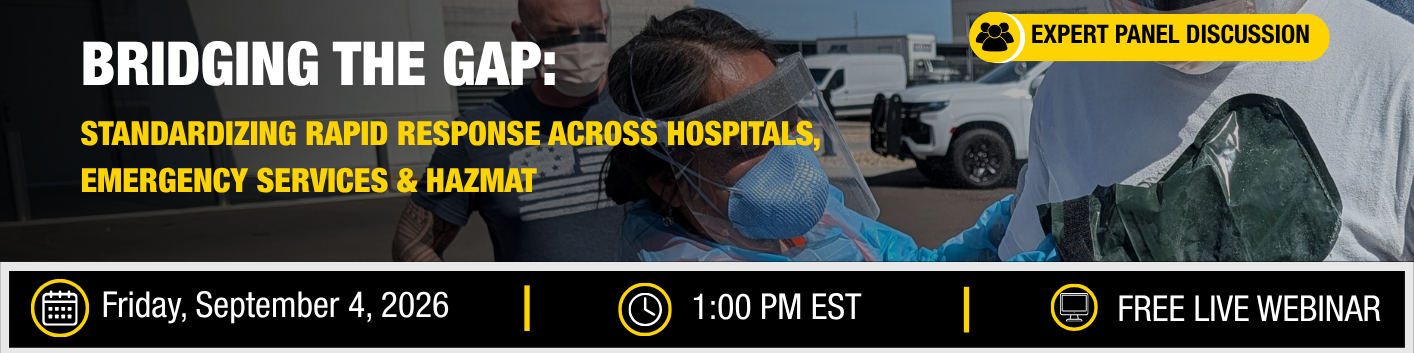
Imagine this: A patient walks into your emergency department showing signs of a possible chemical exposure. They are distressed, their clothing may be contaminated, and no one at the hospital has received a call from EMS.
You don’t know exactly what they were exposed to. You don’t know whether more patients are on the way. And you don’t know whether the patient has already come into contact with staff, other patients, or surfaces inside the facility.
Now the clock starts.
This is one of the most challenging situations a hospital can face during a chemical incident: a potentially contaminated patient arrives before the hospital is fully prepared to receive them.
The first 15 minutes are about recognizing potential exposure, limiting contamination, protecting staff and other patients, and beginning the appropriate response, while EMS, Fire, and HAZMAT resources are being coordinated.
Why Are Self-Presenting Patients a Challenge for Hospitals?
In an ideal response, patients exposed to a hazardous chemical are identified and decontaminated before reaching the hospital. In reality, that does not always happen. Specialized HAZMAT resources can take time to mobilize, and patients may reach healthcare facilities before field decontamination has occurred. Chemical decontamination guidance emphasizes beginning decontamination as soon as feasible after exposure.
The 1995 Tokyo subway sarin attack demonstrates how quickly this can become a hospital challenge. Of the thousands of people seeking medical attention, only 688 were transported by ambulance. More than 4,000 reached hospitals by other means, including on foot and by private vehicle, before coordinated hospital decontamination was established. FEMA’s chemical incident guidance documents this challenge. A patient may therefore arrive before the hospital knows an incident has occurred, making recognition at intake critical.
Research has also identified significant gaps in hospital preparedness. One study found that only 55% of surveyed emergency care facilities had protocols for handling medical facility contamination and potential evacuation after treating contaminated patients. Hospital chemical decontamination preparedness research illustrates why hospitals need defined procedures before an incident occurs. Here at FAST-ACT, we have also examined these challenges in hospital preparedness gaps, including gaps in planning and available decontamination capabilities.
What Should Hospitals Do in the First 5 Minutes?
The priority is recognition and control.
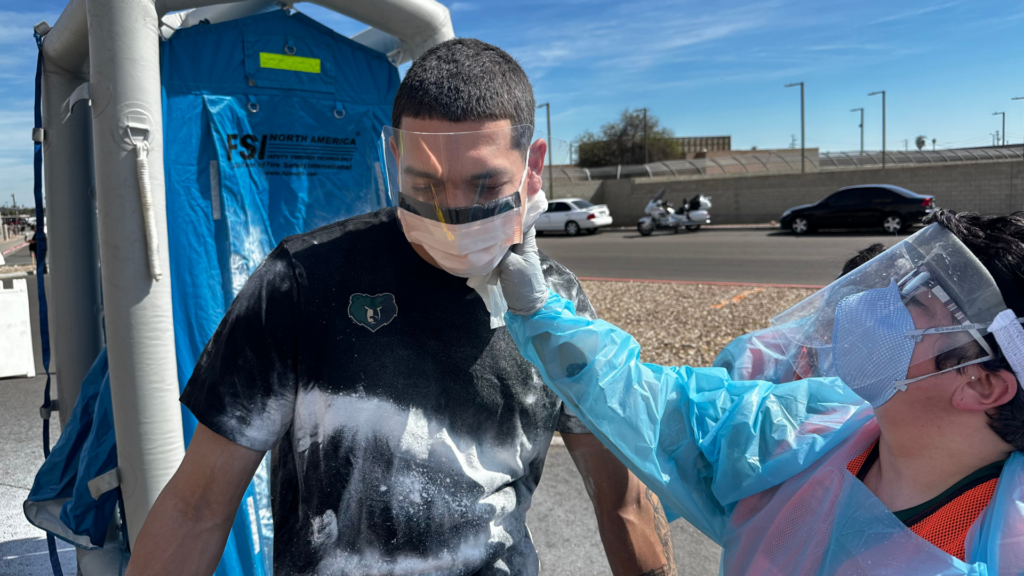
A patient presenting unexplained skin or eye irritation, respiratory symptoms, unusual odors, or other indications following a known or suspected chemical incident should prompt staff to consider the possibility of contamination.
Depending on the facility’s emergency response plan, early actions may include:
- Recognizing a potential contamination event
- Keeping the patient separated from the general waiting area
- Activating first-receiver procedures
- Protecting staff with PPE appropriate to the suspected hazard
- Notifying hospital leadership and incident command
- Contacting EMS, Fire, HAZMAT, or other response partners
- Establishing a controlled area for assessment and decontamination
Hospitals should not assume they can identify a chemical based solely on symptoms, odor, or appearance. When the substance is unknown, established protocols and appropriate HAZMAT and medical expertise should guide the response.
OSHA also emphasizes that personnel treating contaminated victims or performing decontamination may require First Responder Operations-level training, with emergency response plans clearly defining who is responsible for victim decontamination.
How Can Hospitals Reduce the Risk of Secondary Contamination?
Recognizing a contaminated patient is only the beginning. A patient or contaminated clothing can potentially transfer hazardous material to healthcare workers, other patients, equipment, and surfaces. Secondary contamination has been associated with emergency department evacuations, temporary shutdowns, and extensive decontamination operations.
Research examining secondary contamination in emergency departments demonstrates why contamination control needs to be part of the initial response.
Hospitals should have procedures addressing:
- Where potentially contaminated patients are assessed
- How patient movement is controlled
- Appropriate PPE for the suspected hazard
- Handling contaminated clothing and materials
- Where initial decontamination occurs
- How EMS and HAZMAT teams are notified
- How patients transition into medical care
The goal is not to delay necessary treatment. It is to prevent an uncontrolled contamination event from moving farther into the facility.
What Role Does Dry Decontamination Play in the First 15 Minutes?
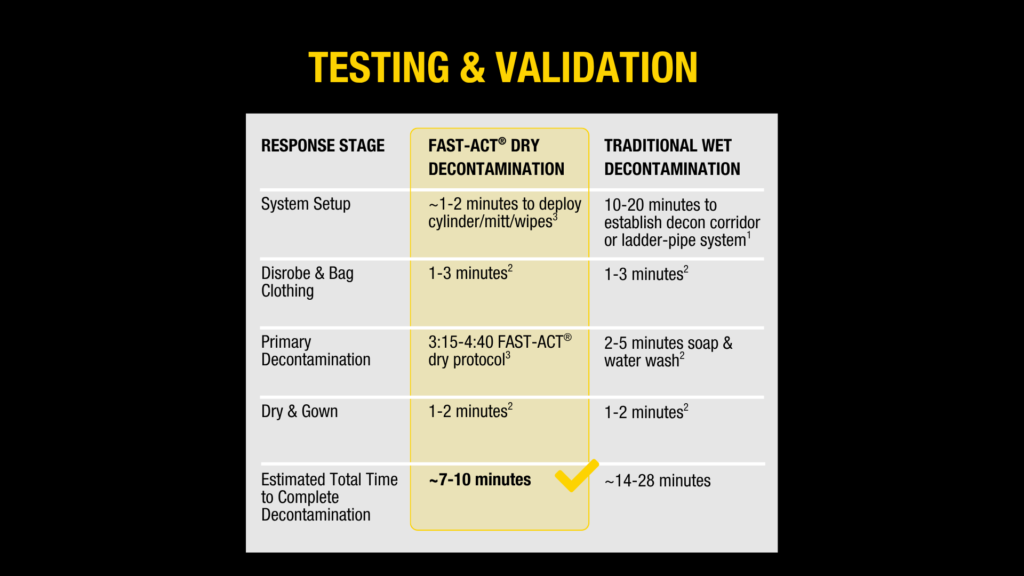
When a contaminated patient arrives before a full decontamination operation is established, dry decontamination can provide an important early-response option.
Dry decontamination does not replace every decontamination procedure, and the appropriate approach depends on the substance, exposure scenario, patient condition, and established response procedures. However, it can provide a way to begin addressing appropriate chemical contamination while additional resources are being mobilized.
The PRISM approach emphasizes a structured, stepwise approach to chemical decontamination. For hospitals, the broader lesson is that decontamination should be planned as a process rather than relying on a single method.
FAST-ACT’s technology is designed around this early-response need, providing FAST-ACT dry decontamination for appropriate chemical contamination scenarios without requiring a traditional water-based setup.
How Should Hospitals Coordinate with EMS and HAZMAT?
The first 15 minutes do not belong to one agency. Hospitals, EMS, Fire, and HAZMAT teams each have different responsibilities, but their actions need to connect.
The hospital may need information about:
- The suspected chemical
- Number of potentially exposed patients
- Whether field decontamination occurred
- Patient symptoms
- Whether additional patients are expected
- Appropriate protective measures
EMS and HAZMAT teams also need to know what the hospital is prepared to receive and whether its decontamination procedures have been activated. OSHA emphasizes that emergency response plans should define the responsibilities of personnel involved in treating and decontaminating contaminated victims. Emergency response training guidance provides additional context.
This is where standardized communication matters. The goal is to prevent the hospital from learning about chemical exposure after the patient is already inside. Hospital and first-responder dry decontamination can be incorporated into this broader coordination strategy when appropriate.
Why Does Training Matter for Hospital Chemical Response?
A written procedure is only useful if staff know how to execute it.
A simulation study found that average knowledge scores for chemical mass-casualty response increased from 41.72 before training to 77.96 after training. Confidence also improved in areas including PPE selection, zone setup, decontamination, and chemical triage.
Hospitals should practice:
- Recognizing a potentially contaminated patient
- Activating first-receiver procedures
- Establishing controlled areas
- Communicating with EMS and HAZMAT
- Initiating appropriate decontamination
- Managing additional self-presenting patients
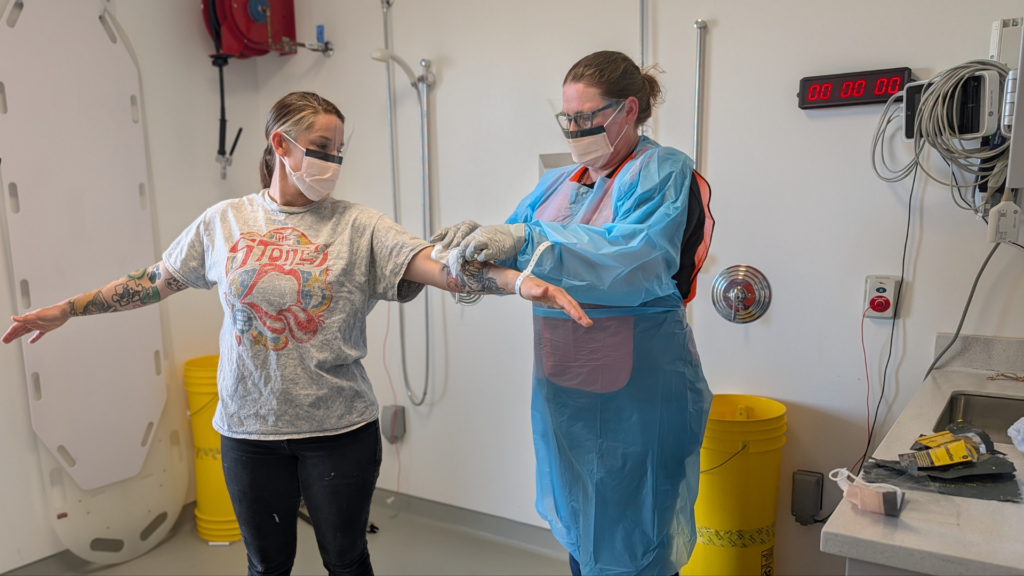
Training should also include the equipment and procedures staff are expected to use during an actual response. Emergency management training can help turn written procedures into repeatable response actions.
Contact Our Team to Set Up FREE In-person or Online Training: https://fast-act.com/contact-us/
How Can FAST-ACT Support Early Hospital Decontamination?
FAST-ACT provides dry decontamination solutions that can support hospitals and first responders during appropriate chemical contamination scenarios.
For chemical vapor threats and full body decon, The FAST-ACT 400g Pressurized Cylinder provides a portable option for rapid chemical neutralization and vapor suppression where appropriate.
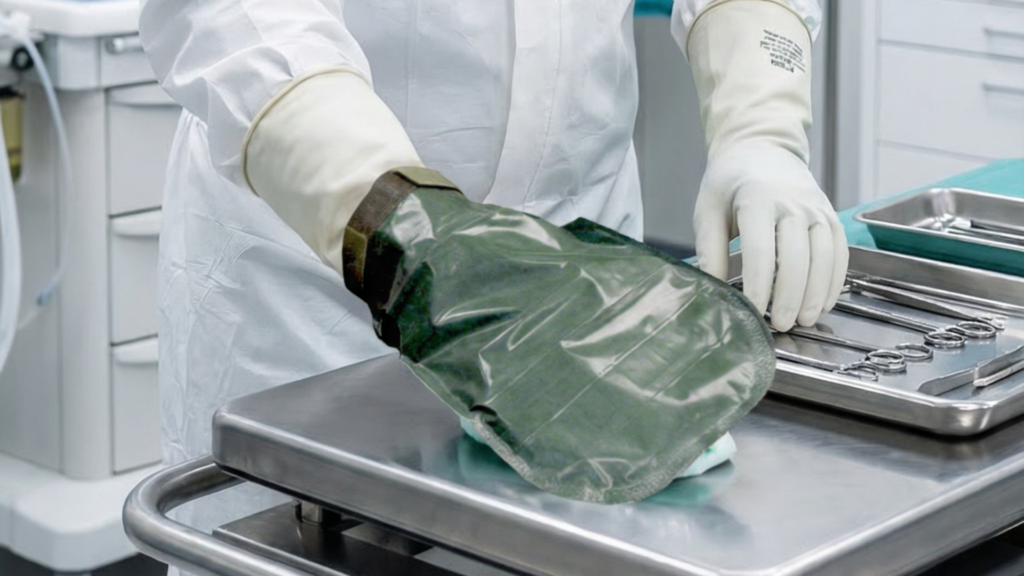
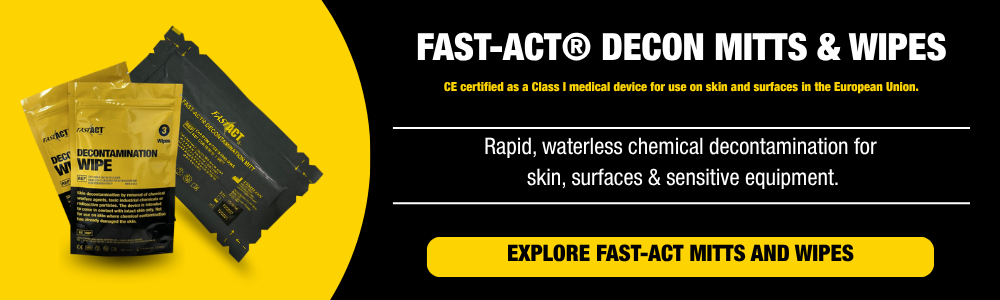
The FAST-ACT Decontamination Mitt and the FAST-ACT Decontamination Wipes are designed for use on skin, surfaces, and sensitive equipment. *CE classified as a class medical devices for use on skin and surfaces in the EU.
These solutions are designed to complement established HAZMAT procedures and full decontamination operations, not replace them. The right response will always depend on the chemical, the exposure scenario, the operational environment, and the established response procedures.
What Should Hospitals Prioritize During the First 15 Minutes?
The first 15 minutes can be simplified into five priorities:
- Recognize
Identify when a patient may have been exposed to a hazardous substance.
- Isolate
Limit unnecessary movement and prevent potentially contaminated patients from moving deeper into clean areas.
- Protect
Use PPE and other protective measures appropriate to the suspected hazard and response activity.
- Decontaminate
Begin decontamination as soon as practical, including dry decontamination within the first 15 minutes.
- Coordinate
Activate the hospital’s response structure and communicate with EMS, Fire, HAZMAT, and other appropriate agencies. These actions do not replace a hospital’s chemical emergency response plan. They reinforce why having that plan, and practicing it matters.
Why Does a Hospital Chemical Decontamination Plan Matter?
When a potentially contaminated patient arrives at an emergency department, the hospital may need to begin its response before EMS or HAZMAT resources are fully established. Without a defined plan, delays in recognition, isolation, communication, or decontamination can increase the potential for secondary contamination and complicate patient care.
A comprehensive hospital chemical decontamination plan should establish clear procedures for patient recognition, isolation, staff protection, communication, decontamination, and coordination with EMS, Fire, and HAZMAT teams.
Dry decontamination can provide an early-response option when appropriate, allowing hospitals to begin addressing chemical contamination while additional decontamination resources are being established. FAST-ACT dry decontamination solutions are designed to support this early response without requiring a traditional water-based setup.
Ultimately, effective chemical incident preparedness depends on more than equipment alone. Training, established procedures, communication, and coordination must work together to protect patients, healthcare personnel, and the facility during the critical early stages of an incident.
About Timilon Corporation:
Timilon Corporation is the manufacturer of FAST-ACT®, a proprietary formulation of non-toxic high-performance specialty materials effective at neutralizing a wide range of toxic chemicals with the added capability to destroy chemical warfare agents. The FAST-ACT technology is utilized by leading defense agencies, chemical industrial companies, first responders and HAZMAT teams to quickly and safely eliminate chemical hazards. For more information, reach out to Leticia Menzzano, Marketing Manager, [email protected].
FAQs
What should a hospital do when a potentially contaminated patient arrives?


Hospitals should recognize the potential exposure, limit the patient's movement, protect staff with appropriate PPE, activate their emergency response procedures, and coordinate with EMS and HAZMAT. Appropriate decontamination should begin as soon as practical based on the chemical and exposure scenario.
What is a self-presenting contaminated patient?
A self-presenting patient is someone who reaches a hospital independently after a potential chemical exposure, rather than arriving through a coordinated EMS response. These patients may arrive before the hospital receives notification or before field decontamination has occurred.
What role does dry decontamination play in hospital chemical response?
Dry decontamination can help hospitals begin addressing appropriate chemical contamination before a full decontamination operation is established. FAST-ACT dry decontamination solutions provide a waterless option designed to decontaminate and neutralize chemical contamination.
Can FAST-ACT be used on contaminated patients in hospitals?
FAST-ACT Decontamination Mitts and FAST-ACT Decontamination Wipes are designed for use on skin, surfaces, and sensitive equipment . *FAST-ACT Decontamination Mitts and Wipes are CE classified as a Class I medical device for use on skin and surfaces in the European Union.
What FAST-ACT products can support hospital chemical decontamination?
FAST-ACT offers several dry decontamination options, including Decontamination Mitts, Decontamination Wipes, Pressurized Cylinders, and the Rapid Decontamination Kit.