

Who Responds to a Chemical Spill? Understanding the Role of Every Agency During a HAZMAT Incident
A recent response in Lexington, Massachusetts demonstrates why. On July 20, 2026, the Lexington Fire Department responded after a large quantity of unknown chemicals was discovered during a home clean-out. Responders identified picric acid, a highly unstable chemical that can become explosive as it ages, along with dozens of unidentified liquids, powders, solids, and radioactive materials. What began as a routine service call quickly evolved into a seven-hour, multi-agency HAZMAT operation involving firefighters, HAZMAT technicians, the State Police Bomb Squad, law enforcement, EMS, environmental agencies, radiological specialists, and hazardous waste contractors.
Reflecting on the response, Lexington Fire Chief Derek Sencabaugh stated:
“These materials could not be left in place and had to be carefully and methodically removed for safe disposal. Our priority at every step was the safety of community residents and our first responders.”
The Lexington incident serves as a reminder that hazardous materials emergencies rarely involve just one organization. From the initial emergency response to hazardous waste disposal, each agency plays a critical role in protecting responders, the public, healthcare facilities, and the environment. So, who responds to a chemical spill and why are so many agencies needed?
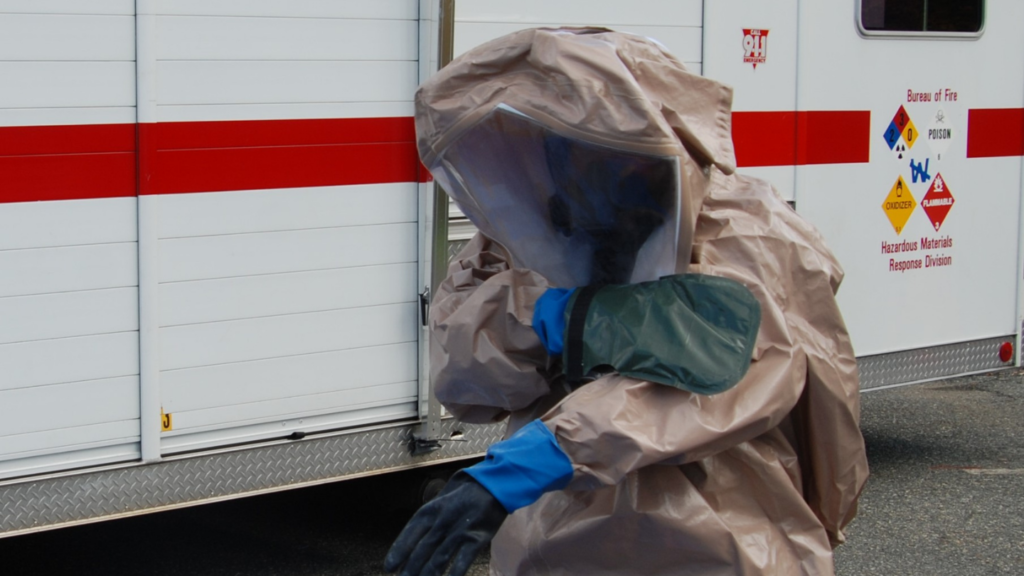
What Is the Fire Department’s Role During a Chemical Spill?
The fire department is almost always the first agency to arrive during a hazardous materials incident. While many people associate firefighters with extinguishing fires, their initial responsibilities during a chemical spill response are focused on protecting life, establishing control, and preventing the situation from escalating.
According to OSHA’s Hazardous Waste Operations and Emergency Response (HAZWOPER) Standard, firefighters responding to hazardous substance emergencies must be trained to at least the First Responder Operations Level. Their role is to respond defensively by protecting nearby people, property, and the environment until specialized resources arrive.Working alongside OSHA guidance, NFPA 472 and NFPA 1072 outline several key responsibilities for Operations-Level responders, including:
- Establishing Incident Command
- Performing the initial scene size-up
- Isolating the hazard
- Protecting civilians
- Identifying potential hazards
- Requesting specialized HAZMAT resources
- Establishing the Hot, Warm, and Cold Zones
These operational zones help control the incident while reducing the risk of secondary contamination. According to NFPA 472, the Warm Zone serves as the decontamination corridor, allowing personnel and equipment to be decontaminated before leaving the contaminated area.
During the Lexington incident, firefighters quickly recognized that the scene involved unstable chemicals beyond the capabilities of a routine response. By establishing control early and requesting specialized assistance, they created the conditions necessary for the technical response that followed.
This early decision-making is often what determines the success of a hazardous materials incident. As discussed in our recent article on the latest HAZMAT transportation study, today’s incidents increasingly require rapid decision-making, coordinated planning, and specialized resources from the very beginning. Fire departments should also understand the five most common hazardous materials encountered by first responders to better prepare for the wide variety of chemical hazards they may encounter in the field.
The decisions made during the first few minutes of a hazardous materials incident can influence every phase of the response. Equip your team with solutions designed to support rapid chemical spill response and improve responder safety.
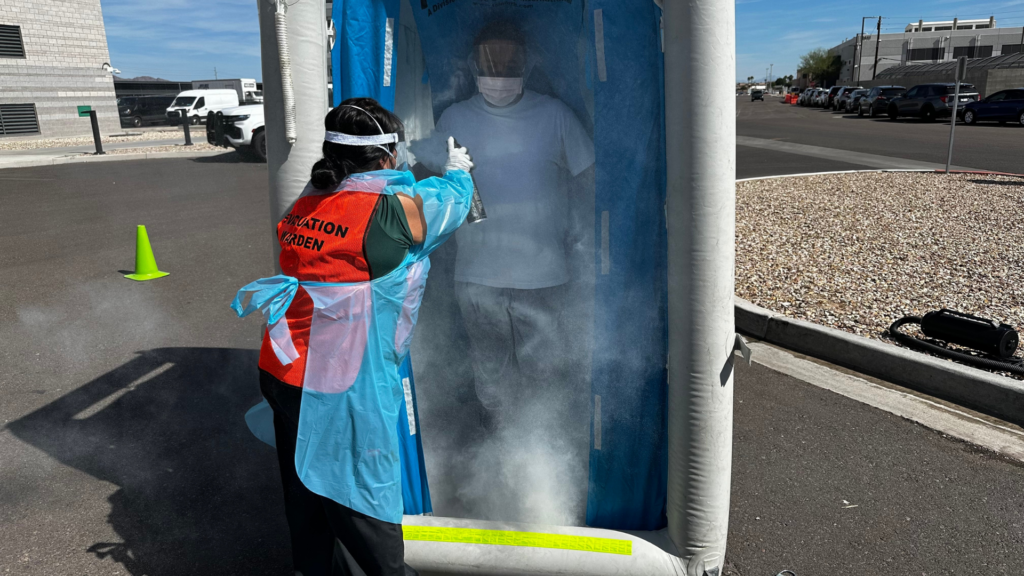
What Does a HAZMAT Team Do During a Chemical Spill?
Once firefighters have stabilized the scene, responsibility often shifts to the HAZMAT team. Unlike Operations-Level firefighters, HAZMAT Technicians are trained to perform technical operations involving hazardous substances. According to NFPA 1072, these specialists are responsible for chemical identification, air monitoring, technical entry, product containment, vapor suppression, sampling, hazard assessment, and technical decontamination.
That level of expertise proved essential during the Lexington incident. After unstable picric acid, radioactive materials, and numerous unknown chemicals were identified, the Massachusetts Department of Fire Services Hazardous Materials Division and the Joint Hazard Incident Response Team assumed responsibility for managing the technical aspects of the response.
Hazardous materials incidents are more common than many people realize. According to the CDC’s Managing Hazardous Materials Incidents guidance, nearly 75% of acute hazardous materials events occur at fixed facilities where chemicals are manufactured, stored, or used, not during transportation. Many of these incidents involve unknown substances, deteriorating containers, or hazardous vapors that require specialized equipment and advanced technical expertise.
According to NIH’s StatPearls Toxic Exposure, hazardous substance incidents frequently require field decontamination by HAZMAT teams before victims can safely receive medical care. However, contaminated individuals sometimes self-transport directly to hospitals, increasing the risk of secondary contamination for healthcare workers and facilities.
Understanding how to reduce contamination early is one reason chemical spill response planning has become such an important part of emergency preparedness. Provide your HAZMAT team with rapid dry decontamination solutions designed to help manage hazardous chemicals, contaminated equipment, and personnel during complex chemical incidents.
What Is EMS’s Role During a Hazardous Materials Incident?
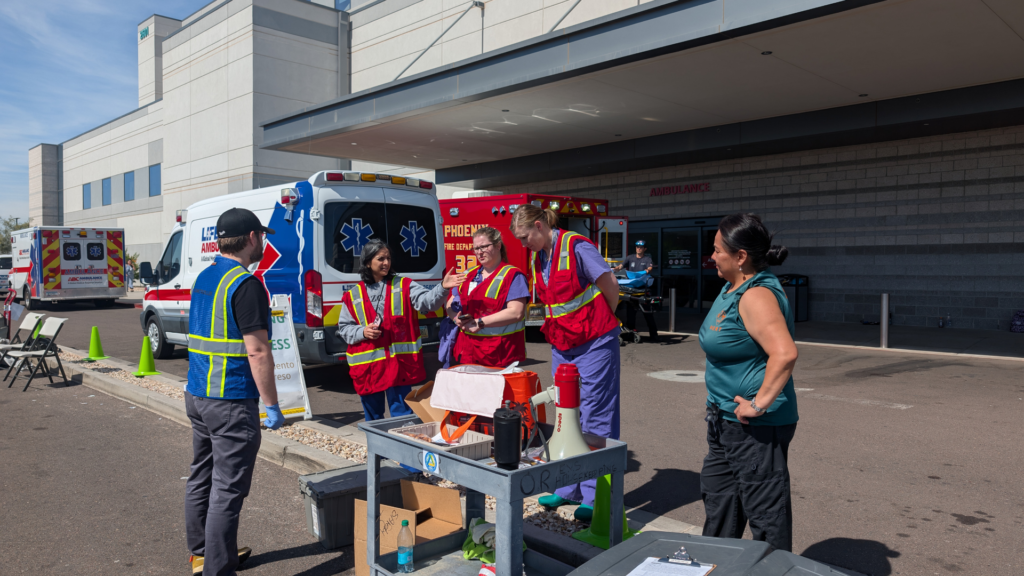
While firefighters and HAZMAT Technicians work to stabilize the incident, Emergency Medical Services (EMS) focus on another critical objective: providing patient care without allowing contamination to spread beyond the incident scene. During a hazardous materials incident, EMS personnel don’t immediately enter the Hot Zone. Instead, they coordinate with the Incident Commander and HAZMAT team, staging in a safe location until patients have been appropriately evaluated and decontaminated.
According to established HAZMAT response protocols, contaminated victims should be decontaminated before entering the medical treatment area whenever possible, and hospitals should be notified before patient transport so staff can prepare appropriate protective measures.
The reason is simple: secondary contamination. According to NIH’s StatPearls Chemical Decontamination, expert consensus recommends beginning chemical decontamination within one minute of exposure whenever feasible. However, contaminated individuals sometimes self-transport directly to hospitals before decontamination can occur.
Research published in Disaster Medicine and Public Health Preparedness found that at least 17 healthcare providers, including EMS personnel and hospital staff, were injured as a result of secondary contamination while treating contaminated patients. These incidents demonstrate why protecting responders also means protecting ambulances, emergency departments, and healthcare facilities. Hospitals and EMS agencies can further strengthen preparedness by understanding how first responders can begin dry decontamination before full decontamination is established and avoiding common hospital decontamination mistakes.
Reduce secondary contamination risks with rapid dry decontamination solutions designed for emergency response.
What Specialized First Responders Support a Chemical Spill Response?
One of the most surprising aspects of the Lexington incident was the involvement of the Massachusetts State Police Bomb Squad. Many people associate bomb squads exclusively with explosive devices, but certain hazardous chemicals can also become explosive over time.
In Lexington, responders identified picric acid (2,4,6-trinitrophenol), a chemical historically used in military explosives, laboratories, and medical applications. When picric acid dries below approximately 10% water content, it becomes increasingly sensitive to heat, friction, and impact, creating a significant explosion hazard. The Lexington response illustrates that hazardous materials incidents often involve far more than chemical hazards alone. When reactive or explosive substances are discovered, multiple specialized agencies must work together to safely resolve the incident.
Who Cleans Up After a Chemical Spill?
Although the immediate emergency may end once hazardous materials are stabilized, the incident itself is often far from over. Environmental agencies and licensed cleanup contractors are responsible for safely managing contaminated waste, protecting surrounding communities, and ensuring hazardous materials are properly removed and disposed of.
Through programs such as CERCLA (Superfund) and the Resource Conservation and Recovery Act (RCRA), the U.S. Environmental Protection Agency oversees hazardous waste cleanup, emergency removal actions, and long-term environmental remediation. Throughout the cleanup process, waste must be properly characterized, packaged, transported, and disposed of to reduce ongoing risks to both responders and the environment.
This phase of the response highlights an important reality: a successful chemical spill response doesn’t end when the leak is contained; it continues until contamination has been safely removed, and the affected area has been restored.
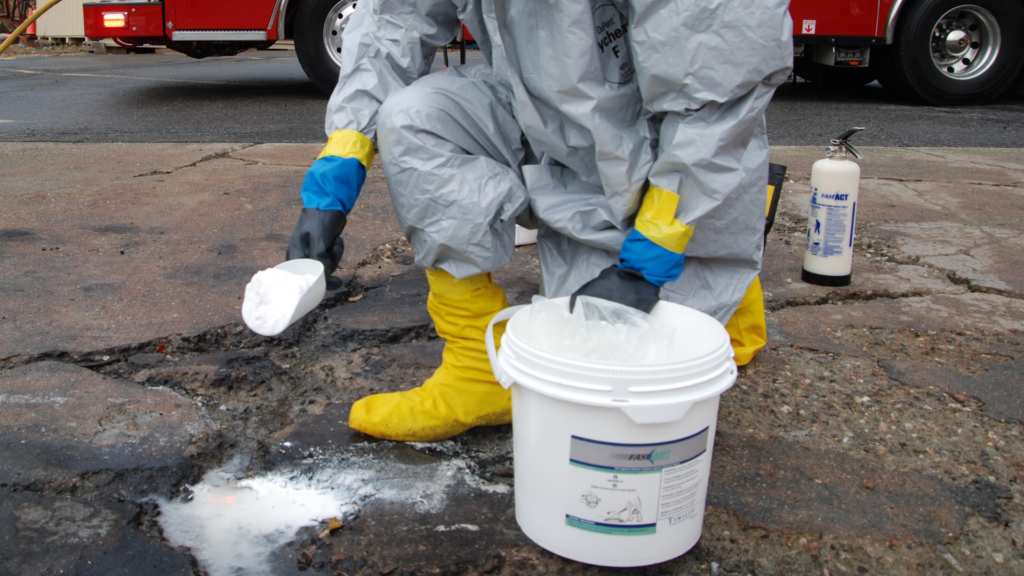
What Is Unified Command During a HAZMAT Incident?
With firefighters, HAZMAT Technicians, EMS, law enforcement, bomb technicians, environmental agencies, and specialized contractors all operating at the same scene, coordination becomes just as important as technical expertise. That’s why hazardous materials incidents are managed using the Incident Command System (ICS) and Unified Command.
According to FEMA and The National Response Team, Unified Command allows agencies to work toward a common set of incident objectives while maintaining responsibility for their own areas of expertise. Rather than asking “Who is in charge?”, Unified Command asks, “How can every agency work together to achieve the safest outcome?” The system reduces duplication of effort, improves communication, strengthens resource management, and allows complex incidents to be managed more efficiently.
Originally developed to improve coordination during California wildfires, ICS has evolved into the national standard for managing all-hazards incidents, including hazardous materials emergencies.
How Does FAST-ACT Support Multi-Agency Chemical Spill Response?
Whether responding to an industrial chemical release, transportation incident, self-presenting patients at hospitals, or unknown hazardous substance, responders across multiple disciplines share one common goal: reducing contamination quickly while protecting both personnel and the surrounding environment.
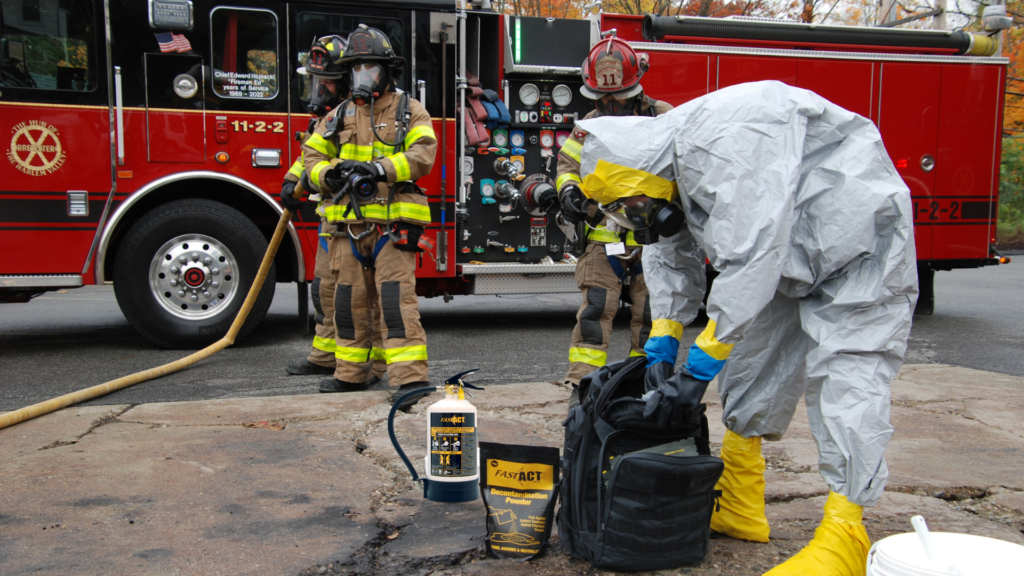
FAST-ACT’s dry decontamination technology supports multiple phases of a hazardous materials response:
- FAST-ACT 400G Pressurized Cylinder for rapid vapor suppression, source containment and neutralization
- FAST-ACT Decontamination Mitt for chemical decontamination of skin, surfaces, and sensitive equipment.
- FAST-ACT Decontamination Wipes for chemical decontamination of skin, surfaces, and sensitive equipment.
- FAST-ACT Bulk Pail is a comprehensive solution for managing hazardous chemical spills and chemical decontamination. An essential tool for safety and emergency response teams, hazmat responders, and first responders.
Organizations preparing for complex hazardous materials incidents should also understand the operational differences between dry vs. wet decontamination and the realities of decontamination in high-risk environments. From fire departments and HAZMAT teams to hospitals and industrial facilities, FAST-ACT provides dry decontamination solutions that support safer, more effective chemical spill response.
Who Responds to a Chemical Spill? It Takes a Coordinated Team
The Lexington hazardous materials incident serves as a powerful reminder that chemical spill response is never the responsibility of a single agency. Firefighters establish control. HAZMAT Technicians identify and contain hazardous substances. EMS protects patients and healthcare facilities from secondary contamination. Law enforcement secures the scene. Bomb technicians manage explosive hazards. Environmental agencies oversee cleanup and recovery.
Each organization brings specialized expertise that contributes to a single objective: protecting responders, the public, and the environment. As hazardous materials incidents continue to grow in complexity, successful outcomes will depend not only on training and coordination, but also on having the right equipment available when every second counts.
Whether preparing for an industrial chemical release, self-presenting patients, transportation accident, or unknown hazardous substance, investing in planning, training, and proven decontamination solutions before an incident occurs is one of the most effective ways to strengthen emergency preparedness.
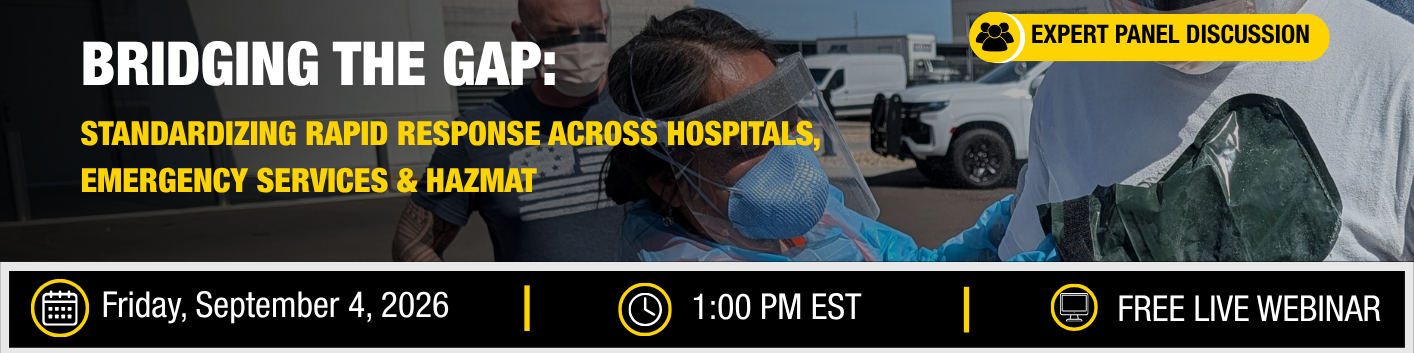
Continue the Conversation: Join Our Free Webinar
Want to learn more about improving chemical spill response and coordination between fire departments, HAZMAT teams, EMS, hospitals, and emergency management?
Join FAST-ACT’s upcoming webinar, where industry experts will discuss real-world hazardous materials response, dry decontamination strategies, and lessons learned from multi-agency emergency incidents.
About Timilon Corporation:
Timilon Corporation is the manufacturer of FAST-ACT®, a proprietary formulation of non-toxic high-performance specialty materials effective at neutralizing a wide range of toxic chemicals with the added capability to destroy chemical warfare agents. The FAST-ACT technology is utilized by leading defense agencies, chemical industrial companies, first responders and HAZMAT teams to quickly and safely eliminate chemical hazards. For more information, reach out to Leticia Menzzano, Marketing Manager, [email protected].
FAQs
Who responds to a chemical spill?


Chemical spill response typically involves the fire department, HAZMAT teams, EMS, law enforcement, environmental agencies, and other specialized responders working together under the Incident Command System (ICS). Each agency has a specific role in protecting the public, containing hazardous substances, and managing the incident safely.
What is the fire department's role during a chemical spill?
The fire department is usually the first agency on scene. Firefighters establish Incident Command, isolate the hazard, protect nearby civilians, create Hot, Warm, and Cold Zones, and request additional HAZMAT resources when needed.
What does a HAZMAT team do during a hazardous materials incident?
HAZMAT Technicians identify hazardous substances, monitor air quality, assess risks, contain chemical releases, suppress hazardous vapors, perform technical decontamination, and support safe incident mitigation.
What is Unified Command during a HAZMAT incident?
Unified Command is an Incident Command System (ICS) structure that allows multiple responding agencies to coordinate under a shared set of incident objectives while maintaining responsibility for their individual areas of expertise.
How does FAST-ACT support chemical spill response?
FAST-ACT provides dry decontamination and vapor suppression solutions that support fire departments, HAZMAT teams, EMS, hospitals, industrial facilities, and emergency managers. Products such as the 400G Pressurized Cylinder, Decontamination Mitt, Decontamination Wipes, Rapid Decontamination Kit, and Lithium Hazard Response Station™ help responders manage hazardous chemicals, vapor threats, and contaminated personnel and equipment.