

What Are the Five Most Common Hazardous Materials Encountered by First Responders?
Hazardous materials incidents can occur almost anywhere. Industrial facilities, transportation corridors, public spaces, homes, hospitals, and other environments may contain hazardous substances capable of putting workers, emergency responders, surrounding communities, and the environment at risk. Decontamination challenges across critical sectors vary significantly depending on the environment and hazardous material involved, and first responders must be prepared for all of them. In 2013 alone, an estimated 14,175 HAZMAT incidents occurred across the United States, resulting in 1,527 injuries and 37 deaths. Sixty-five percent of these incidents occurred at industrial facilities, while the remaining 35% occurred during transportation.
More recent research examining 43 hazardous chemical accidents in the United States between 2021 and 2024 identified 1,090 injuries, including 44 injured first responders, and 63 fatalities. Another study of occupational HAZMAT incidents found that inhalation accounted for 89% of exposures, while spills and releases were responsible for 82% of incidents. The hazards behind these incidents vary significantly. Some involve toxic gases or chemical spills, while others may include biological agents, radiological contamination, suspicious powders, flammable substances, or lithium-ion batteries.
Understanding the hazardous materials first responders may encounter, and the unique challenges associated with each, is an important part of emergency preparedness, HAZMAT response planning, and responder safety. Having a defined strategy for unidentified hazardous materials before an incident occurs is one of the most important steps any response organization can take.
Why Are Chemical Agents a Common Hazard for First Responders?
Chemical agents and hazardous substances are among the most common hazards encountered during emergency response operations. These incidents may involve toxic industrial chemicals, corrosive substances, liquid spills, hazardous vapors, or unknown chemicals released during industrial accidents, transportation incidents, fires, and other emergencies.
Hydrocarbons, including gasoline, diesel fuel, oil, and natural gas, account for more than 75% of hazardous materials transported throughout the United States. When an incident occurs, these substances may create fire and explosion risks, release hazardous vapors, damage property, and contribute to environmental contamination. Inhalation is a particularly significant concern. Research examining acute occupational HAZMAT incidents found that 89% of exposures occurred through inhalation, and that most patients were exposed to gases or vapors, including smoke, carbon monoxide, hydrogen sulfide, chlorine gas, methanol, and ammonia.
Unlike a contained liquid spill, chemical vapors can move beyond the immediate release area, potentially exposing workers, emergency responders, and nearby communities. Agents like chloropicrin, a toxic industrial chemical and historical crowd-control agent, illustrate how quickly airborne chemical hazards can spread across a response environment before the substance is identified.
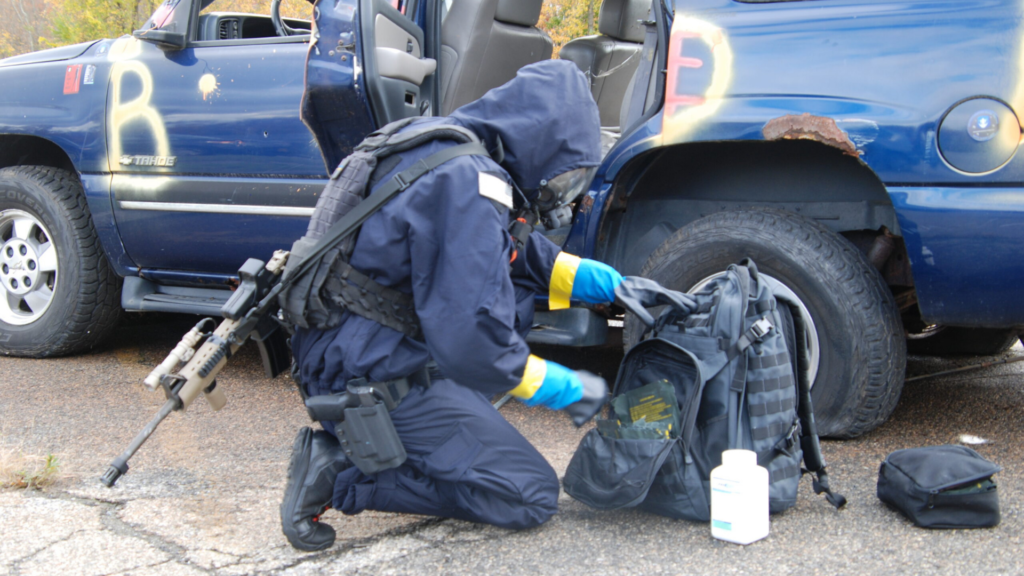
This is why effective HAZMAT response begins with appropriate personal protective equipment, respiratory protection, detection tools, spill containment, and decontamination procedures based on the specific chemical involved. Choosing a dry decontamination solution is an important consideration for organizations evaluating chemical response tools, since not all products offer the same level of neutralization effectiveness across different chemical classes. When hazardous chemicals are released, responders must be prepared to manage both the initial source and the potential spread of contamination. FAST-ACT dry decontamination technology uses a neutralization-based approach to address chemical hazards at the molecular level, reducing contamination spread rather than simply absorbing or diluting it.
What Biological Hazards Can First Responders Encounter?
Biological hazards present a different set of challenges for law enforcement, firefighters, EMS personnel, HAZMAT teams, healthcare professionals, and other emergency responders. According to OSHA’s Bioterrorism Hazard Recognition guidance, biological agents encountered during emergency response operations may include bacteria, viruses, and toxins capable of affecting both individuals and larger populations, with first responders including public health officials, law enforcement, firefighters, paramedics, and the military, all potentially at risk.
The 2001 anthrax letter attacks resulted in 22 confirmed cases of anthrax, 11 inhalation and 11 cutaneous, and 5 deaths. During the response, the CDC Emergency Operations Center received thousands of calls related to potential exposures, with 882 referred for follow-up investigation, demonstrating how quickly a biological incident can place demands on emergency response and public health systems simultaneously. For first responders, biological incidents require careful attention to hazard assessment, personal protective equipment, contamination control, and established response protocols. Decontamination also plays an important role in protecting responders and healthcare personnel from secondary exposure following certain biological incidents; however, response and decontamination procedures must be selected based on the specific biological hazard involved.
How Should First Responders Prepare for Radiological Contamination?
Radiological incidents may involve industrial sources, transportation accidents, damaged equipment, intentional releases, or radiological dispersal devices, commonly known as dirty bombs. One of the primary challenges during a radiological incident is controlling the spread of external contamination. According to the Nuclear Regulatory Commission, the extent of contamination following a radiological dispersal event depends on several factors, including the amount and type of radioactive material involved, the method of dispersal, and weather conditions. Decontaminating affected areas following a significant release may require considerable time and resources.
However, guidance from OSHA’s RDD/Dirty Bomb FAQ emphasizes an important point: emergency responders should not delay lifesaving treatment because of fear of becoming contaminated by radioactive materials. Instead, responders should follow established protocols to reduce the spread of radioactive particles to other individuals, equipment, vehicles, and healthcare facilities. According to FEMA’s Hazardous Materials Incidents guidance, 27% of emergency management survey respondents identified radiological hazardous materials as their second highest technological hazard of concern, underscoring why radiological preparedness cannot be treated as a low-probability afterthought.
Effective radiological preparedness may include:
- Hazard detection and monitoring equipment
- Appropriate personal protective equipment
- Clearly established emergency zones
- Contamination control procedures
- Responder communication
- Patient handling protocols
- Decontamination resources
How to decontaminate radiological contamination from surfaces is a critical component of radiological response planning, FAST-ACT Decontamination Wipes provide options for the removal of radiological particles from skin and surfaces, supporting targeted contamination management during applicable radiological response operations.

Why Are Explosives and Suspicious Powders a HAZMAT Concern?
Explosive incidents create obvious physical hazards, but they can also introduce chemical and contamination concerns that complicate emergency response operations. According to the ATF’s 2024 Explosives Incident Report, 6,227 suspicious or unattended package incidents and 3,148 bomb threats were reported during the year. Educational facilities, offices and businesses, and assembly locations were the three most frequently reported targets of bomb threats.
First responders may also encounter suspicious powders during mail incidents, criminal investigations, public safety calls, and potential terrorism-related events. Until a substance is identified, responders may not know whether a suspicious powder presents a chemical, biological, radiological, explosive, or other hazard. Developing response strategies for unknown substances before an incident occurs can help reduce responder risk, particularly during the critical window before hazard identification is confirmed.
Response considerations may include establishing emergency zones, limiting access to the affected area, using detection tools, selecting appropriate PPE, protecting evidence, preventing contamination spread, and coordinating with specialized HAZMAT and explosive response personnel. CISA’s TRIPwire platform has published a Homemade Explosives Precursor Matrix specifically designed to increase situational awareness for first responders who may encounter improvised explosive devices, reflecting the ongoing and evolving nature of this threat. Studies examining HAZMAT incidents found that first responders, particularly law enforcement, frequently entered hazardous environments without appropriate chemical protective equipment. For agencies preparing for suspicious packages and unknown substances, training personnel to recognize potential hazards and avoid unnecessary exposure can be just as important as the equipment available to manage the incident.
Why Are Flammable Liquids and Lithium-Ion Batteries a Growing Response Challenge?
Flammable and combustible substances remain a common part of HAZMAT response. Gasoline, diesel fuel, industrial chemicals, natural gas, and other flammable materials can create fire, explosion, vapor, and environmental hazards when released. However, first responders are also facing a rapidly evolving challenge: lithium-ion battery incidents. According to UL Solutions research, in 2023 at least 1,600 lithium-ion battery fire incidents were reported in the United States, resulting in 611 injuries and 115 fatalities. New York City alone reported 268 lithium-ion battery fires in 2023, causing 150 injuries and 18 deaths, with fatalities climbing from zero in 2019 to 18 by 2023, before decreasing 67% to 6 deaths in 2024 following enhanced public education and inspection efforts.
The risks associated with these incidents extend beyond the fire itself. When a lithium-ion battery enters thermal runaway, it can generate extreme heat and release toxic and flammable gases, turning the response environment into a combined thermal, chemical, electrical, and environmental hazard zone. Health risks associated with exposure to these gases include decreased lung function, heart rhythm disturbances, renal issues, and lung scarring. According to the National Transportation Safety Board, fires in electric vehicles powered by high-voltage lithium-ion batteries also pose the risk of electric shock to emergency responders from exposure to high-voltage components of a damaged battery, a unique hazard requiring purpose-built response protocols that go beyond traditional HAZMAT procedures.
Even after the initial fire has been extinguished, damaged batteries may reignite, requiring continued monitoring, post-fire assessments, transportation procedures, and contamination management long after visible flames are gone. Dry decontamination for EV battery spills can help address chemical and contamination risks that remain after the initial fire suppression phase. Lessons from recent lithium-ion battery incidents demonstrate how quickly these hazards are evolving and why response organizations must adapt their HAZMAT planning accordingly.
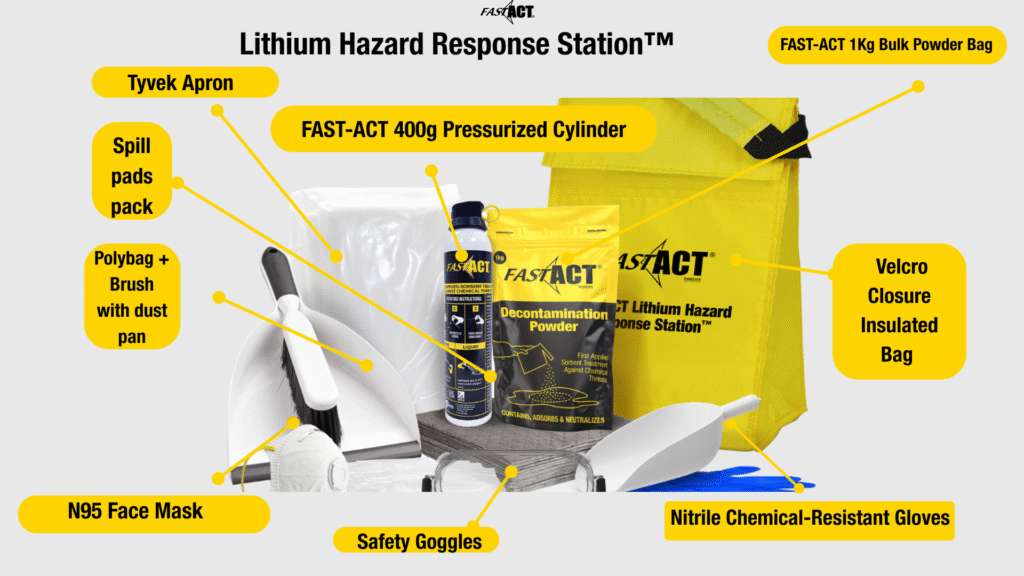
To help organizations prepare for these evolving hazards, the FAST-ACT Lithium Hazard Response Station™ provides an all-in-one emergency response solution for lithium-ion battery incidents. Designed for industrial facilities, first responders, and HAZMAT teams, the station contains FAST-ACT® technologies that help contain and neutralize hazardous chemicals associated with battery failures, including thermal runaway events, electrolyte leaks, and toxic vapor releases. By keeping essential response tools readily available, organizations can improve preparedness, support responder safety, and reduce operational disruption during lithium-ion battery emergencies.
How Can First Responders Prepare for Different Types of HAZMAT Incidents?
No single response strategy can address every hazardous materials incident. A chemical spill requires different response considerations than a biological threat, radiological release, suspicious powder, or lithium-ion battery fire. However, several preparedness principles apply across HAZMAT response operations. Organizations should consider:
- Conducting routine hazard assessments
- Maintaining an up-to-date Emergency Response Plan
- Using the Incident Command System to establish clear response roles
- Conducting regular training exercises
- Establishing procedures for hazard identification and monitoring
- Evaluating personal protective equipment and respiratory protection needs
- Maintaining spill containment and decontamination resources
- Coordinating with off-site responders and specialized HAZMAT teams
- Reviewing procedures following incidents and exercises
Responders should also recognize that the first few minutes of a HAZMAT incident can significantly influence the overall response. The hazardous material may not be immediately known, the size of the affected area may still be developing, and responders may have limited information about potential exposures, contamination spread, or secondary hazards. Early dry decontamination for first responders can help address the critical gap between initial exposure and the establishment of full technical decontamination operations. Understanding dry vs. wet decontamination can help responders determine the appropriate approach during the early stages of a HAZMAT incident. Preparedness provides personnel with the training, procedures, and resources necessary to begin making informed decisions under those uncertain conditions. Chemical preparedness lessons from the 2026 World Cup, for example, reinforce a consistent principle: coordination, hazard recognition, and early response capabilities matter more than any single piece of equipment.
How Can FAST-ACT Support HAZMAT Response and Decontamination?
The hazardous materials encountered by first responders can vary significantly, which means response tools must be selected based on the specific hazard, contamination scenario, and operational objectives. FAST-ACT® provides dry decontamination and contamination management solutions designed to support applicable chemical, radiological, vapor, and hazardous material response operations. The science behind FAST-ACT’s dry decontamination technology explains why its neutralization-based formulation is particularly effective across a wide range of hazardous chemical classes, making it a flexible tool for HAZMAT response environments where the specific substance may not yet be confirmed.
Depending on the incident, FAST-ACT® solutions can help responders manage contamination through broad application, targeted decontamination, chemical containment, neutralization, or radiological particle removal.
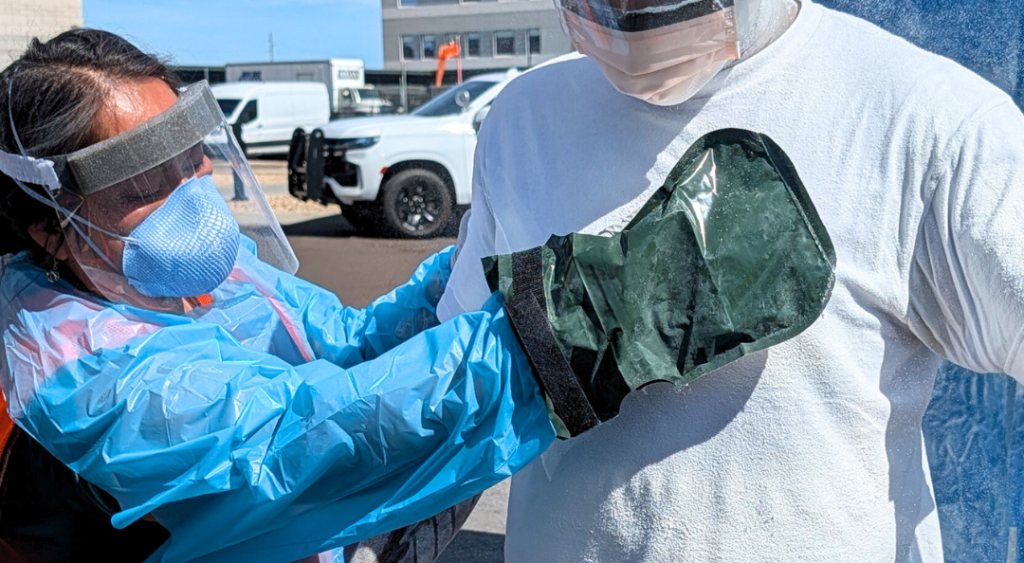
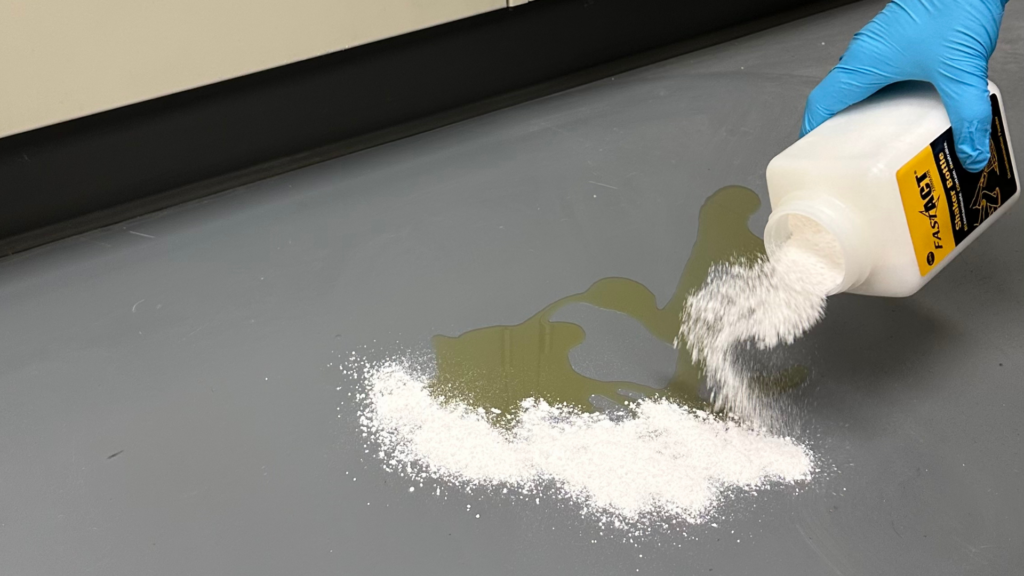
FAST-ACT Pressurized Cylinders provide rapid deployment of FAST-ACT® technology for chemical spills, vapor hazards, and broader contamination concerns. FAST-ACT Bulk Pails and FAST-ACT Shaker Bottles support spill containment and neutralization for applicable hazardous chemicals, helping simplify subsequent cleanup and disposal. For personnel and targeted contamination concerns, FAST-ACT Decontamination Mitts and FAST-ACT Decontamination Wipes provide additional options based on the specific response scenario. *CE classified as a class I medical device for use on skin and surfaces in the EU. The FAST-ACT Rapid Decontamination Kit integrates these capabilities into a compact, portable system designed for immediate deployment across the full range of HAZMAT scenarios first responders are likely to encounter.
The goal is not to apply the same response method to every hazardous materials incident. It is to provide responders with flexible contamination management solutions that can be incorporated into existing HAZMAT response protocols.
Why Does HAZMAT Preparedness Matter for Every First Responder?
Hazardous materials are present in every community, transported across highways and railways, stored in industrial facilities, used in businesses and homes, and encountered during routine emergency calls. For first responders, the challenge is not simply knowing that hazardous materials exist. It is understanding how different hazards behave, how exposure can occur, and what actions can help protect responders, victims, surrounding communities, and the environment.
Chemical agents, biological hazards, radiological contaminants, explosives and suspicious powders, flammable substances and lithium-ion batteries each present different operational challenges. Responders may also encounter emerging and less common hazards, from fentanyl and synthetic opioid exposure risks in high-density public environments to bear spray incidents and chemical exposure during crowd control operations, that require the same core preparedness principles applied to more commonly discussed HAZMAT scenarios. They share one common requirement: preparedness before the incident occurs.
Through effective training, hazard assessment, personal protective equipment, emergency response planning, interagency coordination, and appropriate decontamination resources, first responders can be better prepared to recognize hazards, reduce exposure risks, manage contamination, and respond safely when the next HAZMAT incident occurs. Scenario-based HAZMAT training that incorporates scenario-based exercises across all five hazardous material categories is one of the most effective investments any response organization can make before the next incident occurs.
About Timilon Corporation:
Timilon Corporation is the manufacturer of FAST-ACT®, a proprietary formulation of non-toxic high-performance specialty materials effective at neutralizing a wide range of toxic chemicals with the added capability to destroy chemical warfare agents. The FAST-ACT technology is utilized by leading defense agencies, chemical industrial companies, first responders and HAZMAT teams to quickly and safely eliminate chemical hazards. For more information, reach out to Leticia Menzzano, Marketing Manager, [email protected].
FAQs
What hazardous materials do first responders encounter most often?


First responders commonly encounter chemical agents, biological hazards, radiological contaminants, explosives or suspicious powders, and flammable liquids, including hazards associated with lithium-ion batteries. Each requires different response procedures, protective equipment, and decontamination strategies to protect responders and the public.
Why are lithium-ion battery incidents considered a HAZMAT response?
Lithium-ion battery incidents can release toxic gases, flammable vapors, and hazardous electrolyte during thermal runaway. Even after flames are extinguished, damaged batteries may reignite and continue releasing hazardous materials, requiring specialized response procedures and ongoing monitoring.
How does FAST-ACT® support hazardous materials response?
FAST-ACT® technologies help first responders and HAZMAT teams contain and neutralize hazardous chemicals during emergency response. Depending on the incident, FAST-ACT products can support vapor suppression, chemical spill response, personnel decontamination, and contamination management across a wide range of hazardous materials.
Why is dry decontamination important during HAZMAT incidents?
Dry decontamination can begin immediately without requiring large volumes of water or complex setup, helping reduce contamination spread during the critical early stages of an incident. It can complement traditional wet decontamination as part of a comprehensive hazardous materials response strategy.