

What the 2026 FIFA World Cup Is Teaching Emergency Management and Response Teams About Chemical Preparedness
The 2026 FIFA World Cup is already providing emergency management professionals with a real-time case study in large-scale preparedness, public safety coordination, and operational resilience. Chemical and CBRN preparedness for the 2026 FIFA World Cup is no longer a theoretical planning exercise; it is actively unfolding across 16 host cities in real time.
Spanning 16 host cities across three countries, the tournament represents one of the most complex public safety operations ever undertaken in North America. More than 400 law enforcement agencies, hundreds of healthcare organizations, emergency management teams, transportation authorities, and federal agencies are working together to support what officials have described as an unprecedented security and preparedness challenge.
Much of the public conversation has focused on crowd management, cybersecurity, transportation logistics, and venue security. However, another lesson is emerging in real time: many of the same systems required to manage large public events are also essential for effective chemical incident response. Chemical preparedness for large-scale global events requires planning for threat environments that extend far beyond traditional venue security considerations.
From hazard recognition and information sharing to contamination management and operational continuity, the World Cup is reinforcing several important lessons about modern chemical preparedness and emergency response.
What Does the 2026 FIFA World Cup Reveal About Large-Scale Public Safety Coordination?
The scale of World Cup preparedness efforts is difficult to overstate. FEMA awarded approximately $846 million in grants to support security, cybersecurity, emergency response, and counter-drone operations across host cities, including $625 million through the FIFA World Cup Grant Program and more than $221 million in Counter Unmanned Aircraft Systems grants to protect host cities against drone threats. More than 400 law enforcement agencies are participating in security operations throughout the tournament, while local, state, federal, and international partners continue coordinating across a wide range of threat environments.
Officials involved in tournament planning have repeatedly emphasized that the challenge extends beyond any single venue, city, or agency. Andrew Giuliani, executive director of the White House FIFA World Cup 2026 Task Force, told ESPN: “This entire country’s police force is leaning in. It is an unbelievable problem set when I think about what local law enforcement is going to have to go over this 40-day stretch. It is unprecedented.” In Los Angeles alone, officials described the security effort as one of the largest in the city’s history, with the L.A. County Sheriff’s Department, LAPD, FBI, and Secret Service all at the table, training specifically in crowd control and counterterrorism response.
One of the most important lessons emerging from these efforts is that preparedness is not simply about having resources available. It is ensuring that organizations can communicate, coordinate, and operate effectively across multiple jurisdictions for an extended period of time.
The same principle applies directly to chemical preparedness. During a hazardous materials incident, the effectiveness of the response often depends less on the availability of specialized resources and more on how quickly information is shared, decisions are made, and response actions are coordinated. Decontamination across critical sectors requires the same sustained coordination that the World Cup is stress-testing in real time.
What Did Operation Red Card Teach About Chemical and CBRNE Preparedness?
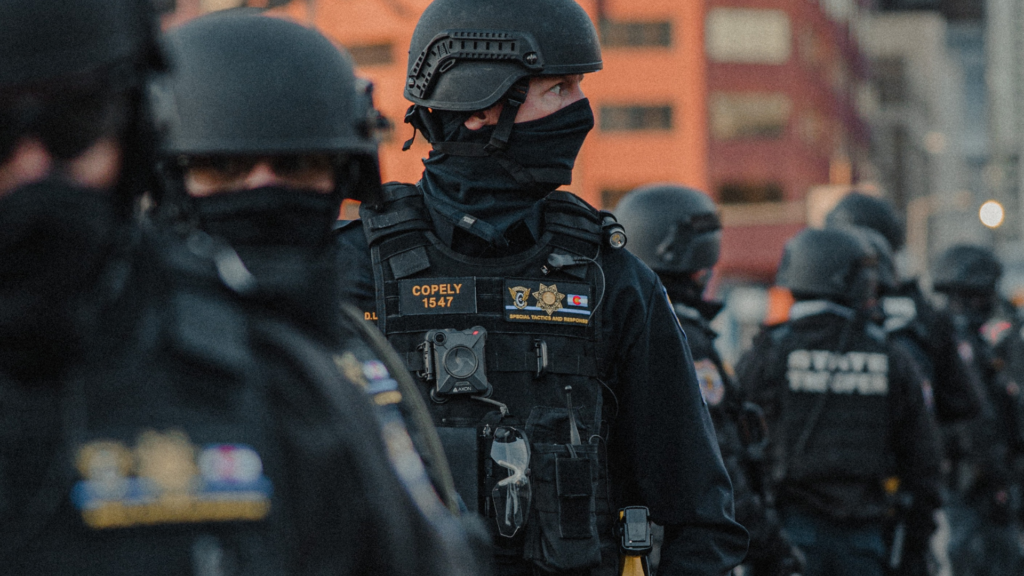
One of the most significant preparedness exercises associated with the World Cup was Operation Red Card, a large-scale CBRNE-focused exercise designed to test emergency response capabilities against complex and evolving threats.
The exercise brought together organizations involved in multi-agency CBRNE preparedness exercises, including emergency management professionals, public health officials, law enforcement, fire services, military personnel, intelligence partners, and homeland security agencies. Toronto’s version of the exercise involved 32 provincial health organizations coordinating across hospitals, paramedics, police, and fire services, using a scenario where contraband fireworks misfired into a crowd near BMO Field, causing mass panic and injuries.
The most important lesson from Operation Red Card was that successful CBRNE preparedness is not simply a function of resources; it depends on coordination, governance flexibility, intelligence sharing, and integrated planning. Annual emergency management training that incorporates multi-agency coordination and chemical incident scenarios is what separates organizations that perform well under pressure from those that don’t.
For chemical emergencies, these findings are especially relevant. Hazardous materials incidents frequently require coordination between fire departments, HAZMAT teams, EMS, hospitals, emergency management agencies, public health organizations, transportation authorities, and law enforcement partners. CBRN preparedness for large-scale events must account for the multi-agency coordination demands that Operation Red Card exposed.
When those relationships and communication pathways are established before an incident occurs, response operations are generally more effective and recovery efforts can begin more quickly.
Why Is Situational Awareness Critical During Chemical Emergencies?
The World Cup is also reinforcing the importance of situational awareness. Host cities are monitoring large crowds, transportation systems, fan zones, public gatherings, and critical infrastructure in real time. Georgetown University and MedStar Health established a Health Security Operations Center focused on real-time health security monitoring, integrating wastewater surveillance, electronic health records, hospitalizations, and public health reporting across all 16 host cities, with more than 350 organizations enrolled to receive daily situation reports beginning June 1.
For chemical preparedness professionals, this lesson is particularly important. Many chemical incidents begin as unknown events, a suspicious substance, unusual odor, vapor release, or unexplained medical symptoms may initially appear unrelated or insignificant. The ability to recognize potential hazards quickly and communicate that information effectively can significantly influence the outcome of an incident.
As demonstrated throughout World Cup preparedness efforts, the time between hazard recognition and coordinated response often determines whether an event remains localized or develops into a larger operational challenge. Protecting critical infrastructure during major events requires real-time situational awareness and the ability to identify chemical and CBRN threats before they escalate. The 2026 FIFA World Cup is effectively field-testing those capabilities in real time. Maintaining situational awareness is not simply a security objective. It is a critical component of chemical incident preparedness.

How Does Communication Influence Chemical Incident Response?
One of the recurring themes emerging from World Cup operations is the importance of communication. Security Magazine notes that frontline workers cannot afford to navigate complicated systems or wait for messages to pass through multiple intermediaries, information needs to move instantly between teams, departments, and locations, and this becomes even more critical during emergencies involving crowd surges, medical incidents, or operational disruptions. Real-time threats are already emerging: a hacking group has claimed it infiltrated FBI drone systems being used in World Cup security operations, highlighting the growing cybersecurity challenges at major public events and the operational consequences they can create.
This reality is equally relevant during chemical incidents. Chemical exposures often involve rapidly changing conditions, incomplete information, and multiple organizations responding simultaneously. Frontline personnel, transportation workers, venue staff, healthcare providers, and emergency responders may all possess information that contributes to the overall understanding of the incident.
Effective communication helps organizations:
- Identify hazards more quickly
- Coordinate protective actions
- Support contamination management efforts
- Improve public messaging
- Reduce operational confusion
- Strengthen overall response effectiveness
HAZMAT coordination during large public events depends on the same communication infrastructure the World Cup is currently stress-testing, and the lessons being learned right now will directly shape how chemical incident response is planned and executed at future events.
Why Should Recovery Planning Begin Before a Chemical Incident Occurs?
Another lesson emerging from preparedness exercises and operational planning efforts is the importance of recovery. Operation Red Card highlighted that long-term recovery considerations, including infrastructure restoration, continuity planning, public communication, environmental remediation, and multi-agency coordination, must be incorporated into preparedness planning before an incident occurs. Environmental remediation after large-scale public events represents one of the most resource-intensive and often under planned phases of chemical incident response.
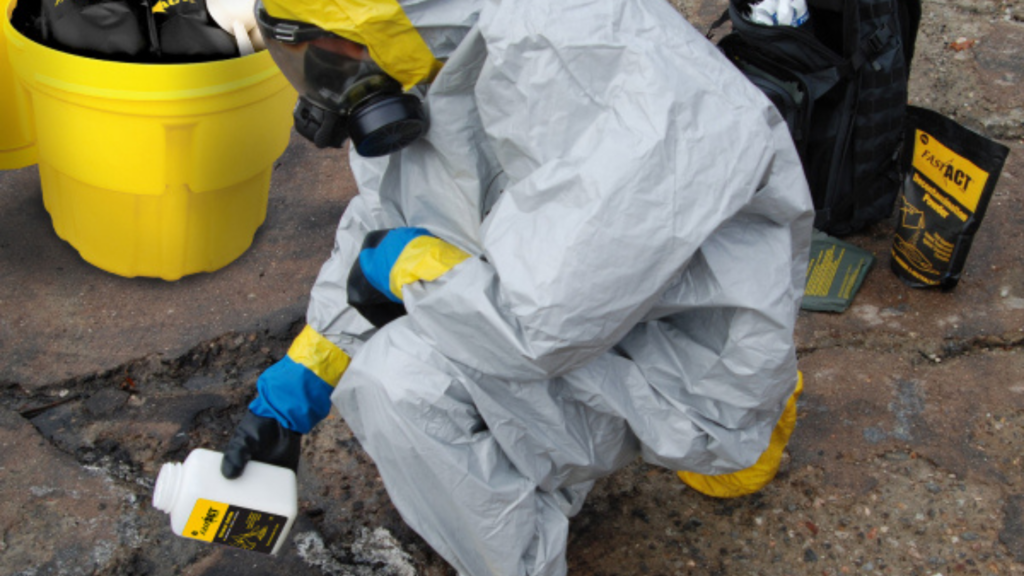
Chemical incidents often present significant recovery challenges because contamination concerns may persist long after the immediate threat has been addressed. Modern chemical decontamination strategies are directly relevant to how organizations must think about recovery planning, not just initial response, when building chemical preparedness strategies for events of this scale.
Organizations responsible for stadiums, transportation systems, hospitals, public venues, and critical infrastructure must be prepared not only to respond to incidents but also to manage the consequences that follow. Decisions made during the earliest stages of an incident frequently influence the complexity of downstream recovery operations, and rapid decontamination strategies that minimize contamination spread from the outset can significantly reduce recovery requirements.
Preparedness and recovery should never be viewed as separate activities. They are interconnected components of the same response framework.
What Chemical Preparedness Lessons Are Emerging From the 2026 FIFA World Cup?
As the tournament continues, several chemical preparedness lessons are becoming increasingly clear:
Coordination Matters More Than Resources
Even well-equipped organizations can struggle if communication and coordination break down. Hospital and first responder decontamination challenges are often a direct reflection of the coordination gaps Operation Red Card was designed to expose and address.
Hazard Recognition Drives Outcomes
The sooner a threat is contained, the greater the opportunity to limit contamination spread and reduce operational impacts. Chemical preparedness in fan zones and watch parties presents unique challenges because less controlled conditions and unrestricted crowd movement can make early hazard recognition more difficult.
Communication Is a Critical Capability
Information must move quickly between organizations, responders, facilities, and decision-makers. First responder health and safety depends directly on the quality and speed of information available at the moment of response, and the World Cup is demonstrating that communication gaps remain one of the most significant vulnerabilities in large-scale emergency operations.
Recovery Planning Starts Before the Incident
Critical event infrastructure protection requires planning that accounts for the full incident lifecycle, from early containment through long-term environmental remediation, not just the immediate response window.
Preparedness Requires Sustained Performance
The challenge is not simply responding to a single incident. It is maintaining operational effectiveness over extended periods of time while managing evolving risks. HSToday notes that the World Cup functions as a sustained, multi-jurisdictional campaign environment, and the question is no longer whether jurisdictions can respond to a major incident, but whether they can maintain synchronized performance across dozens of jurisdictions without degradation over time.
FAST-ACT Supporting Chemical Preparedness During Large-Scale Public Events
The lessons emerging from the 2026 FIFA World Cup highlight the importance of rapid response, contamination management, and operational continuity during complex public safety events.
FAST-ACT® technology is designed to support these objectives by providing solutions that can be rapidly deployed when chemical contamination concerns arise. FAST-ACT dry decontamination technology helps explain why its formulation is particularly effective in the dynamic, fast-moving environments the World Cup is currently stress-testing across stadiums, fan zones, transportation hubs, and hospitals simultaneously. Understanding dry versus wet decontamination is an essential consideration for organizations building chemical preparedness capabilities for large-scale public events where water access and setup time may be limited.
FAST-ACT® Pressurized Cylinders
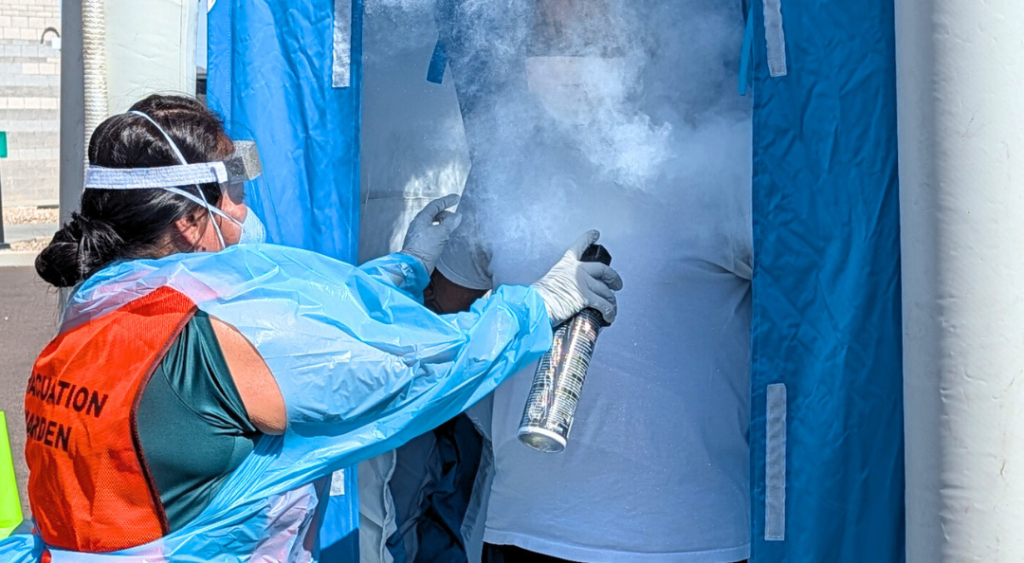
FAST-ACT® Pressurized Cylinders provide a rapid-response option for managing vapor hazards, airborne contamination concerns, and unknown substances in dynamic operational environments. Their portable design and rapid deployment capabilities make them well suited for large public events where response time is critical.
FAST-ACT® Decontamination Mitts
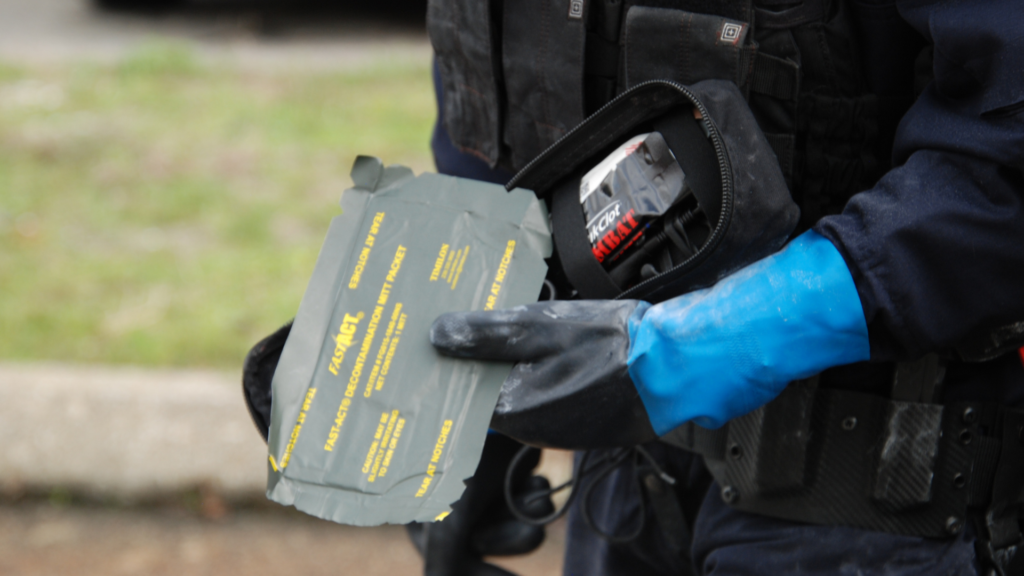
FAST-ACT® Decontamination Mitts support contamination reduction for personnel, equipment, and operational surfaces. Their portable format allows responders to quickly address contamination concerns while maintaining operational continuity. *CE classified as a class I medical device for use on skin and surfaces in the EU.
FAST-ACT® Decontamination Wipes
FAST-ACT® Decontamination Wipes provide a convenient option for addressing localized contamination on equipment, hard surfaces, skin, and sensitive operational assets. Their portability makes them useful for organizations operating in fast-moving environments where rapid action may be required. *CE classified as a class I medical device for use on skin and surfaces in the EU.
What Will Emergency Management Teams Take Away From the 2026 FIFA World Cup?
The most important lesson emerging from the 2026 FIFA World Cup may be that preparedness is no longer measured solely by an organization’s ability to respond to a single incident.
Success increasingly depends on maintaining coordination, communication, situational awareness, and operational effectiveness across multiple agencies, jurisdictions, and operational environments over an extended period of time. Scalable decontamination solutions built for high-density, high-complexity environments are a direct reflection of what the World Cup is teaching emergency management teams about the gap between traditional preparedness planning and real-world operational demands.
Whether the challenge involves crowd management, cybersecurity, public health concerns, transportation disruptions, or chemical incidents, the underlying principles remain remarkably similar. The organizations that perform best are often those that can share information quickly, adapt to changing conditions, coordinate effectively, and sustain performance throughout the duration of an event.
As emergency managers and response teams continue evaluating lessons from the tournament, those insights will likely influence preparedness planning long after the final match is played.
About Timilon Corporation:
Timilon Corporation is the manufacturer of FAST-ACT®, a proprietary formulation of non-toxic high-performance specialty materials effective at neutralizing a wide range of toxic chemicals with the added capability to destroy chemical warfare agents. The FAST-ACT technology is utilized by leading defense agencies, chemical industrial companies, first responders and HAZMAT teams to quickly and safely eliminate chemical hazards. For more information, reach out to Leticia Menzzano, Marketing Manager, [email protected].
FAQs
How can FAST-ACT® support chemical preparedness at large public events?


FAST-ACT® technologies are designed to support contamination management, emergency decontamination, vapor hazard mitigation, and hazardous materials response. Their portable design allows organizations to rapidly deploy solutions when chemical contamination concerns arise.
What FAST-ACT® products can support emergency chemical response operations?
FAST-ACT® offers several solutions that support chemical preparedness and response, including: FAST-ACT® Pressurized Cylinders FAST-ACT® Decontamination Mitts FAST-ACT® Decontamination Wipes These solutions can help organizations address contamination concerns involving personnel, equipment, surfaces, and airborne hazards.
Why is rapid decontamination important during chemical incidents?
The earlier contamination is addressed, the greater the opportunity to reduce exposure risks, limit contamination spread, protect responders, and simplify downstream recovery and remediation efforts.
How do chemical incidents affect operational continuity?
Chemical incidents can disrupt transportation systems, healthcare facilities, public venues, critical infrastructure, and emergency response operations. Effective contamination management and decontamination strategies help organizations maintain operational continuity while protecting personnel and the public.