

Airport and Transportation Chemical Preparedness During Large-Scale Public Events
As the 2026 FIFA World Cup approaches, much of the preparedness discussion has focused on stadium security, fan zones, and public safety operations. However, transportation systems may represent one of the most operationally complex environments involved in the tournament. Chemical emergency preparedness for the 2026 World Cup extends across every environment where fans, personnel, and response teams move, and transportation infrastructure sits at the center of all of it.
The 2026 FIFA World Cup will span 104 matches across 16 host cities in the United States, Canada, and Mexico, creating unprecedented movement between airports, rail systems, public transit networks, bus terminals, and transportation corridors. More than 5 million international visitors are expected throughout the tournament, placing significant pressure on transportation infrastructure that must continue operating safely while accommodating increased passenger volumes. Global events introduce transportation security and chemical preparedness challenges that go well beyond what standard transit emergency planning has historically addressed.
To support these efforts, the U.S. Department of Transportation’s Federal Transit Administration has announced more than $100 million in investments to help host cities expand transit capacity and improve transportation services ahead of the tournament.
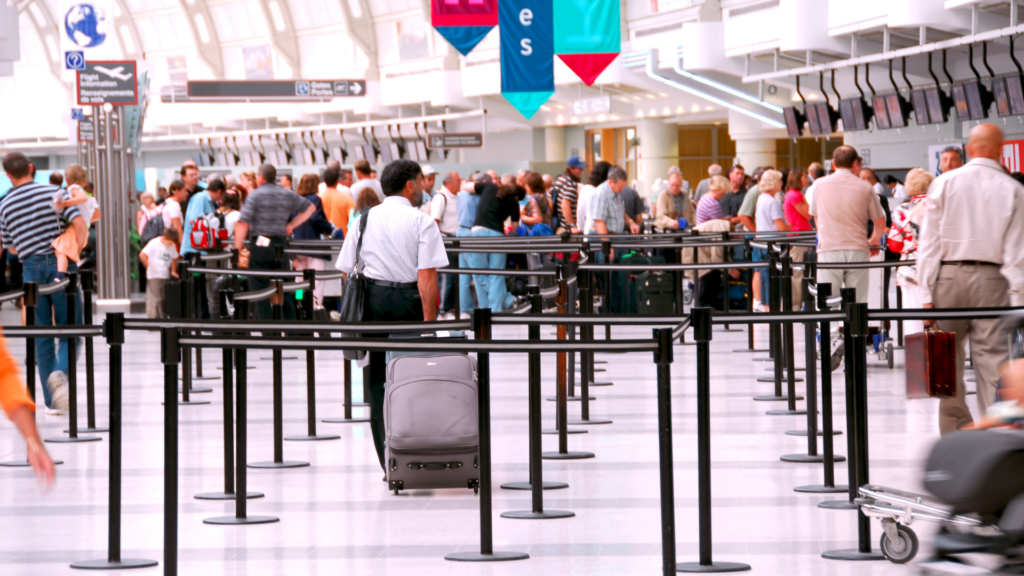
While transportation systems are designed to move people efficiently, they can also unintentionally move contamination during a chemical incident. Airports, transit hubs, rail stations, and transportation corridors present unique challenges because passengers, employees, and vehicles are constantly in motion. When a hazardous substance is introduced into these environments, the window for containment may be measured in minutes rather than hours.
Understanding transportation chemical preparedness is critical for emergency management agencies, transportation operators, first responders, and public safety organizations preparing for large-scale public events.

Why Transportation Hubs Present Unique Preparedness Challenges
Transportation systems differ significantly from stadiums, fan zones, and other event venues because they are designed around continuous movement. Chemical incidents in stadium environments are operationally complex, but transportation hubs introduce an entirely different set of variables because there are no fixed perimeters and passenger movement never stops.
During the World Cup, travelers will move between host cities using commercial aviation, commuter rail systems, subway networks, buses, rideshare services, and pedestrian corridors. Major transportation hubs such as Dallas-Fort Worth International Airport, Penn Station, Newark Liberty International Airport, and regional transit centers are expected to experience significant increases in passenger traffic throughout the tournament. Atlanta’s Hartsfield-Jackson, already the world’s busiest airport by passenger volume, will serve as a key transit hub for World Cup operations, while JFK, Newark Liberty, and Philadelphia airports have already been flagged by travel analysts for efficiency and on-time performance concerns that could be amplified by tournament demand.
Unlike controlled event venues, transportation environments often feature:
- Multiple access points
- Constant passenger turnover
- Shared public spaces
- Complex infrastructure systems
- High-volume daily operations
These factors can complicate emergency response efforts when a chemical incident occurs. Passenger movement may continue before a threat is recognized, increasing the potential for contamination to spread beyond the original location. HAZMAT preparedness for large public events must account for transportation environments where incident boundaries are fluid and passenger movement is continuous.
Understanding how transportation preparedness supports large-scale public events helps illustrate why transit systems play a critical role in overall World Cup readiness. Critical transportation infrastructure preparedness requires strategies purpose-built for dynamic, high-traffic environments.
What Can Transportation Systems Learn from Past Chemical Incidents?
One of the most frequently cited examples of a transportation-based chemical incident is the 1995 Tokyo subway sarin attack. According to FEMA’s chemical incident planning guidance, communication failures during the incident allowed trains to continue operating after the attack was identified, resulting in contamination spreading across multiple train lines, 15 stations, and hundreds of additional people. The incident ultimately resulted in 12 deaths, 54 severely injured, 980 people moderately affected, and over 5,000 people seeking medical assistance, with 10% of ambulance staff and 23% of hospital staff also affected, demonstrating how rapidly a transportation-based chemical incident can overwhelm both responders and healthcare systems.
The lessons from Tokyo remain relevant today because transportation systems are interconnected. An incident occurring in one station, terminal, vehicle, or transit corridor can quickly affect other locations if contamination is not identified and managed early. Responding to unknown hazardous materials incidents is especially critical in transportation environments where the window between exposure and contamination spread can be measured in minutes.
For transportation operators preparing for major public events, the goal is not simply responding to an incident. It is preventing a localized event from becoming a multi-location operational challenge.
Chemical Incident Response Considerations in Transportation Environments
Transportation systems face a wide range of potential hazards, including toxic industrial chemicals, vapor releases, suspicious powders, chemical warfare agents, and hazardous materials associated with commercial or industrial activities. DOT and PHMSA hazardous materials transport priorities highlight the regulatory framework governing chemical transport across the same infrastructure corridors that will carry millions of World Cup visitors.
Unlike many fixed facilities, transportation hubs must balance emergency response with ongoing passenger movement and operational demands.
A chemical incident occurring in an airport terminal, train station, subway platform, or transit center may create several immediate challenges:
- Identifying the nature of the hazard
- Communicating with passengers and staff
- Preventing contamination spread
- Coordinating with first responders
- Maintaining public confidence
- Managing operational disruptions
These challenges become even more complex when incident information is incomplete. Decontamination challenges across interconnected environments become significantly more difficult when incident boundaries are undefined and passenger movement cannot be immediately halted.
According to airport preparedness guidance published by Airports Council International (ACI), airports should maintain dedicated CBRN response plans that address contamination control, passenger movement, and coordination with local hazardous materials response teams. The guidance also emphasizes the importance of preventing contamination from spreading beyond the affected location, particularly in environments where travelers may quickly move to other cities, states, or countries. Preparing for CBRN threats at major global events must account for the speed at which transportation-based exposures can move across jurisdictions before an incident is fully identified.
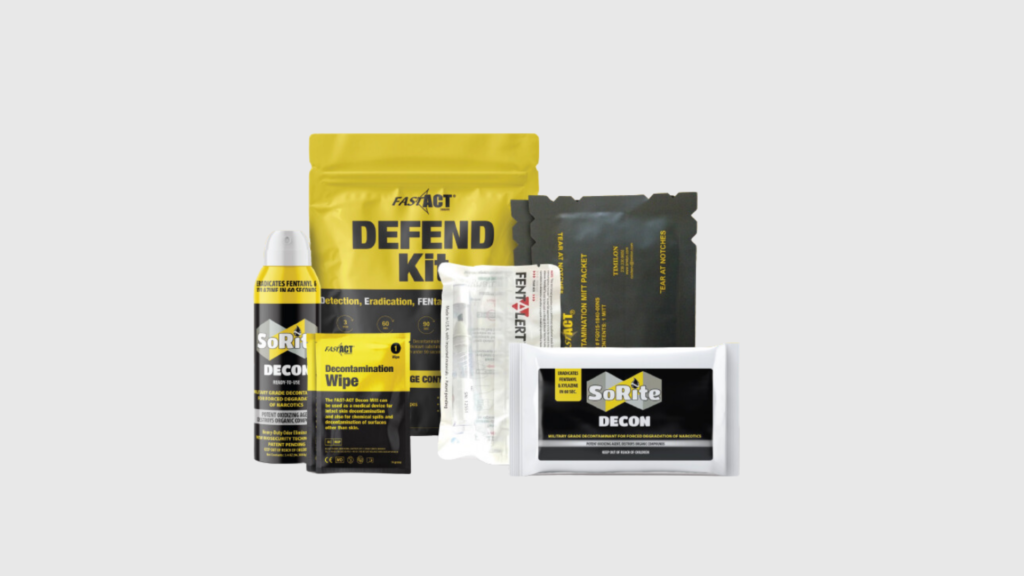
Fentanyl and synthetic opioids also represent an increasingly relevant chemical hazard in transportation environments. Fentanyl contamination risks in public spaces present unique challenges for transportation security and emergency response personnel where secondary exposure risks are high and substance identification may be significantly delayed.
The Operational Continuity Challenge
One of the most difficult aspects of transportation chemical preparedness is maintaining operational continuity while protecting passengers and personnel.
In many incidents, transportation agencies must make decisions before specialized resources arrive on scene. Establishing traditional decontamination corridors, isolation zones, and large-scale response operations can take time, particularly in crowded public environments. Research into urban chemical incident response indicates that specialized decontamination systems may require 15 to 30 minutes to establish after HAZMAT teams arrive, during which passengers may continue moving through terminals, stations, platforms, and transportation corridors.
The challenge is not simply decontamination. It is managing contamination concerns while minimizing disruption to critical transportation services. Understanding dry versus wet decontamination procedures is a critical consideration for transportation emergency response teams where water access, setup time, and operational disruption must all be weighed against the speed of the response window.
This reality has driven increased interest in rapid decontamination strategies for transportation hubs that support early intervention, contamination reduction, and operational flexibility during the earliest stages of an incident.
Regular emergency management training for transportation security personnel, transit police, and first responders ensures that response protocols are practiced and ready before the pressure of a live incident, particularly in multi-jurisdictional environments like transportation corridors where coordination across agencies is essential.
How FAST-ACT® Supports Transportation Chemical Preparedness
Transportation environments require solutions that can be deployed quickly, operate in dynamic conditions, and support contamination management without introducing additional operational challenges.
FAST-ACT® technologies are designed to support emergency response teams managing chemical incidents in airports, transit systems, transportation hubs, and other high-traffic environments. The science behind FAST-ACT dry decontamination explains why its formulation is particularly effective in dynamic, high-traffic environments where setup time is limited, and operational continuity is essential.
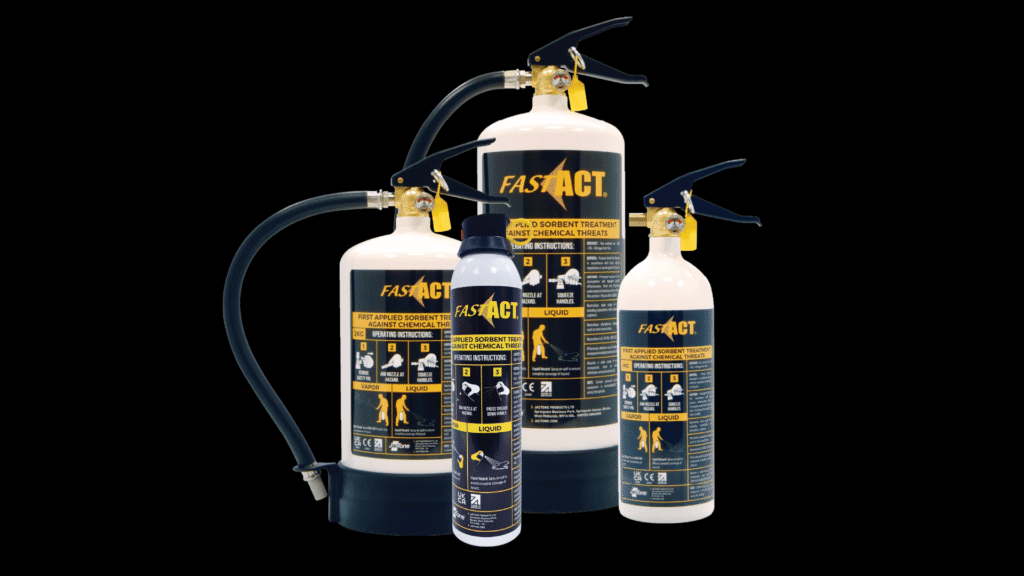
FAST-ACT® Pressurized Cylinders
FAST-ACT Pressurized Cylinders provide a rapid-response option for chemical incident preparedness in transportation environments. Their portable design allows responders to quickly deploy them in areas where contamination concerns may involve vapors, airborne hazards, or unknown substances. With an average discharge time of approximately 9.9 seconds, FAST-ACT® Pressurized Cylinders support rapid deployment in transportation hubs, terminals, rail systems, and other environments where contamination can spread quickly through passenger movement.
Because transportation facilities often contain sensitive infrastructure, electronics, passenger screening systems, and enclosed spaces, solutions that can be rapidly deployed without extensive setup requirements may support early response efforts while additional resources are mobilized.
FAST-ACT® Decontamination Mitts
FAST-ACT Decontamination Mitts are designed to support rapid contamination reduction for personnel, equipment, and exposed surfaces. Their portable format makes them well suited for transportation security personnel, transit police, emergency response teams, and other staff who may encounter contamination concerns during incident response operations. *CE classified as a class I medical device for use on skin and surfaces in the EU.
FAST-ACT® Decontamination Wipes
FAST-ACT Decontamination Wipes provide a convenient option for addressing localized contamination concerns on equipment, hard surfaces, and operational touchpoints. In transportation environments where maintaining functionality is essential, portable decontamination tools can help support response activities while limiting operational disruption. *CE classified as a class I medical device for use on skin and surfaces in the EU.
The FAST-ACT Rapid Decontamination Kit integrates these capabilities into a compact, portable system designed for immediate deployment, making it well suited for the fast-moving, high traffic demands of transportation environments during a large-scale event like the 2026 FIFA World Cup.
Preparing Transportation Systems for the Future
The 2026 FIFA World Cup represents one of the largest international events ever hosted across North America. While transportation agencies are preparing for increased passenger volumes, expanded transit services, and heightened security measures, preparedness planning must also account for low-frequency, high-consequence incidents involving hazardous materials and chemical exposures.
Airports, rail systems, transit hubs, and transportation corridors are essential components of public safety and emergency management planning because they connect every aspect of the tournament. The same systems that move millions of visitors efficiently can also influence how quickly an incident escalates if contamination is not identified and managed effectively. Modern chemical decontamination strategies are directly relevant to how transportation preparedness strategies must develop ahead of the 2026 FIFA World Cup.
Transportation chemical preparedness requires more than emergency response plans alone. It requires coordination, communication, training, and the ability to rapidly address evolving threats while maintaining critical operations.
Follow along with our 2026 World Cup preparedness blog series as we continue exploring environmental remediation, recovery operations, and lessons learned from major public events around the world.

About Timilon Corporation:
Timilon Corporation is the manufacturer of FAST-ACT®, a proprietary formulation of non-toxic high-performance specialty materials effective at neutralizing a wide range of toxic chemicals with the added capability to destroy chemical warfare agents. The FAST-ACT technology is utilized by leading defense agencies, chemical industrial companies, first responders and HAZMAT teams to quickly and safely eliminate chemical hazards. For more information, reach out to Leticia Menzzano, Marketing Manager, [email protected].
FAQs
Why are transportation systems important to 2026 World Cup preparedness?


Transportation systems connect every aspect of the tournament, moving millions of visitors between airports, stadiums, fan zones, hotels, and host cities. Maintaining safe and efficient operations is essential to overall public safety and emergency preparedness efforts.
What transportation environments require chemical preparedness planning?
Chemical preparedness planning may involve airports, rail systems, subway networks, bus terminals, transportation corridors, passenger screening areas, and other high-traffic transit environments where large numbers of people move through shared spaces.
What role do airports play in chemical incident preparedness?
Airports serve as major transportation hubs and may require planning for chemical threats, suspicious substances, vapor hazards, passenger movement, and coordination with hazardous materials response teams. Preparedness efforts help reduce operational disruption while supporting public safety.
How does FAST-ACT® support transportation chemical preparedness?
FAST-ACT® supports transportation preparedness through dry decontamination technologies designed for rapid deployment in airports, transit systems, transportation hubs, and other high-traffic environments where contamination concerns may require immediate action.
Why is dry decontamination valuable in transportation environments?
Dry decontamination can support rapid response efforts in locations where water access, setup time, sensitive equipment, or operational continuity concerns make traditional decontamination methods more challenging to implement.