

Dry Decontamination Isn’t the Finish Line: Where It Fits in EMS Chemical Response
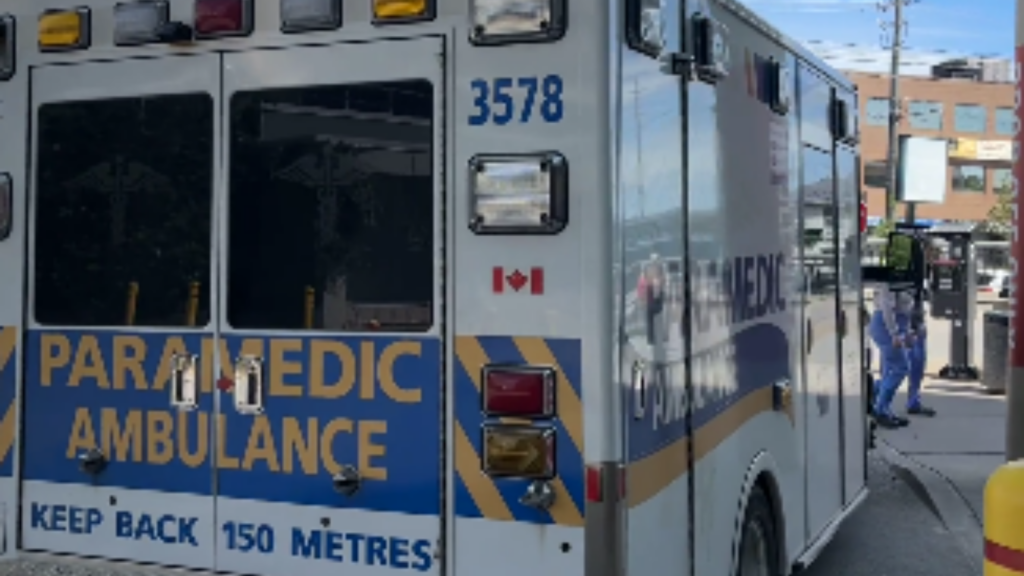
When EMS arrives at a chemical exposure, the full decontamination operation may not yet be established. HAZMAT resources may still be responding, equipment may still be arriving, and a technical decontamination corridor may still be getting set up.
But the patient is already there.
EMS personnel must assess the situation, protect themselves, provide appropriate medical care, and determine how to safely manage a potentially contaminated patient during those first stages of response.
This is where an important misconception about dry decontamination comes into play. Many people think of dry decontamination as a final step in response. In reality, when appropriate, it can be an early action that helps reduce contamination and bridge the gap while full decontamination is being established.
Dry decontamination is not a replacement for technical or wet decontamination. It is another tool that can help EMS manage contamination and support a safer transition to the next stage of response.
What Is EMS’ Role in a Chemical Incident?
EMS personnel are often among the first responders to reach an incident scene. According to the CDC’s HAZMAT incident planning guidance, EMS may need to assess the nature and extent of the hazard while attending to the immediate needs of victims, including people who may be chemically contaminated. That places EMS in the response chain before the full HAZMAT operation may be established.
The need for preparedness is significant. The U.S. Department of Transportation estimates that 12,000 to 18,000 HAZMAT events occur each year in the United States, including roadway spills, industrial releases, and laboratory exposures. Many are handled locally and never formally reported, meaning the true number is likely higher.
94% of chemical exposure incidents examined in one EMS HAZMAT study resulted in victims requiring hospital transport, placing EMS as the near-universal transport link between the scene and the receiving facility.
For EMS, chemical response involves more than treating the patient’s medical condition. Responders must also consider contamination, their own safety, and how the patient moves through the response system. Understanding each agency’s role in a chemical incident is one of the most important preparedness decisions any jurisdiction can make before an incident occurs.
Why Can’t Decontamination Always Wait for Full HAZMAT Setup?
A full technical decontamination operation requires personnel, equipment, planning, and coordination. Those resources take time to establish. Meanwhile, contamination can continue to affect the patient’s health.
Research published in Clinical Toxicology evaluated decontamination timing after chemical exposure at 5, 15, 45, and 120 minutes. Across all test substances, decontamination was significantly more effective when initiated at the earliest time point, with effectiveness decreasing measurably as treatment was delayed.
Research on early decontamination similarly found that delayed intervention occurs after the system approaches its asymptotic state, meaning the window for meaningful impact narrows significantly with time.
This does not mean EMS should automatically begin the same decontamination procedure for every chemical exposure. The appropriate response depends on the substance, exposure, patient condition, and established protocols. It does reinforce an important principle: when decontamination is indicated, early action can matter while the larger response is still coming together.
Clothing can also remain a source of contamination after a patient leaves the original exposure area. Research found that clothing off-gassing after exposure ranged from approximately 7 minutes for denim to 42 minutes for a down jacket, making early clothing removal an important consideration before transport.
Where Does Dry Decontamination Fit?
Dry decontamination provides EMS with another potential option during this early-response window.
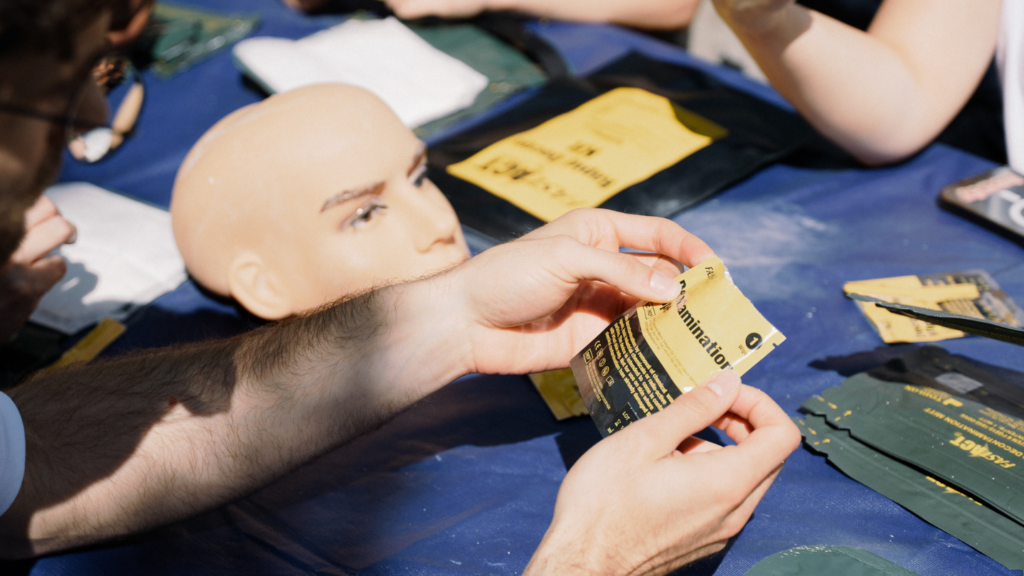
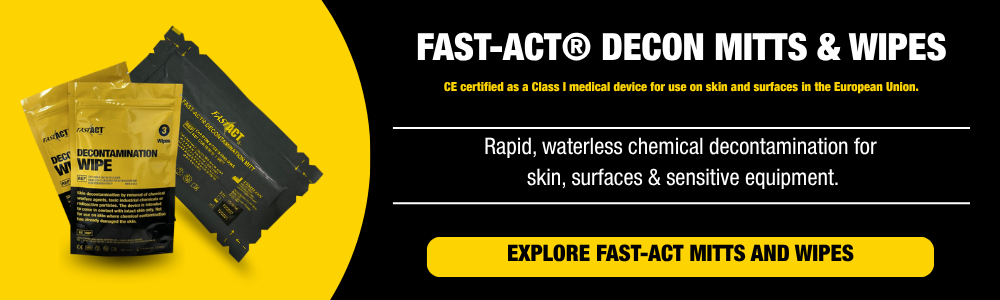
A controlled human volunteer study found that dry decontamination reduced skin contamination under all test conditions; blotting combined with rubbing producing the greatest reduction. The FAST-ACT Decontamination Mitt and Decontamination Wipes are designed around exactly this principle, providing a portable, hands-on option for targeted dry decontamination of skin and surfaces without requiring water or complex setup.
A controlled cross-over study found that combining dry and wet decontamination resulted in lower simulant recovery than either method alone, supporting the idea that dry and wet approaches can serve different roles within a larger response rather than competing with each other.
Whether dry or wet decontamination is right for the situation depends on the chemical, patient condition, and available resources. That decision should be addressed in EMS protocols before an active incident.
What Does the Bridge to Full Decontamination Look Like?
The “bridge” is the period between initial EMS contact and the establishment of full decontamination.
EMS may encounter a contaminated patient before specialized HAZMAT resources and technical decontamination equipment are ready. During that period, responders still need to manage patient care, contamination, responder safety, transport, and communication.
The UK’s Initial Operational Response framework provides an example of an approach designed to allow decontamination procedures to begin rapidly without waiting for specialist teams, supporting dry decontamination as soon as possible in appropriate circumstances while recognizing that certain contaminants require different approaches.
The goal is not for EMS to complete the entire decontamination process at the scene. Early decontamination helps manage contamination while the appropriate full response is being established. How dry decontamination fits within the broader response chain is one of the most important questions EMS agencies should address in preparedness planning. Dry decontamination is a bridge, not a substitute for the technical or wet decontamination that may still be required.
How Can EMS Help Reduce Secondary Contamination?
Chemical contamination can move with a patient into an ambulance, emergency department, and equipment if it is not appropriately managed.
At least 17 medical personnel were injured through secondary contamination while treating contaminated victims in one documented study, including 12 EMTs and five hospital personnel. Secondary ED contamination events have resulted in facility decontamination, evacuation, or temporary closure, often because patients arrived before being appropriately decontaminated.
These examples highlight why contamination management is not only about the patient. EMS personnel are part of the contamination-control process. When appropriate, addressing contamination before transport can help reduce what is carried into an enclosed ambulance or receiving facility. Hospital decontamination preparedness gaps, including secondary contamination entering through the ambulance bay, are among the most consequential vulnerabilities in the chemical response chain.
What Does EMS Need to Communicate Before Transport?
Early decontamination is only one part of the response. Communication is equally important. EMS should coordinate with Fire/HAZMAT and notify the receiving hospital when a patient may be chemically contaminated. Common EMS-to-hospital pitfalls, including failing to communicate whether decontamination occurred, are among the most preventable failures in the chemical response chain.
A clear handoff should answer:
- What happened?
- What has already been done?
- What contamination may remain?
- What happens next?
This also helps prevent early dry decontamination from being mistaken for completion of the patient’s decontamination. Assuming field decontamination was complete when it was not is one of the most consequential and preventable errors in the response chain.
Is EMS Prepared to Perform Early Decontamination?
EMS responsibilities during a hazardous materials incident should be established before an emergency occurs.
OSHA’s HAZWOPER guidance states that EMS providers expected to treat or transport victims contaminated by a hazardous materials release must be trained at least to the First Responder Operations Level, a minimum of eight hours of training.
OSHA also distinguishes between EMS personnel treating already-decontaminated patients and those who may treat contaminated victims, making it critical for response plans to define who is responsible for patient decontamination and what EMS personnel are trained to do.
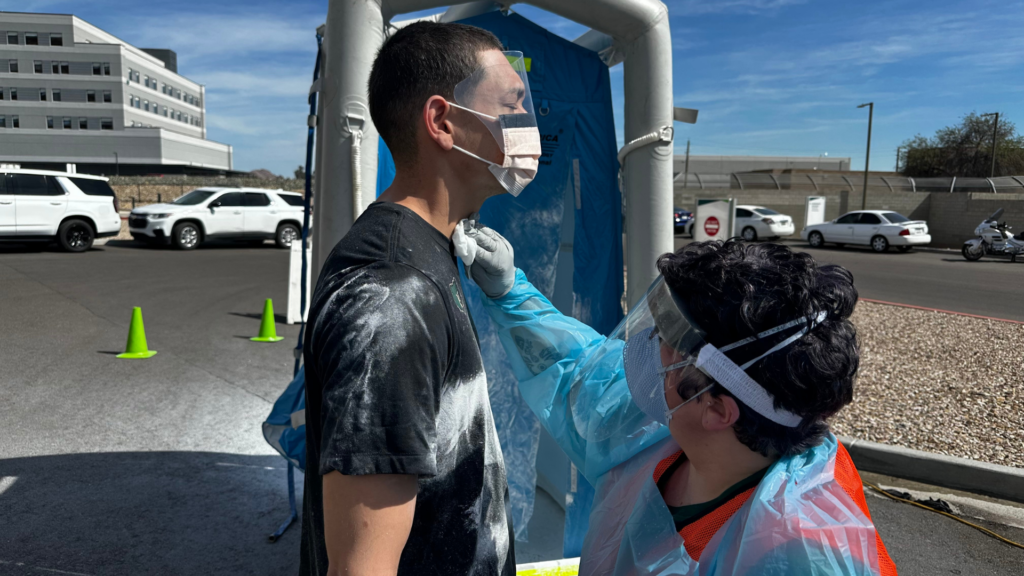
Preparedness should include appropriate equipment, established procedures, and hands-on training. Annual emergency management training incorporating EMS-specific chemical decontamination scenarios is one of the most effective investments any agency can make before the next incident occurs.
Where Does FAST-ACT Fit Into EMS Response?
FAST-ACT dry decontamination products provide another tool for managing chemical contamination during the early response.
FAST-ACT Decontamination Mitts and FAST-ACT Decontamination Wipes support targeted decontamination of skin and surfaces and are CE certified as Class I medical devices for use on skin and surfaces in the European Union.
For larger areas and applications involving whole-body decontamination or chemical vapor threats, the FAST-ACT 400G Pressurized Cylinder provides a portable format for rapidly deploying FAST-ACT during an appropriate response, with an average discharge time of approximately 9.9 seconds, making it well suited for fast-moving HAZMAT environments.
FAST-ACT’s Dry Decontamination technology uses a neutralization-based formulation effective during the early response window before comprehensive decontamination systems are in place. Not all dry decontamination solutions offer the same level of neutralization effectiveness, an important consideration for any EMS agency evaluating early-response equipment.
These products are not intended to replace a complete technical or wet decontamination operation. They support the early-response bridge between initial patient contact and the next stage of decontamination.
Building Early Decontamination Into EMS Preparedness
The time to determine EMS’s role in chemical decontamination is before an incident occurs.
Response plans should establish:
- Who is responsible for patient decontamination
- What EMS personnel are trained and authorized to do
- What equipment is available
- How contaminated patients will be transported
- How EMS will coordinate with Fire/HAZMAT
- How the receiving hospital will be notified
- What information needs to be included in the patient handoff
- How early decontamination transitions to comprehensive decontamination
The goal is not to replace the full decontamination process. It is to make sure EMS has appropriate options during the period before that process is ready. Decontamination in high-risk environments introduces operational realities that shift rapidly, and EMS agencies with established protocols and appropriate equipment are consistently better positioned to manage them.
Dry Decontamination Is the Bridge, Not the Finish Line
Chemical response does not begin when the technical decontamination line is ready. It begins when responders first encounter the patient.
For EMS, that means understanding what actions may be appropriate during the early response, how contamination can affect responders and transport, and how early decontamination supports the transition to the next stage. First responder health and safety depends on having the right tools, training, and protocols in place before the call comes in.
Dry decontamination isn’t the finish line. When appropriate, it is another tool that can help EMS manage contamination and bridge the gap while full decontamination is being established- if necessary.
From there, the response moves to the next critical stage: Fire and HAZMAT establishing and managing the broader decontamination operation when necessary.
Continue the Conversation
Reach out to our team to receive the full panel discussion featuring industry experts on rapid decontamination and coordinated response across EMS, hospitals, and HAZMAT.
About Timilon Corporation:
Timilon Corporation is the manufacturer of FAST-ACT®, a proprietary formulation of non-toxic high-performance specialty materials effective at neutralizing a wide range of toxic chemicals with the added capability to destroy chemical warfare agents. The FAST-ACT technology is utilized by leading defense agencies, chemical industrial companies, first responders and HAZMAT teams to quickly and safely eliminate chemical hazards. For more information, reach out to Leticia Menzzano, Marketing Manager, lmenzzano@timilon.com.
FAQs
What is dry decontamination for EMS?


Dry decontamination is a method of managing chemical contamination without relying on water. For EMS, it can provide an additional option during the early response when full decontamination resources may not yet be established.
Why is early decontamination important for EMS in a chemical response?
When decontamination is indicated, research shows that earlier intervention can be more effective than delayed decontamination. Early action may also help reduce contamination carried into ambulances and receiving facilities.
Can dry decontamination replace wet or technical decontamination?
No. Dry decontamination is an early-response tool that can help bridge the gap while comprehensive decontamination is being established. Technical or wet decontamination may still be necessary depending on the chemical, exposure, patient condition, and established protocols.
What FAST-ACT products can support EMS chemical decontamination?
FAST-ACT offers dry decontamination products including Decontamination Mitts, Decontamination Wipes, and pressurized formats that can support appropriate early-response applications. These products are not intended to replace complete technical or wet decontamination.
How Does FAST-ACT Support EMS in a Chemical Response?
FAST-ACT provides dry decontamination tools that can help EMS manage chemical contamination during the early stages of a response. Decontamination Mitts and Wipes support targeted decontamination of skin and surfaces, along with other tools. FAST-ACT is not intended to replace complete technical or wet decontamination.