

Railroad Chemical Spill Response: Preparing for the First Hour
Freight rail has a strong record with hazardous materials. According to the Association of American Railroads, more than 99.99% of hazmat shipments arrive without a release caused by a train accident. FRA data show the hazmat accident rate per carload has declined 80% since 2005.
That record is the reason preparedness planning focuses on the rare event. When a release does happen, it often happens far from a fixed facility. There may be no hydrant, no containment, and no established decontamination area. The product may not be confirmed yet, and HAZMAT resources may be some distance away.
This article looks at what that means for rail safety teams and emergency responders, and where dry decontamination can support the first hour of a response.
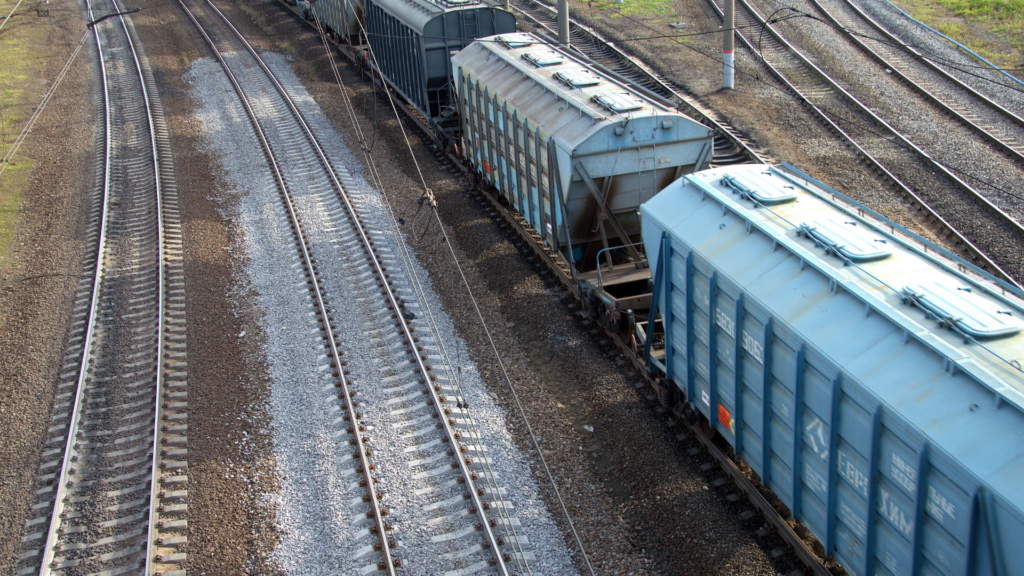
What Chemical Hazards Are Associated With Rail Transport?
Rail carries many of the industrial chemicals that communities depend on, including some of the most hazardous. Rail safety teams and responders may encounter:
- Chlorine. It is shipped as a liquefied gas, and the vapor is heavier than air. It tends to settle in low areas such as ditches and culverts.
- Anhydrous ammonia. It disperses quickly and affects the eyes, airways, and moist skin.
- Sulfur dioxide and nitric acid. Both are corrosive and can damage PPE and equipment.
- Hydrogen sulfide. At higher concentrations it can deaden the sense of smell, so odor is not a reliable warning.
These hazards are not theoretical. In 2005, a collision in Graniteville, South Carolina, released an estimated 11,500 gallons of chlorine. According to the CDC, the release caused nine deaths and led at least 529 people to seek medical care. More than 5,400 residents were evacuated.
Why Is Chemical Response Different on the Railroad?
A railroad release does not follow the plan written for a plant. Responders may arrive by access road to a stretch of track with no water supply and limited room to stage equipment. The consist and the commodity may still be getting confirmed.
Scale matters as well. In East Palestine, Ohio, the NTSB reported that responders established a 1-mile evacuation zone affecting about 2,000 residents. Even for an incident of that size, the first people on scene are often local fire and rail personnel. The full response arrives later.
Rail operators do invest in closing this gap. For example, they have expanded responder access to AskRail, which provides real-time information on railcar contents. Information helps responders choose the right approach, but it does not by itself reduce contamination in the first minutes.
Why Can Water-Based Decontamination Be Difficult at a Rail Incident?
Water-based decontamination remains a core HAZMAT capability, but it depends on water, equipment, personnel, space, and wastewater control. Wet decontamination requires all of these to be in place before it can begin. At a remote rail location, each one takes time.
There is also the question of what happens to the water afterward. Runoff follows the ground into ditches, drains, and waterways. The East Palestine cleanup shows how large the secondary waste stream can become. According to the EPA, more than 219,823 tons of contaminated soil and more than 74 million gallons of contaminated liquid were shipped off-site for disposal.
That total came from a very large incident, but it shows why responders try to limit contaminated water at the source. Some chemicals are also water-reactive. For those, water-based methods may not be appropriate even when water is available.
What Can Rail Teams Do Before Full Decontamination Is Available?
The first minutes usually look the same regardless of the commodity:
- Recognize the hazard. Placards, car markings, and consist information help identify what is involved.
- Protect personnel. Responder safety comes first, and entering an uncontrolled area can create more casualties.
- Establish control. Zones and access control limit how far contamination spreads.
- Call for specialized resources if necessary. Early notification gives HAZMAT teams more time to mobilize.
- Address contamination early. People and equipment that have contacted the product need attention before the full decontamination setup is ready.
That last step is where the gap tends to appear. A HAZMAT response involves many tasks at once, and decontamination capability is often the last piece to arrive.
How Does Dry Decontamination Support Early Response?
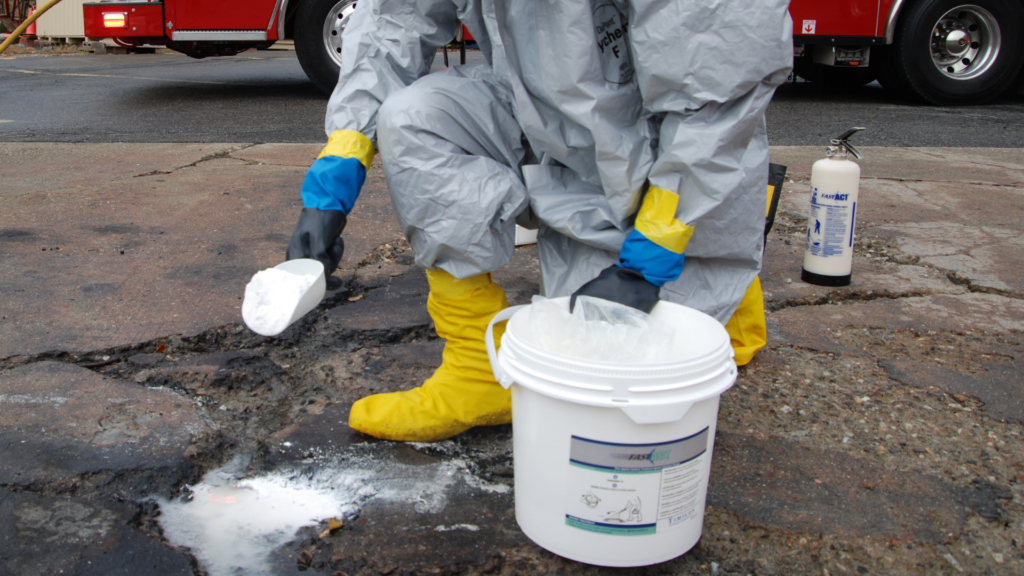
FAST-ACT dry decontamination is designed to help with that early window. It decontaminates, contains, and neutralizes liquid and vapor chemical hazards without water, which means no runoff and no corridor to build.
For rail operations, three practical points stand out:
- No water supply needed. Teams can begin where the incident is, without waiting for tenders or hose lines.
- No contaminated runoff. There is no wastewater stream to collect and manage.
- A broad range of chemicals. FAST-ACT neutralizes many hazardous chemicals, so a team does not need to identify the exact product before it acts. That matters when the consist information is still being confirmed.
FAST-ACT can work as a standalone product, so rail personnel can begin addressing a release without waiting for a HAZMAT team to arrive. It also works alongside existing procedures, giving first-arriving responders another option while the larger response is established. The same logic applies in other conditions where water is limited, such as cold-weather incidents.
Which FAST-ACT Products Fit Rail Operations?
FAST-ACT® is deployed through several product forms, so a rail operation can match each product to the places where crews are most likely to be exposed, from the derailment site to the rail yard and the repair shop.
- 400G Pressurized Cylinder. The 400G Pressurized Cylinder offers rapid decontamination of toxic chemical vapors and liquids. It provides a portable option for responding to appropriate chemical vapor threats and supporting rapid chemical neutralization at the source, with an average discharge time of approximately 9.9 seconds. For rail, that makes it a fit for people, PPE, and enclosed spaces such as locomotive cabs and hi-rail vehicles.
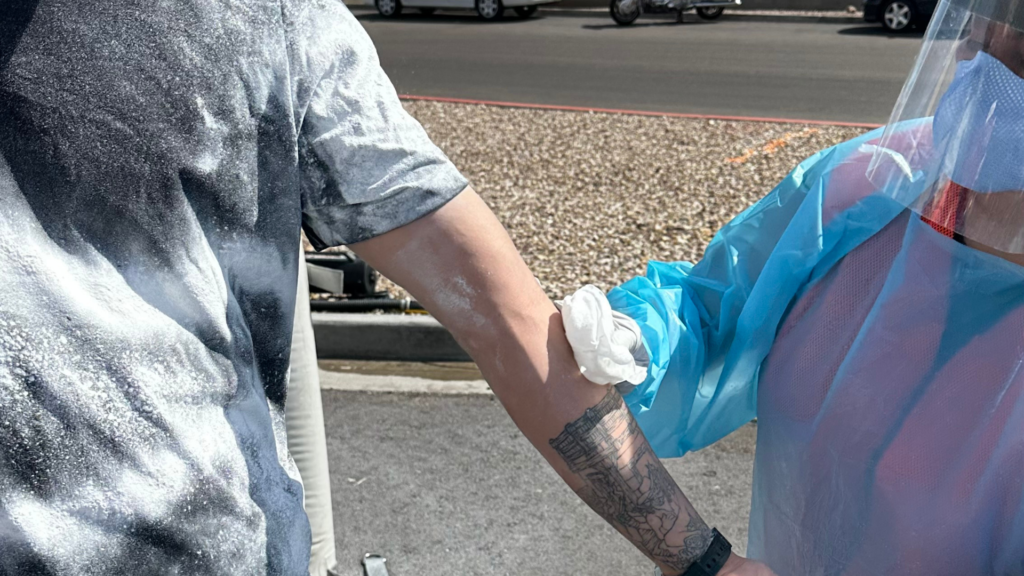
- Decontamination Mitts and Wipes. The Mitt and Wipes are designed for use on skin, surfaces, and sensitive equipment. They support targeted cleanup of valves, fittings, tools, and other contact points where residue can otherwise be carried back into cabs and vehicles. CE certified as Class I medical devices for use on skin and surfaces in the European Union.
- Bulk Pails. Bulk Pails are intended for spill containment and neutralization on platforms, ballast, and shop floors, where a liquid release needs to be addressed on a surface.
Having the right product on hand is only part of preparedness. Crews also need to know what is in the kit, where it is staged, and how it fits with their existing procedures. That is why FAST-ACT offers training. It gives rail teams a working understanding of the products and the situations they are designed for, so crews are familiar with them well before an incident occurs and not learning them for the first time under pressure.
How Should Rail Safety Teams Plan Ahead?
A few planning questions can help rail safety and EHS leaders find gaps before an incident does:
- Which hazardous commodities move through or near your operation, and what is the nearest HAZMAT resource?
- What can personnel on scene do for contaminated people and equipment in the first 15 minutes?
- Does your plan depend on water at locations where water may not be available?
- Do your kits cover many chemical types, or only a few?
- Do rail personnel, local fire departments, and HAZMAT teams train together? Joint exercises show where handoffs break down. See who responds to a chemical spill for how each agency fits in.
Strengthening Rail Preparedness
Railroads move chlorine, anhydrous ammonia, acids, and other hazardous materials every day, which means crews and first-on-scene responders are working near these products as part of normal operations. When a release does occur at a derailment, a loading rack, or a rail yard, the people closest to it are often exposed before specialized HAZMAT teams or water-based decontamination can arrive. That early window is where risk concentrates, and it is the part of the response that rail teams control the most.
Graniteville and East Palestine both showed how quickly a release can affect crews, responders, and surrounding communities, and how much of the outcome depends on what happens in the first hour. Early recognition and early communication matter, but so does the ability to act on contamination right away. A team with a dry decontamination solution already in the cab, the truck, or the yard does not have to wait for water, equipment, or outside resources to begin.
FAST-ACT gives rail personnel and first responders a way to decontaminate, contain, and neutralize chemical hazards at the point of release, whether they are working on their own or alongside a larger response. Preparedness planning should account for the moments before help arrives as carefully as the response that follows.
Contact FAST-ACT to request a demo and discuss equipment matched to your rail operation.
About Timilon Corporation:
Timilon Corporation is the manufacturer of FAST-ACT®, a proprietary formulation of non-toxic high-performance specialty materials effective at neutralizing a wide range of toxic chemicals with the added capability to destroy chemical warfare agents. The FAST-ACT technology is utilized by leading defense agencies, chemical industrial companies, first responders and HAZMAT teams to quickly and safely eliminate chemical hazards. For more information, reach out to Leticia Menzzano, Marketing Manager, [email protected].
FAQs
What chemicals are most commonly involved in rail hazmat incidents?


Railroads move chlorine, anhydrous ammonia, sulfur dioxide, nitric acid, and hydrogen sulfide, among other hazardous materials. Each presents a different risk, including toxic vapors and corrosive contamination of people, PPE, and equipment.
Can FAST-ACT be used without a HAZMAT team on scene?
Yes. FAST-ACT can work as a standalone product, so rail personnel can begin addressing a chemical release without waiting for a HAZMAT team. It also works alongside existing HAZMAT procedures and response handoffs.
Does FAST-ACT require water, power, or setup?
No. FAST-ACT dry decontamination works without water, power, or setup, so crews can begin where the release occurs. It also produces no contaminated runoff.
Is training available for rail teams?
Yes. Training is included with every FAST-ACT purchase, so crews understand the products and how they fit their operations before an incident occurs.
Which FAST-ACT products are used in rail operations?
FAST-ACT is available as the 400G Pressurized Cylinder, Decontamination Mitts and Wipes, Bulk Pails, and Kits. Each fits a different part of rail operations, from people and enclosed cabs to tools, valves, ballast, and shop floors.