

Environmental Remediation and Cleanup Lessons from Large-Scale Public Events
When discussions around chemical preparedness and emergency response take place, most attention is focused on the initial incident. Questions often center on threat identification, responder actions, decontamination procedures, evacuation decisions, and public safety measures. Yet one of the most challenging phases of any chemical incident begins after the immediate emergency has been contained. Chemical and CBRN preparedness for the 2026 World Cup extends well beyond the response window, and the environmental remediation phase is where long-term consequences are determined.
Host cities across North America have prepared for a wide range of potential public safety scenarios. Throughout this series, we have explored chemical preparedness considerations for stadiums, fan zones and opening ceremony venues, hospitals, and transportation systems. However, preparedness planning does not end when an incident is controlled. Recovery operations, environmental remediation, infrastructure restoration, and contamination management can continue long after the public’s attention has shifted elsewhere.
According to FEMA’s Chemical Incident Consequence Management framework, remediation efforts may include decontaminating environmental materials and surfaces, including soil, groundwater, surface water, drinking water, and infrastructure such as subways, buildings, and stadiums, addressing impacts to critical infrastructure, managing hazardous waste, restoring public spaces, and returning affected facilities to normal operations. In some cases, recovery activities can continue for months or even years following a major incident.
Understanding what happens after a chemical incident is contained provides important lessons for organizations preparing for large-scale public events, including the 2026 FIFA World Cup.
The Response Doesn’t End When the Incident Is Contained
The successful containment of a chemical incident is often viewed as the conclusion of the emergency. In reality, it frequently marks the beginning of a much longer recovery process. Decontamination challenges across critical sectors extend far beyond the initial response window, and organizations that plan only for the incident often underestimate the scope of what follows.
Environmental remediation efforts may involve:
- Stadiums and event venues
- Transportation systems and transit hubs
- Public gathering spaces
- Buildings and surrounding infrastructure
- Soil and surface contamination
- Surface water and groundwater concerns
- Waste management and disposal operations
The complexity of recovery depends on numerous factors, including the type of hazardous substance involved, the extent of contamination, environmental conditions, and the effectiveness of early response efforts.
According to FEMA’s long-term recovery operations guidance, long-term recovery operations typically include infrastructure restoration, environmental monitoring, public health surveillance, and remediation activities designed to return affected areas to their pre-incident use, and recovery activities may last for an extended period of months or years. The true impact of a chemical incident is often measured not only by the initial response, but by the resources, time, and coordination required to achieve full recovery.
A community’s ability to achieve recovery outcomes after a chemical incident rests on multiple factors, including injury of personnel, lack of resources, physical damage, and contamination of impacted facilities. According to FEMA’s recovery outcomes guidance, medical care for the injured, health surveillance for those exposed, and housing options for those displaced may be needed for the long term, and costs to achieve recovery outcomes may be substantial.
Why Limiting Contamination Early Matters
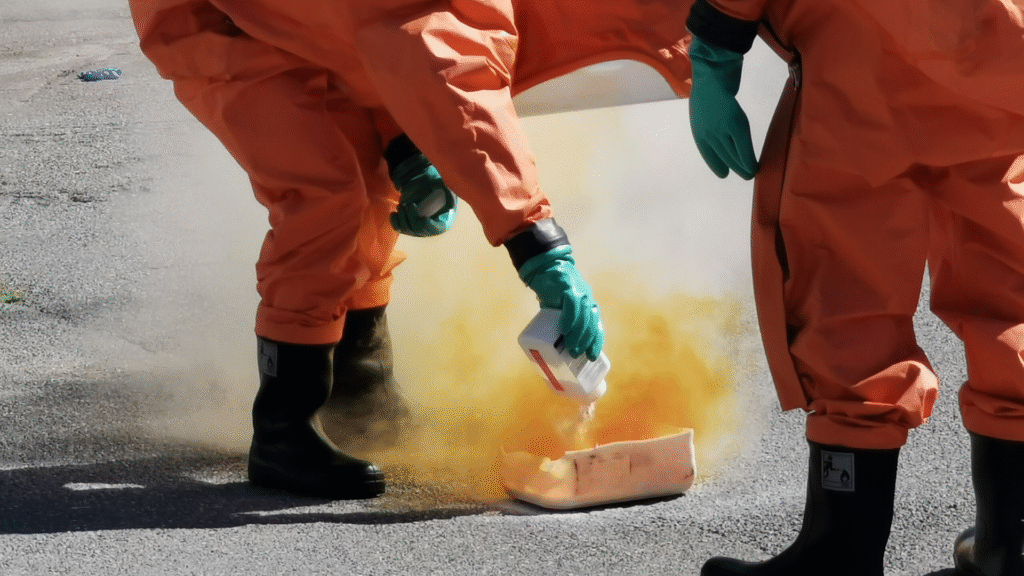
One of the most important lessons from chemical incident consequence management is that the actions taken during the earliest stages of an incident often determine the scale of recovery operations that follow.
FEMA identifies limiting contamination spread as the single most effective means of reducing the level and complexity of wide-area response and recovery activities, including remediation time and cost. When hazardous chemicals spread beyond the original release area, remediation efforts become significantly more challenging.
For example, contamination that reaches:
- Public infrastructure
- Transportation systems
- Soil and vegetation
- Surface water
- Buildings and equipment
may require extensive environmental remediation efforts before normal operations can be resumed.
FEMA also notes that following a large-scale toxic chemical release, response and recovery operations will likely generate very large quantities of both hazardous and non-hazardous waste, and that management of large quantities of hazardous waste may prove especially challenging when it contains evidence from a suspected or confirmed intentional incident. Pre-incident waste management planning is an important aspect of preparedness that can directly reduce both the time and cost of cleanup.
This relationship between early response and long-term recovery highlights why contamination management should be viewed as more than an emergency response objective. Effective containment can directly influence environmental outcomes, waste generation, infrastructure restoration requirements, and overall recovery costs. Chemical decontamination in environmental remediation continues to evolve as modern approaches to early neutralization help reduce the scope and cost of downstream cleanup operations.
Understanding how contamination management influences long-term recovery operations helps illustrate why rapid decontamination strategies remain an essential component of chemical preparedness planning.
Environmental Remediation Challenges Following Large Public Events
Large public events present unique remediation challenges because contamination rarely affects a single location.
Stadiums, fan zones, transportation hubs, hotels, public transit systems, and surrounding infrastructure are often interconnected through the movement of people, equipment, and materials. As discussed throughout this World Cup preparedness series, contamination that is not quickly identified and managed may affect multiple operational environments simultaneously. Critical event infrastructure protection is one of the defining remediation challenges of large-scale public events.
Following a chemical incident, remediation teams may face challenges involving:
- Contaminated surfaces
- Public gathering spaces
- Transportation corridors
- Critical infrastructure
- Equipment and facilities
- Hazardous waste management
- Environmental monitoring activities
According to FEMA’s environmental containment and remediation options framework, remediation strategies must account for the physical and chemical properties of the hazardous substance involved, the environmental medium affected, and site-specific conditions, making a one-size-fits-all approach to environmental cleanup ineffective. Available remediation approaches include thermal, biological, physical, and chemical treatment methods that can be applied to contaminated media at the release site or following removal from the site.
These realities reinforce the importance of preparedness efforts that focus not only on response, but also on minimizing the extent of contamination before recovery operations begin. HAZMAT preparedness for large events must account for the full remediation lifecycle, not just the immediate response window.
Contaminated Soil, Surface Water, and Infrastructure Recovery
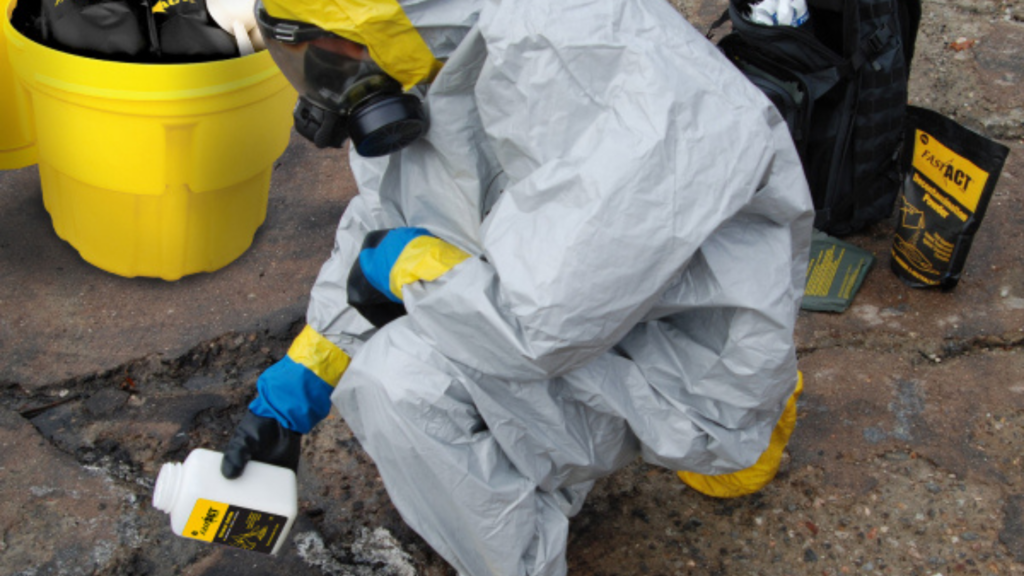
When chemical contamination extends beyond a facility or structure, recovery operations become substantially more complex.
Environmental remediation may involve contaminated soil, surface water, groundwater systems, infrastructure components, and surrounding public spaces. In some situations, complete removal of contamination may be impractical, requiring long-term management strategies to limit ongoing risk. According to FEMA’s long-term remediation guidance, longer-term, complex remediation strategies may be needed to eliminate or limit the harm of ongoing chemical contamination on a region’s environment, critical infrastructure, and population, and in some cases, chemical releases are virtually impossible to fully contain or treat.
FEMA also notes that waste management decisions following large-scale chemical releases can significantly affect both the cost and timeline of response and recovery, and that pre-incident waste management planning can reduce the time and cost of cleanup. Responses to large-scale chemical releases involve waste management decisions that can significantly affect the cost and timeline of the entire recovery operation.
Recovery operations can also affect transportation networks, public facilities, and surrounding communities. Environmental monitoring programs may be required to evaluate cleanup effectiveness and determine when affected areas can safely return to normal use. These considerations are particularly relevant for major international events where large numbers of people gather in concentrated areas and where critical transportation infrastructure plays a central role in event operations.
The ability to restore facilities, transportation systems, and public spaces quickly can have a significant impact on both public confidence and operational recovery following a chemical incident.
Lessons Learned from Major Public Events and Environmental Incidents
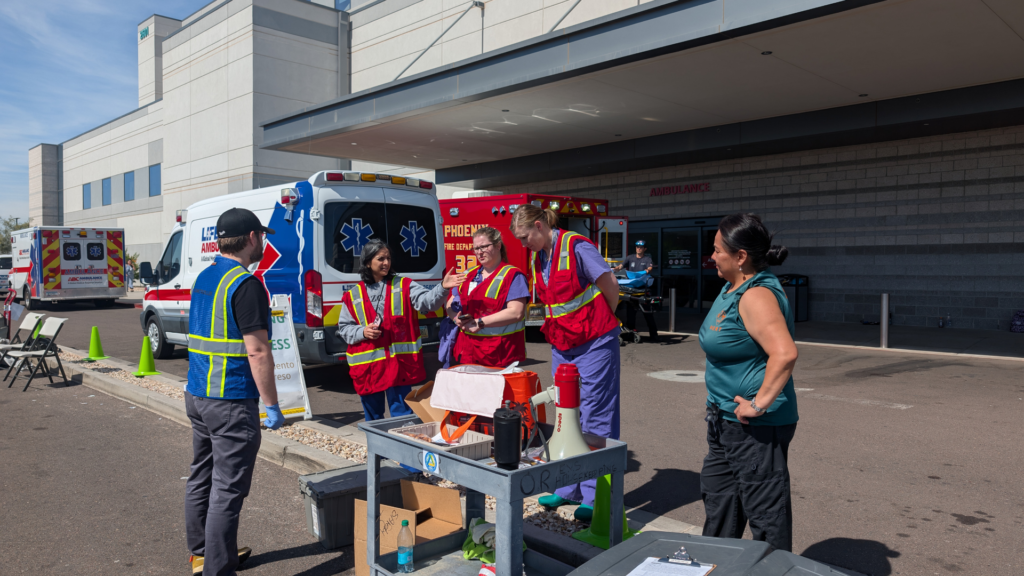
Mass gatherings have long been recognized as environments that require specialized planning due to the concentration of people, infrastructure demands, and public health considerations involved. According to the WHO’s mass gathering risk management framework, mass gathering events require distinctive planning, communication, and risk management strategies due to the concentration of people and increased public health risks, and at events like the FIFA World Cup or Olympic Games, surface contamination and indoor air quality management are critical public health infrastructure concerns, not simply housekeeping operations.
One of the most frequently cited examples of long-term environmental remediation associated with a major international event is the redevelopment of Sydney Olympic Park for the 2000 Olympic Games. The site required extensive remediation efforts involving contaminated soil, industrial waste, hydrocarbons, asbestos, and other environmental concerns before it could support Olympic operations. Groundwater leaching from waste at the site was found to contain elevated levels of chlorobenzenes, chloromethanes, and chloroethylene; and environmental management responsibilities continued long after spectators left and event operations concluded.
Research on mass casualty decontamination published in PMC has shown that beginning the decontamination process as early as possible, including the early removal of contaminated clothing and materials, directly reduces the volume of contaminated waste generated and lessens the scope of downstream remediation requirements. Emergency management training that incorporates remediation planning, not just initial response protocols, helps ensure organizations are prepared for the full lifecycle of a chemical incident. For organizations preparing for major public events, the most effective cleanup strategy often begins long before cleanup operations are required.
How Modern Decontamination Technologies Are Changing Recovery Operations
Advances in environmental remediation technologies continue to influence how organizations approach contamination management and recovery planning.
The EPA notes that remediation optimization strategies increasingly focus on improving cleanup effectiveness while reducing operational costs, resource requirements, and long-term environmental impacts, with emerging technologies playing a growing role in reducing the scope and cost of large-scale cleanup operations.
One challenge associated with traditional water-based decontamination methods is that contaminants may be diluted and removed without necessarily being neutralized. According to NCBI research on decontamination strategies, a serious drawback of water-based approaches is that while most contaminants are removed and diluted, not all are neutralized or destroyed, and the large volume of fluid used can cause logistics challenges while contaminated runoff may cause additional environmental problems requiring subsequent treatment. Understanding dry versus wet decontamination is a critical consideration for organizations planning environmental remediation operations where water infrastructure may be limited, and secondary waste generation must be minimized.
According to research on dry decontamination methods, dry decontamination reduces the size and manpower requirements of the decontamination line and eliminates the need for excess equipment, making it especially useful when water is scarce or difficult to transport. These advantages are particularly relevant in transportation corridors, fan zones, and other large-scale event environments without reliable water infrastructure.
These challenges have contributed to growing interest in alternative decontamination approaches that support contamination reduction while minimizing waste generation and secondary environmental impacts. FAST-ACT dry decontamination technology helps demonstrate how neutralization-based approaches can address the limitations of traditional water-based methods by reducing secondary waste, simplifying logistics, and supporting faster recovery timelines.
How FAST-ACT® Supports Environmental Remediation and Contamination Management
Environmental remediation efforts often focus on reducing contamination spread, supporting cleanup operations, and minimizing long-term impacts on infrastructure and surrounding environments. High-contamination decontamination challenges require scalable solutions that can be deployed rapidly across wide operational areas without adding logistical complexity to already demanding recovery operations.
FAST-ACT® technologies support these objectives through solutions designed to assist with contamination management, vapor threat reduction, and environmental response operations.
FAST-ACT® Bulk Pail
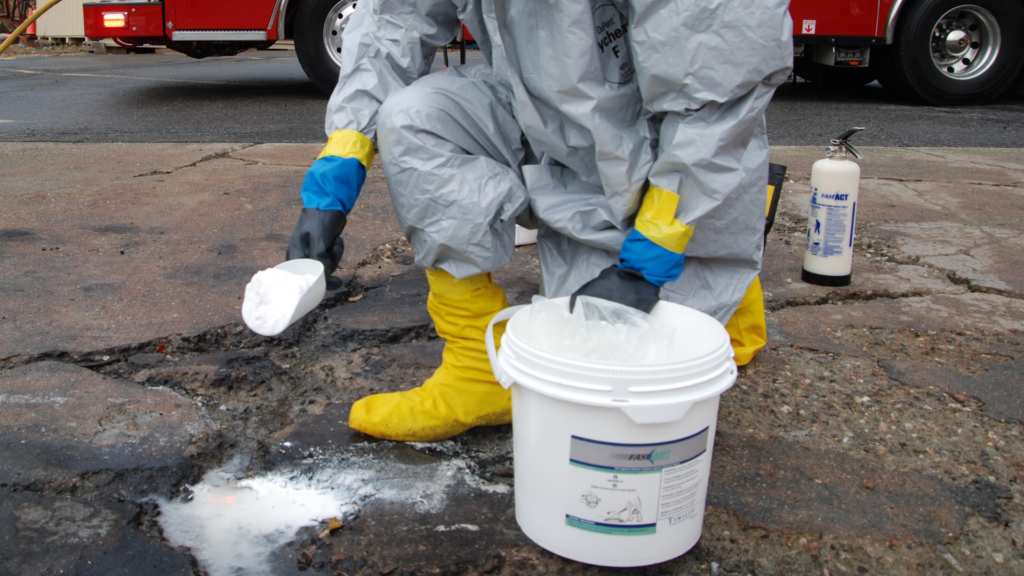
FAST-ACT Bulk Pail is designed to support high-volume spill response and environmental contamination management. It can be applied during chemical leaks, spills, and contamination incidents where reducing spread and supporting remediation efforts are priorities, specifically positioned to help address environmental contamination concerns and support early-stage mitigation efforts before contamination spreads into soil or water systems.
FAST-ACT® Shaker Bottles
FAST-ACT Shaker Bottles provide a portable option for localized contamination concerns and smaller spill response scenarios. Their compact design supports rapid deployment when contamination management is needed on equipment, surfaces, or limited areas requiring immediate attention.
FAST-ACT® Pressurized Cylinders
FAST-ACT® Pressurized Cylinders support vapor threat reduction and contamination management in enclosed or confined environments. Their rapid deployment capability allows response teams to quickly address airborne contamination concerns while supporting broader remediation and recovery objectives.
Together, these solutions help support contamination management strategies that prioritize limiting spread, protecting infrastructure, and reducing the long-term challenges associated with environmental remediation. Chemical decontamination and environmental response continue to evolve as neutralization-based approaches reshape what recovery operations look like in practice.
Looking Ahead
Throughout this series, we have examined chemical preparedness considerations across stadiums, fan zones, hospitals, transportation systems, and other environments supporting the 2026 FIFA World Cup.
While emergency response remains a critical component of preparedness planning, recovery operations deserve equal attention. The ability to limit contamination spread, support effective decontamination, and simplify environmental remediation efforts can significantly influence how quickly affected communities return to normal operations. First responders and the organizations that support them play a critical role not just in the immediate response window, but in the early containment decisions that determine how complex and costly recovery ultimately becomes.
As organizations continue preparing for large-scale public events, the lessons of environmental remediation serve as an important reminder that preparedness is not solely about responding to incidents. It is also about reducing long-term consequences, protecting critical infrastructure, and supporting recovery long after the immediate emergency has passed.
About Timilon Corporation:
Timilon Corporation is the manufacturer of FAST-ACT®, a proprietary formulation of non-toxic high-performance specialty materials effective at neutralizing a wide range of toxic chemicals with the added capability to destroy chemical warfare agents. The FAST-ACT technology is utilized by leading defense agencies, chemical industrial companies, first responders and HAZMAT teams to quickly and safely eliminate chemical hazards. For more information, reach out to Leticia Menzzano, Marketing Manager, [email protected].
FAQs
How does FAST-ACT® support environmental remediation and contamination management?


FAST-ACT® technologies are designed to support contamination management, vapor threat reduction, spill response, and environmental remediation efforts. By helping limit contamination spread, these solutions can support broader recovery and cleanup objectives.
Which FAST-ACT® products support environmental remediation efforts?
FAST-ACT® solutions commonly used in environmental remediation and contamination management include: FAST-ACT® Bulk Pail FAST-ACT® Shaker Bottle FAST-ACT® Pressurized Cylinders These solutions can support spill response, contamination management, vapor threat reduction, and remediation activities across a variety of operational environments.
How do dry decontamination approaches support environmental remediation?
Dry decontamination approaches can help reduce water usage, minimize contaminated runoff, simplify logistics, and support rapid deployment. These benefits may help reduce secondary environmental impacts while supporting contamination management objectives.