This blog explores why battery failure produces dangerous hazardous fumes, how these events escalate into hazardous areas, and why emergency response personnel need fast, water-free neutralization methods to reduce chemical exposure.


Month: November 2025
FAST-ACT November Event Highlights: Advancing CBRN Readiness Across the Nation
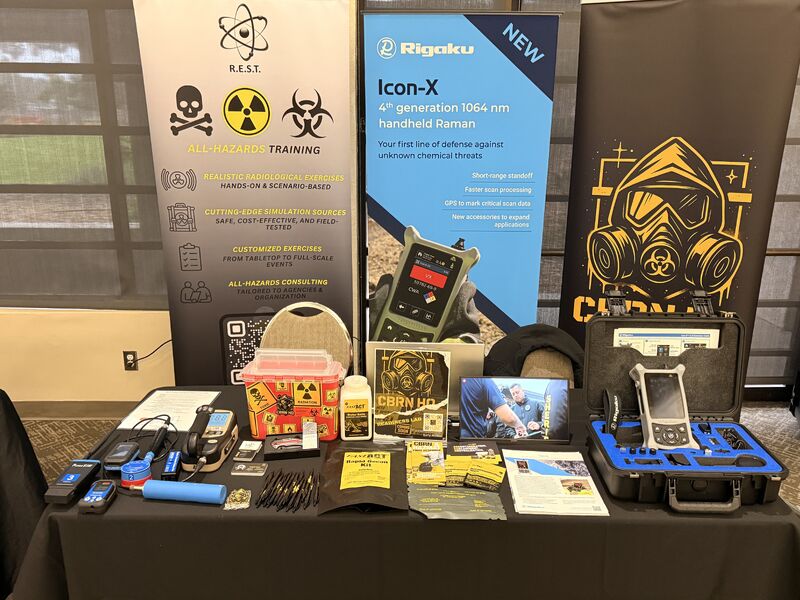
This November, the FAST-ACT team continued its commitment to advancing chemical preparedness and CBRN defense through nationwide engagement and collaboration. From Charleston to Los Angeles and Fort Campbell, FAST-ACT and its partners showcased how dry decontamination technology enhances operational readiness and response efficiency across military, emergency, and defense sectors.
Safe Hazardous Package Handling: Lithium, Opioids, and Chemical Spill Response
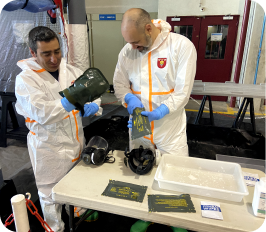
While campaigns like USPS Hazmat Awareness Month help reinforce safety practices, incidents related to hazardous package handling can happen at any time of the year, from chemical spills to opioid exposure or lithium battery leaks.
Ensuring employee safety requires a combination of awareness, proper handling protocols, and practical chemical decontamination tools that can neutralize threats quickly.
When Seconds Matter: Lessons in Chemical Incident Preparedness from the Tennessee Explosion
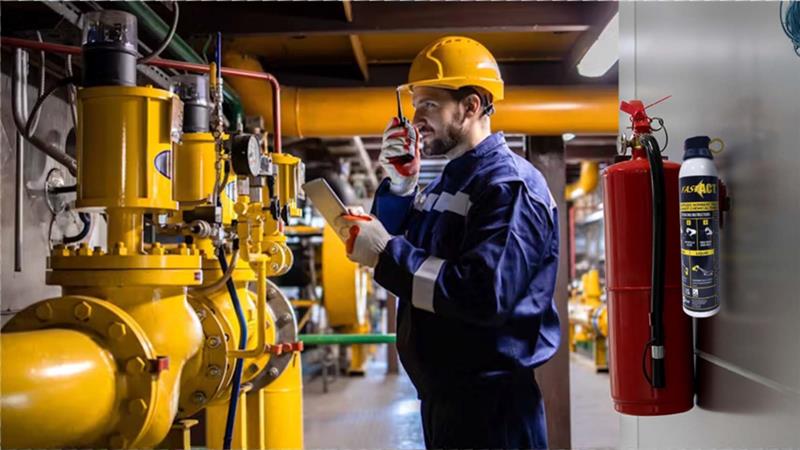
The U.S. Chemical Safety Board (CSB) has launched an investigation into the October 10, 2025 explosion at Accurate Energetic Systems in McEwen, Tennessee, where 24,000–28,000 pounds of explosive material detonated, killing 16 workers and damaging the industrial chemical facility. Early findings suggest the blast began during heating operations and triggered secondary detonations in nearby storage areas. The incident underscores the ongoing need for robust chemical safety measures, emergency planning, and readiness for large-scale chemical incidents.
Why Combined Wet and Dry Decontamination Is the New Gold Standard for Hospital Emergency Preparedness
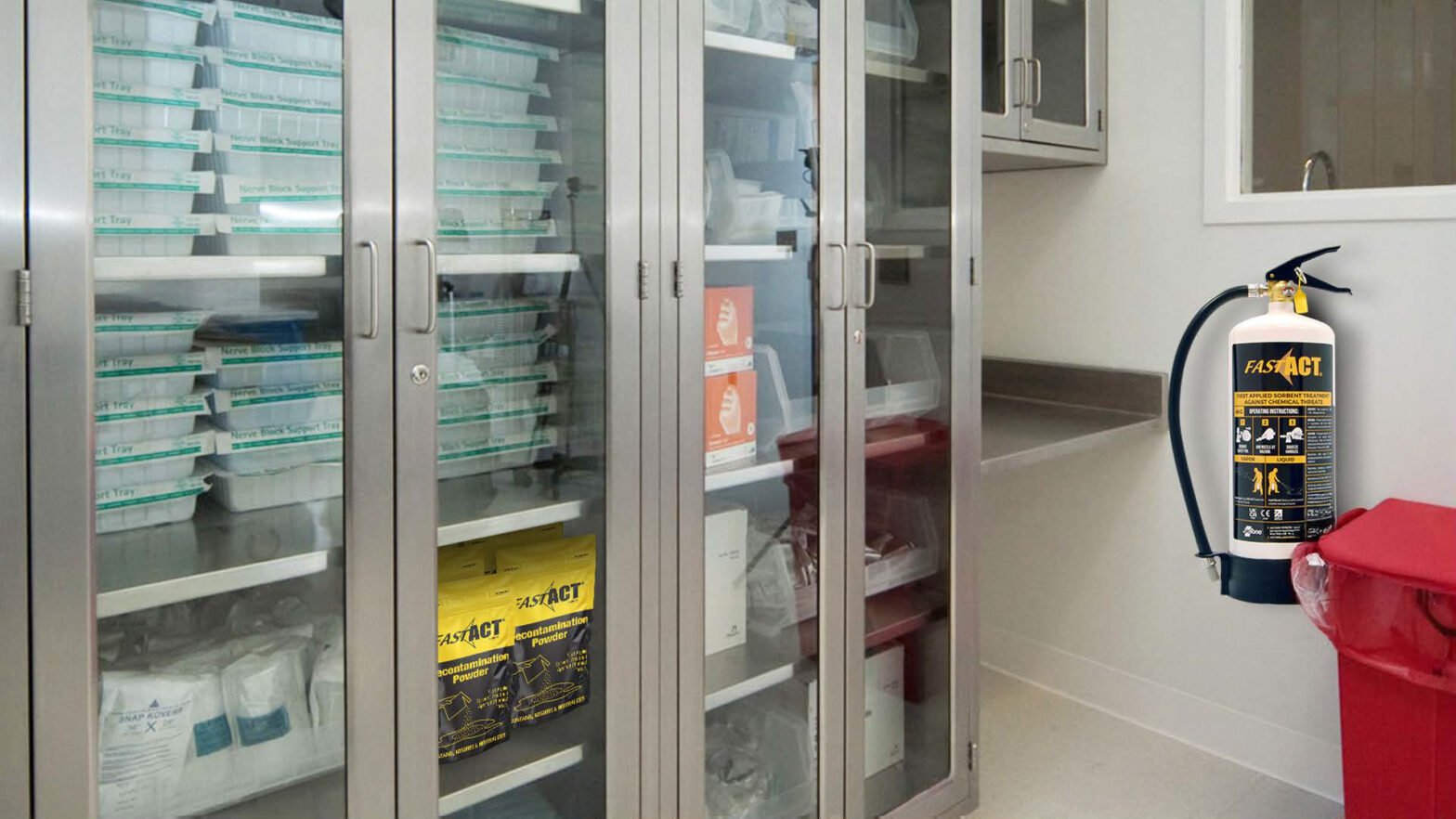
Across Level 1 trauma centers in the U.S., Sweden, Canada, and Singapore, teams now deploy combined decontamination methods—a hybrid model proven to improve outcomes, optimize speed, and reduce risks from hazardous chemicals. This approach aligns with hospital emergency preparedness standards that prioritize rapid, safe, and patient-centered decontamination workflows.